
Free roof inspection with deck photos before we talk money - GAF and Owens Corning certified installation
 Before
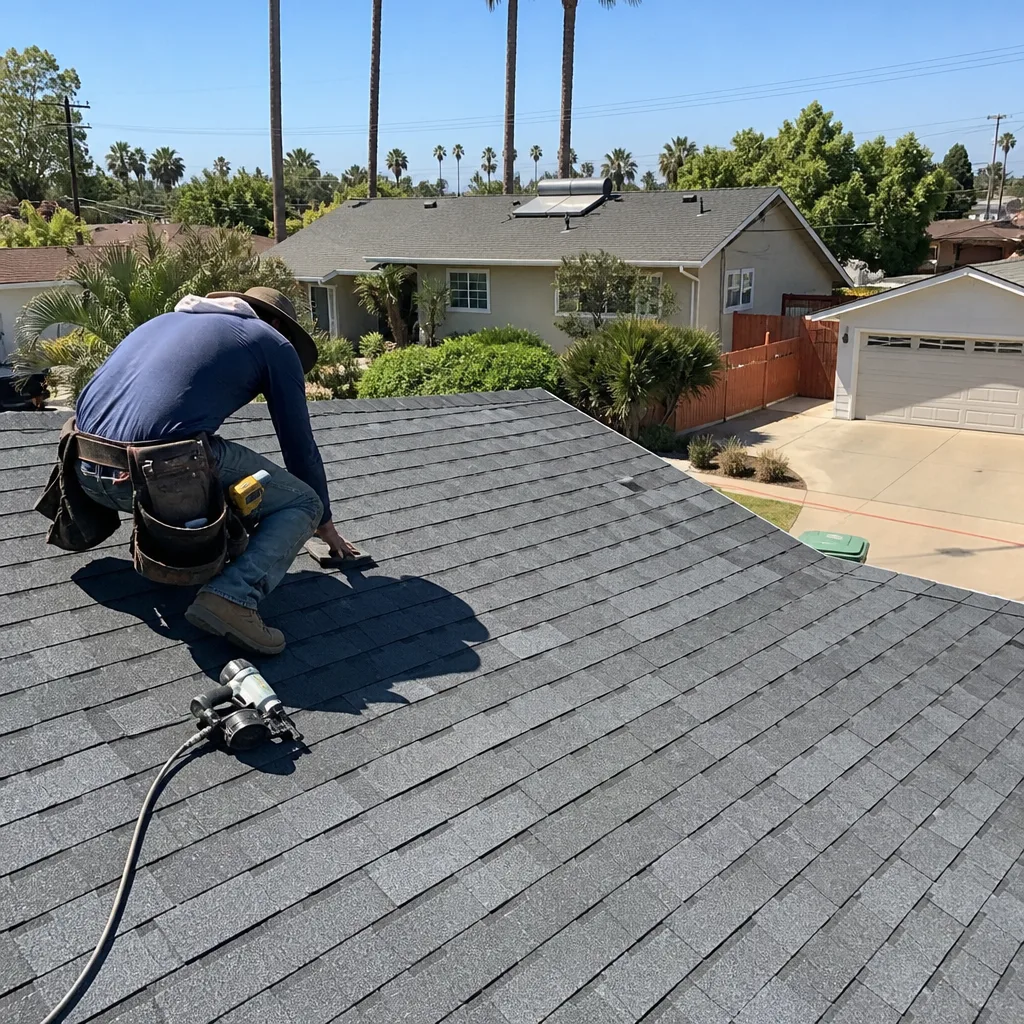 After
After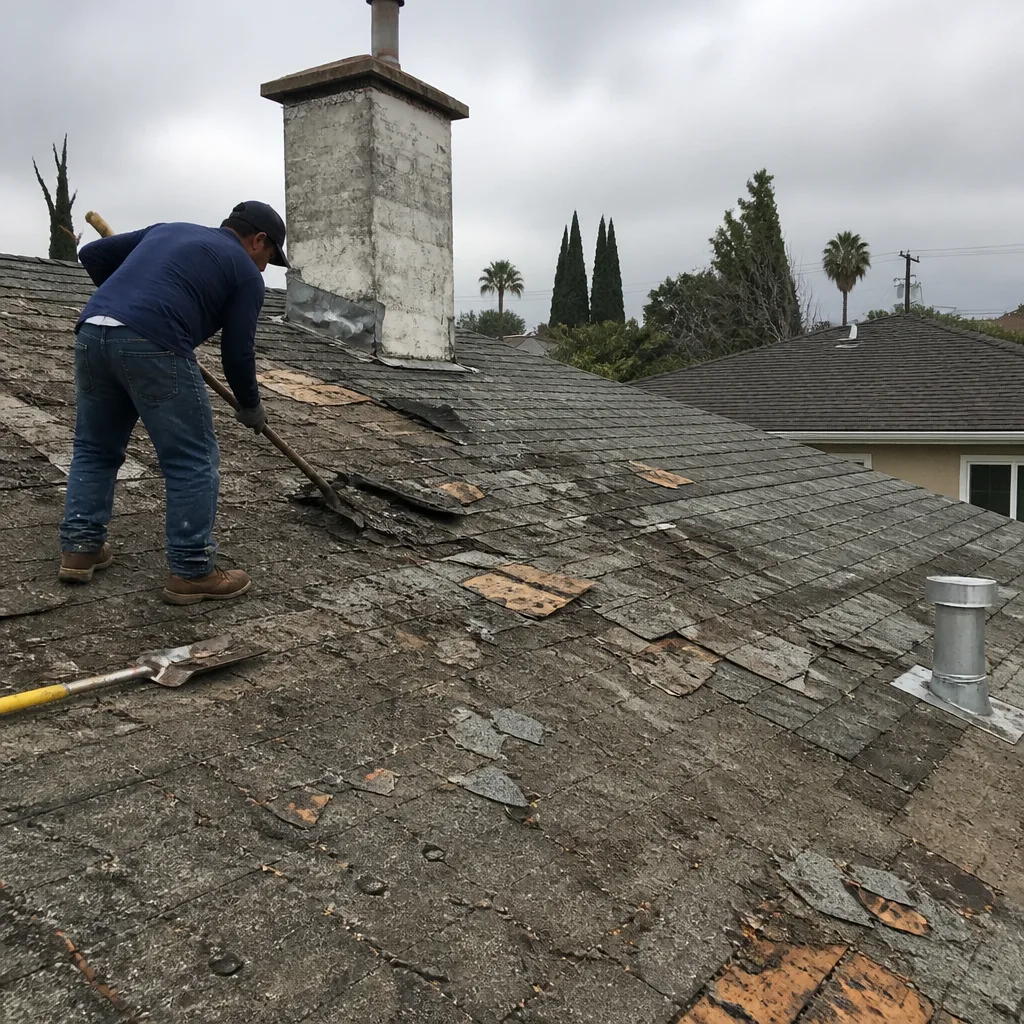 Before
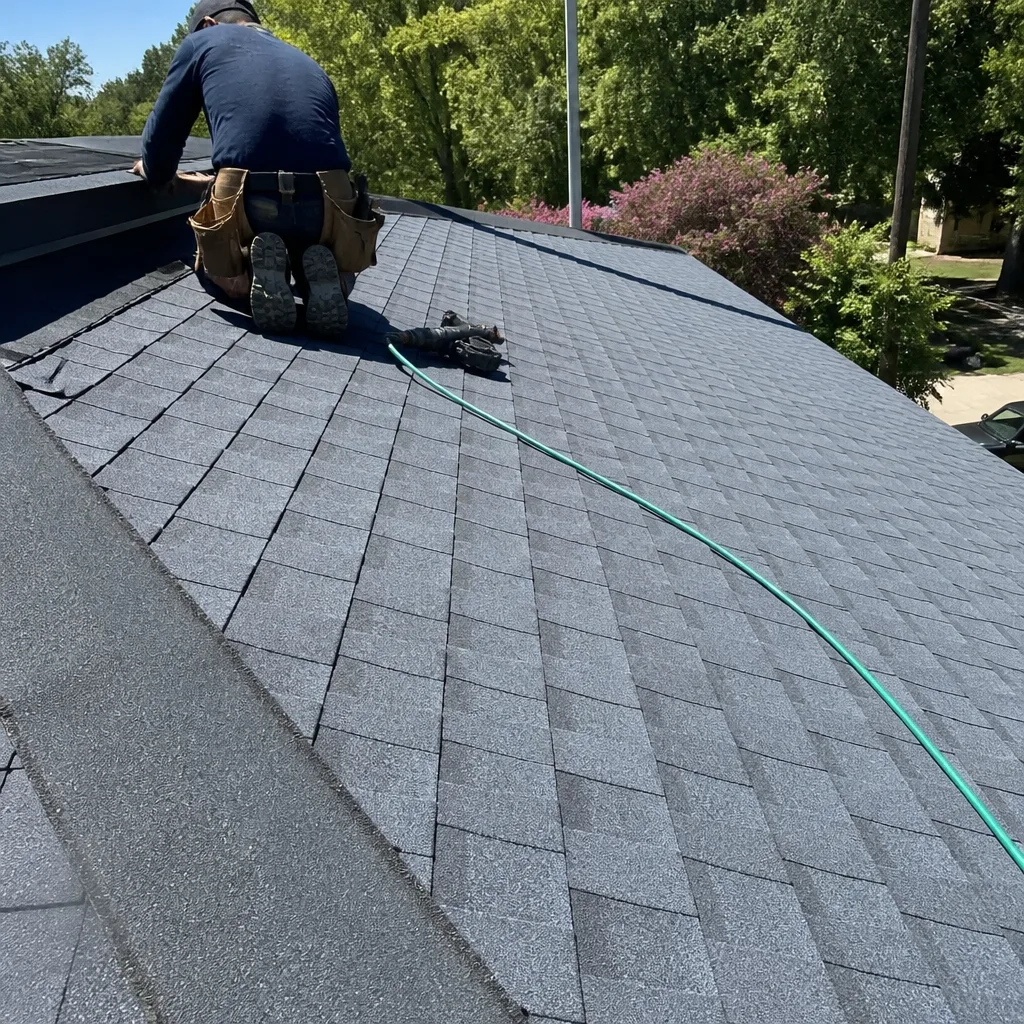 After
After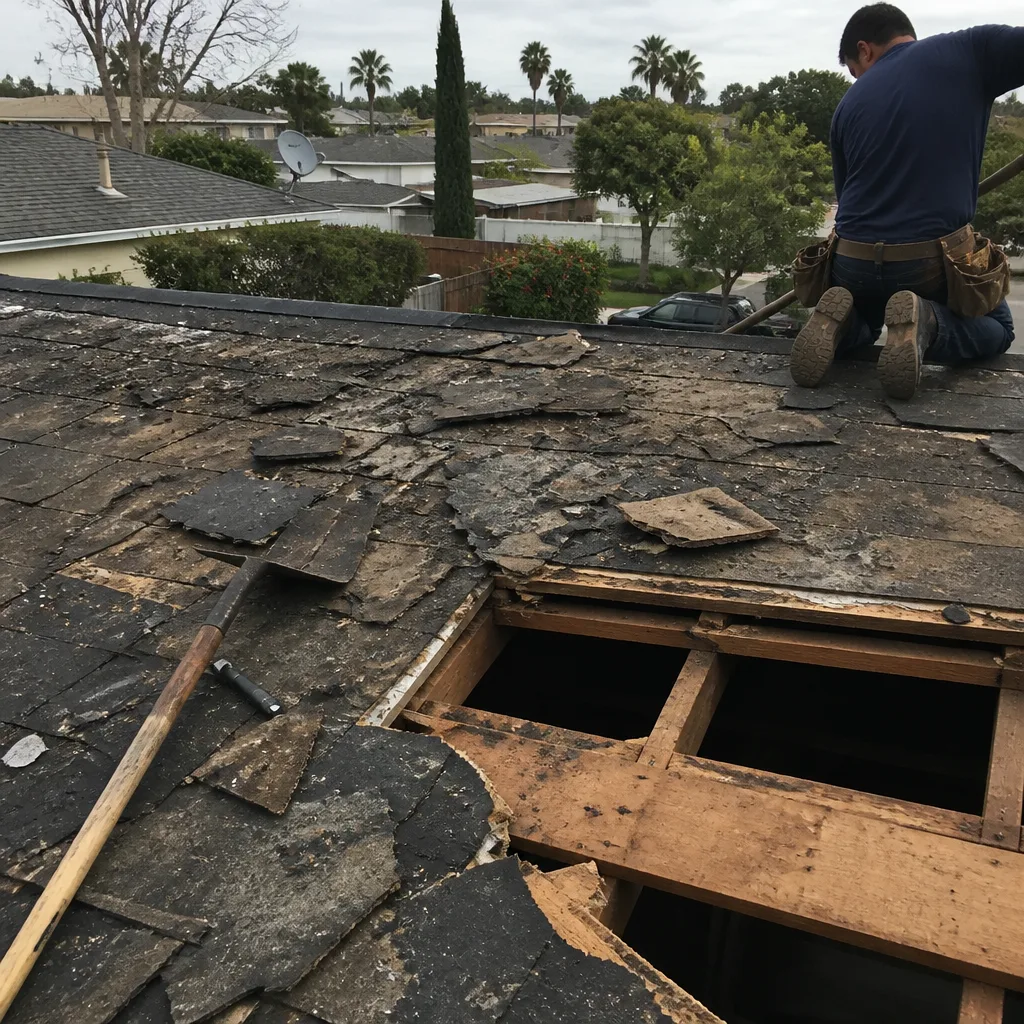 Before
 After
AfterSagging Roof Deck
You noticed it from the driveway, or maybe from inside the attic with a flashlight. Either way, a roof that sags is not a cosmetic problem – it is a structural one, and it is telling you something needs to happen soon.
What’s Happening
A sagging roof deck almost always means the wood sheathing beneath your shingles has been weakened – by water, by long-term loading, or by the failure of a supporting structure below it. This is not a shingle problem. The shingles are the surface layer; the deck is the solid wood base they’re nailed to, and when that base softens or deflects, the shape of the roof changes. You’ll see it as a visible dip, a wave, or a low spot that wasn’t there before.
The sag you’re looking at is the roof’s way of telling you that something below the surface has already failed. It rarely appears overnight. Typically it’s the end result of a slow process – moisture getting in through a failed flashing, a cracked shingle, or a poorly sealed penetration, then sitting in the wood for months or years until the sheathing loses its rigidity. In some cases the supporting rafters or trusses beneath the deck have deteriorated or shifted. In either case, the roof is no longer carrying its load the way it was designed to.
Why It Happens
Rotted or Softened Sheathing
This is the most common cause. Roof sheathing – usually oriented strand board (OSB) or plywood – absorbs moisture when water gets underneath the shingles and has nowhere to drain. Once it stays wet long enough, it swells, delaminate, and loses structural strength. From the attic, you can often press on the underside of the deck with your hand; if it feels spongy or gives at all, the wood has already broken down. You may also see dark staining, white mineral deposits, or active mold growth on the underside of the panels.
Damaged or Undersized Rafters
The rafters are the sloped framing members that hold the deck up. If a rafter has cracked, sagged under years of load, or was undersized when the house was built, the deck above it will follow. Look in the attic for any rafter that visibly bows downward or has a crack running across its grain. A rafter problem tends to produce a narrow, linear sag rather than the broader, softer depression you get from deteriorated sheathing.
Long-Term Water Infiltration from Failed Flashing
Flashing is the metal trim that seals the joints where your roof meets a chimney, a wall, a skylight, or a valley. When flashing fails – from corrosion, improper installation, or caulk that has dried out and cracked – water follows that joint straight down to the deck and pools there. The sag may appear directly next to a vertical surface like a chimney or dormer wall. Inside, you might see a water stain on the ceiling that lines up with that same wall.
Overspanning or Age-Related Fatigue
Sheathing panels are sized for a specific spacing between rafters. If a previous repair used the wrong panel thickness, or if the rafter spacing is wider than the panel was rated for, the deck flexes more than it should under foot traffic and snow load over the years. This type of sag tends to be gradual and widespread rather than localized. It’s especially common on older homes where the original construction didn’t follow current load standards, or where additions were tied in without engineering review.
What to Do Right Now
- Stay off the roof. A deck that sags has already lost structural integrity in that zone. Walking on it risks breaking through. Do not attempt to inspect it from above until a trained technician has evaluated it – this is a genuine safety risk, not a precaution for liability’s sake.
- Get into the attic if you can do it safely from below. Bring a flashlight and look – don’t touch – at the underside of the deck in the area above the sag. Note any soft spots, dark staining, mold, or rafters that look cracked or deflected. Photograph everything you can see.
- Photograph the sag from the ground. Take photos from the driveway at multiple angles, and photograph any interior ceiling stains that correspond to the location. Timestamps help, especially if this is an insurance situation.
- Move anything under the sag that you can’t replace. If the sag is above a living space, park the car outside, move furniture, and place a bucket if there’s any sign of active leaking. A deck that has failed once can fail further.
- Call before you try to cover it yourself. Tarping a sagging area can trap additional moisture and add weight to a deck that’s already overstressed. Let a technician assess it first – then a tarp, if needed, gets placed correctly.
How We Fix It
When your local Brennan Roofing team arrives, the technician’s first job is to find out exactly how far the damage extends – not just the visible sag, but the full area of compromised sheathing or framing beneath it. That means an attic inspection and a careful look at the deck from the outside before any work is scoped.
Once the scope is clear, you get a written price before anything starts. That’s not a soft offer – it’s how every Brennan job works, every time, no exceptions. The repair itself typically involves removing the affected shingles, pulling the damaged sheathing, replacing it with panels of the correct thickness and grade, and reinstalling shingles from manufacturer lines like GAF, CertainTeed, or Owens Corning. If a rafter is involved, that framing gets sistered or reinforced before the deck goes back on. The flashing in that area gets checked and replaced if it contributed to the problem. Most deck repairs – depending on size – take one to two days on site. All of it is covered by the 365-Day Done Right Promise: a written guarantee for a full year, with a free return visit if anything fails in that time. The work falls under our Roof Repair service, and for decks where the damage is widespread, a full Roofing Replacement may be the right call – your technician will tell you which, in writing, before work begins.
Frequently Asked Questions
Yes – a sagging deck is a structural failure, not a cosmetic issue. The wood has lost the rigidity it needs to support the weight above it, including any additional load from rain or snow. In an advanced case, a section of deck can collapse. If the sag is pronounced or has appeared quickly, treat it as urgent: keep people out of the room below and call (361) 320-9467 right away.
A small sag that’s been stable for a long time is less urgent than one that’s visibly growing, but neither one repairs itself. Deck rot spreads – water that’s already inside the structure keeps moving, and every rain event adds to it. Waiting typically expands the repair scope, which expands the cost. Get the written estimate in hand now, so you know what you’re actually dealing with. Call (361) 320-9467 and your local team will get eyes on it.
Your written price covers the scope that’s been assessed before work begins. If the technician opens the deck and finds that the damage extends further than was visible from the inspection, that additional scope gets priced in writing before any additional work starts. The number on your paper does not move without your sign-off on a new written price. That’s a condition of every Brennan job, not a policy we bend.
Your local Brennan Roofing team schedules inspections as quickly as the local calendar allows – call (361) 320-9467 and a live person will pick up and get you on the schedule. We don’t route to voicemail or a callback queue. If the situation looks urgent when you describe it, the team will tell you honestly what they can do about timing.
Get It Fixed
A sagging deck is one of those problems that doesn’t get smaller by waiting. Call (361) 320-9467 – a live person answers around the clock – or book online to schedule your free written estimate. Your local Brennan Roofing team will assess it, price it honestly, and fix it to the Garrison Standard.
Written by Travis Oakley, Owner at Brennan Roofing, part of the Garrison Partners family serving communities across the country since 2000.
What Our Customers Say
"Ridge vent added and the attic is cooler. Fair price compared to the other two quotes."
- Vernon C."Neat, quiet, and disciplined crew. Magnet swept the yard after."
- Tonya R."Replaced the underlayment and drip edge as well as shingles. Many roofers skip that. Everything was explained in writing."
- Barry F.