

Free roof inspection with deck photos before we talk money - GAF and Owens Corning certified installation






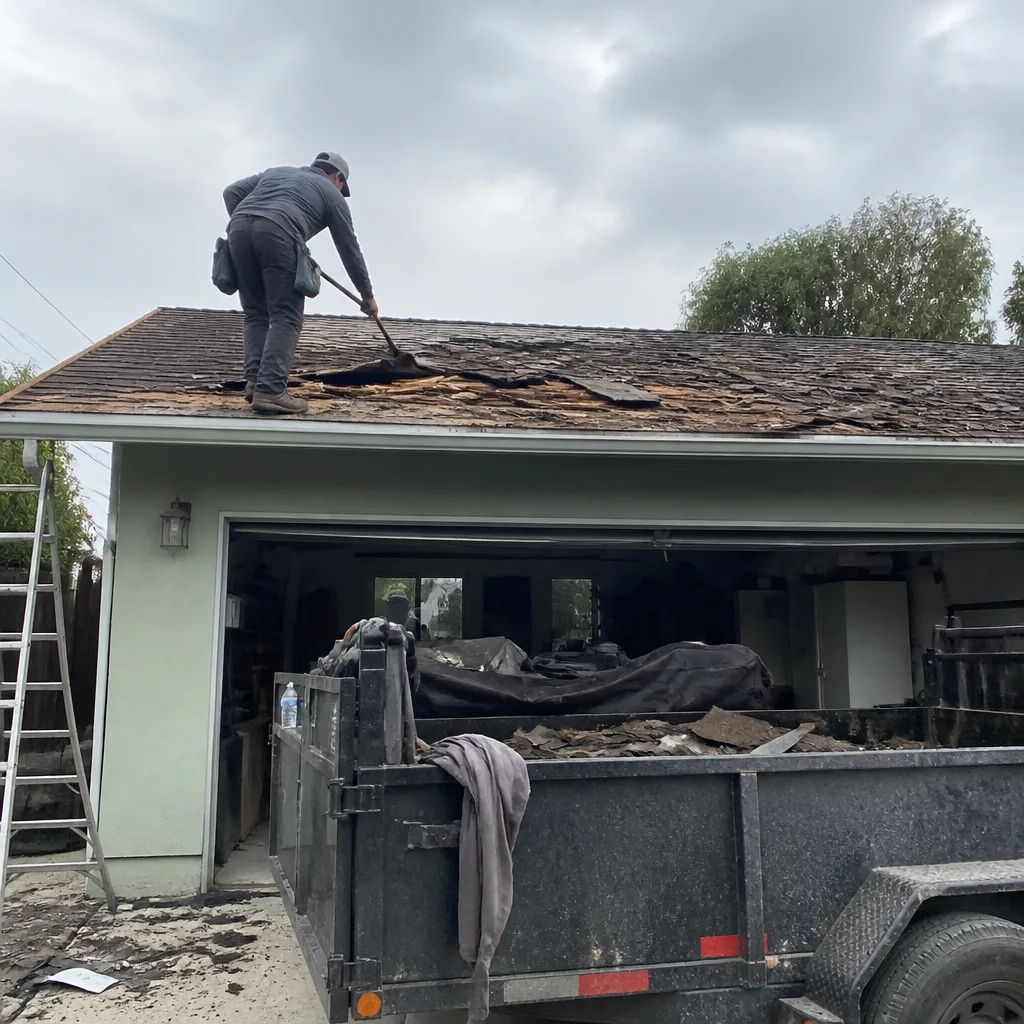 Before
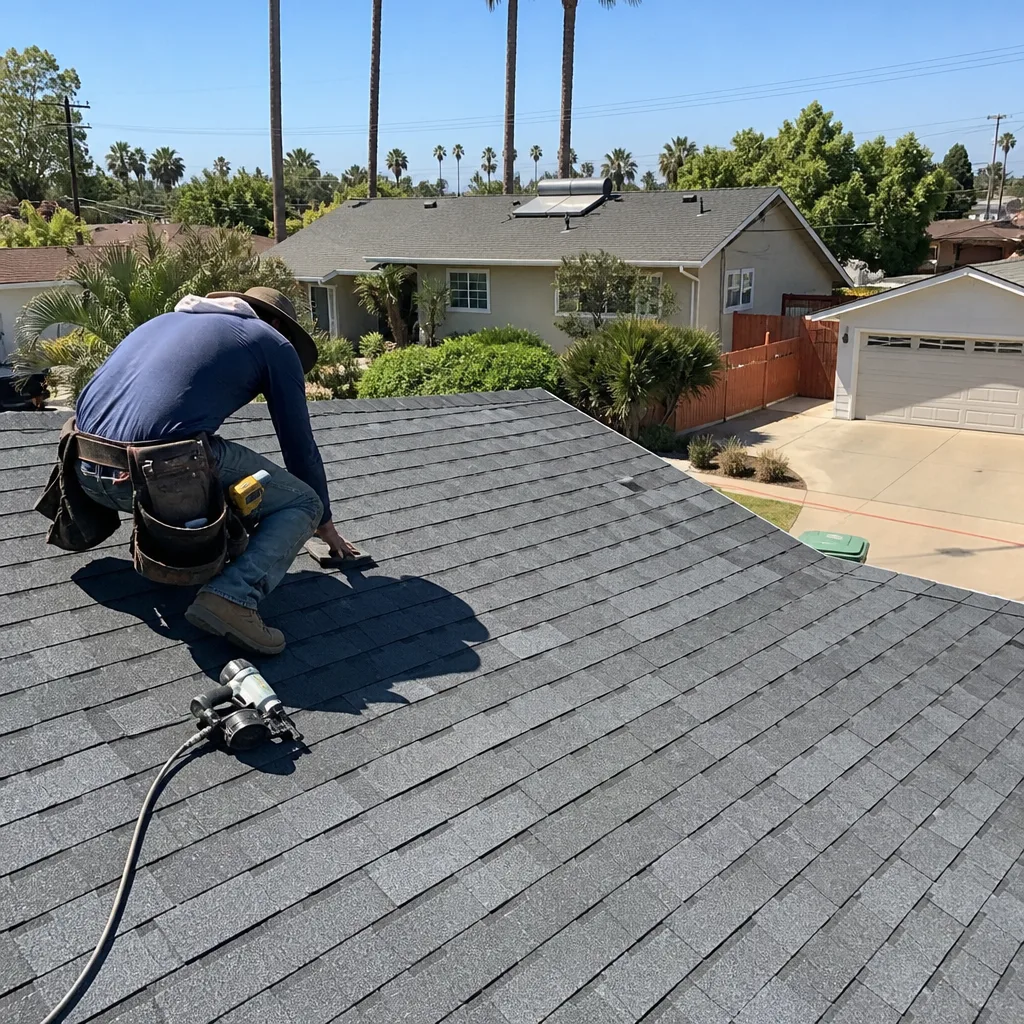 After
After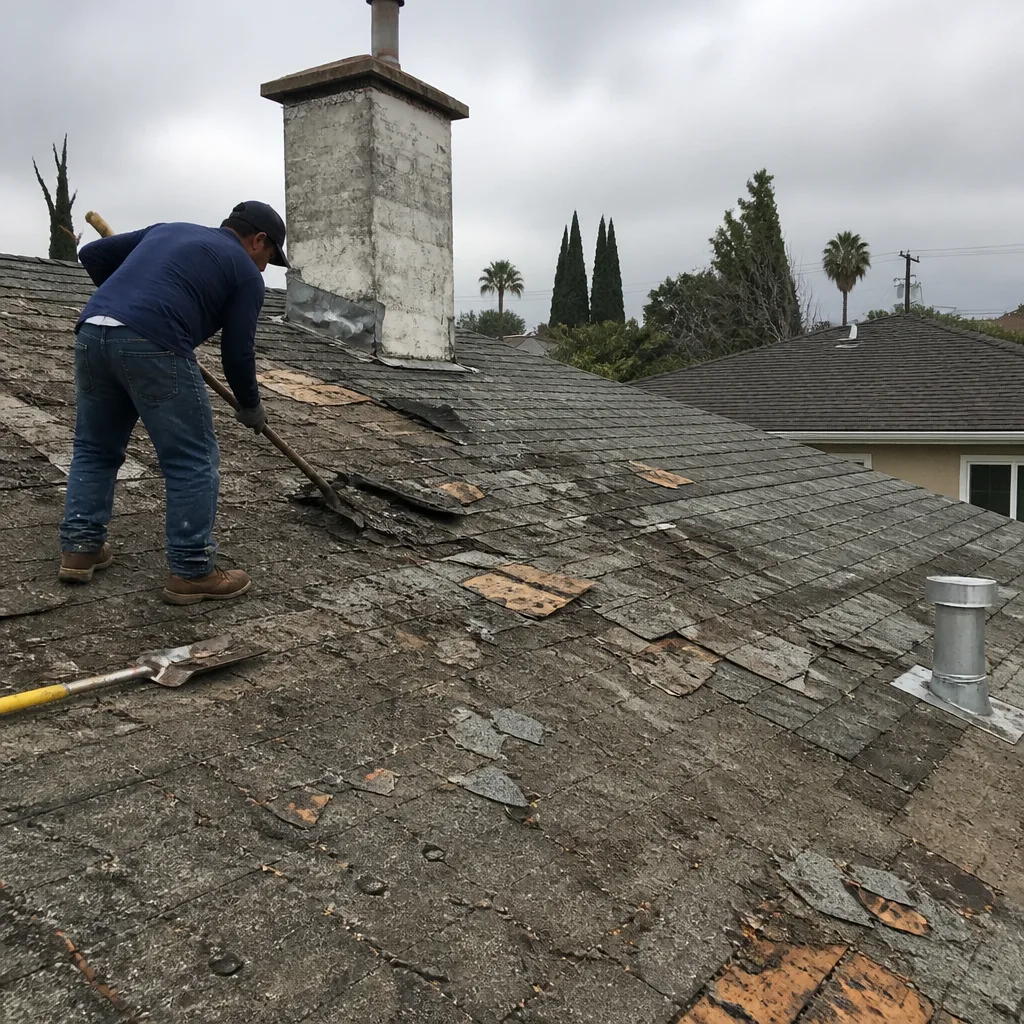 Before
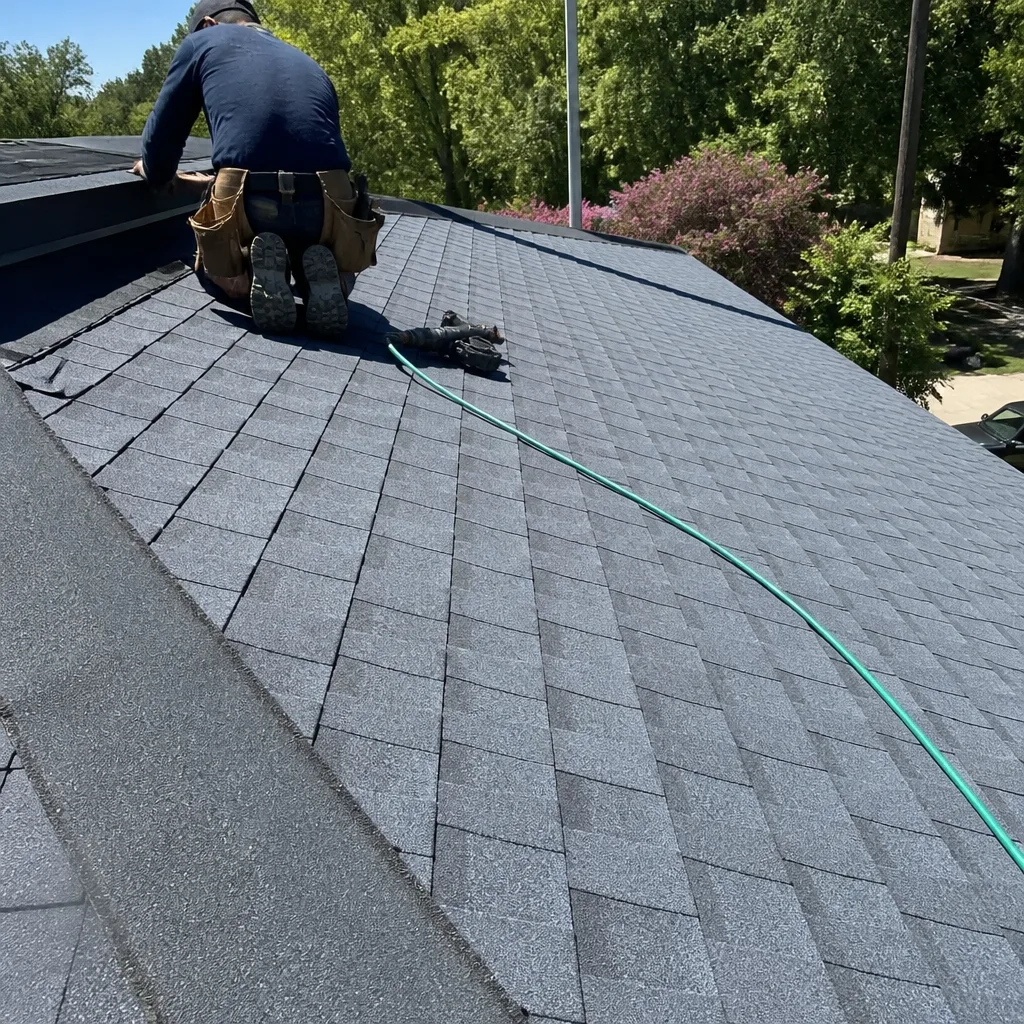 After
After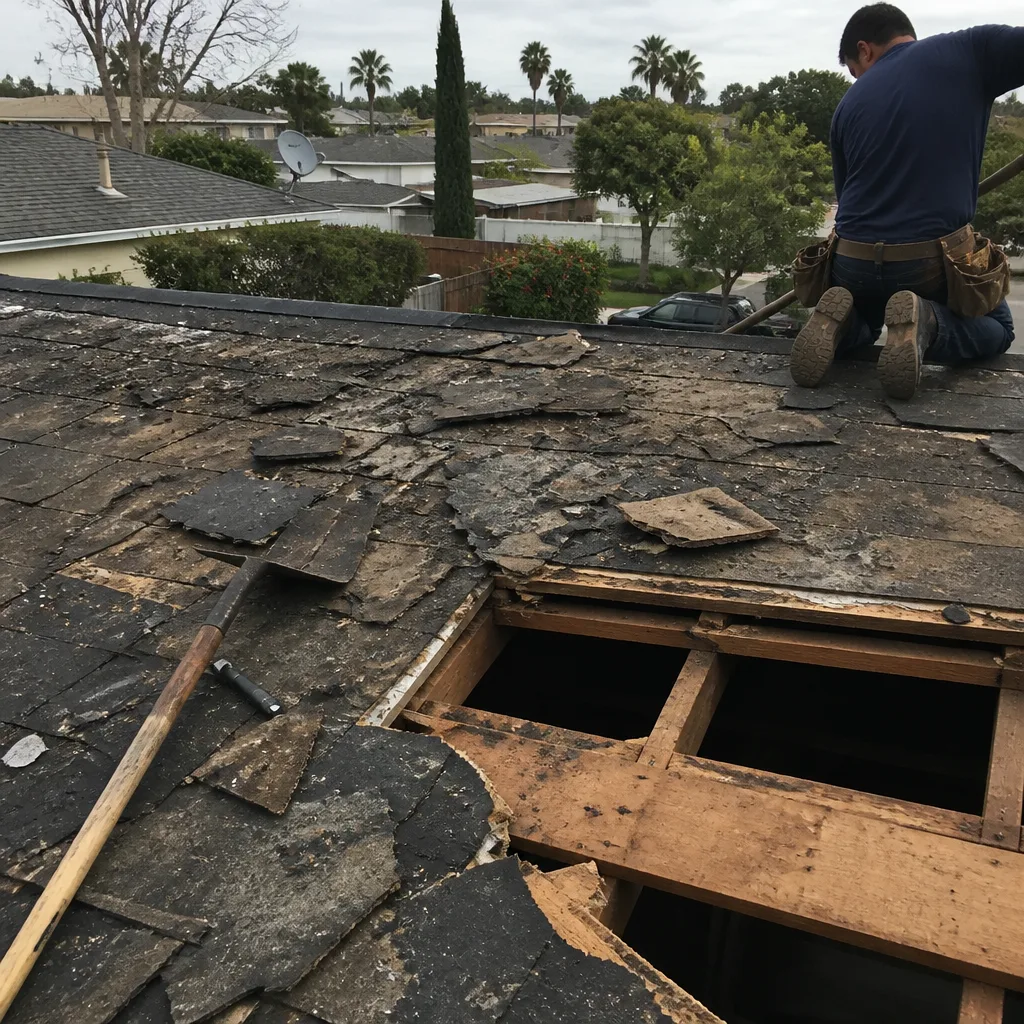 Before
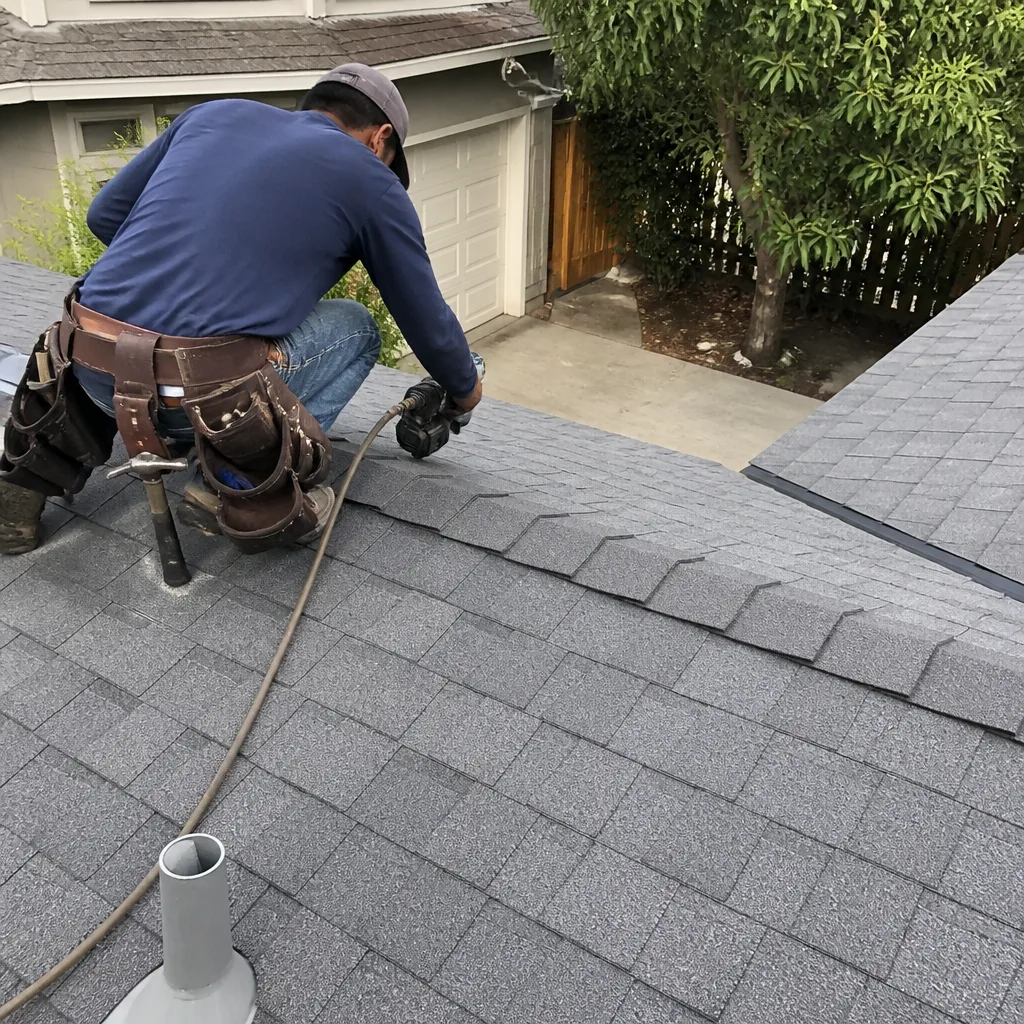 After
AfterWater stains spreading across the ceiling
What’s Happening
A spreading water stain on your ceiling almost always means moisture is getting past your roof and soaking into the structure above. It is not a cosmetic problem – it is an active leak, and the stain you see today is smaller than the wet area you cannot see. Your roof needs to be inspected and the source sealed before the damage reaches your attic insulation, your ceiling joists, or the drywall itself.
The reason the stain keeps spreading is that water rarely enters and falls straight down. It follows rafters, sheathing, and insulation until it finds a low point and drips. So the wet patch on your ceiling may be several feet away from where the roof is actually failing. A stain that was the size of a dinner plate last week and is now the size of a trash-can lid is telling you the entry point is still open and water has been working its way in for longer than it looks.
Why It Happens
Failed or missing flashing
Flashing is the thin metal that seals every joint on your roof – where the roof meets a chimney, a dormer wall, a skylight curb, or a pipe boot. It is the most common source of ceiling stains we see. Metal flexes with temperature swings, caulk dries out and cracks, and over time the seal opens just enough for water to run behind it. If your stain is below a chimney, a wall, or any kind of penetration, flashing is the first thing a technician will check.
Cracked, curled, or missing shingles
Shingles take a beating from UV exposure, wind, and hail. When a shingle cracks through or curls up at the edge, it stops directing water off the roof and starts letting it underneath. You can often spot this from the ground with binoculars – look for shingles that look buckled, cupped, or are a different color than the surrounding field. Any obvious gap or exposed dark underlayment is a direct path for rainwater.
Clogged or damaged gutters sending water back under the eave
When gutters overflow or pull away from the fascia, water backs up against the roof edge instead of draining away. In cold climates this creates ice dams; in warmer climates it just sits and wicks under the first course of shingles. If your stains are near an exterior wall rather than the center of the ceiling, and you haven’t cleaned your gutters recently, this is worth checking from the ground before a technician arrives.
Deteriorated pipe boots or vent collars
Every plumbing vent and exhaust stack that exits through your roof has a rubber or neoprene collar around it called a pipe boot. That rubber dries and cracks, typically within 10 to 15 years, and the gap it leaves is a direct funnel for rainwater. Stains that appear near a bathroom or kitchen and don’t follow an obvious structural line often trace back to a failed pipe boot directly above. It’s a small part, but it fails quietly and regularly.
What to Do Right Now
- Put a bucket under the drip if water is actively falling, and lay down towels around it. This won’t fix anything, but it protects your floor and gives you a sense of how fast the leak is moving.
- Take photographs of the stain right now, with something in the frame for scale – a hand, a coin, a cup. Take another photo in 24 hours. That comparison tells your technician how fast water is traveling and helps pinpoint the entry zone.
- Check the attic if you can access it safely from inside. Look for wet insulation, water trails on rafters, or daylight showing through the sheathing. Do not go onto the roof yourself – a wet roof is slippery, and working at height without proper equipment and fall protection is genuinely dangerous. Leave the roof surface to the technician.
- If the stain is near any light fixture, ceiling fan, or recessed can, turn off the circuit breaker for that room and keep it off. Water and live electrical fixtures are a serious hazard. Call an electrician if the fixture has already gotten wet before you restore power.
- Note roughly when the stain first appeared and whether it follows any recent rain. Write it down. That timeline is useful diagnostic information – a stain that shows up 48 hours after rain is a slower path than one that appears during the storm itself.
How We Fix It
When your local Brennan Roofing team arrives, the technician starts on the roof, not the ceiling. The visible stain inside tells us the water landed there – it doesn’t tell us where the roof let it in. We trace the path back: checking the flashing at every transition, examining pipe boots and vent collars, looking for cracked or displaced shingles in the zone above the stain.
Once we’ve identified the source, you get a written price before any tool comes out of the truck. That’s not a formality – it’s how we work on every job, every time. No number that surprises you later.
Most single-source repairs take a few hours. A flashing reseal or pipe boot replacement is typically done the same visit. A larger shingle replacement or full roof inspection that uncovers multiple problem areas may take longer, but you’ll know that before we start.
The work is covered by our 365-Day Done Right Promise. If the repair fails within a year, we come back and make it right at no charge – that’s in writing, not a handshake. The services that resolve this kind of leak are Roof Repair and, where the full picture is unclear, a Roof Inspection first to map out what’s going on above the ceiling.
Frequently Asked Questions
It can’t wait – a stain that is still spreading means water is still moving through your structure right now. Every additional wet/dry cycle pushes moisture deeper into insulation and framing, which leads to mold and rot that cost significantly more to fix than the original leak. If the stain is near any electrical fixture, that raises the urgency further. Call (361) 320-9467 and let your local Brennan Roofing team take a look before the damage compounds.
Your local Brennan Roofing team prioritizes active leaks, and our phones are answered by a live person around the clock – no voicemail, no automated system. Scheduling depends on your area and current demand, but calling now puts you at the front of the line. Call (361) 320-9467 and we’ll tell you exactly what we can do for your timeline.
Water almost never drips straight down from where it enters. It follows the path of least resistance – along a rafter, across a sheathing seam, pooling at a low point – before it finally comes through the ceiling. A stain in the center of a room can trace back to a failed flashing 8 feet away along the roofline. This is exactly why the inspection starts on the roof, not from inside the house.
There’s no honest flat number to give here because the cost depends entirely on what the technician finds when they get on the roof – a cracked pipe boot is a very different job from resealing a chimney chase or replacing a section of shingles. What we can tell you is that you’ll have the exact price in writing before any work starts, and that number doesn’t move. Call (361) 320-9467 to schedule your free written estimate.
Get It Fixed
A spreading ceiling stain is not something to watch and hope for the best. Call (361) 320-9467 now – our phones are answered by a live person around the clock. Your local Brennan Roofing team will inspect the roof, find the source, and hand you a written price before a single shingle moves.
Written by Travis Oakley, Owner at Brennan Roofing, part of the Garrison Partners family since 2000.
What Our Customers Say
"They gave me a warranty in writing and stood behind it."
- Irene G."Quality work and clear communication. Rain pushed the start by two days, which is fair, but we were hoping to be done sooner."
- Cathy N."Storm took off a section of shingles. They were here next morning to tarp it and finished the repair that week."
- Elaine D.