
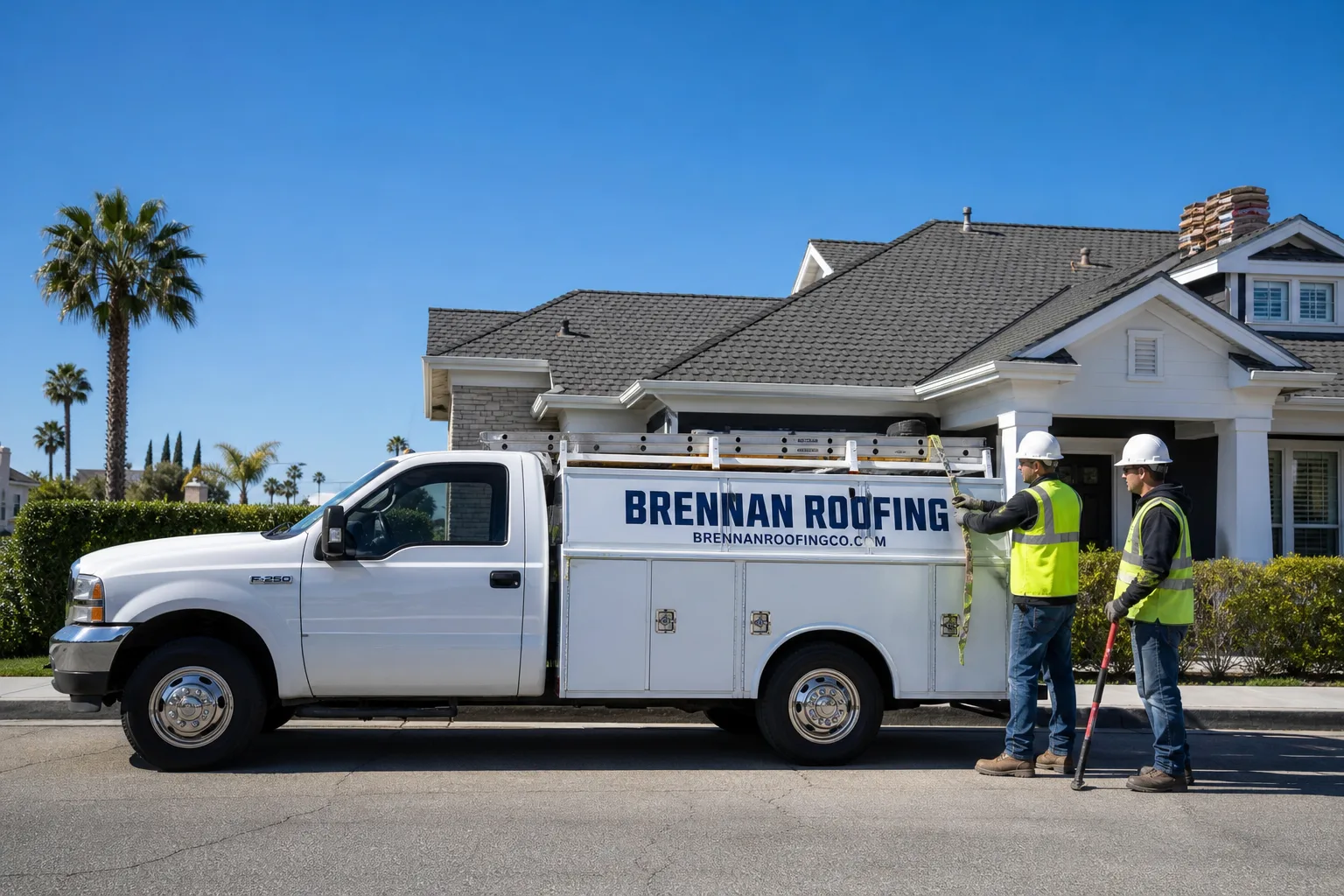
Free roof inspection with deck photos before we talk money - GAF and Owens Corning certified installation



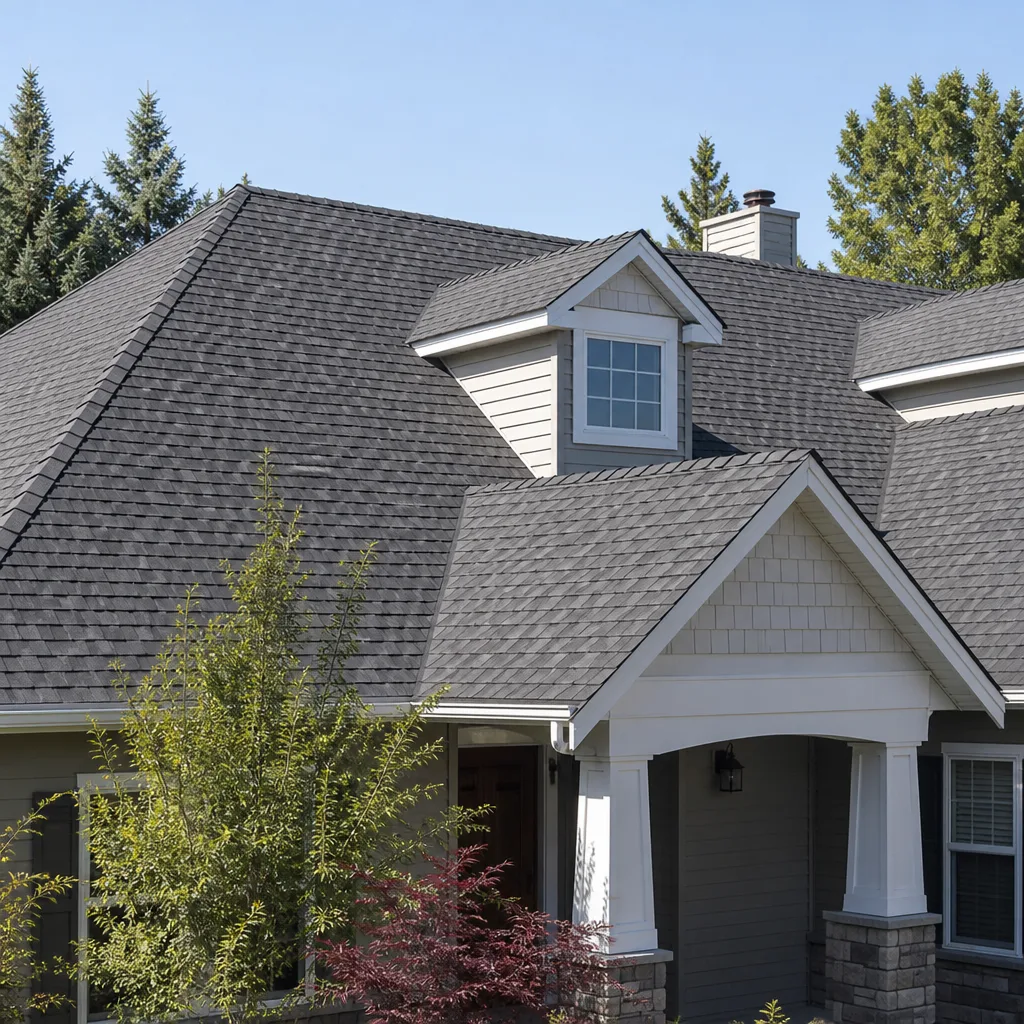


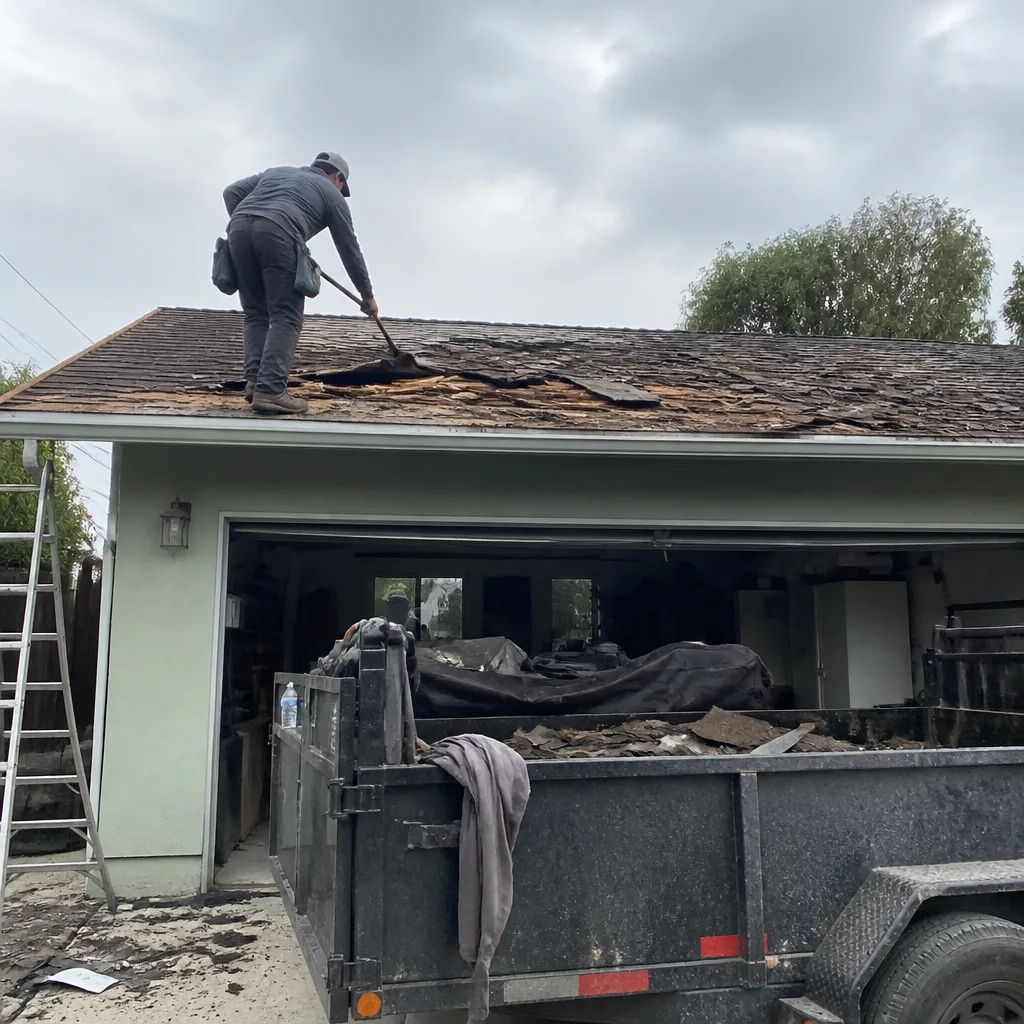 Before
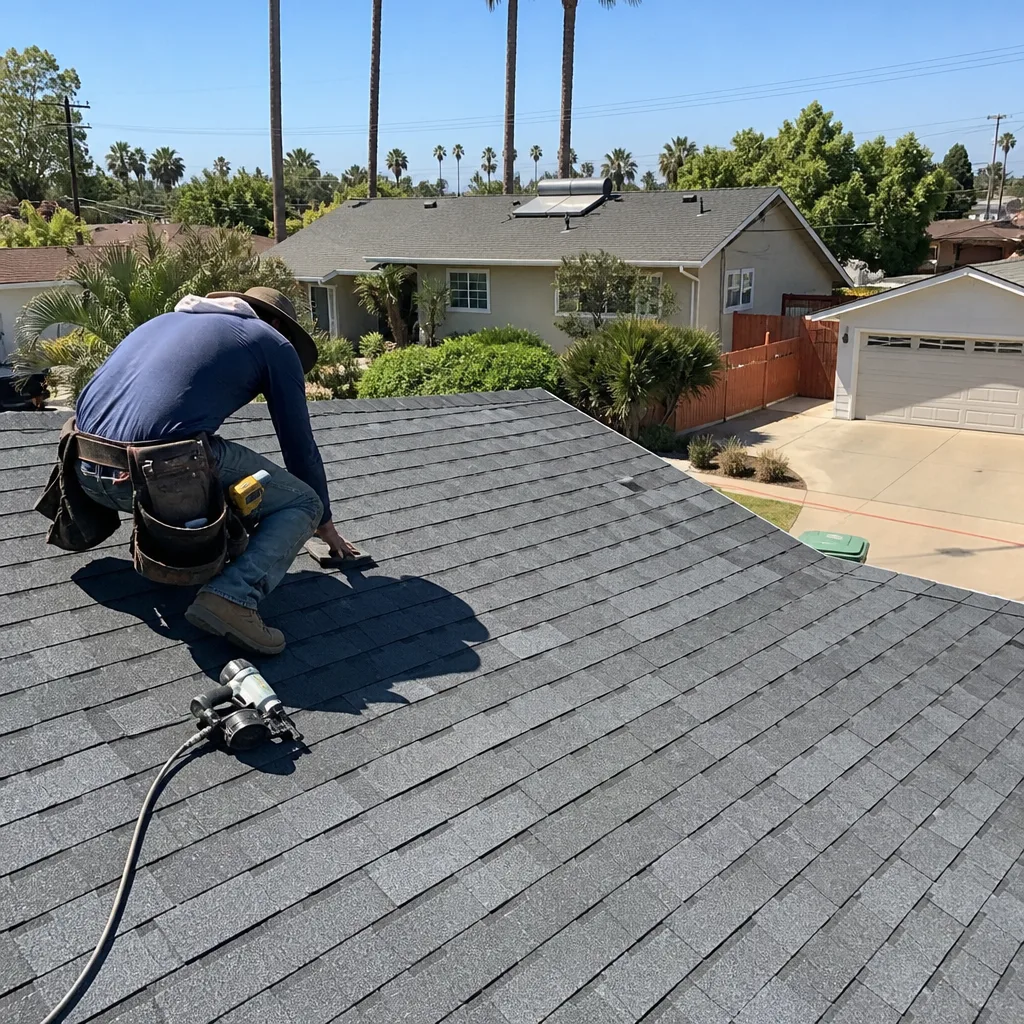 After
After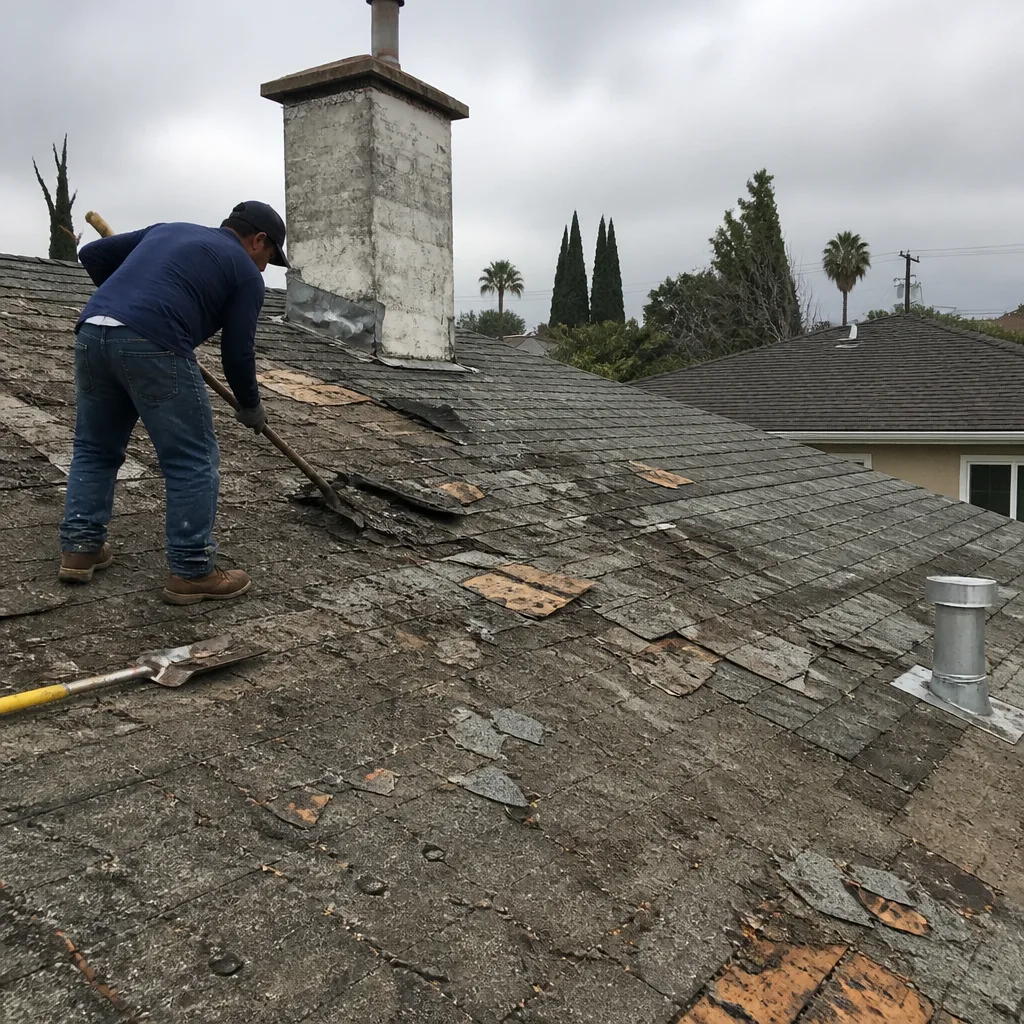 Before
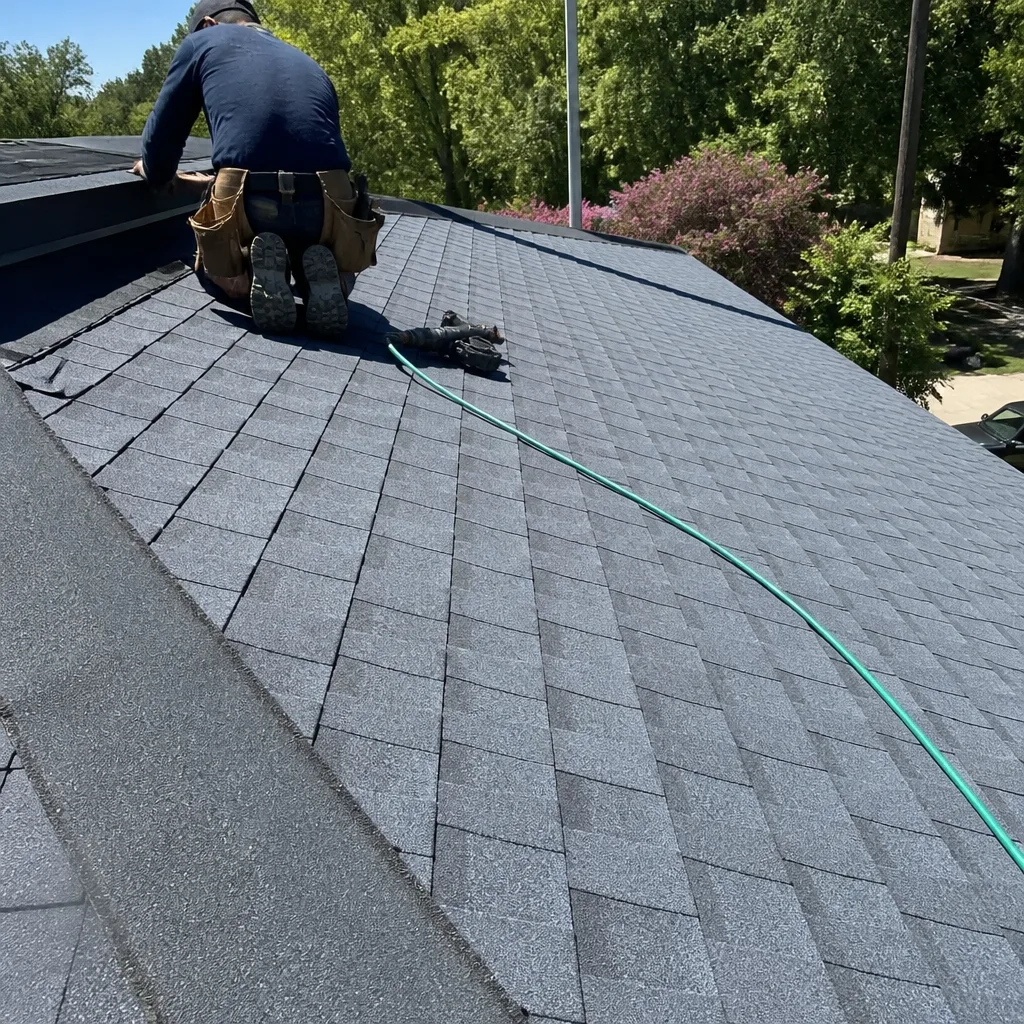 After
After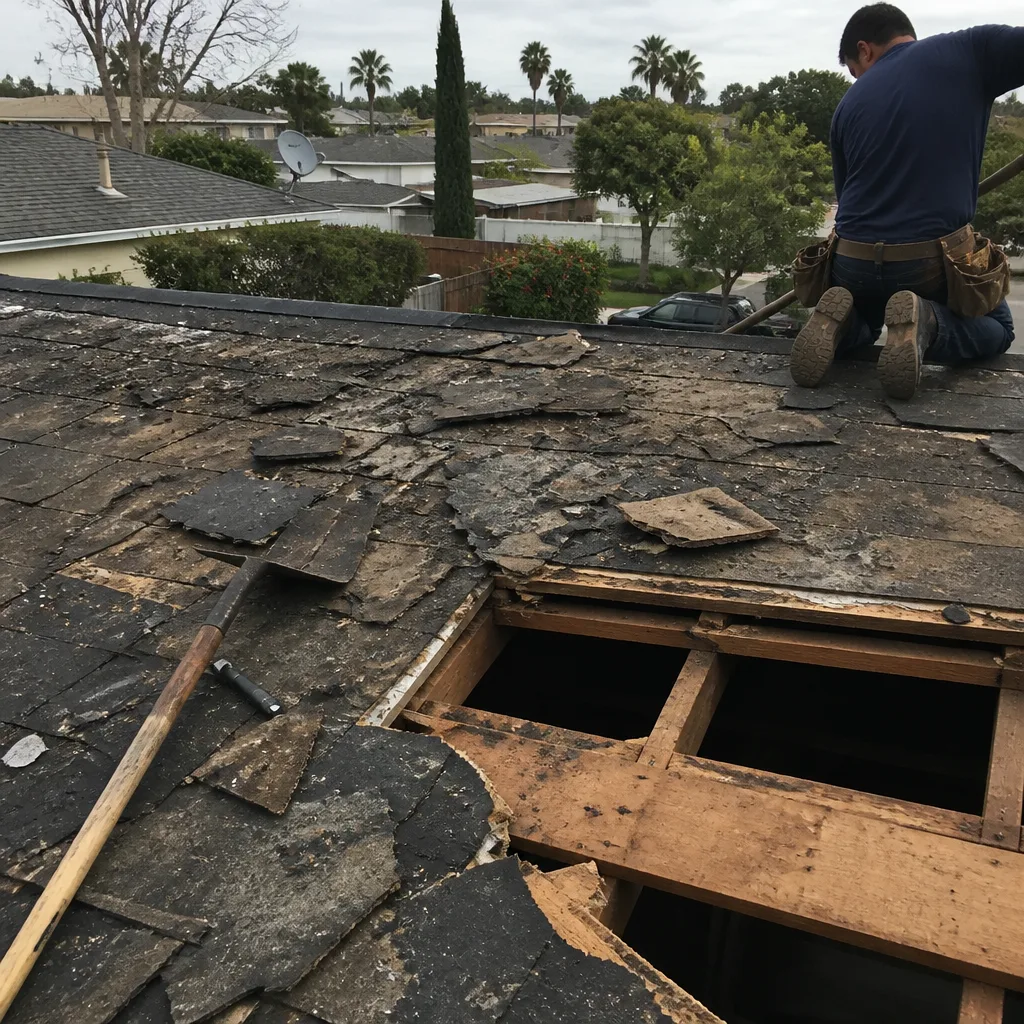 Before
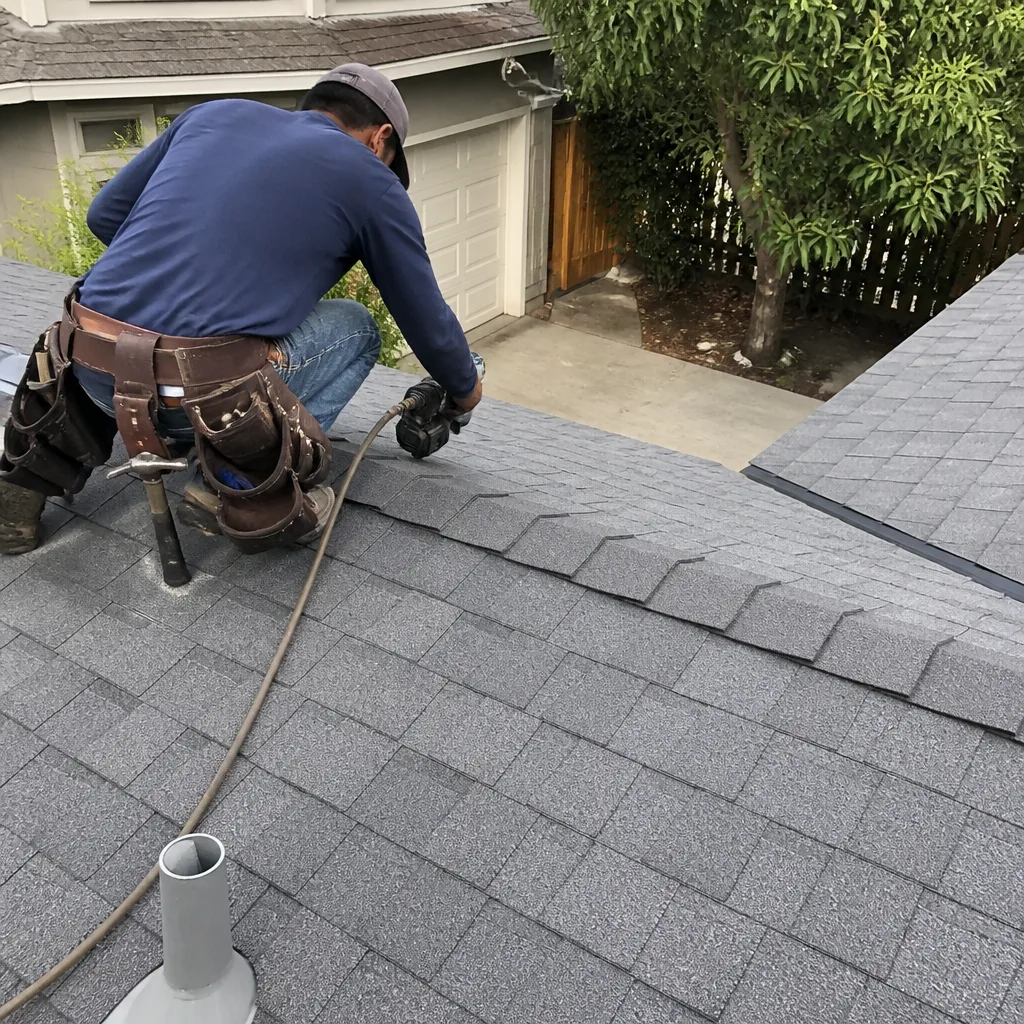 After
AfterHail Dents on the Roof and Gutters
What’s Happening
Hail dents on your roof and gutters almost always mean the storm did more than leave cosmetic marks. The soft aluminum or galvanized steel of a gutter dents on impact from hailstones large enough to do the same thing to your shingles, and shingle damage from hail is rarely visible from the ground. What looks like a few dings on the gutter is frequently a signal that the granule layer on your shingles – the protective coating baked into the surface – took a beating at the same time.
Granule loss matters because those tiny mineral particles are what protect the asphalt beneath from UV exposure and water intrusion. Once they’re knocked loose, the exposed asphalt dries out, cracks, and eventually lets water through. The gutter dents you can see are the easy part of this story. The roof damage you can’t see from the ground is the part that becomes a leak – sometimes within weeks, sometimes over a season or two. Either way, it doesn’t repair itself.
Why It Happens
Impact Granule Loss on Asphalt Shingles
When hailstones hit an asphalt shingle, they knock the embedded granules loose. You’ll often see the evidence collecting in your gutters after a storm – dark, sandy sediment that looks like coarse pepper. A few granules in the gutter every spring is normal aging. A heavy accumulation right after a storm is not. The exposed spots left behind look like small circular bruises or bare patches on the shingle surface, and they age fast once the sun gets to them.
Cracked or Split Shingles
Larger hailstones – anything above about an inch in diameter – can crack a shingle outright or split it along the mat beneath the surface. From the ground this is almost impossible to spot. Up close, you’ll see a clean break or a star-shaped crack radiating from the point of impact. A cracked shingle is no longer a single waterproof layer; it’s two pieces with a gap between them, and rain will find that gap.
Dented or Misaligned Gutters
Gutters are designed to channel water, not absorb impact. A hailstone that dents the face of a gutter section can also push the section slightly inward or change its pitch. Water that used to flow toward the downspout now pools in a low spot, spills over the front edge, or drips behind the gutter and runs down your fascia. You can check for this yourself by watching your gutters during the next rain – pooling or overflow in a spot that was fine before the storm is the sign.
Hidden Flashing Damage
The metal flashing around your chimney, skylights, and pipe boots takes hail hits the same way shingles do, but flashing is thinner and more exposed. A dent or a lifted edge on flashing breaks the seal against the roof deck. This one is harder to diagnose by eye because flashing damage doesn’t always look dramatic – a small lift or a cracked sealant bead is enough to let water in at the joint. If your gutters are dented and your flashing is more than a few years old, assume it needs to be inspected.
What to Do Right Now
- Photograph everything before cleanup. Walk the perimeter of the house and take photos of every dent you can see on the gutters, every downspout, the fascia boards, and any shingle edges visible from the ground. Date-stamped photos matter for insurance purposes and for the technician who comes out.
- Check your gutters for granule sediment. After the next rain, look in the bottom of your downspout splash blocks or in the gutter channel itself. A heavy deposit of dark, sandy material confirms granule loss on the shingles above.
- Note any interior changes. Water stains on the ceiling, damp insulation in the attic, or a musty smell appearing after the storm are signs the roof has already been breached. Flag these for the technician.
- Don’t attempt a roof inspection yourself. A wet or hail-pitted roof surface is genuinely slippery, and damaged sections can be structurally soft underfoot. Stay on the ground and let a trained technician handle the roof surface. The risk of a fall from a residential roofline is serious.
- Keep water from pooling where you can. If a gutter section has pulled away from the fascia, you can temporarily redirect water with a bucket or a tarp at ground level – but don’t try to reattach gutters or tarp the roof yourself. Both tasks carry real fall risk.
How We Fix It
When your local Brennan Roofing team arrives, the technician starts on the ground – checking the gutters, downspouts, and any visible fascia – then goes up to walk the entire roof surface. We’re looking at shingle condition, granule loss patterns, flashing integrity, and the roof deck beneath any lifted or cracked sections. Nothing gets skipped.
Before any work begins, you get a written price. That number doesn’t change once work starts – it’s on paper, it’s the number, and that’s how it works under The Garrison Standard. Depending on what we find, the fix is usually a targeted roof repair for isolated damage, or a roof inspection that documents everything and puts a remediation plan in writing. For widespread damage across multiple shingle fields or flashing runs, we may recommend full replacement and will walk you through material options from lines including GAF, CertainTeed, Owens Corning, and others. Most inspections and targeted repairs are completed in a single visit. All work is backed by the 365-Day Done Right Promise – a written guarantee, one full year, and a free return visit if anything we repaired fails inside that window.
Frequently Asked Questions
It can wait a short time, but not indefinitely, and “short” depends on your climate and your roof’s age. Hail-damaged shingles don’t fail the moment they’re hit – they fail progressively as rain, heat, and UV work on the exposed asphalt underneath. A roof in good shape before the storm might give you a season. An older roof or one that was already showing wear may leak within weeks of a significant hail event. The safe answer is to get it inspected before the next major rain. Call (361) 320-9467 and your local Brennan Roofing team will schedule a free written estimate.
Hail damage starts at the surface but doesn’t stay there. Once granule loss exposes the asphalt mat, water gets to the sheathing beneath the shingle, and prolonged moisture in roof sheathing leads to rot, mold, and eventually structural softening of the deck. Flashing damage is faster – a lifted seal at a chimney or pipe boot can let water into the wall cavity during the very next rain. Don’t assume dented gutters mean only the gutters need attention. Call (361) 320-9467 so we can tell you exactly what you’re dealing with, in writing, before any work starts.
Our phones are answered by a live person around the clock – no voicemail, no automated system. Scheduling depends on your local team’s current availability, and we’ll give you a real window when you call, not a vague range. What we can tell you is that your call goes to a person every time, and your local Brennan Roofing team will get you on the schedule as quickly as the calendar allows. Call (361) 320-9467 to find out what’s available.
No. The price goes on paper before any work starts – that’s one of the five points of The Garrison Standard and it applies to every job, every time, with no exceptions. If the inspection reveals damage beyond what was visible from the ground, we write a revised scope and put the new number in writing before we touch anything additional. The price you sign is the price you pay. If you want an exact number for your roof, call (361) 320-9467 – the written estimate is free.
Get It Fixed
Hail dents on the gutters are usually the first thing you can see. The shingle and flashing damage behind them is what actually becomes a leak. Your local Brennan Roofing team will put a written price in your hands before anything starts. Call (361) 320-9467 or book online – live answer, every time.
Written by Travis Oakley, Owner at Brennan Roofing, part of the Garrison Partners family serving communities nationwide since 2000.
What Our Customers Say
"Neat, quiet, and disciplined crew. Magnet swept the yard after."
- Tonya R."Replaced the underlayment and drip edge as well as shingles. Many roofers skip that. Everything was explained in writing."
- Barry F."Crew lead is a veteran and runs the job like it. Showed up at 7 sharp, tarped the garden, tore off the old roof, and had the new shingles on by the end of day two."
- Joe K.