
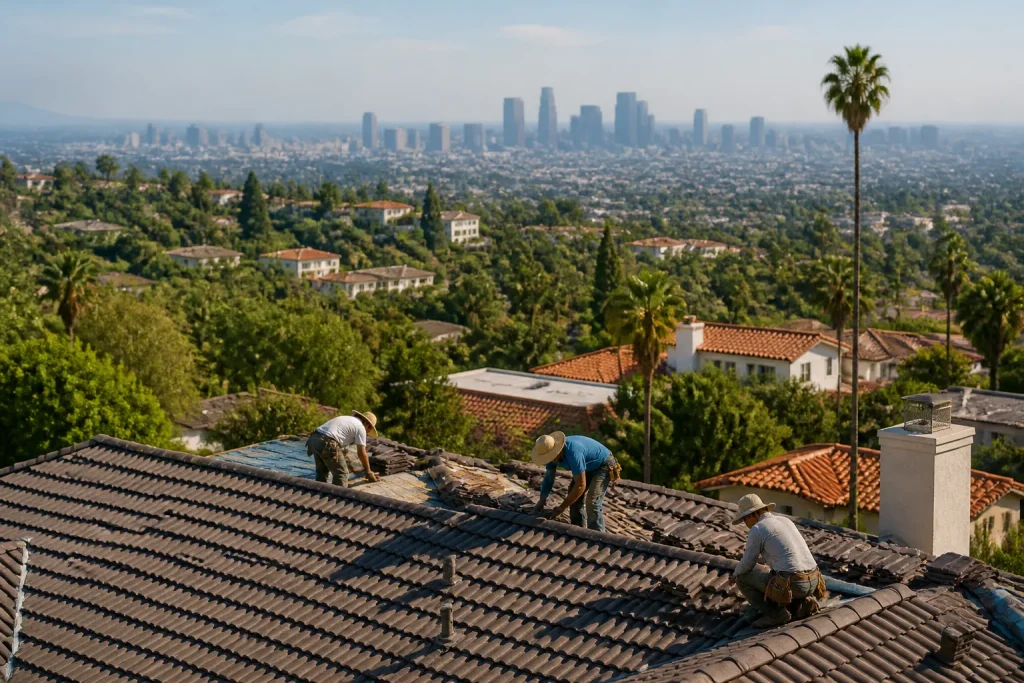
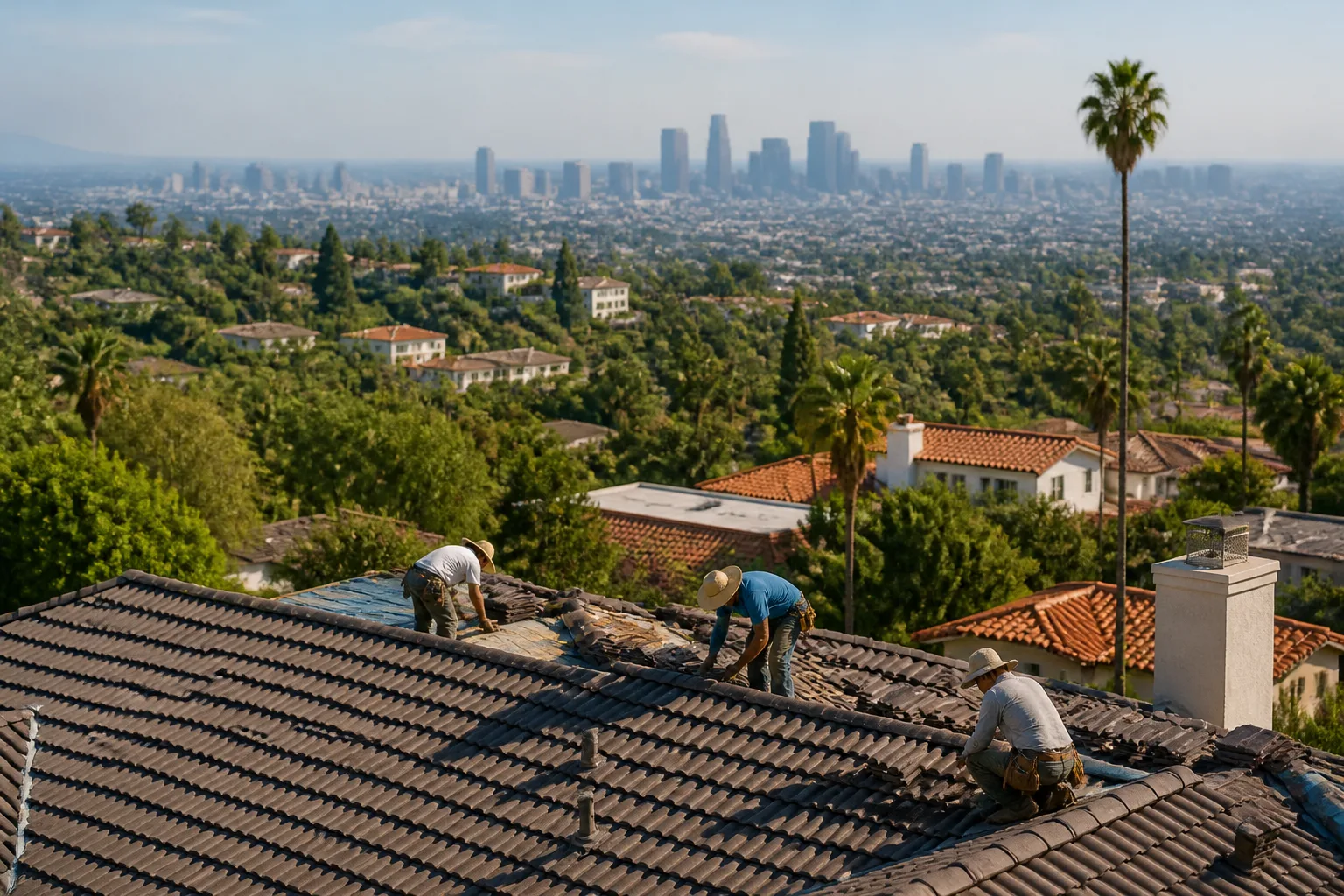
Boral Roofing Company in Los Angeles: A Homeowner’s Guide
A Boral tile roof in Los Angeles can last 50 years or more, but only if the system underneath it holds up. Most homeowners don’t realize the tile itself is just the top layer. It’s the underlayment, flashing, and battens that keep water out, and those components typically fail in 20 to 25 years. That means your Boral tile can look fine from the street while the roof underneath it is quietly failing. Here’s what you need to know if you’re making a Boral decision for a Los Angeles home.
If you’d rather skip the research and talk to someone directly, call Brennan Roofing at (361) 607-0835. Estimates are free, and we’ll put the numbers on paper before any work starts.
Why Boral Is So Common on Los Angeles Roofs
Drive through Hancock Park, Sherman Oaks, or Pasadena and you’ll see Boral tile on a huge share of the roofs. There’s a reason for that. Boral concrete and clay tile handles two things Los Angeles throws at a roof constantly: intense UV exposure and extreme temperature swings between day and night. Tile doesn’t degrade in sunlight the way asphalt shingles do, and it doesn’t warp or crack under the thermal cycling that comes with living in a high-desert-to-coastal climate band.
Boral concrete tile is the heavy-duty option. It comes in at roughly 900 to 1,100 pounds per square (a square is 100 square feet of roof area), which means the framing has to be able to carry that load. Most Los Angeles homes built after the 1970s were framed to handle concrete tile, but it’s worth confirming during a roof inspection in Los Angeles before you assume. Clay tile is lighter, usually 600 to 800 pounds per square, and it’s more common on Spanish Revival and Mediterranean-style homes where the aesthetic matters as much as the function. In coastal neighborhoods like Santa Monica or Pacific Palisades, clay holds up well against salt air. Inland, in places like Woodland Hills or Granada Hills, concrete tile is the more common choice because it’s less expensive and handles the higher summer heat without issues.
Boral manufactures both types, and they’re both good materials. The material is rarely the problem. The installation is.
The Part Most Homeowners Miss: Underlayment Fails First
Here’s the math that should shape your entire Boral decision, and it’s the thing we at Brennan Roofing home explain to nearly every Los Angeles homeowner who calls us about a tile roof replacement. Boral tile is rated to last 50 years or more. The underlayment, the waterproof layer that sits on top of the decking and underneath the tile, is typically rated for 20 to 25 years in Los Angeles conditions. The tile doesn’t rot. The underlayment does. The tile doesn’t tear. The flashing eventually separates. The tile just sits there, looking fine.
So you get a home in Los Feliz or Silver Lake with a 35-year-old Boral roof, and the tile looks great from the curb, but the underlayment under it is exhausted. The homeowner doesn’t find out until a winter rain seeps through, shows up as a water stain on the ceiling, and suddenly they’re looking at a five-figure repair that includes replacing tile that never should have been the point of failure in the first place.
We’ve pulled tile off roofs in Eagle Rock where the underlayment was so far gone it crumbled in our hands, while the tile on top was still in near-perfect condition. The homeowner was shocked. They’d been told their roof was fine because the tile was fine. Nobody had bothered to mention that the tile isn’t the waterproof layer. The underlayment is.
That’s why a proper Boral installation in Los Angeles starts with what’s underneath. Not what you can see from the street.
What Boral’s Installation Specs Actually Require
Boral writes installation specifications for a reason. The company’s warranty depends on those specs being followed. If a contractor skips steps, Boral can decline a warranty claim. Here’s what the specs cover and what you should know as a homeowner:
- Underlayment type: Boral requires a specific class of underlayment depending on the roof pitch and local code. In Los Angeles, that generally means a double layer of a high-quality synthetic or a self-adhered modified bitumen underlayment in valleys and eaves, with a strong base layer across the field of the roof. Cheap felt paper doesn’t meet the standard for a tile roof that’s supposed to last half a century.
- Batten sizing and spacing: Tile roofs in Los Angeles are often installed over battens, which are horizontal wood strips that the tile hooks onto. Boral specifies batten dimensions, often 1×3 or 1×4 depending on the tile profile, and the spacing between battens is set to match the tile’s headlap. If the spacing is off, the tile doesn’t seat and can crack under foot traffic or wind.
- Fastener schedule: In high-wind areas, which includes a lot of the hillside and canyon communities in Los Angeles like Laurel Canyon and Mount Washington, mechanical fastening matters. Boral specs call for specific fasteners on the eaves, hips, and ridges, and on every tile in steep-slope or high-wind zones. If a contractor uses only the minimum and a Santa Ana wind event hits, you lose tiles.
- Flashing details: This is where most shortcuts happen. Valleys, chimneys, skylights, and wall intersections all need metal flashing that’s sized and installed to work with tile. If the flashing is undersized or done in pieces rather than continuous runs, water finds a way in. We see this on re-roofs all over the San Fernando Valley.
If you’re hiring a contractor to install Boral in Los Angeles, ask to see the specific details before the job starts. A legitimate installer can show you the batten layout, the underlayment product they’re using, and the flashing plan. If they wave it off and tell you not to worry, that’s your sign to keep looking.
Boral-Trained Installer vs. “We Install Boral”
Any roofer can buy Boral tile and nail it to a roof. That’s not the same thing as installing it to Boral’s specifications so that the manufacturer’s warranty passes through to you, the homeowner. This is the difference between a roofing company that says “we install Boral” and one that has actually trained on Boral’s systems and installs them the way the manual says.
Here’s why this matters for Los Angeles homeowners specifically. Boral’s warranty applies to the tile itself. If the tile fails, the warranty covers the tile. But in the real world, the tile almost never fails in year 10 or year 20. What fails is the installation. If the contractor didn’t follow Boral’s specs, the warranty claim gets denied, and the contractor is long gone. You’re left holding a roof that should have lasted 50 years and didn’t make it to 15.
A Boral-trained contractor can also help you choose the right tile profile and color for your neighborhood. Los Angeles has strong architectural identity by neighborhood. Boral’s range of colors and profiles is wide, and the wrong choice can affect resale value. A contractor who works with Boral systems regularly can show you what’s working well on similar homes in the area and what’s likely to look right in ten years, not just on installation day.
At Brennan Roofing, we install Boral, CertainTeed, and other leading lines from the same disciplined playbook every time. The garrison standard we operate under means the price goes on paper before any work starts, and the crew that shows up is background-checked and uniformed. If we install Boral, we install it so the warranty has teeth.
Real Cost Ranges for Boral Tile Installation in Los Angeles
Boral tile is a premium roofing material, and installation labor in Los Angeles is among the most expensive in the country. Here are realistic ranges based on what we see across the Los Angeles market for a standard single-family home:
- Boral concrete tile, basic profile, low-slope roof: $900 to $1,200 per square installed, or roughly $18,000 to $36,000 for a typical 2,000 to 3,000 square foot roof.
- Boral clay tile, basic profile: $1,100 to $1,500 per square installed, or roughly $22,000 to $45,000 for the same home.
- Boral clay tile, custom color or high-end profile: $1,500 to $2,000 per square installed. This is the range we’ve seen for homes in Hancock Park and the hills where the architectural standards and HOA requirements push toward specific looks.
- Re-roof with existing tile salvage and reset: $500 to $800 per square for underlayment replacement, flashing replacement, and resetting the original tile. This can save homeowners $15,000 to $25,000 compared to a full new tile roof, assuming the existing tile is in good shape.
These numbers assume a clean roof without major decking replacement, no structural reinforcement needed, and standard access. Steep slopes, multi-story homes, roof penetrations like skylights and chimneys, and the need to bring the roof up to current Los Angeles code can all push the price higher. Those are honest variables, not change orders waiting to happen. A written estimate should account for all of them before the job starts.
If you want a real number for your specific Los Angeles home, call us at (361) 607-0835. We’ll give you a written price before any work begins, and it won’t change at the door.
Common Boral Tile Repair Mistakes We See in Los Angeles
Tile roof repair is a different skill than tile roof installation, and Los Angeles has no shortage of contractors who are good at neither but will try both. Here are the specific mistakes we’ve seen, and what you should look out for:
- Color-match failures: Boral tile colors age. A tile that’s been on a Los Angeles roof for 15 years has weathered differently than a brand-new tile from the same batch. A careless repair crew slaps on a new tile that’s visibly a different shade, and now your roof looks patched. A careful contractor sources tile that matches the aged surface, not the original catalog color.
- Improper mortar use at ridges and hips: Los Angeles roofers often use too much mortar on ridge and hip tiles, or they use the wrong mix, or they slap mortar over damaged flashing instead of replacing the flashing. Oversized mortar beds crack in the heat and let water in. We’ve repaired ridges in Northridge where the mortar was so thick it was actually trapping water behind it.
- Underlayment shortcuts: This is the big one, and it’s the one that voids warranties. When a contractor does a “repair” on a Boral roof and only replaces tile, they’re not addressing the underlayment underneath. Water entry at the repair point continues, and the homeowner thinks the problem was fixed. It wasn’t. They added a lid to a pot that’s still leaking.
- Walking on the tile without knowing how: Boral tile will crack if you step in the wrong place. Tile roof repair requires walking the roof in a way that distributes weight along the tile’s support points. A contractor who treats it like an asphalt roof will crack more tile than he fixes, and you won’t know until the next rain.
If you’re facing a Boral tile repair in Los Angeles, and you’re not sure whether the contractor is doing it right, ask them to explain the underlayment condition at the repair point. If they can’t answer that question in plain English, call someone else. If you want a repair estimate from us, Brennan Roofing’s roof repair service in Los Angeles is one call away.
When to Call a Professional
Boral tile work is not a DIY project. The tile is heavy, the roof is high, and the stakes for getting it wrong are water damage to the structure of your house. We’re not talking about a weekend project here. We’re talking about a job where the wrong step costs thousands of dollars and possibly voids a manufacturer’s warranty. If any of these apply, call a professional:
- Your Boral roof is more than 20 years old and you don’t know the condition of the underlayment.
- You see cracked or slipped tile, especially after heavy wind or rain.
- You notice water stains on ceilings or walls on the top floor.
- You’re buying a home in Los Angeles with a Boral tile roof and want to know what you’re getting into before you sign.
In our experience serving homeowners across Los Angeles roofing company territory, the homeowners who get the most life out of their Boral roofs are the ones who inspect underneath the tile, not just the tile. We pulled one out of a garage over in Atwater Village last week. The homeowner’s tile roof looked perfect. The garage ceiling had a stain the size of a dinner plate. When we pulled up the tile, the underlayment was essentially gone. That’s not a tile failure. That’s an underlayment failure wearing a tile costume.
Related services in Los Angeles: if you’re not sure what’s going on with your roof, start with a roof inspection in Los Angeles. It’s the least expensive way to get a real read on what you’re dealing with, and you won’t be guessing.
The Bottom Line
Boral tile is a proven material for Los Angeles roofs. It handles the sun, the heat, and the architectural demands of the region as well as anything on the market. But the tile is only one part of the system. If the underlayment, flashing, and battens aren’t installed to Boral’s specs, that 50-year lifespan disappears, and you won’t know until water is inside your house.
If you’re in Los Angeles and need a Boral roof installed, repaired, or inspected, Brennan Roofing gives you the same thing on every job: a written price before any work starts, background-checked uniformed technicians, and a full-year written guarantee. If it’s not done right, we make it right. Call (361) 607-0835 for a free estimate.
Frequently Asked Questions
Boral concrete tile in Los Angeles typically runs $900 to $1,200 per square installed, while Boral clay tile runs $1,100 to $1,500 per square. For a 2,000 to 3,000 square foot roof, that’s roughly $18,000 to $45,000 depending on material choice and roof complexity. Call (361) 607-0835 for an exact quote, estimates are free and the price goes on paper before any work starts.
Boral tile itself can last 50 years or more, but the underlayment and flashing underneath typically last 20 to 25 years in Los Angeles conditions. The tile can look fine while the waterproof layer under it fails. If your Boral roof is more than 20 years old, get the underlayment inspected before problems show up inside.
Boral’s warranty can be denied if the installation doesn’t follow the company’s written specifications. A contractor who “installs Boral” without following those specs puts you at risk of losing warranty protection. Ask for specific installation details before the job starts. If the contractor won’t show them, that’s a warning sign.
Yes, if the tile is still in good shape, you can replace the underlayment and flashing and reset the original tile. This typically costs $500 to $800 per square in Los Angeles compared to $900 to $1,500 for new tile, a savings of $15,000 to $25,000 on many homes. The tile has to be inspected first to confirm it’s worth saving. Call (361) 607-0835 to schedule a roof inspection and get the full picture.
Written by the team at Brennan Roofing.
Need Roofing Help?
Call Brennan Roofing - licensed & insured, here with fast after-hours help in Los Angeles.
(361) 607-0835