
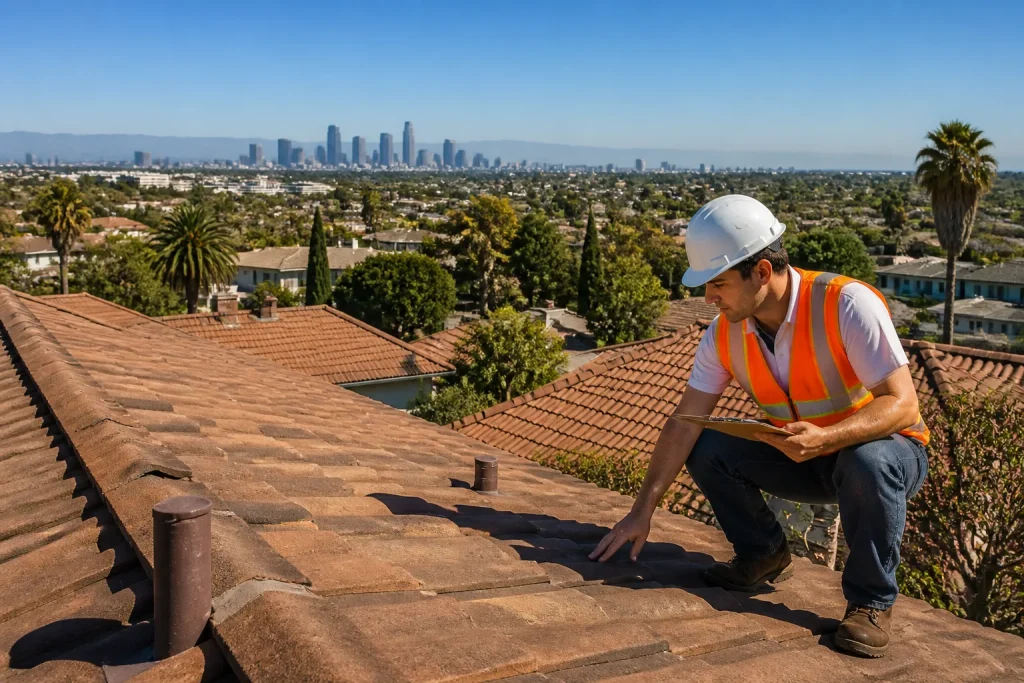
5 Mistakes to Avoid With Roof Inspection
A roof inspection is only as reliable as the person doing it and the terms you agreed to before they climbed the ladder. The five mistakes below cost Los Angeles homeowners real money every year, and most of them happen before the inspector ever sets foot on the roof. If you’d rather skip the guesswork, call Brennan Roofing at (361) 607-0835 and we’ll walk you through what a disciplined inspection actually looks like.
Here’s the core problem: in California, no license is required to call yourself a roof inspector. Any unlicensed person can walk your roof, write a report, and recommend $15,000 in work, legally. Knowing what credentials to require before anyone steps on your roof is the first mistake this piece addresses.
Mistake #1: Accepting a ‘Free’ Inspection Without Understanding the Incentive
Free inspections are not free. They are a sales call with a clipboard. The person inspecting your roof in Los Angeles is usually the same person who quotes the repair, which means every cracked tile and lifted shingle is a line item on a proposal that pays their mortgage. That is a conflict of interest most homeowners never think to question.
A paid independent inspection in the Los Angeles market typically costs between $150 and $300, depending on roof size, pitch, and whether it includes attic access and moisture readings. For that price, you get a report from someone who does not profit from whatever the report recommends. The math is simple: if a free inspection finds $8,000 in “needed” work, you have no way of knowing whether the roof needs it or the inspector needs the commission.
To be clear, we are a roofing company. We repair and replace roofs. And we think free inspections are a bad deal for homeowners unless the scope is locked in writing first. That is why every Brennan Roofing inspection starts with a written price and a written list of exactly what we are checking before anyone climbs up. You know the cost. You know the scope. No surprises at the door.
Mistake #2: Not Specifying What the Inspection Covers in Writing
Not all roof inspections are the same thing, and a surprising number of homeowners do not find that out until after the report arrives. There are three basic levels, and they produce very different information:
- Surface visual: The inspector walks the roof and looks at what is visible. Shingles, tile, flashing, gutters. Takes photos. Done in 30 to 45 minutes.
- Penetration check: Adds a close look at every pipe boot, vent, skylight, chimney flashing, and valley. This is where most leaks in Los Angeles actually start.
- Full attic moisture assessment: The inspector goes into the attic with a moisture meter, checks the underside of the decking, looks for staining, mold, and ventilation problems. This is the only inspection that catches leaks that have not shown up on the ceiling yet.
If you do not specify the level before the inspection happens, you will get the surface visual, because that is the cheapest and fastest. And a surface visual misses the slow leak behind the chimney that has been soaking your sheathing for two winters. Get the scope in writing before the ladder comes off the truck. A real roofer will not blink at that request. If someone hedges, call someone else.
Mistake #3: Treating ‘End of Useful Life’ as a Replacement Emergency
Roof inspection reports use language that sounds urgent but often is not. The phrase that causes the most confusion, and the most unnecessary replacements in Los Angeles, is “end of useful life.”
That phrase means the roof has aged past the manufacturer’s expected service window. It does not mean the roof is actively leaking or about to collapse. An Owens Corning or IKO asphalt shingle roof rated for 25 years that is at year 27 is at end of useful life. It may still have five good years left with a few repairs. It may not. But the phrase itself is not a diagnosis, it is a classification.
Compare that to “active leak risk,” which means the inspector found a specific condition, like cracked flashing or a failed pipe boot, that is letting water in right now. That needs attention quickly.
Here is the practical rule: if a report says end of useful life, ask what specifically failed. If the answer is age alone, you have time to plan and budget. If the answer is a torn underlayment and exposed decking, you do not. We have walked roofs in Los Angeles that were three years past their rated life and bone dry, and we have walked 12-year-old roofs that were failing because of bad original installation. Age is a data point. Specific conditions are the answer.
Mistake #4: Not Being Present During the Inspection
Most homeowners schedule the inspection, go to work, and come home to a report they cannot fully interpret. That is backwards. The inspection is your best chance to learn about your roof, and the best information comes from questions asked while the inspector is looking at the actual roof, not hours later over the phone.
If you can be home for the inspection, here are the questions to ask while the inspector is on the roof in Los Angeles:
- “Show me the worst spot you have found so far.” Every roof has something. If the answer is “nothing,” you hired the wrong inspector.
- “How are the pipe boots and vents holding up?” These are the most common leak points on Los Angeles homes, and they age faster than the roof itself.
- “Is the flashing sealed, or is it relying on old caulk?” Caulk fails. Proper flashing does not.
- “What does the attic look like from underneath?” Staining, soft decking, and mold tell a story the surface cannot.
- “If this were your roof, what would you do in the next 12 months?” This question cuts through the report and gets to a practical answer.
Being there also lets you see how the inspector works. Someone moving carefully, taking photos, and showing you what they see is doing the job. Someone who walks the ridge once and heads for the truck is not doing the job, no matter what the report says.
Mistake #5: Skipping Post-Storm Inspections Because the Roof Looks Fine
Los Angeles does not get the kind of weather that makes national news, but we get enough to damage roofs in ways you cannot see from the ground. Heavy rain, Santa Ana wind gusts, and the occasional hailstorm in the foothills all leave marks that only show up close.
Hail damage on asphalt shingles looks like small circular bruises where the granules have been knocked off. Find one, and you will probably find dozens. Wind damage shows up as lifted or creased shingles, loosened flashing, and displaced tiles, especially along eaves and ridges. None of that is visible from your driveway. And once the damage is there, the clock starts: exposed shingle substrate breaks down fast in LA sun, and a small granule-loss spot becomes a leak within a season or two.
The rule is simple: after any storm with wind over 40 mph or hail of any size, get the roof looked at. Not necessarily a full inspection. A focused post-storm check looking for impact and wind damage is enough. At Brennan Roofing, we do these checks and tell you plainly if there is nothing to worry about. Sometimes the honest answer is that your roof rode out the storm fine. We would rather tell you that than sell you a repair you do not need, which is exactly why the Garrison Standard exists in the first place.
How to Choose an Inspector You Can Trust in Los Angeles
Given everything above, here is a short checklist for hiring a roof inspector in Los Angeles, whether you choose Brennan Roofing or someone else:
- Ask if the inspector is also the contractor who would do the repair. If yes, ask how their compensation works. A straight answer is fine. Evasion is not.
- Get the scope of the inspection in writing, including whether it includes attic access and moisture readings.
- Get the price in writing before the inspection happens. Paid inspections in Los Angeles should run roughly $150 to $300 for a standard single-family home.
- Be present during the inspection and ask the questions above while the inspector is on the roof.
- Read the report looking for specific conditions, not age classifications. “End of useful life” is a planning note. “Failed pipe boot at rear vent” is a repair item.
One more thing worth saying: we pulled a failed roof vent out of a home over in Sherman Oaks last month where the previous inspector had written “roof in good condition, minor wear” eighteen months earlier. The vent boot had cracked all the way through and water had been running down the inside of the wall for a full winter. The owner did nothing wrong. She hired someone who did a surface visual on a roof that needed a penetration check. That is the difference between an inspection and a real inspection, and it is a difference that costs money every year in Los Angeles.
When to Call a Pro
If you have not had your roof looked at in three years or more, or if you just bought a home and the previous owner’s inspection report is thin on roof detail, call a professional. A correctly scoped inspection costs a fraction of what a missed leak will cost you a year from now.
Related services in Los Angeles: Roof Inspection in Los Angeles and Roof Repair in Los Angeles. You can also learn more about Roofing Company in Los Angeles and our approach to Brennan Roofing home.
The Bottom Line
A roof inspection is a tool, not a verdict. The value you get from it depends on three things: who is doing it, what they are checking, and whether you are there to ask questions. Get the scope in writing. Be present. Understand what the report actually says. And if the inspection is free, ask yourself who is really paying for it.
If you’re in Los Angeles and want an inspection done to the Garrison Standard, with a written price before anyone climbs up and a straight answer either way, call Brennan Roofing at (361) 607-0835 for a free estimate. We’ll tell you what your roof needs, and just as often, what it doesn’t.
Frequently Asked Questions
A paid roof inspection in Los Angeles typically costs between $150 and $300 for a standard single-family home, depending on roof size, pitch, and whether it includes attic access and moisture testing. Free inspections are available from many contractors, but they come with a sales incentive that can influence what the report recommends. Get the scope and price in writing before the inspection happens.
Yes, whenever possible. Being present lets you ask specific questions while the inspector is looking at your roof, see the worst spots firsthand, and judge whether the inspection is thorough. The best questions include asking to see the worst area, how pipe boots and flashing are holding up, and what the attic looks like underneath. If you cannot be present, ask the inspector to photograph every area they flag and walk you through the photos by phone before you accept the report.
“End of useful life” means the roof has aged past the manufacturer’s expected service window. It does not mean the roof is actively leaking or failing, and it is not by itself a reason to replace the roof immediately. “Active leak risk” is different: that means the inspector found a specific condition, like cracked flashing or failed vent boots, that is letting water in now. If you see “end of useful life” on a report, ask what specifically failed. If the answer is age alone, you have time to plan.
Yes. Hail and wind damage in Los Angeles is almost always invisible from the ground. Hail leaves circular granule-loss spots that weaken shingles over time, and wind can lift shingles, loosen flashing, and displace tiles along eaves and ridges. After any storm with wind over 40 mph or hail of any size, schedule a focused post-storm check. The cost is small compared to letting a granule-loss area become a leak. Call (361) 607-0835 to schedule one.
Written by Travis Oakley, Owner at Brennan Roofing, serving Los Angeles since 2000.
Need Roofing Help?
Call Brennan Roofing - licensed & insured, here with fast after-hours help in Los Angeles.
(361) 607-0835