
Free roof inspection with deck photos before we talk money - GAF and Owens Corning certified installation
 Before
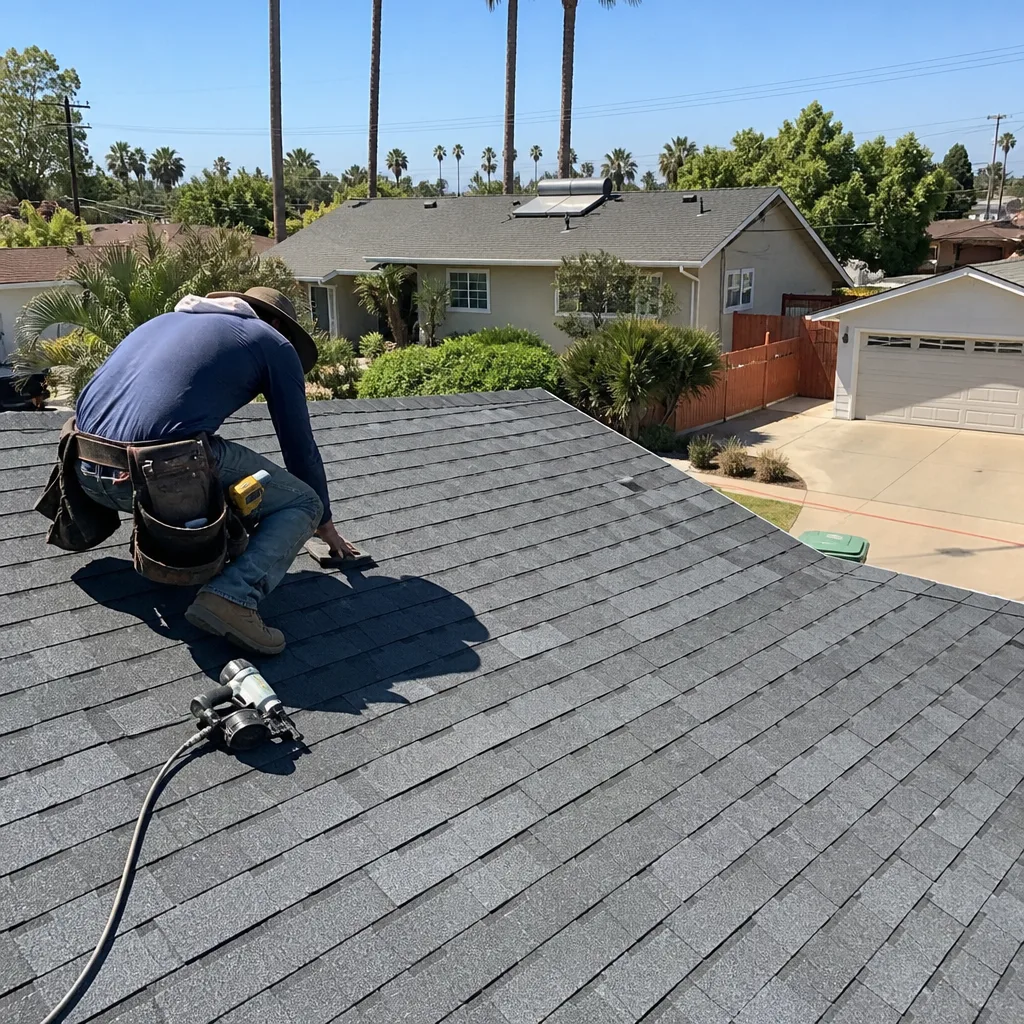 After
After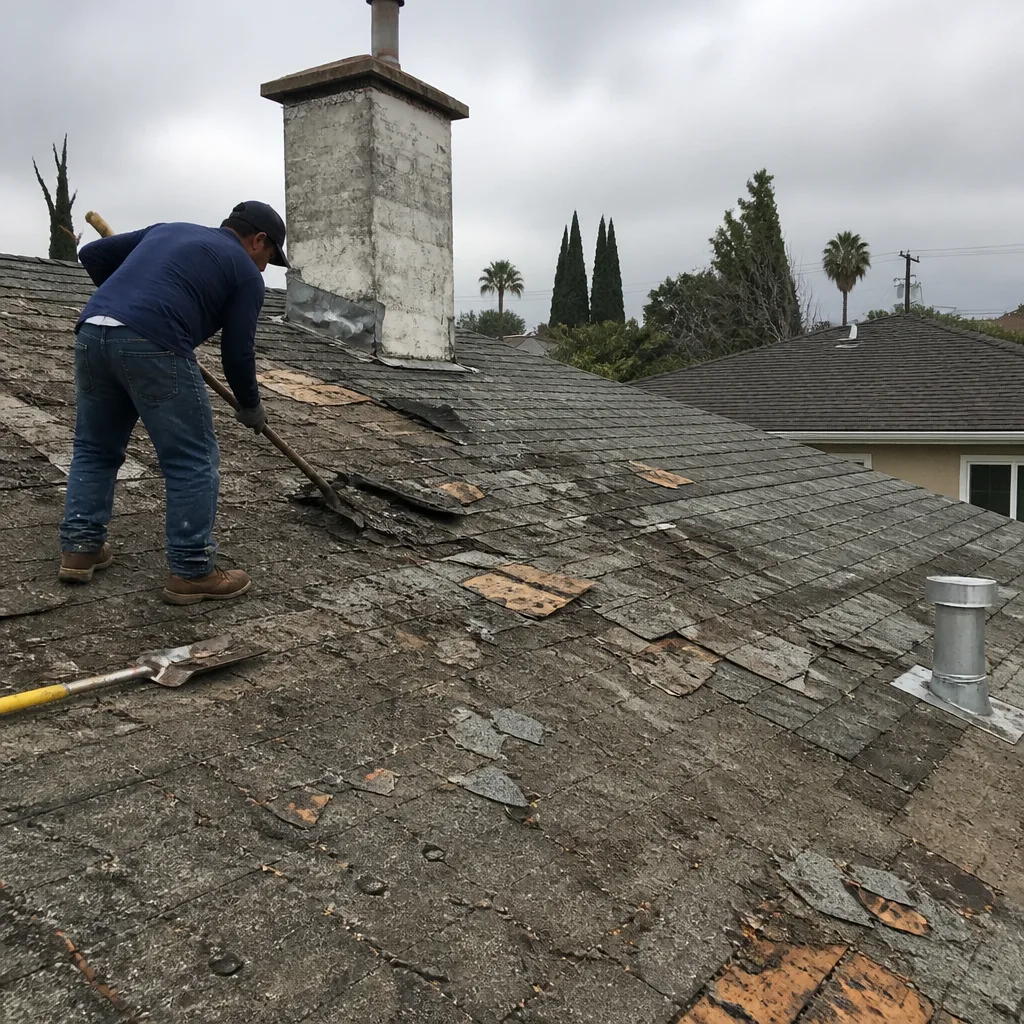 Before
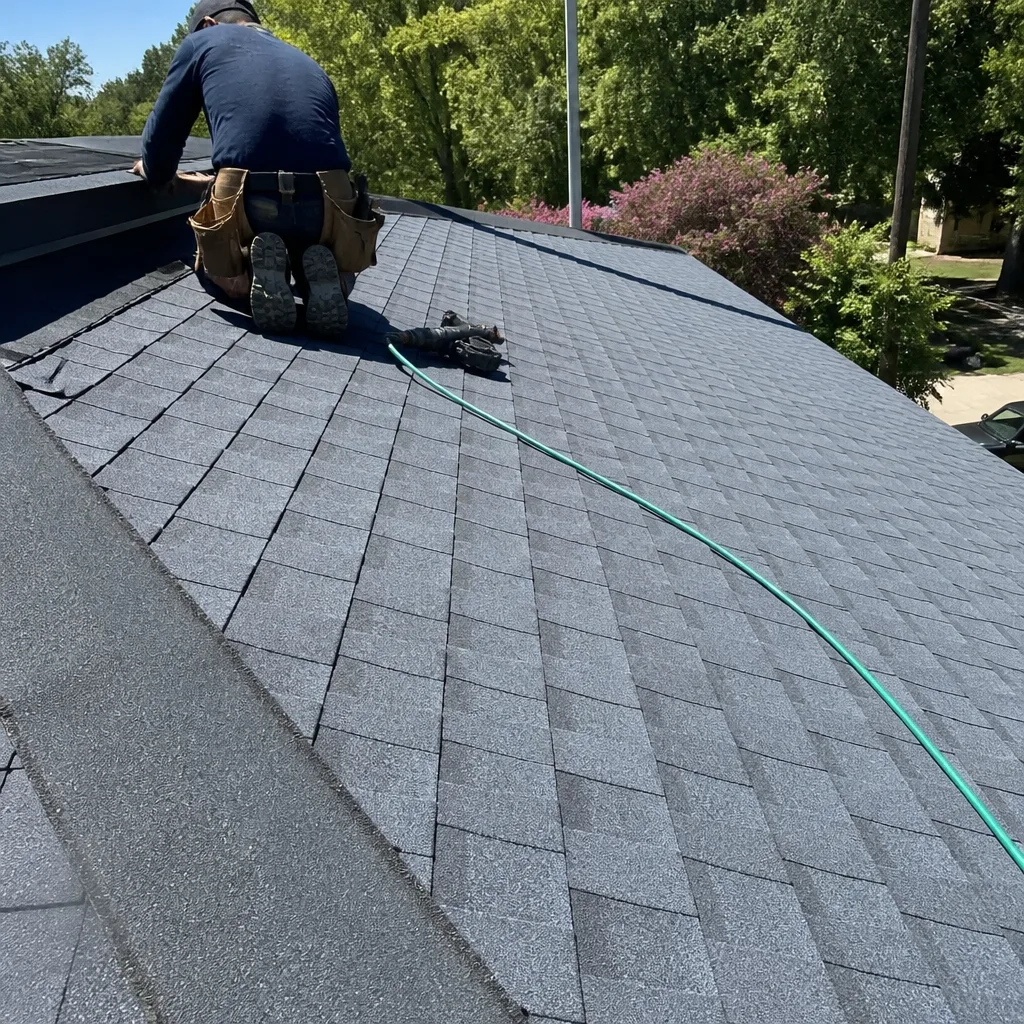 After
After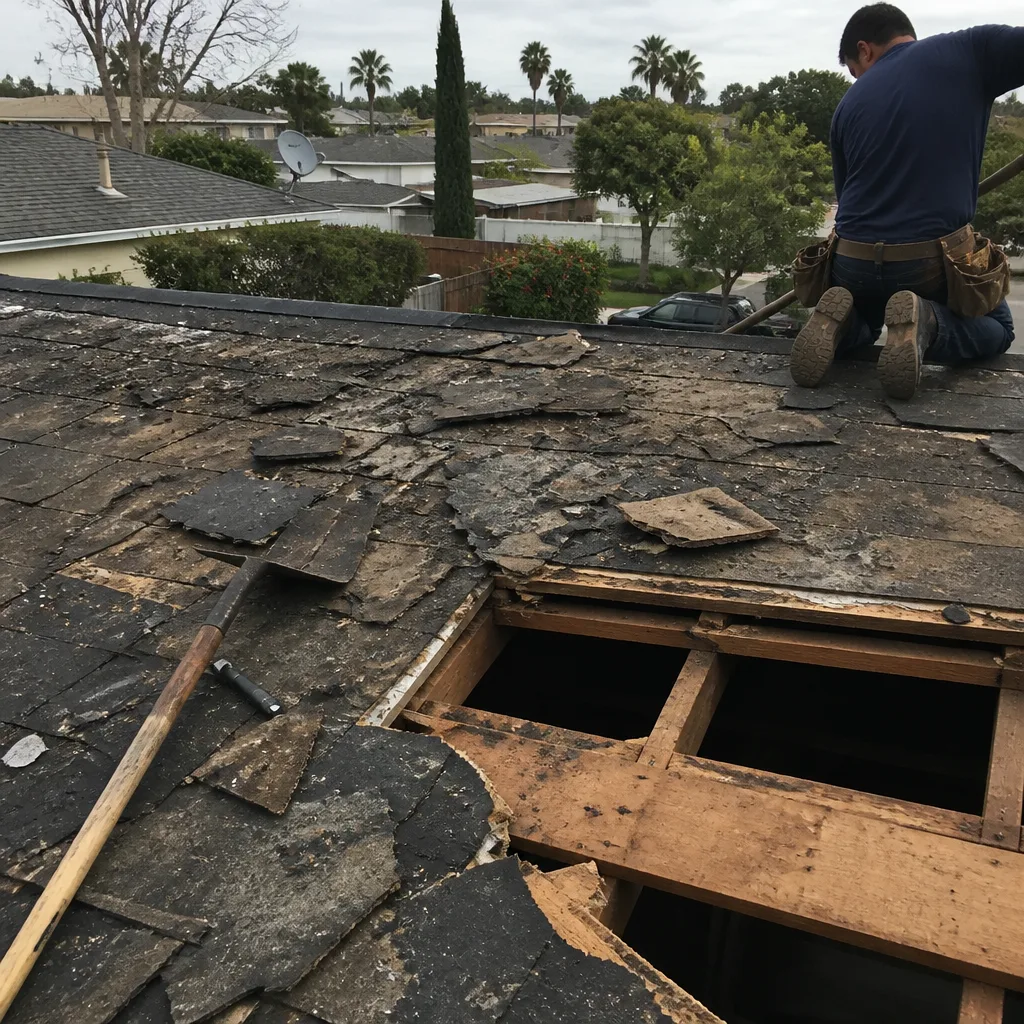 Before
 After
AfterWhat’s Happening
Ice dams form when heat escaping through your roof melts snow near the ridge, and that meltwater refreezes along the colder eaves before it can drain. The result is a wall of ice that traps standing water on your roof, and standing water finds every gap a shingle, flashing, or nail hole has. Left alone, it leaks – and it usually leaks somewhere you won’t see until the ceiling is stained or the drywall is soft.
The ice itself isn’t the root problem. It’s a symptom of a heat and ventilation imbalance in your attic. Warm air from your living space is rising into the attic faster than it can escape, which means the roof deck above the insulated area stays warm enough to melt snow while the overhanging eaves stay below freezing. Water runs downslope, hits the frozen edge, backs up, and sits. Some winters you’ll get a small one that drips a little and dries out. Other winters – heavy snowfall, a few hard freeze-thaw cycles – you’ll get four inches of ice and a water trail down your interior wall. The difference is usually how bad the underlying attic condition is.
Why It Happens
Inadequate Attic Insulation
The most common cause: not enough insulation between your living space and the attic floor, which means heat moves straight up through the ceiling and warms the roof deck. You can sometimes tell from inside – if your upstairs rooms feel drafty or consistently harder to heat than the rest of the house, the insulation layer is likely thin or missing in spots. Ice dams that form in the same location every winter and show a clear pattern along the eaves are a strong indicator here.
Blocked or Inadequate Attic Ventilation
Even a well-insulated attic needs airflow to flush out the warm air that builds up. Ridge vents, soffit vents, and intake channels work together to keep the attic temperature close to the outside air temperature. When those are blocked – by settled insulation, debris, or a prior crew that didn’t reinstall them correctly – heat stacks up and you get the melt cycle that feeds ice dams. A sign: look at your soffit from outside. If there are no visible vent openings, or they’re painted over, airflow is restricted.
Damaged or Missing Flashing at the Eaves
Ice expansion is brutal on metal. If your eave flashing or drip edge was already loose or poorly sealed, a few freeze-thaw cycles will open those gaps wider and give backed-up water a direct path under the shingles. You might notice this as interior water stains that appear right at the top of an exterior wall, just below where the ceiling meets it – classic eave leak territory. A roof inspection will show whether the flashing is intact or needs to be reset and resealed.
Old or Lifted Shingles Along the Lower Roof
Shingles that are curling, cracking, or have lost their bond are already compromised before the ice season starts. When an ice dam forms and water backs up, it finds the weakest point, and old shingles at the eave are often exactly that. If you can see from ground level that the lower edge of your roof looks wavy, cupped, or uneven, or if granules are collecting heavily in your gutters, the shingles there may not be sealing correctly against water intrusion.
What to Do Right Now
- Photograph the dam from the ground before anything melts. Get the full eave line, any visible icicles, and any staining on the fascia or soffit. These photos are useful during the inspection and for any insurance documentation you might need later.
- Check inside for active leaks. Walk the upstairs perimeter – look at the top of exterior walls and the ceiling near the eaves. Press gently with your hand at any discolored area. If it’s soft or wet, set a bucket and mark the spot with tape so the technician can find it quickly.
- Do not attempt to chip or break the ice dam from the roof. Getting up on a snow- or ice-covered roof is genuinely dangerous, and swinging a tool at the ice can puncture or crack shingles you’ll then need to replace on top of everything else. This is a call-a-professional situation, not a Saturday project.
- Stop running exhaust fans that vent into the attic, if any. Older bathroom fans and kitchen fans sometimes terminate in the attic space rather than out through the roof – that warm, moist air contributes directly to the heat buildup causing the dam. Turn them off until the situation is evaluated.
- Note whether the gutters are pulling away from the fascia. Ice weight can start separating gutters from the roofline, which is a separate repair but worth flagging for the technician. Don’t try to push them back in place while ice is still loading them.
How We Fix It
When your local Brennan Roofing technician arrives, the first step is a full roof inspection – eave flashing, shingle condition along the lower courses, soffit and ridge vents, and attic access if the situation calls for it. We’re not guessing at the cause; we’re finding it. From the inspection, we’ll put together a written price for exactly what needs to happen, and that price is in your hand before any work starts. It doesn’t move.
Depending on what we find, the repair path runs through our roof repair service, our roof inspection service, or both. Eave flashing that’s failed gets reset and resealed. Shingles that are no longer doing their job get replaced with material from our manufacturer lines – GAF, CertainTeed, Owens Corning, IKO, Atlas, Tamko, and Boral – chosen to match your existing roof as closely as possible. Most eave and flashing repairs are completed in a single visit. All of it is covered by the 365-Day Done Right Promise: if the repair fails within a year, we come back and make it right at no charge. That’s in writing, not just a thing we say.
Frequently Asked Questions
It depends on how much water is already backed up behind it. A small dam in a cold, dry stretch may not be actively leaking yet, but the moment temperatures fluctuate or snow adds weight, backed-up water will find the first available gap. Interior water damage – soaked insulation, stained drywall, mold starting behind a wall – is far more expensive than a timely roof repair. We’d rather you call before it leaks than after. Call (361) 320-9467 and let your local Brennan Roofing team take a look before it gets worse.
Your local Brennan Roofing team schedules inspections and repair visits as quickly as the calendar allows, and our phones are answered by a live person around the clock – no voicemail, no automated system. Call (361) 320-9467 right now and we’ll tell you exactly when we can get there. We give you a window, and we show up inside it.
No. Every Brennan Roofing job starts with a written price, and that number does not move at the door. If the technician finds additional damage during the repair that wasn’t visible in the initial inspection, we stop and talk to you before anything changes – you decide, in writing, before we proceed. That’s part of how the Garrison Standard works.
Most ice dam damage resolves with targeted repair – eave flashing, lower-course shingles, and sometimes attic corrections – rather than a full replacement. The inspection will tell us which one applies to your roof. If the shingles across the whole slope are at end of life, we’ll say so plainly and walk you through the options. If a repair is the right call, that’s what we’ll recommend. We don’t upsell a replacement when a repair handles the problem.
Get It Fixed
Ice dams don’t fix themselves, and the damage they cause gets worse with every freeze-thaw cycle. Call (361) 320-9467 right now – a live person will answer – or book online. Your local Brennan Roofing team will inspect the roof, put the price in writing, and back every repair with the 365-Day Done Right Promise.
Written by Travis Oakley, Owner at Brennan Roofing, part of the Garrison Partners family since 2000.
What Our Customers Say
"Storm took off a section of shingles. They were here next morning to tarp it and finished the repair that week."
- Elaine D."Ridge vent added and the attic is cooler. Fair price compared to the other two quotes."
- Vernon C."Neat, quiet, and disciplined crew. Magnet swept the yard after."
- Tonya R.