
Last updated October 9, 2026
Free roof inspection with deck photos before we talk money - GAF and Owens Corning certified installation
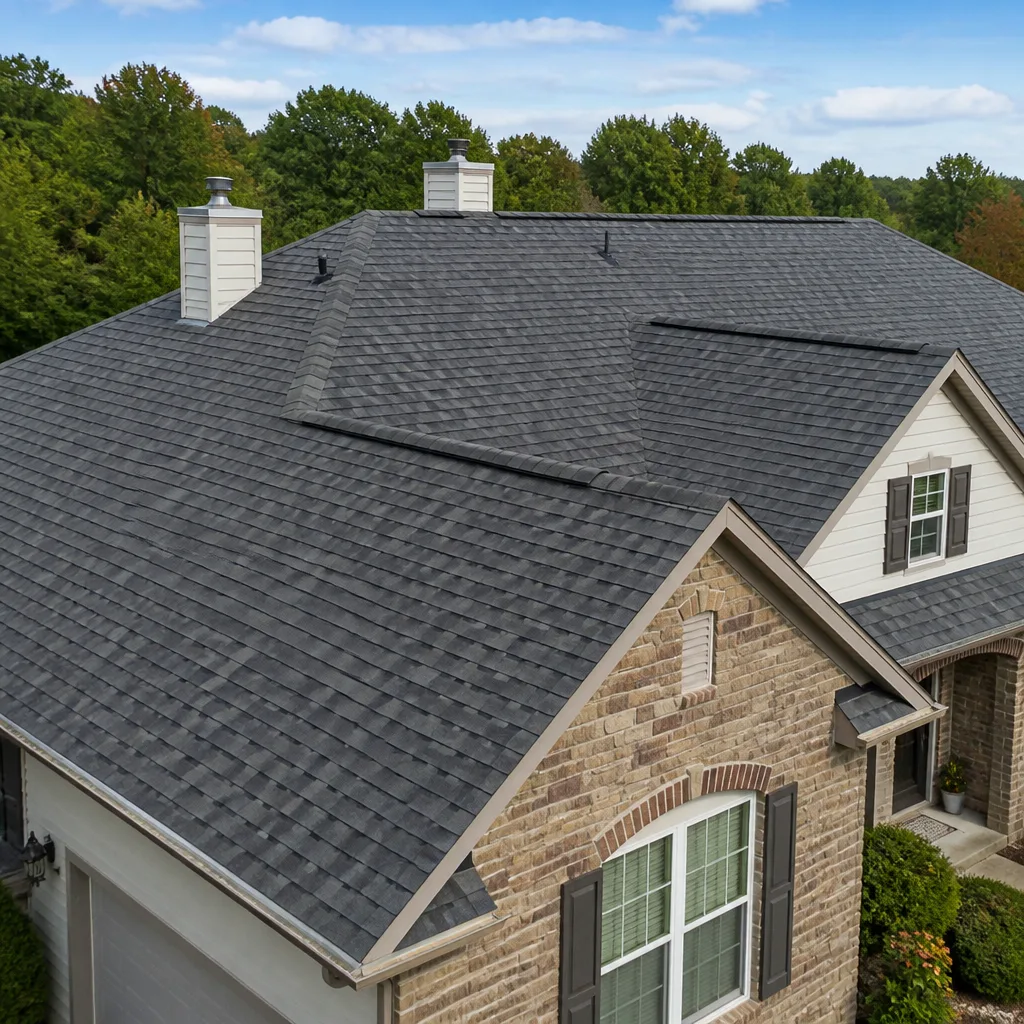
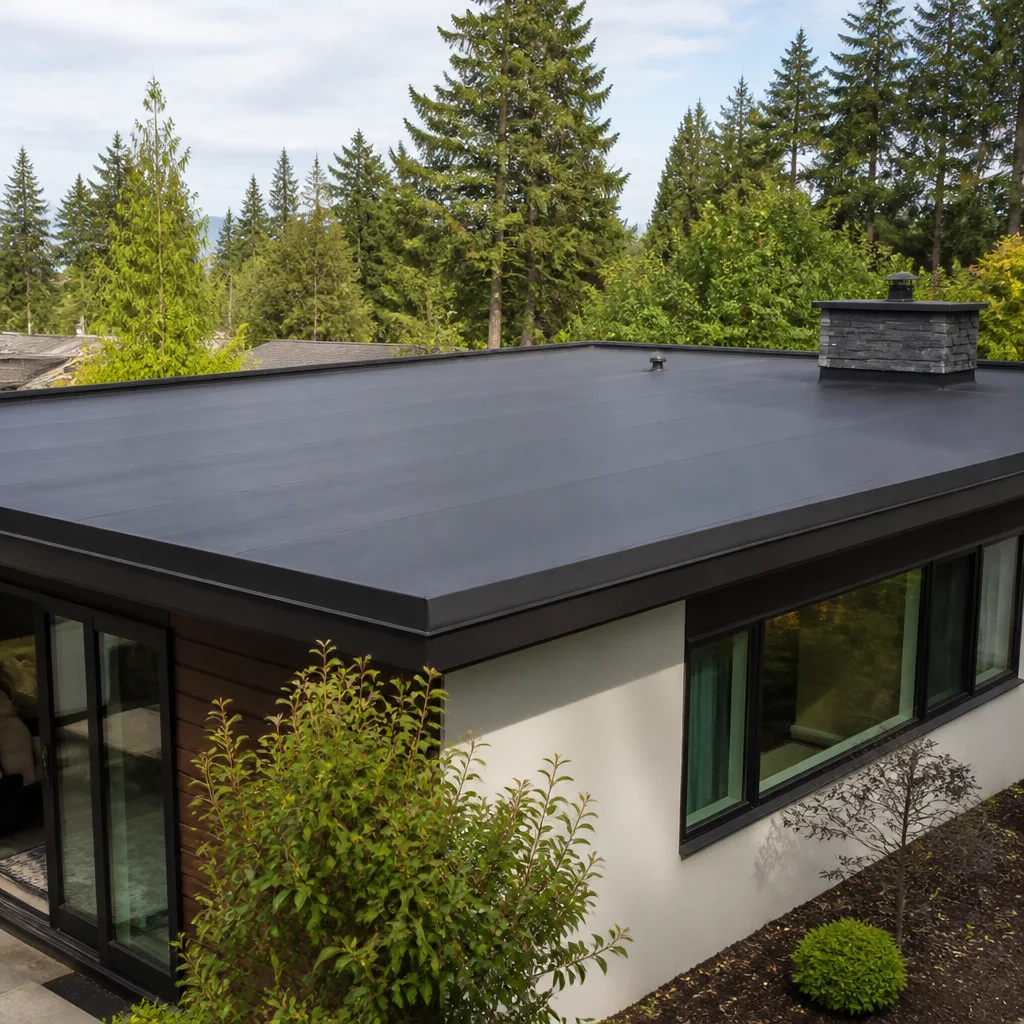
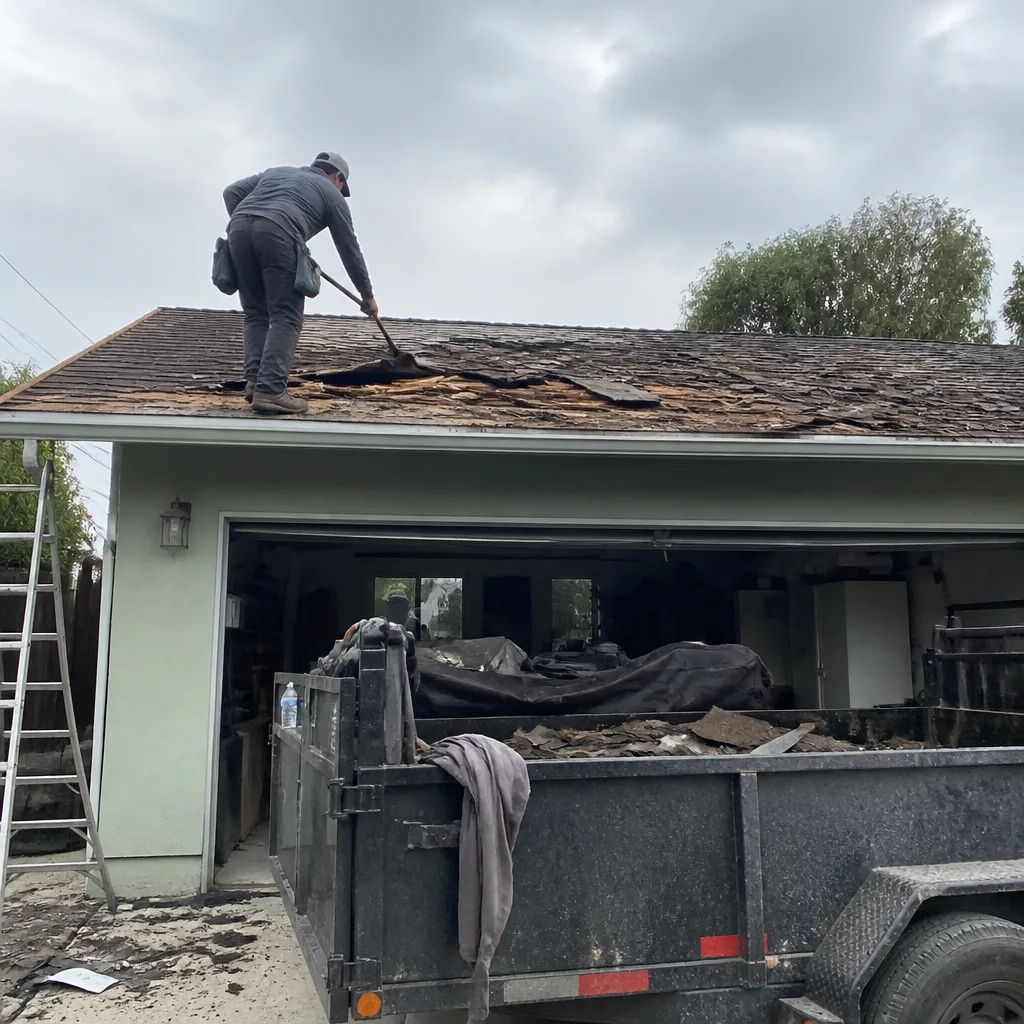 Before
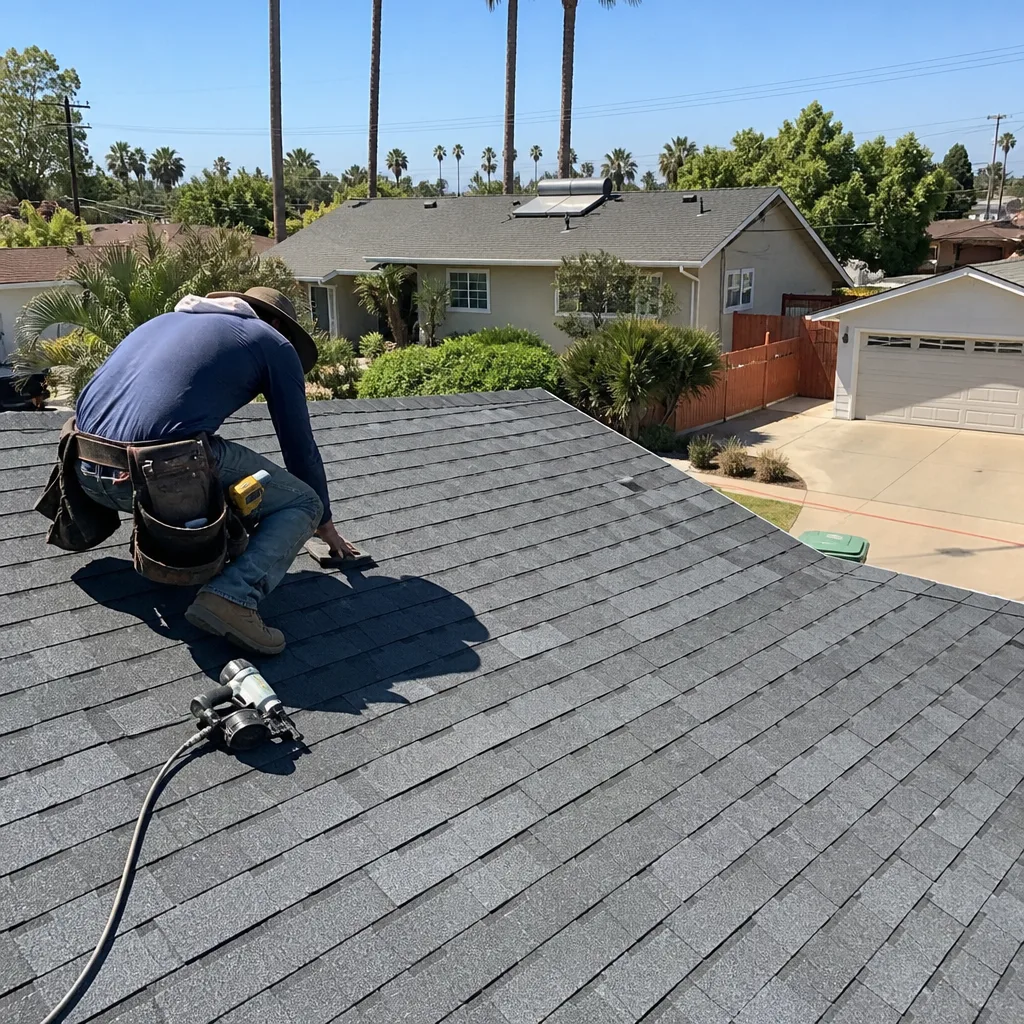 After
After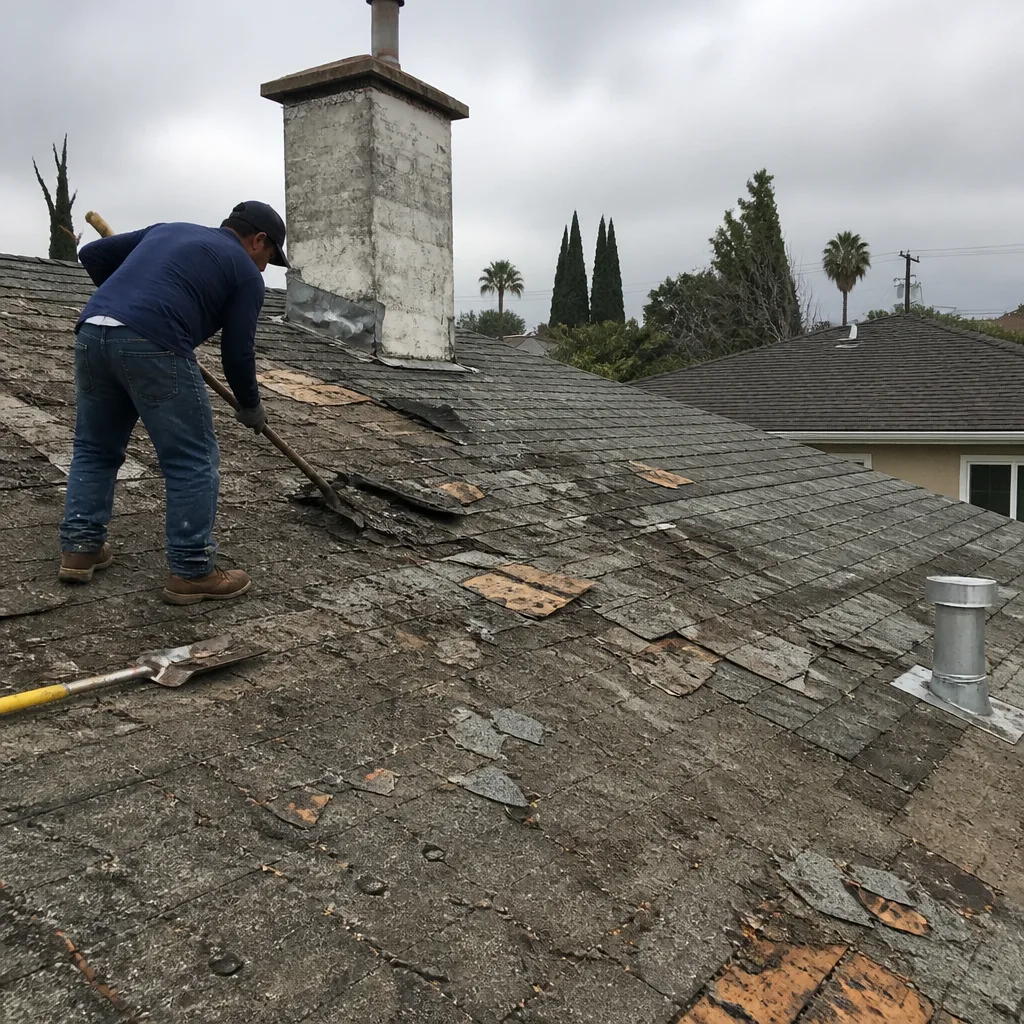 Before
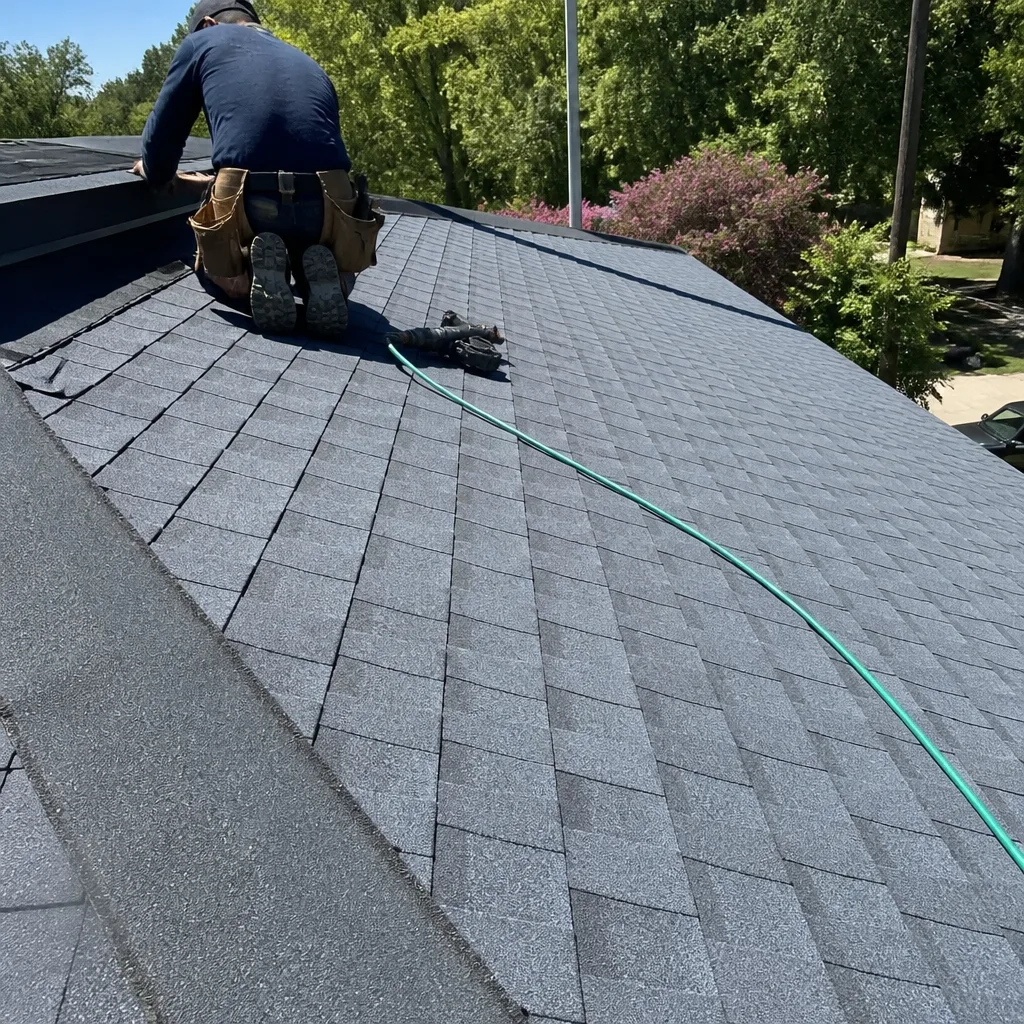 After
After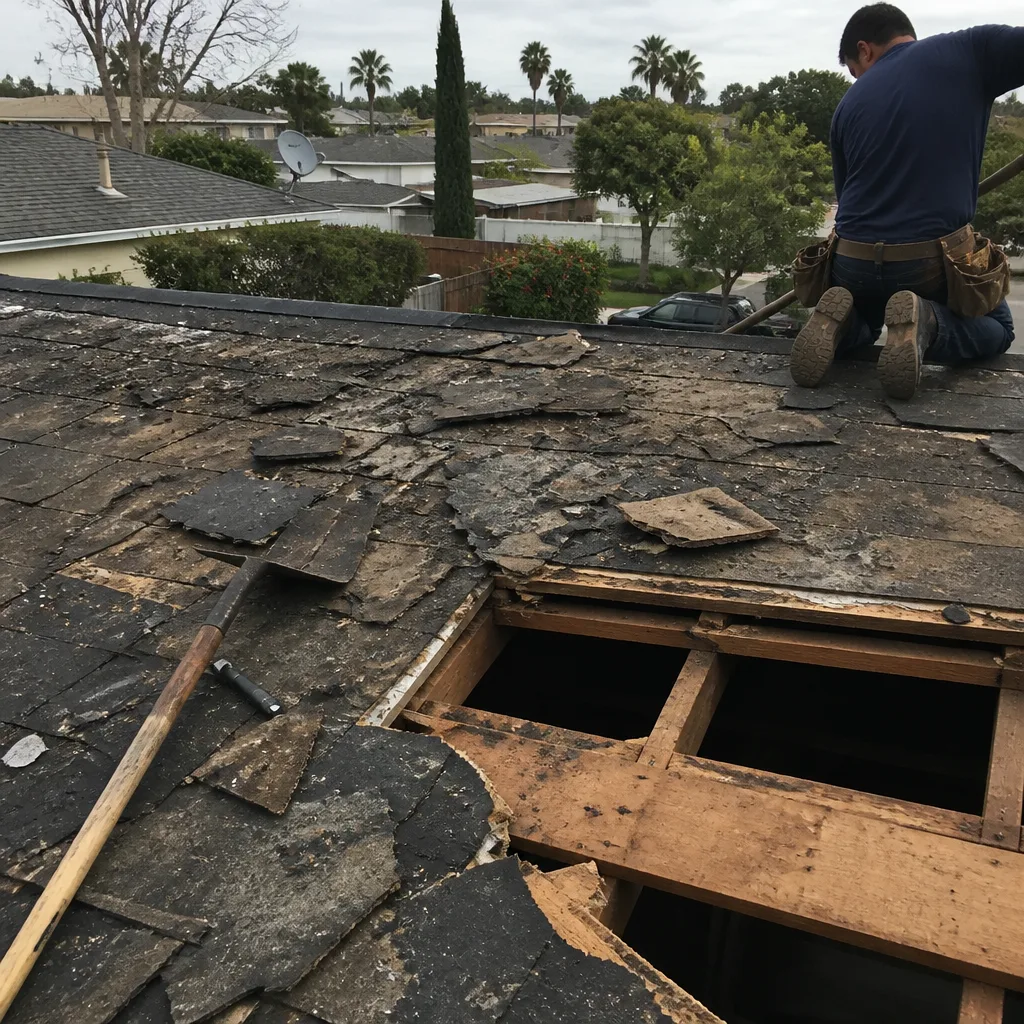 Before
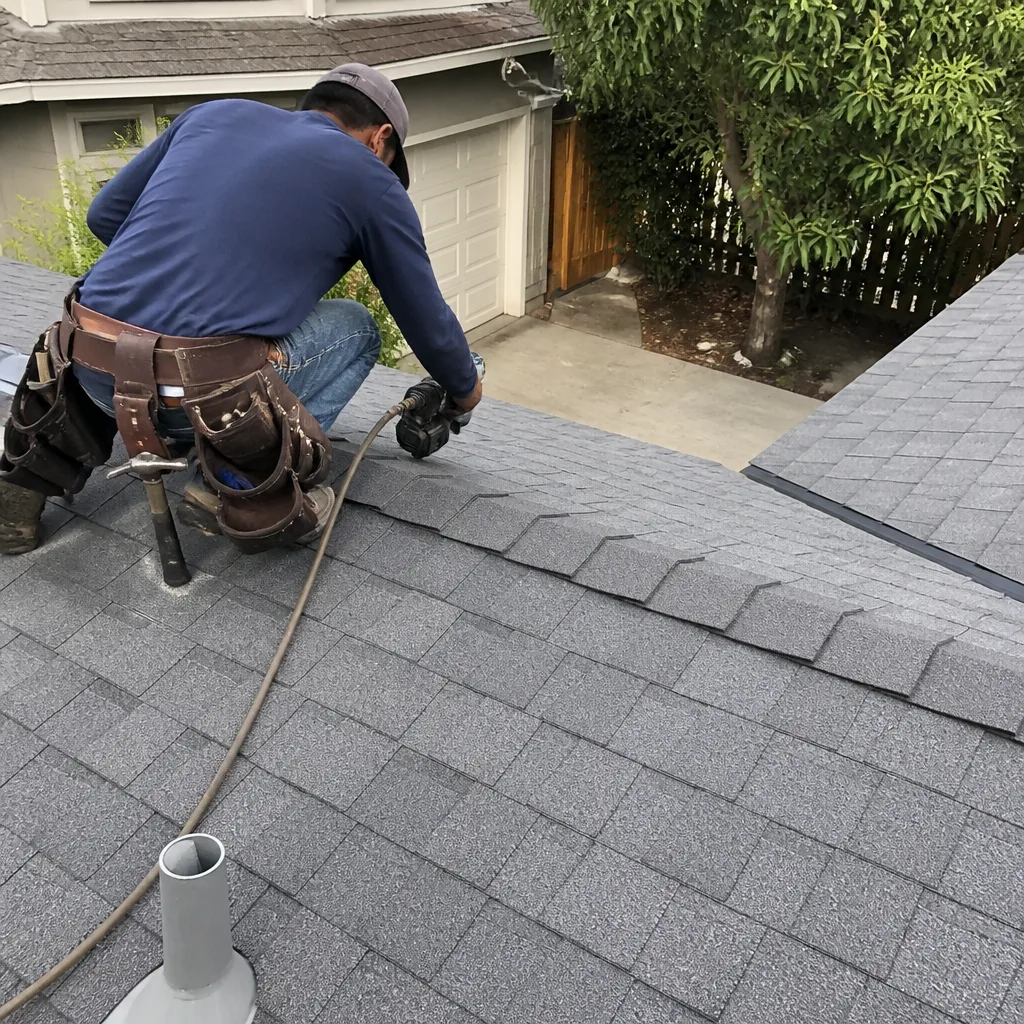 After
AfterHow Long Does Roofing Company Take? Timelines and What to Expect
A standard 2,000-square-foot asphalt shingle replacement in Los Angeles should take one to two days of production. If a roofer quotes you a week for that scope, ask why, and expect a specific answer. The honest variables are few: roof type, square footage, access, and what’s hiding under the old material. This guide breaks down realistic production timelines, the four legitimate reasons a job runs long, and the contract language that protects you if a crew disappears after day one.
Quick Answer
Most asphalt shingle roofs in Los Angeles take 1 to 3 days to replace once materials are on site and the old roof is torn off. Tile, flat, and steep-slope jobs run 3 to 7 days depending on square footage and decking repairs. Total calendar time, from signed contract to final inspection, typically spans 1 to 3 weeks because permit scheduling, material delivery, and weather all sit outside the production window.
Table of Contents
- Production Timelines by Roof Type
- Calendar Time vs. Production Time: What You’re Actually Waiting On
- The Four Legitimate Delay Causes (And How to Spot Excuses)
- How LA County Permit Inspections Add Time
- What “Substantial Completion” Means in a Roofing Contract
- Contract Provisions That Protect You If a Crew Stops Showing Up
- What You Should Do While the Job Is Underway
- Common Mistakes to Avoid
- When to Call a Professional
- Frequently Asked Questions
- The Bottom Line
Production Timelines by Roof Type
Production time is the number of days a crew is actually on your roof. It excludes permit waits, material lead times, and rain days. Here are real benchmarks for the four most common roof systems in Los Angeles, based on our experience across the city and the San Fernando Valley.
Asphalt Shingle: 1 to 3 Days
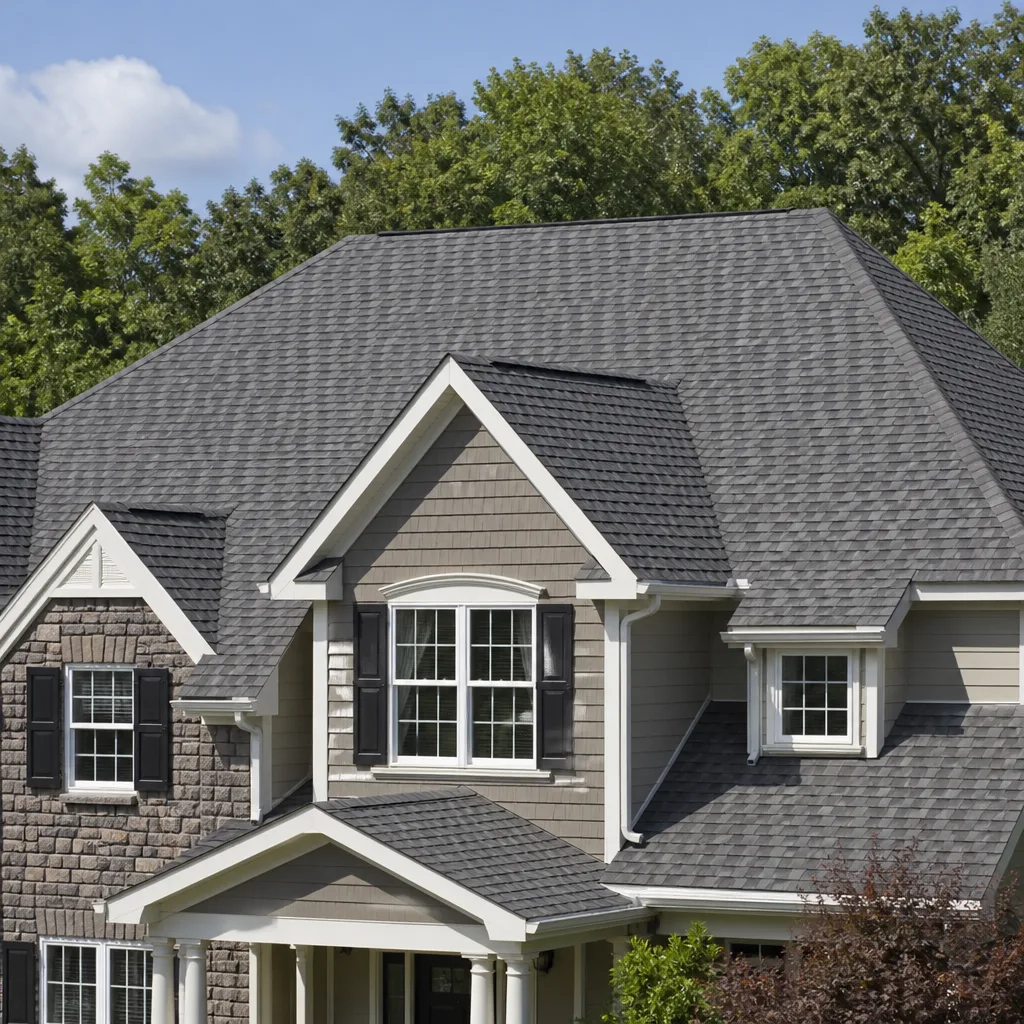
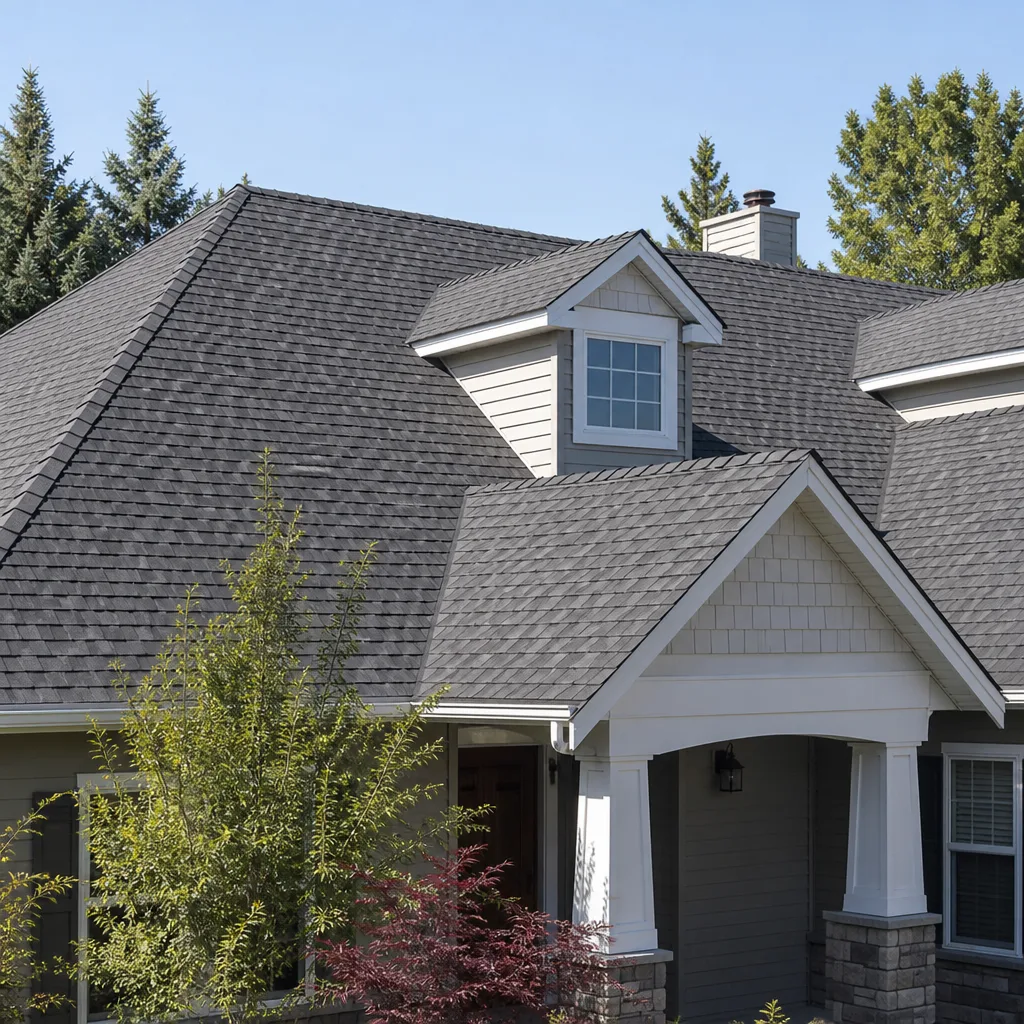
A 2,000-square-foot roof with a standard pitch takes one full day to tear off and one full day to install new shingles, underlayment, and flashing. A smaller roof, say 1,200 square feet in a neighborhood like Westchester or Mar Vista, can often be done in a single long day with a six-person crew. Larger homes in Brentwood or Pacific Palisades, 3,500 square feet and up, run two to three days. Shingle is the fastest system because the material is lightweight, the installation method is repetitive, and most Los Angeles roofers maintain full-time shingle crews.
Shingle brands matter for both cost and lead time. We price and install materials from Brennan Roofing home lines including GAF, CertainTeed, Owens Corning, IKO, Atlas, Tamko, and Boral. GAF and CertainTeed typically have the strongest Los Angeles warehouse stock, so shingle jobs using those lines rarely wait on material. Special-order colors or niche lines like Tamko can add three to seven days of lead time before production even starts.
Concrete or Clay Tile: 3 to 7 Days
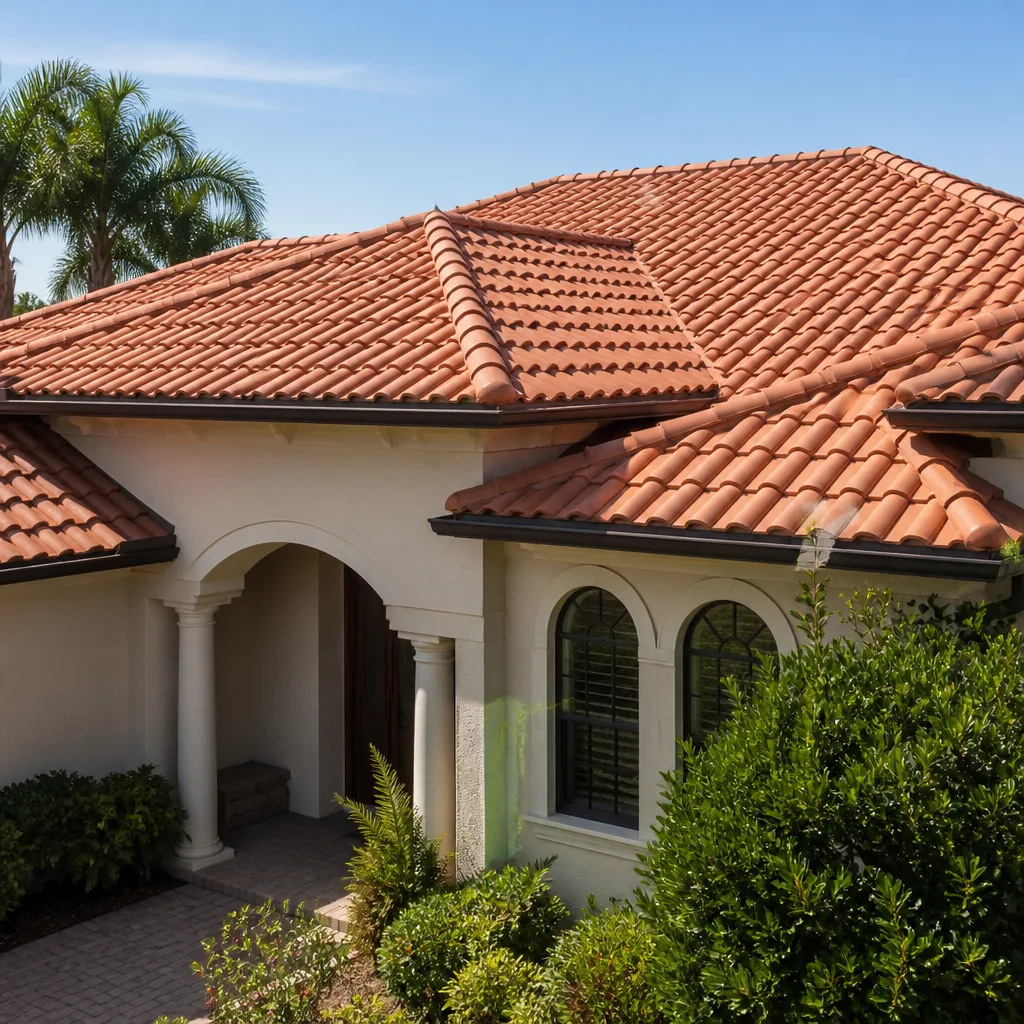
Tile roofs in Los Angeles run slower for two reasons. First, tear-off is heavier: a 2,000-square-foot tile roof produces roughly 20,000 pounds of debris. That’s several dumpster loads and a slower removal process. Second, tile installation is placement-intensive. Each tile is set individually, and the roof has to be walkable in sections without cracking what’s already laid.
A 2,000-square-foot concrete tile roof in a neighborhood like Sherman Oaks or Studio City typically takes three to four production days. Clay tile, especially curved profiles from Boral, runs four to six days because the material is more fragile and the install rate is lower. Expect to add a day if the underlying decking needs patch work.
Modified Bitumen Flat Roof: 2 to 4 Days
Flat roofs are common on mid-century homes in Los Angeles, particularly in the flats of Culver City, Mid-Wilshire, and large swaths of the Valley. Modified bitumen, often called “mod bit,” is installed in torched or self-adhered layers. A typical 1,500 to 2,000-square-foot mod bit replacement takes two to three days of production. If the roof has multiple penetrations, HVAC curbs, skylights, or a lot of parapet wall flashing, add a day. Torch-down work requires fire watch protocols, especially in Los Angeles during the dry season from June through November.
TPO Flat Roof: 2 to 4 Days
TPO is a white single-ply membrane, usually heat-welded at the seams. A 1,500 to 2,000-square-foot TPO roof takes two to three days if the deck is sound and the roof has a simple layout. Complex roofs with multiple levels or extensive edge metal run three to four days. TPO is a common choice for Los Angeles homeowners because the reflective surface cuts cooling costs during summer heat waves in the Valley.
Steep-Slope and High-Access Roofs: Add 1 to 2 Days
Homes in the Hollywood Hills, Mount Washington, and parts of Silver Lake often have steep pitches, limited staging space, or both. Crews move slower when every bundle of shingles has to be carried by hand up a hill or set with a crane. A steep-slope shingle job that would take one day on a flat lot in Torrance can take two to three days in a hillside neighborhood. This is production reality, not contractor padding.
Calendar Time vs. Production Time: What You’re Actually Waiting On
Homeowners often hear “one day” and think the entire process takes one day. In practice, a one-day production job typically spans two to four weeks of calendar time. Here’s the sequence and where the days go.
- Contract signed and deposit paid: Day 0. Work does not start until you have a written price in hand, per The Garrison Standard we operate under. No exceptions.
- Permit application filed: Day 1 to 2. For most Los Angeles roofing jobs, the permit is filed online through the Los Angeles Department of Building and Safety (LADBS).
- Permit approval and fee payment: Day 3 to 10. Simple reroof permits usually clear within a week, but city load varies. Summer is busier.
- Material ordered and delivered: Day 3 to 14, running parallel to the permit where possible. Stocked shingle lines are quick. Tile and custom flat-roof membrane can take longer.
- Production: The 1 to 7 days of actual on-site work.
- Inspection: Day after production, typically. LADBS inspectors schedule next-day in most cases.
- Final walkthrough and payment: Same week as inspection.
The calendar expands because paperwork and materials move on their own schedules. A good roofer manages those parallel paths so production starts the same week the permit clears, not the week after. When you’re comparing quotes in Los Angeles, ask specifically: “When does the permit go in, and what day are you on-site once it’s approved?” A vague answer is a red flag.
The Four Legitimate Delay Causes (And How to Spot Excuses)
There are four reasons a roofing job in Los Angeles legitimately runs past its original production window. Everything else is usually scheduling mismanagement dressed up as an explanation. Here’s what’s real and what’s not.
1. Permit Inspection Scheduling
Once the roof is installed, LADBS must inspect it before the job is closed out. The production work may be done in two days, but the inspector’s availability controls the completion date. In busy months, particularly May through September, inspection appointments can push three to five business days out. This is outside the roofer’s control, but a competent roofer schedules the inspection request the moment the last nail goes in, not three days later.
2. Material Delivery
Shingle roofs using stock GAF, CertainTeed, or Owens Corning colors rarely wait on material in Los Angeles. The distribution network is deep. Tile roofs are different. Some Boral clay profiles are manufactured to order and can take two to four weeks. Flat-roof accessories, tapered insulation, and custom drip edge can also carry lead times. Your roofer should lock material availability before scheduling production, not after tear-off. At Roofing Company in Los Angeles we quote lead times in writing so there is no surprise gap between the contract and the first day on-site.
3. Decking Rot Discovered at Tear-Off
This is the delay homeowners fear most, and it’s legitimate. Los Angeles homes built in the 1940s through 1960s often have plywood or skip sheathing decking that has been wet at some point. You can’t confirm deck condition until the old roof is off. If a section of decking is rotted, it must be replaced before new underlayment goes down. This is building code, not upselling. A typical decking repair adds half a day to a full day of production, depending on how many sheets are replaced.
Here’s how a disciplined roofer handles it. The contract includes a per-sheet price for decking replacement, stated up front, so when tear-off reveals rot the cost is already on paper at a known rate. The Garrison Standard means the price for that work was written before any work began. You approve the additional work with a signature, not a handshake.
4. Weather
Los Angeles gets roughly 15 inches of rain per year, almost all of it between December and March. Spring and summer roof replacements rarely lose days to weather. But a January reroof in Los Angeles can lose three to four production days to rain, because you cannot install shingles or TPO over wet underlayment. Tile is slightly more forgiving, but mastic and flashings still need dry conditions. Reputable roofers build a weather buffer into winter schedules and keep you updated by phone. Excuses like “the crew got pulled to another job” are not weather and not your problem.
How LA County Permit Inspections Add Time
Los Angeles has one of the more structured permitting processes in the country, and it directly affects how long your roofing job takes from signed contract to final sign-off. Unlike smaller municipalities where a roofer can pull a permit over the counter same-day, LADBS runs most reroof permits through its online system, with plan review times that vary by office and season.
A standard asphalt shingle reroof in Los Angeles typically gets permit approval in three to seven business days. Tile and flat-roof jobs with structural considerations can take longer, especially if the home is in a designated historic district or hillside overlay. Homes in Los Angeles hillside zones may trigger additional review for weight load, which can add one to two weeks to the calendar.
What should your roofer be doing during this window? Three things. First, filing the permit within 48 hours of contract signing. Second, ordering materials so they arrive the same week the permit clears. Third, communicating the inspection date as soon as it’s scheduled. If your roofer goes silent for two weeks and then says “we’re waiting on the city,” ask for the permit number. LADBS tracks every permit online, and you can check status yourself. A roofer who won’t give you the permit number has not filed it.
The inspection itself is usually quick, 15 to 30 minutes. The inspector checks nailing patterns, flashing details, underlayment exposure, and final cleanup. After a pass, you get a signed inspection card and the job is legally complete. If the inspector fails the job, the roofer must correct the issue and schedule a reinspection. This adds days, not weeks, unless the failure is structural.
What “Substantial Completion” Means in a Roofing Contract
Substantial completion is the contract term for the moment the roof is functional, watertight, and usable for its intended purpose, even if minor punch-list items remain. It matters because it triggers two things: the warranty start date and, in many contracts, the final payment obligation.
In a well-written Los Angeles roofing contract, substantial completion is defined as the point where the roof passes final inspection and all installed materials are in place. Minor items, like a piece of trim that needs a touch-up or a gutter hanger adjustment, do not hold up substantial completion. But missing flashing, uninstalled ridge cap, or an unsealed penetration are not minor. Those are incomplete work.
Why the timeline clause matters as much as the price: a contract with a price but no completion date gives the roofer no obligation to finish on any particular schedule. A contract with a completion date but no remedy for missing it gives you no leverage. Strong contracts include a stated window for substantial completion, typically expressed as “within X days of permit approval” rather than a calendar date, since permit timing is outside the roofer’s control. That window should match the production timelines listed above for your roof type.
At Brennan Roofing, every job carries a written completion window and a 365-Day Done Right Promise. If the work isn’t done right, in writing, we make it right at no charge, including a free second visit if a repair fails within the guarantee period.
Contract Provisions That Protect You If a Crew Stops Showing Up
A crew that disappears after day one is one of the most common roofing complaints in Los Angeles, and the contract is your only real protection. Three specific provisions do the heavy lifting.
Milestone Payments, Not Upfront Deposits
Never pay the full job, or half the job, before any work starts. Yes, roofers commonly require a deposit to order materials. That should be 10% to 30% of the contract, never more. The balance should be structured as milestone payments: a portion at tear-off complete, a portion at installation complete, and the final balance at final inspection pass. Milestones keep the roofer’s incentive aligned with finishing. A roofer holding 70% of your money has little financial reason to rush back.
A Written Completion Date or Window
As covered above, the contract must state when substantial completion will occur. “Reasonable time” is not a completion date. It’s a legal opening. Insist on a specific window tied to permit approval, written in the contract before you sign. The Garrison Code we operate under includes this on every job: the price goes on paper before any work begins, and the schedule goes on paper with it.
Lien Waiver Timing
In California, subcontractors and material suppliers can file a mechanics lien against your home if the roofer doesn’t pay them, even if you paid the roofer in full. The protection is a conditional lien release, then an unconditional lien release, collected at each payment milestone. Before you make the final payment, the contract should require the roofer to provide unconditional lien waivers from the company and all subcontractors and material suppliers on the job. Without this clause, you can pay in full and still get a lien notice six months later. It’s one of the least understood protections in Los Angeles roofing contracts, and the most important.
Ask any roofer you’re considering: “Do you provide lien waivers at final payment?” If they pause or say it’s not standard, keep looking. At Roof Repair in Los Angeles we provide lien waivers as standard practice on every job, and our technicians are background-checked and arrive in uniform.
What You Should Do While the Job Is Underway
Your involvement during production is limited, but a few specific actions keep the timeline on track.
- Be reachable on day one. If the crew discovers decking rot at tear-off, someone needs to approve the repair quickly. A two-hour delay waiting for your call can push a one-day job into a second partial day.
- Keep the staging area clear. Move cars out of the driveway or street parking zone the crew requested. If the crew has to wait for a tow or a neighbor’s car to move, production stops.
- Secure pets and communicate access needs. A dog in the yard means the crew works around it or waits. Both slow the roof down.
- Do a daily walk-around each evening. Not on the roof, just around the property. Look for debris, stray nails, and damaged landscaping. A disciplined crew cleans as they go. If you see nails in the grass, say something that day, not after the final check is cashed.
- Track the inspection schedule. After production ends, confirm with the office when the inspection is scheduled and what the result was. Don’t assume. Ask.
Common Mistakes to Avoid
- Signing a contract with no completion date. You now have a price and no schedule. In Los Angeles, a busy roofer with no completion obligation may push your job weeks while they finish other contracts.
- Paying more than 30% upfront. The moment the roofer holds most of the money, the schedule is yours at their convenience. Milestone payments keep leverage where it belongs.
- Ignoring the permit requirement. Skipping permits saves a few days and puts you at legal and insurance risk. If the roofer suggests it, walk away. LADBS requires permits for reroofing, full stop.
- Choosing the cheapest bid on a hillside home. Steep-slope roofing in Los Angeles requires proper tie-offs, safety equipment, and experience. The low bidder often underbids safety and staging, which leads to a longer timeline and a sloppier roof.
- Not asking about lien waivers. You pay in full, the roofer doesn’t pay the supplier, and six months later you get a lien notice on a home in Los Angeles you’ve already paid to roof. The document is free. The protection is not automatic.
- Assuming decking is fine because the old roof looked okay. Deck condition is invisible under shingles. A responsible roofer prices decking replacement per sheet up front so there’s a known number when the roof opens up.
- Scheduling a winter reroof with no weather buffer. A January roof in Los Angeles can lose a week to rain. A spring or summer roof rarely loses a day. The season you sign determines the calendar risk.
When to Call a Professional
You should have a professional roofer inspect your roof if you see water stains on the ceiling, missing shingles after a wind event, granules collecting in gutters, or cracked tile visible from the ground. These are indicators of active deterioration, and Los Angeles’s wet season turns a small opening into interior damage quickly. A professional inspection tells you what’s wrong, what it costs to fix, and how urgent it actually is. Brennan Roofing offers free estimates in Los Angeles. Call (361) 320-9467 to schedule one, and you’ll get a written price before any work starts, with no pressure to sign.
Frequently Asked Questions
Most asphalt shingle replacements take 1 to 3 days of on-site production, while tile and flat roofs run 3 to 7 days. Total calendar time from contract to final inspection typically spans 1 to 3 weeks, with permit scheduling and material delivery accounting for most of the gap. Call (361) 320-9467 with your roof type and square footage, and we’ll give you a production estimate on the spot.
Yes, a simple asphalt shingle roof between 1,000 and 1,500 square feet with standard access can often be torn off and reroofed in a single day with a full crew. Larger roofs, steep pitches, and tile or flat systems require two or more days. One-day production does not mean one-day calendar; the permit still needs to clear and the inspection still needs to pass.
Permit inspection scheduling and decking rot discovered at tear-off are the two most common legitimate delays. LADBS inspection availability pushes completion by a few days in busy months, while rotted decking requires replacement before new material goes down. Both are manageable when the contract prices decking per sheet up front and the roofer files the permit within days of signing.
Asphalt shingle replacement in Los Angeles typically runs $7,000 to $14,000 for an average home, tile runs $18,000 to $35,000, and flat roofs fall between $10,000 and $20,000 depending on the system and square footage. These are production ranges, not quotes. The price goes on paper before any work starts when you call (361) 320-9467 for a free estimate.
It should not, except for decking repair that was priced per sheet in the original contract. A written contract with a stated decking rate means the only variable is how many sheets get replaced, not whether the roofer decides to charge more. If a roofer hands you a change order for work that was visible before tear-off, that’s a contract problem, not a roof problem.
Yes. Brennan Roofing files the permit with LADBS as part of every reroof and repair that requires one. We handle the paperwork, the inspection scheduling, and the final sign-off, and we provide the permit number so you can verify status online at any point. Call (361) 320-9467 to discuss your project.
In Los Angeles, LADBS typically schedules inspections for the next business day after the roofer requests it. Busy summer months can push that to two or three business days. Your roofer should request the inspection the same day production wraps, not days later.
The Bottom Line
The honest answer to “how long does a roofing company take” is that production is fast and calendar is slow. A shingle roof goes on in one to three days. A tile roof takes three to seven. The weeks around that production come from permits, materials, inspections, and weather. The protections are simple: a written completion window, milestone payments, a per-sheet decking price, and lien waivers at final payment. If a Roof Inspection in Los Angeles reveals your roof is near the end of its life, get the contract right and the timeline takes care of itself. Brennan Roofing operates under The Garrison Standard: written price before any work starts, background-checked uniformed technicians, and a 365-Day Done Right Promise in writing on every job. Call (361) 320-9467 for a free estimate, and you’ll know exactly what the job costs and how long it takes before you sign anything.
Written by Travis Oakley, Owner at Brennan Roofing, serving Los Angeles since 2000.