
Last updated October 9, 2026
Free roof inspection with deck photos before we talk money - GAF and Owens Corning certified installation
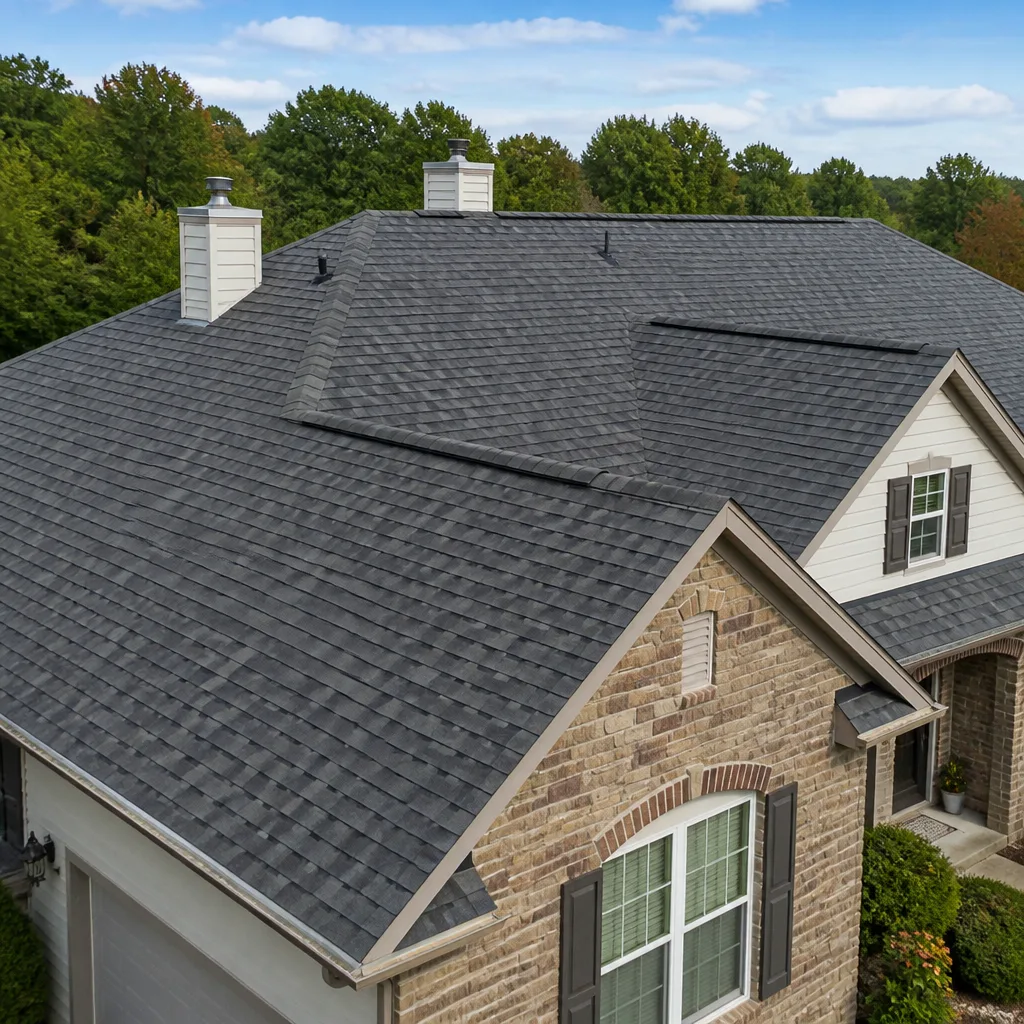
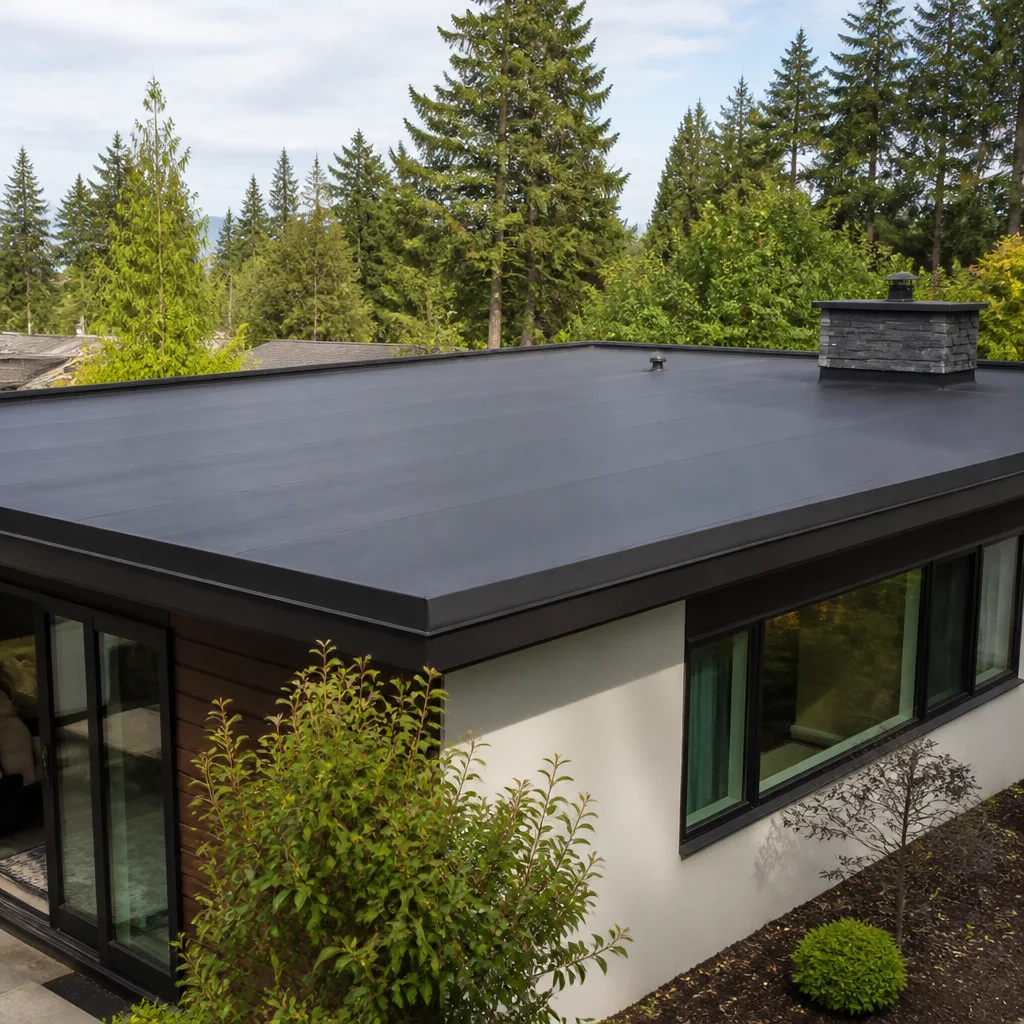
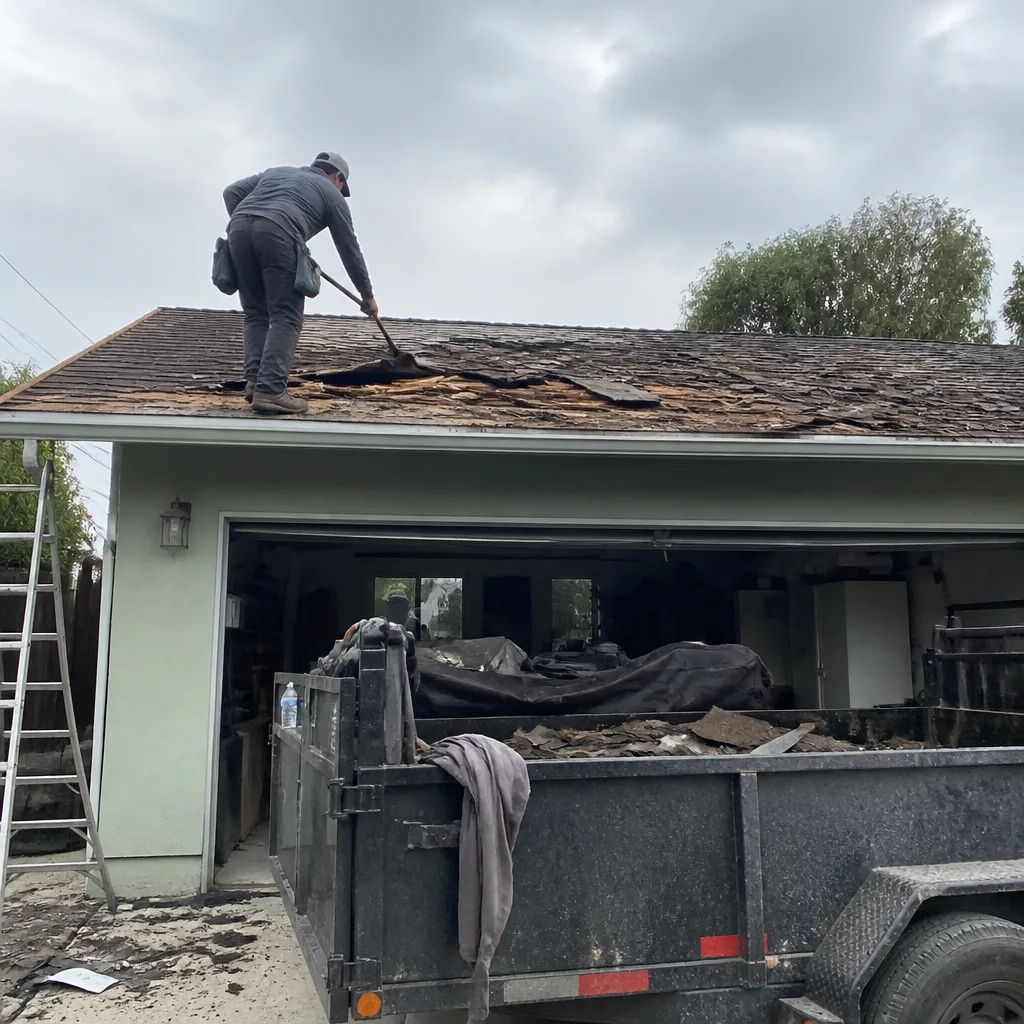 Before
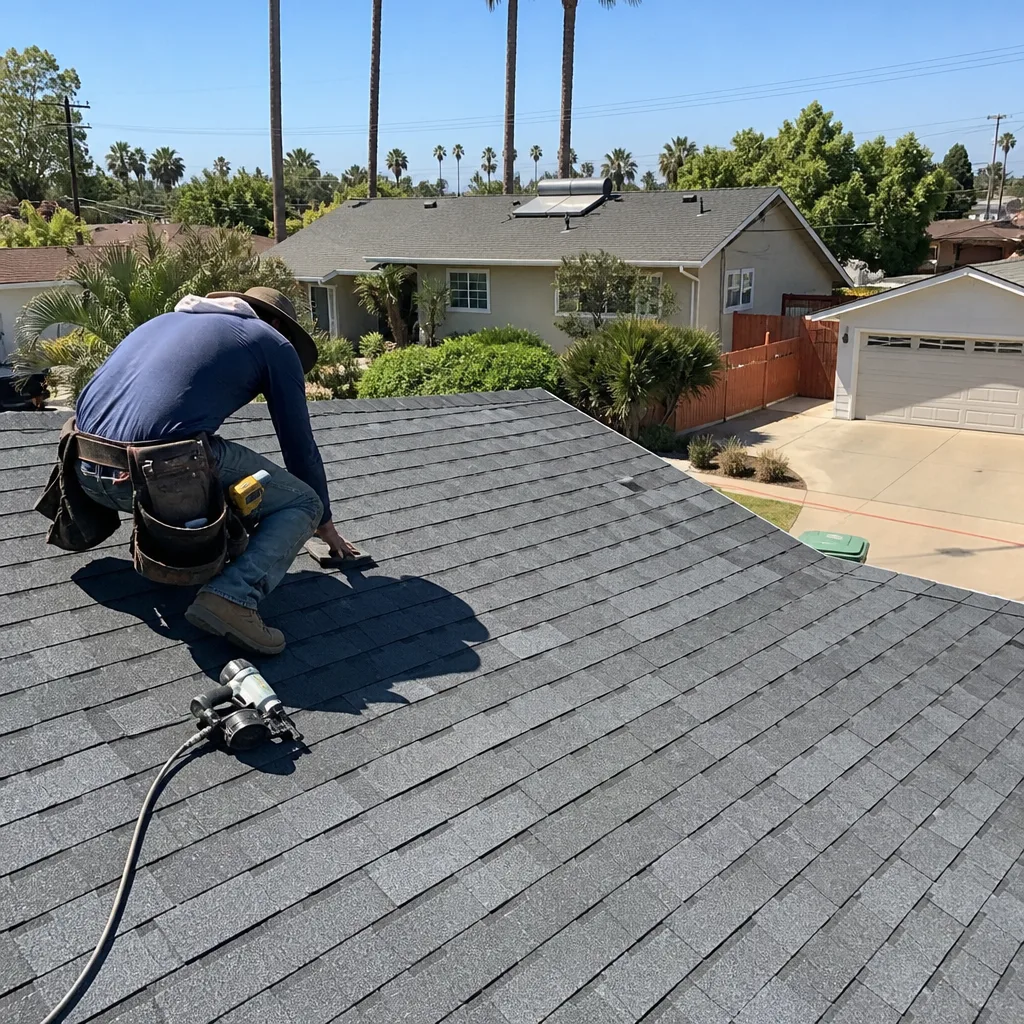 After
After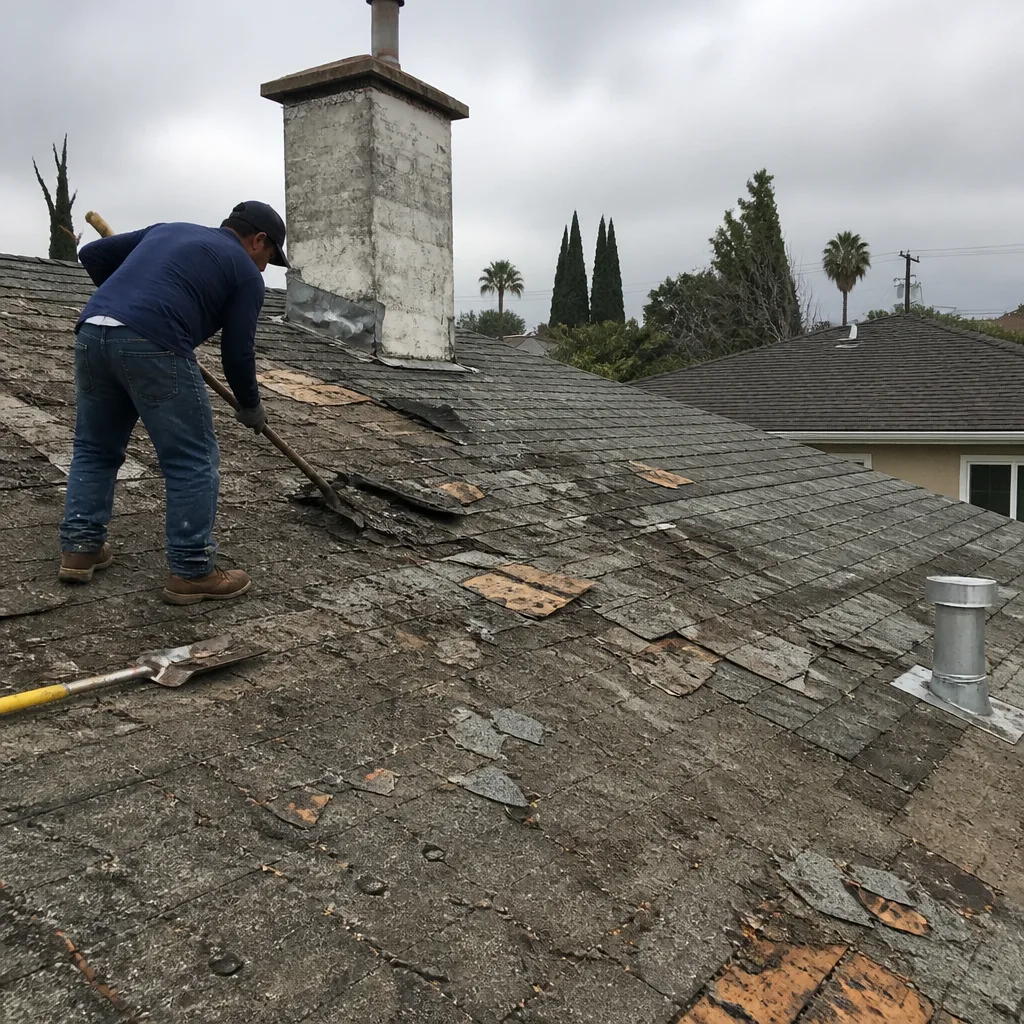 Before
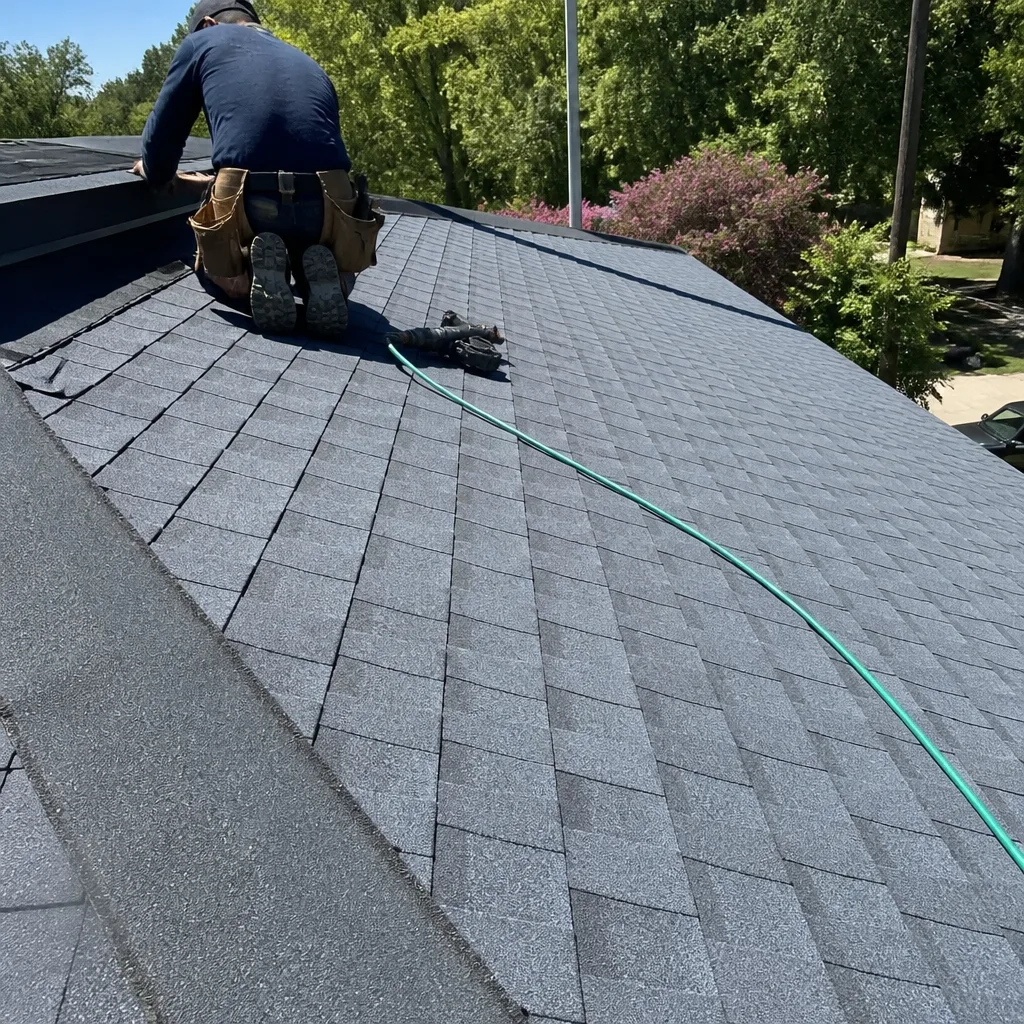 After
After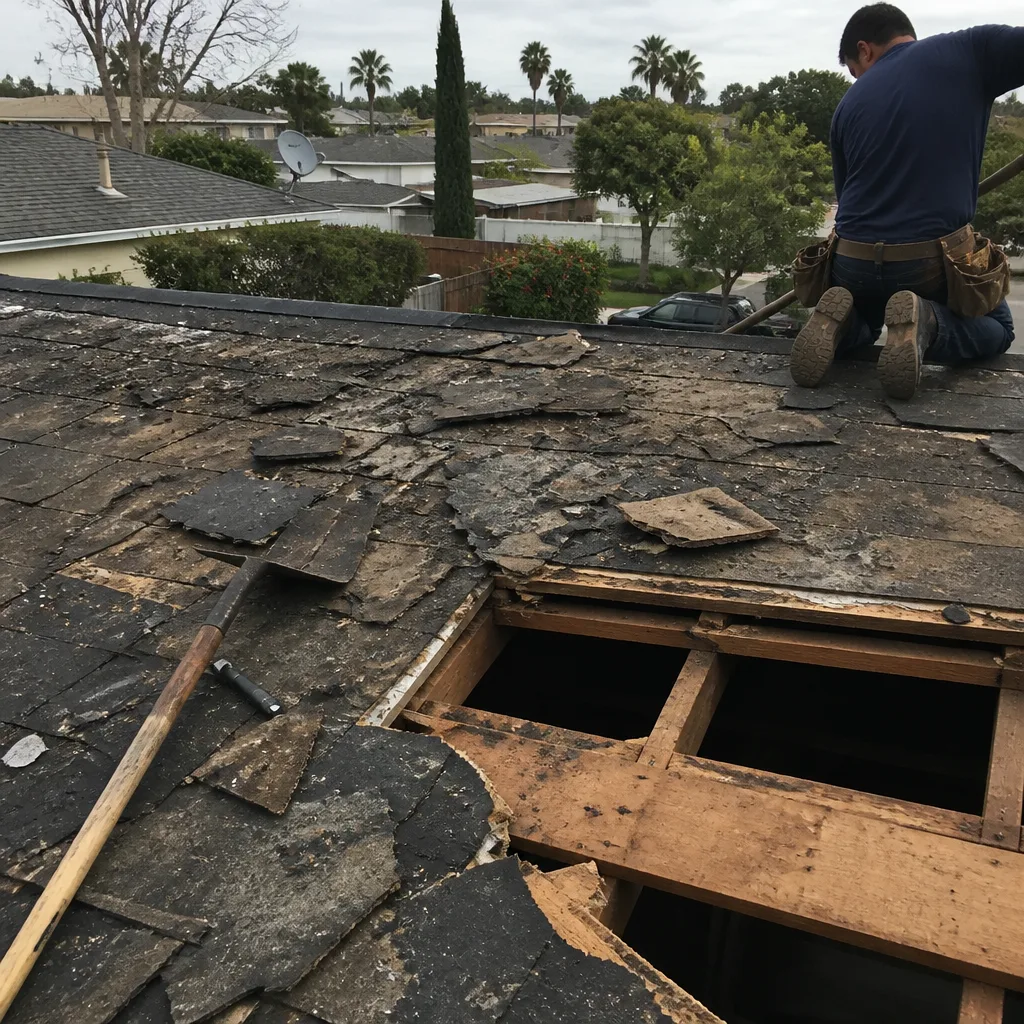 Before
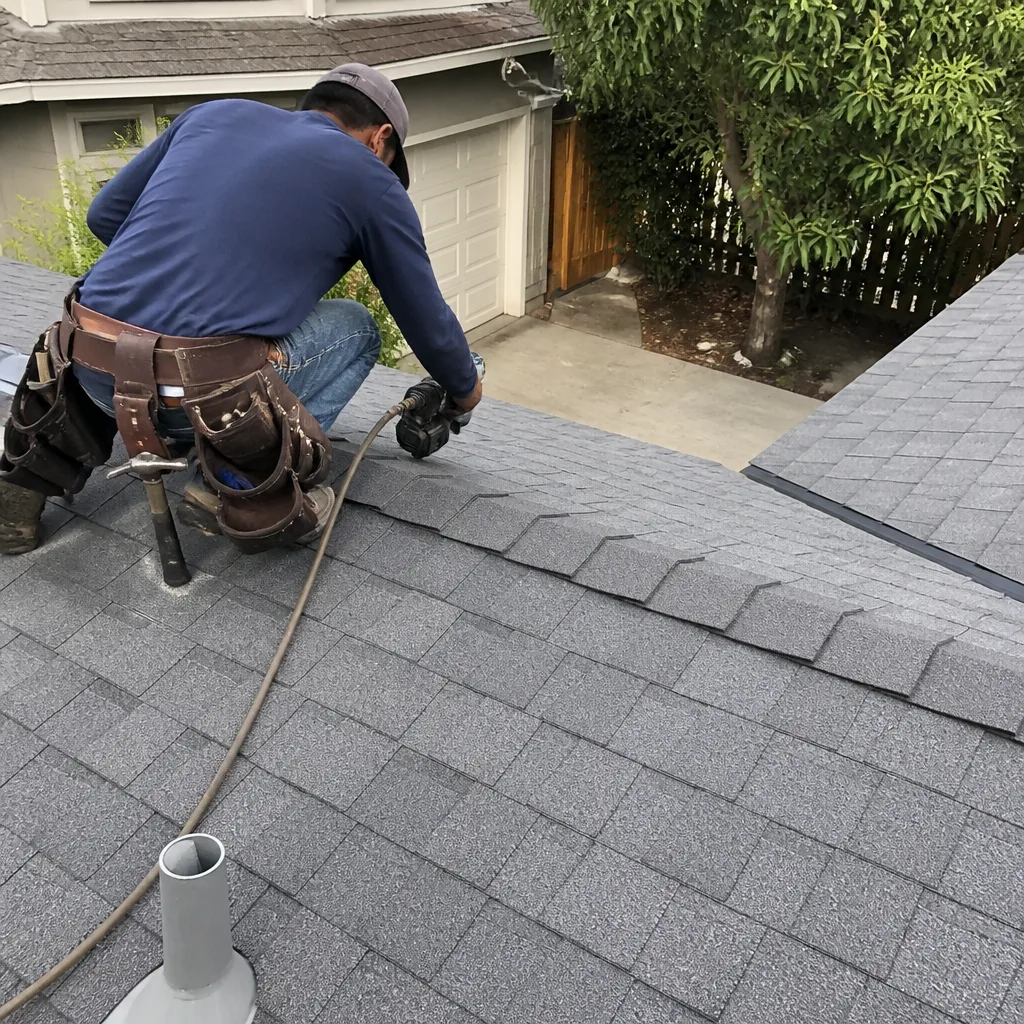 After
AfterDIY vs Professional Roofing Company: What’s Safe to Do Yourself
In California, an unpermitted roofing repair discovered during a home sale can require full disclosure and force a price renegotiation, or kill the deal entirely. That single fact changes how a smart Los Angeles homeowner should think about the DIY vs Professional Roofing: The Los Angeles Homeowner’s Decision Guide question. This guide draws a hard line between what a careful homeowner can safely handle and what creates legal or financial exposure that no amount of YouTube confidence can fix. You’ll learn the real cost differences, the liability traps, and the specific tasks where calling a roofer is not a preference, it’s the only defensible decision.
Quick Answer
Safe DIY roofing work is limited to gutter cleaning, flat-roof debris removal, and interior leak documentation. Anything involving shingles, flashing, underlayment, structural decking, or a roof pitch of 4:12 or steeper belongs with a licensed professional, both for fall safety and because unpermitted work in Los Angeles can void insurance claims and stall a future home sale.
Table of Contents
- The Fall Risk No One Talks About: Pitch, Height, and OSHA Data
- What’s Genuinely Safe to Do Yourself
- Tasks That Look Simple but Carry Hidden Liability
- California Permit Thresholds: When DIY Becomes Illegal
- How DIY Work Interacts with Insurance and Manufacturer Warranties
- True Cost Comparison: DIY vs Professional in Los Angeles
- Red Flags on Your Roof: What to Document Before Calling Anyone
- Common Mistakes to Avoid
- When to Call a Professional
- Frequently Asked Questions
- The Bottom Line
The Fall Risk No One Talks About: Pitch, Height, and OSHA Data
OSHA reports that falls remain the leading cause of death in construction, and roofing accounts for a disproportionate share of those fatalities. Residential roofing carries a fatality rate roughly 10 times higher than the average for all construction occupations. For a homeowner standing in the driveway looking up, that statistic is easy to dismiss. For a homeowner standing on a 6:12 pitch with worn-out sneakers and no harness, it becomes real fast.
The pitch angle is the single most important factor. A 4:12 roof rises four vertical inches for every twelve horizontal inches. At 4:12 and below, a careful adult can often walk the surface with proper footwear and caution. At 4:12 and above, the surface stops feeling like a floor and starts feeling like a slope designed to shed you. In Los Angeles, a significant share of homes in neighborhoods like Silver Lake, Echo Park, and the hills above Studio City have steep pitches that architects chose for aesthetics and drainage. That same pitch makes a casual repair attempt genuinely dangerous.
What professionals bring to a steep roof is not just courage. It’s fall-arrest systems, roof brackets, toe boards, and years of muscle memory for how weight shifts on a 30-degree surface. We’ve told this to homeowners directly: the cost of a fall is not measured in hospital bills alone. It’s measured in lost work, lost mobility, and in some cases, a family that has to adapt to a new reality. No roof repair is worth that trade.
If you’re going to go up on a low-slope section, at minimum use a sturdy extension ladder secured at the top, wear rubber-soled shoes, and never work alone. But understand that even those precautions don’t address the skill gap in the actual repair work.
What’s Genuinely Safe to Do Yourself
There are three roofing-related tasks a careful Los Angeles homeowner can handle without professional help, and all three keep your feet on the ground or on a stable, low-slope surface.
- Gutter cleaning and downspout flushing. Clogged gutters cause water to back up under the eaves and damage fascia board. Cleaning gutters twice a year, before winter rains and again in late spring, is safe work from a ladder provided the ladder is set on level ground and you never overreach. A garden hose, a scoop, and heavy gloves are all you need. This prevents water damage, but it does not fix existing roof leaks.
- Flat-roof debris removal. Many Los Angeles homes have flat or low-slope sections over additions, garages, or sunrooms. Leaves, twigs, and wind-blown trash accumulate and hold moisture against the membrane. Removing this debris with a broom or leaf blower is safe on a roof with a pitch below 2:12 and a stable walking surface. Walk slowly, wear soft-soled shoes, and stay away from skylights and roof penetrations. If you see standing water that doesn’t drain after 48 hours, that’s a drainage problem, not a debris problem. Document it and call a roofer.
- Interior leak documentation. This is the most underrated DIY task in roofing. When you notice a water stain on the ceiling, photograph it immediately. Mark the edges of the stain with pencil and note the date. Check the attic if you have one and photograph any wet insulation, damp rafters, or visible light coming through the decking. This documentation matters enormously when you call a Roof Repair in Los Angeles contractor, because it helps pinpoint the leak source without guesswork. It also creates a record for insurance purposes, should the damage warrant a claim.
None of these tasks involves altering the roof system. That’s the line. Cleaning and documenting are safe. Modifying shingles, flashing, membrane, or decking is where DIY stops making sense.
Tasks That Look Simple but Carry Hidden Liability
Three specific repairs look approachable on a YouTube tutorial and fail quietly in real Los Angeles conditions.
Replacing ridge cap shingles
Ridge cap shingles sit at the peak, the highest point of the roof. Replacing a cracked or blown-off cap shingle means working at the absolute highest elevation, often on a steep pitch, with a heat gun or roofing cement in hand. The hidden liability is not just the fall risk. A poorly seated ridge cap shingle lets water enter along the entire ridgeline, and the damage shows up months later as widespread staining across multiple rooms. That’s a repair cost far beyond what a shingle bundle costs.
Re-caulking pipe boots
Pipe boots are the rubber or metal collars that seal plumbing vent pipes where they penetrate the roof. The caulk around a pipe boot degrades under Los Angeles sun exposure, which is intense and unrelenting across the San Fernando Valley and the Inland-adjacent portions of the city. When homeowners re-caulk a pipe boot themselves, they typically use the wrong sealant, failing to remove the old material first or choosing a product that can’t handle thermal movement. The result is a leak that persists, gets worse, and rots the decking beneath before it’s discovered. A proper repair often means replacing the entire boot, not just re-caulking it.
Patching modified bitumen
Modified bitumen, or mod bit, is the rolled asphalt membrane common on low-slope Los Angeles roofs. Patching it with a bucket of tar from a home improvement store looks simple. It is not. Mod bit requires specific adhesive compatibility, proper surface preparation, and seam overlap. A homeowner patch typically fails within one rainy season, and then the original small leak is joined by a larger one where the bad patch lifted. By the time we see these roofs, the decking underneath is often saturated and the repair scope has doubled.
The pattern is consistent: tasks that look simple because they’re physically small often carry the largest hidden liability because the failure mode is invisible until the damage is extensive.
California Permit Thresholds: When DIY Becomes Illegal
California’s permit rules for roofing are stricter than most homeowners assume. The state requires a building permit for any reroofing project where the existing roof covering is removed and replaced, and that work must be performed by a contractor holding a C-39 roofing license. There is no homeowner exception for a full reroof. The state’s position is unambiguous: removing and replacing a roof covering is not within a homeowner’s legal scope, period.
For repairs, the threshold in Los Angeles is tied to both dollar value and scope. Under the California Building Code and Los Angeles Department of Building and Safety practice, repairs to less than 25% of a single roof plane may not require a permit, provided no structural members are altered. If the repair touches decking, rafters, or any structural component, the permit requirement kicks in regardless of square footage. If the total value of the work exceeds $500 in combined labor and materials, most jurisdictions, including Los Angeles County, expect a permit on file.
The $500 threshold matters. A bundle of shingles, a box of nails, and a Saturday afternoon rarely stays under $500 once you factor in sealant, replacement flashing, and the materials you wasted by learning on the job. The practical reality is that most meaningful repairs in Los Angeles cross the permit threshold and legally require a licensed contractor.
What happens if you skip the permit and do the work anyway? In a fast-moving Los Angeles real estate market, the problem surfaces at the worst possible moment. When you sell, the transfer disclosure statement asks whether any work was performed without required permits. Answering honestly means the buyer can demand a price reduction, or walk. Answering dishonestly creates fraud exposure. Neither outcome is worth the money you thought you saved.
How DIY Work Interacts with Insurance and Manufacturer Warranties
This section is where the DIY question stops being philosophical and becomes financial.
Homeowner’s insurance. Most California homeowner’s policies contain language requiring the policyholder to take reasonable steps to maintain the property. If a DIY repair fails and causes interior water damage, the insurer may argue that the damage resulted from improper maintenance or unauthorized modification, and deny the claim. Insurers are not required to cover the cost of fixing bad workmanship. If they can show the leak originated from a repair you performed yourself, the denial is often clean and final. The money you saved on labor evaporates instantly, and you’re left holding the full cost of interior remediation.
Manufacturer warranties. Shingle manufacturers including Owens Corning, IKO, and Atlas publish installation instructions that are conditions of the warranty. These warranties cover manufacturing defects, not installation errors. If a roof fails and the manufacturer’s inspector determines the failure was caused by improper installation, the warranty is void. When a homeowner installs shingles themselves, the manufacturer has no licensed contractor to hold accountable, and proving the defect is genuinely a manufacturing flaw becomes far more difficult. At Brennan Roofing, we install materials from GAF, CertainTeed, Owens Corning, IKO, Atlas, Tamko, and Boral, and we can tell you plainly: the warranty protects you only when the installation was done to the manufacturer’s published spec by a licensed crew.
Workmanship coverage. This is where professional work carries an advantage DIY can never match. Under the Garrison Standard, every repair and installation we perform is backed by the 365-Day Done Right Promise. That means a written guarantee for one full year, and if the repair or installation fails within that period, we come back and make it right at no charge. A homeowner cannot offer themselves a workmanship warranty. When you do the work yourself, you are the warranty, and the warranty expires the moment you discover your own mistake.
True Cost Comparison: DIY vs Professional in Los Angeles
The honest cost conversation has to include failure risk. Here is what real roof work costs across Los Angeles, from the San Fernando Valley to South Bay, as of this guide’s publication.
Typical Repair Cost Ranges in Los Angeles
- Pipe boot replacement: $250 – $450 professional, $40 – $80 DIY materials. Failure cost if done wrong: $1,500 – $4,000 in decking and ceiling repair.
- Small flashing repair (chimney or wall transition): $400 – $900 professional, $80 – $150 DIY materials. Failure cost if done wrong: $2,000 – $6,000 in interior water damage.
- Ridge cap shingle replacement (10 – 20 linear feet): $350 – $700 professional, $100 – $200 DIY materials. Failure cost plus fall risk: not worth calculating.
- Full reroof, 1,500 – 2,000 square feet (asphalt shingle): $12,000 – $22,000 professional, depending on material grade and tear-off requirements. DIY is illegal under California code for this scope.
- Roof inspection with written report: $200 – $400 professional. We offer free estimates in Los Angeles, and our Roof Inspection in Los Angeles service includes a complete written assessment.
The pattern is clear. On small, self-contained repairs, DIY saves a few hundred dollars and risks a few thousand. The math gets worse as the repair grows. Cross the permit threshold and you’re adding legal risk to financial risk. Cross into structural work and you’re betting your biggest asset against your amateur hour.
What you get from a professional that you cannot buy at a supply house: a live person answering the phone when you call, written pricing before any work starts, background-checked uniformed technicians, and a one-year guarantee in writing. The Garrison Standard exists because Travis Oakley believed, and still believes, that roofing should be accountable in ways the industry has historically resisted.
Red Flags on Your Roof: What to Document Before Calling Anyone
Before you call a roofer or decide to tackle a repair yourself, walk the perimeter and document what you see. This applies equally to both paths.
- Curled or lifting shingle edges. Photograph them from the ground with a zoom lens or phone. Shingles that curl upward are losing their seal and will tear off in a strong Santa Ana wind event.
- Granule accumulation in gutters. If your gutters are filling with dark grit, the shingles are shedding their protective surface. This is the early warning sign of a roof nearing the end of its service life, and it matters for budgeting a replacement.
- Daylight visible through the attic. If you can see light where the roof deck meets the walls, water can get in. This is a structural flashing failure at the eave or rake edge.
- Interior ceiling stains that grow after rain. A stain that expands after a heavy Los Angeles rain is an active leak, not an old stain. Mark the edges in pencil and check again after the next storm.
- Moss or algae on shaded slopes. In canyon-shaded areas like Laurel Canyon and Coldwater Canyon, moisture lingers on north-facing roof planes. Moss lifts shingles and begins the rot cycle.
Documenting these issues before you call does two things. It gives the contractor a head start on diagnosis, and it gives you a baseline for comparing estimates. A roofer who says you need a full replacement when your only issue is granule loss is either wrong or selling you. A roofer who explains the connection between what you documented and the repair scope is doing their job.
Common Mistakes to Avoid
- Using the wrong sealant. Homeowners commonly use silicone caulk on a roof surface. Silicone does not bond well with asphalt-based materials and fails within months. Roofing cement or a manufacturer-specified sealant is required. This single mistake accounts for a large share of failed DIY repairs we see across Los Angeles.
- Nailing through the wrong place. Shingles have a nail line. Nailing above it or below it compromises the seal and creates leak paths. Roofing nails also have specific lengths. A homeowner using the wrong fastener creates a roof that fails in the first wind.
- Ignoring the permit requirement. Many Los Angeles homeowners assume small repairs are permit-exempt. The $500 and 25% thresholds exist, and crossing them creates disclosure problems at sale. When in doubt, ask a licensed roofer rather than guessing.
- Working alone on any roof surface. A fall with no one there to call for help changes the outcome dramatically. If you insist on doing roof work, have a second adult on site.
- Assuming insurance will cover a bad DIY job. It usually will not. The insurer’s obligation is to cover covered perils, not to subsidize your learning curve.
- Patch-on-patch repairs. Adding a new patch over an old failed patch creates a moisture sandwich where both layers fail and the decking rots faster. We see this constantly on low-slope Los Angeles roofs where homeowners have been patching the same spot for years.
- Forgetting that roofing materials have a shelf life. That bargain bundle of shingles from the home improvement store may have been sitting in inventory for two years. Shingles degrade in storage, and installing aged shingles means installing a shortened service life.
When to Call a Professional
Call a licensed roofer when any of these apply: the roof pitch is 4:12 or steeper, the repair involves flashing or structural decking, the work requires a permit, the damage follows a storm event, or you are selling the home in the next five years and need a clean disclosure. Also call when you find yourself two hours into a project and realize you’re guessing. We’ve answered that phone call many times. Brennan Roofing offers free estimates in Los Angeles, and you’ll get a written price before any work starts. Call (361) 320-9467 and a live person answers, 24/7. No voicemail, no automated system.
Frequently Asked Questions
No. California requires a C-39 licensed contractor for any reroofing project where the existing roof covering is removed and replaced. There is no homeowner exemption for this scope of work. A full reroof performed without a licensed contractor creates permit and disclosure problems at sale.
Gutter cleaning is the safest roofing-related task a homeowner can perform, provided the ladder is set properly and you never overreach. Flat-roof debris removal on a pitch below 2:12 is also safe for a careful adult with proper footwear.
Typically no. If the insurer determines that water damage resulted from a repair you performed yourself, the claim may be denied as excluded workmanship. Insurance covers sudden covered perils, not the consequences of unqualified installation.
Small repairs in the Los Angeles area range from $250 for a pipe boot replacement to $900 for a flashing repair. Larger repairs and full reroofs range from $12,000 to $22,000 depending on material and scope. Call (361) 320-9467 for an exact quote on your roof. Estimates are free.
Repairs covering less than 25% of a single roof plane and under $500 in value may not require a permit. Anything beyond that, or any work touching structural decking or rafters, requires a permit and a licensed contractor. When in doubt, ask before you start.
Almost never. Owens Corning, IKO, Atlas, and Tamko all condition their warranties on installation to published specification by a qualified installer. A homeowner installation voids the warranty claim process for most defect issues.
The Bottom Line
The line between DIY and professional roofing is clear once you stop thinking about skill and start thinking about liability. Cleaning gutters, clearing flat-roof debris, and documenting leaks are safe homeowner tasks. Anything that modifies shingles, flashing, membrane, or decking crosses into territory where a mistake costs ten times the labor you saved. In Los Angeles, the permit rules and the disclosure obligations at sale add another layer of risk that has nothing to do with craftsmanship. The smartest DIY roofing move is documentation, and then the phone call. We answer it. For more guides & resources, visit our blog.
Written by Travis Oakley, Owner at Brennan Roofing, serving Los Angeles since 2000.