
Last updated October 9, 2026
Free roof inspection with deck photos before we talk money - GAF and Owens Corning certified installation
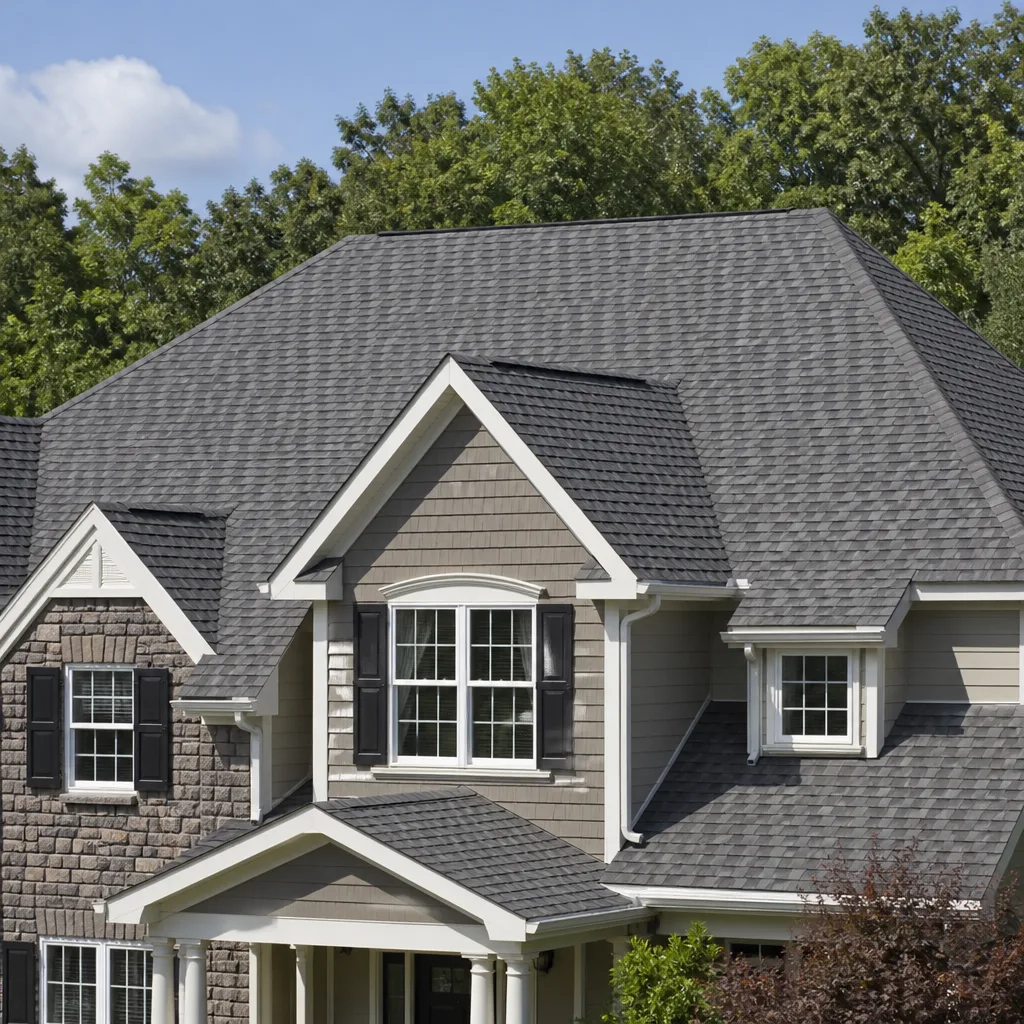
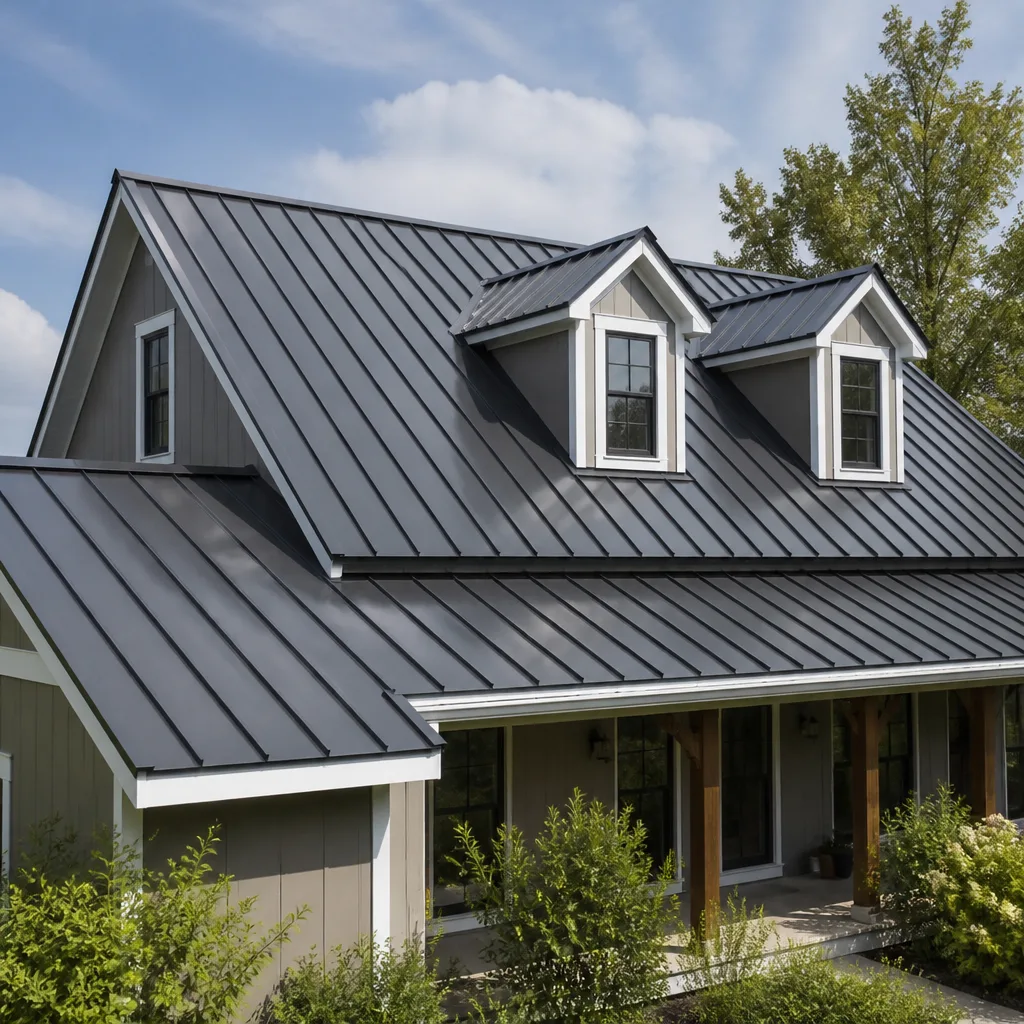
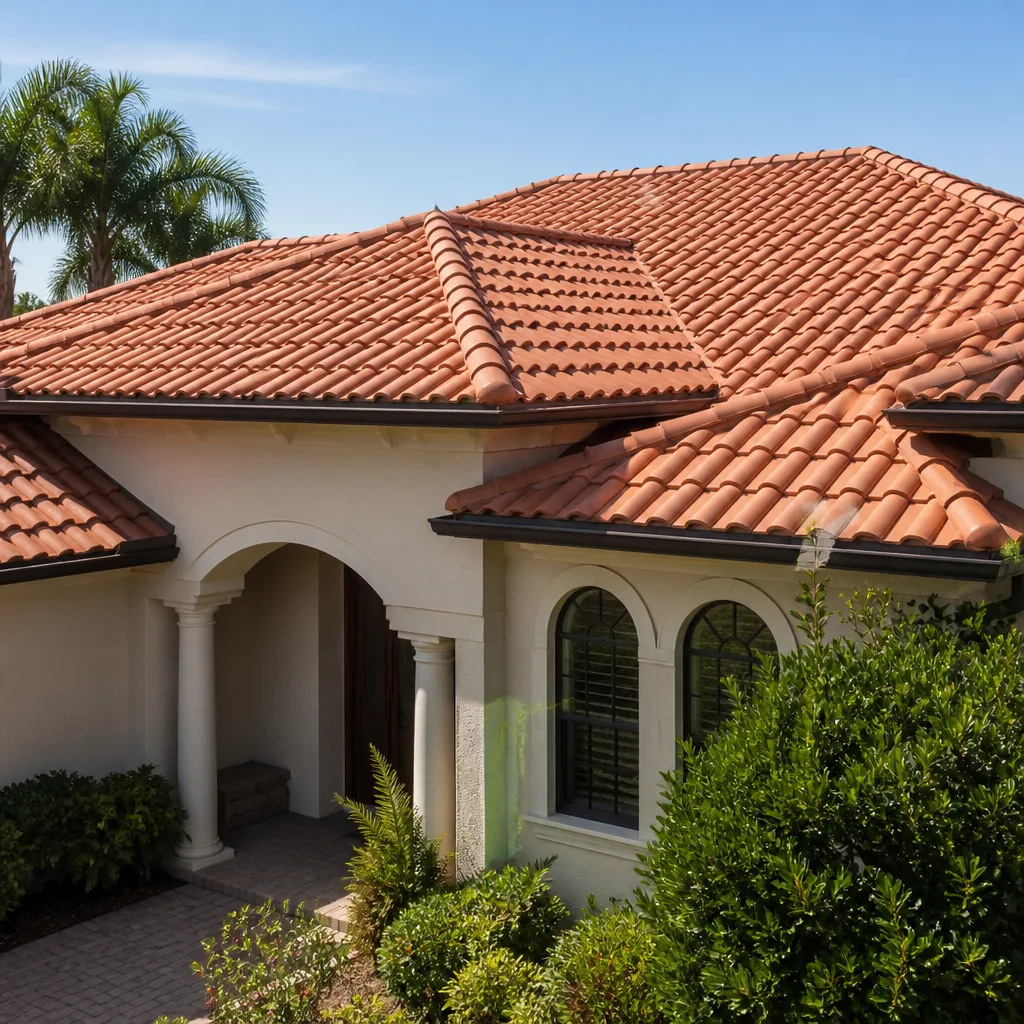
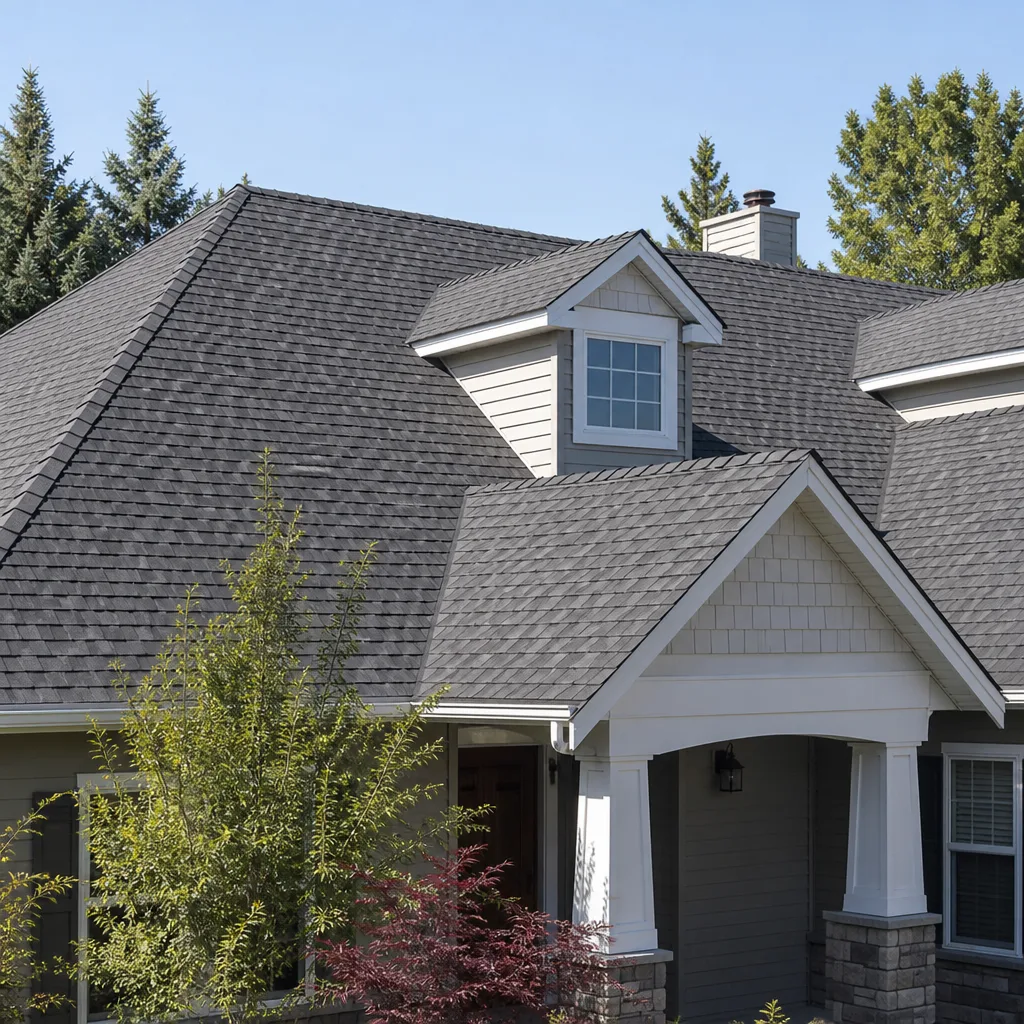
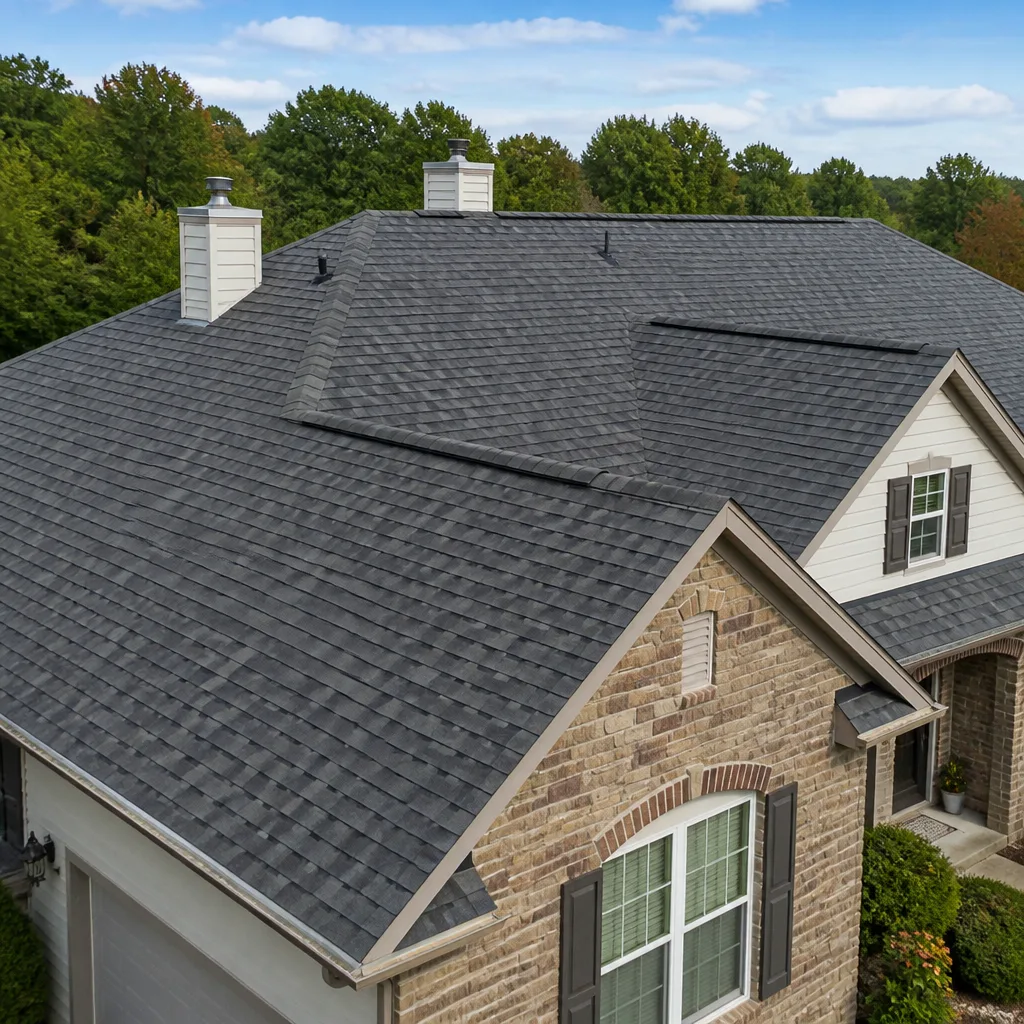
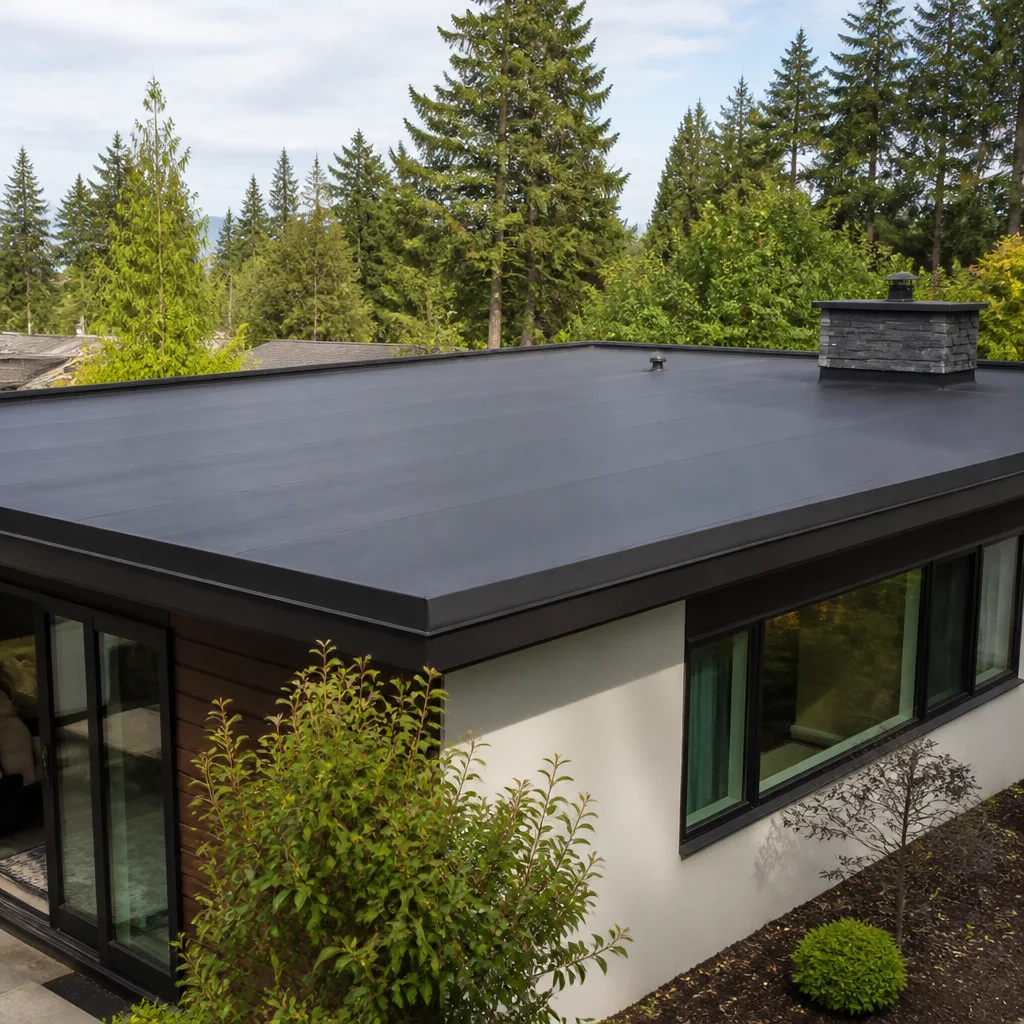
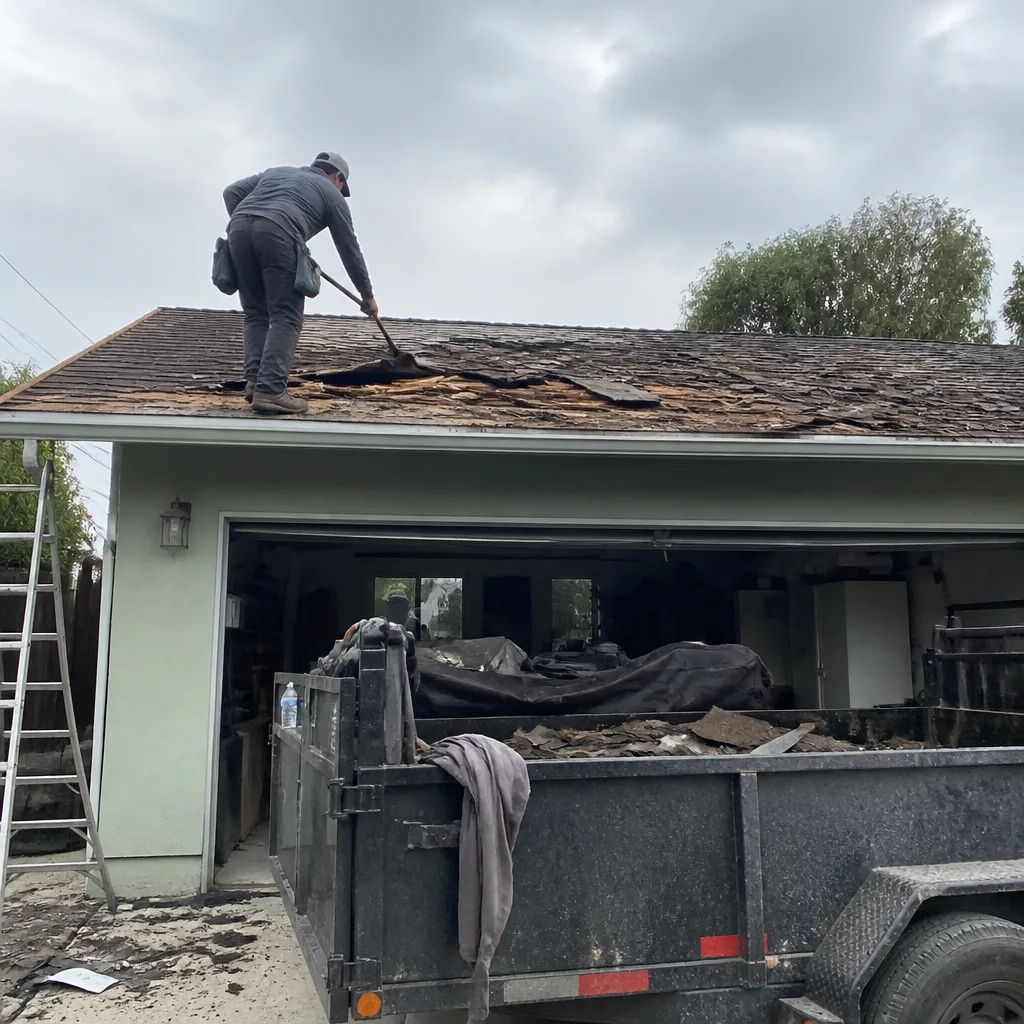 Before
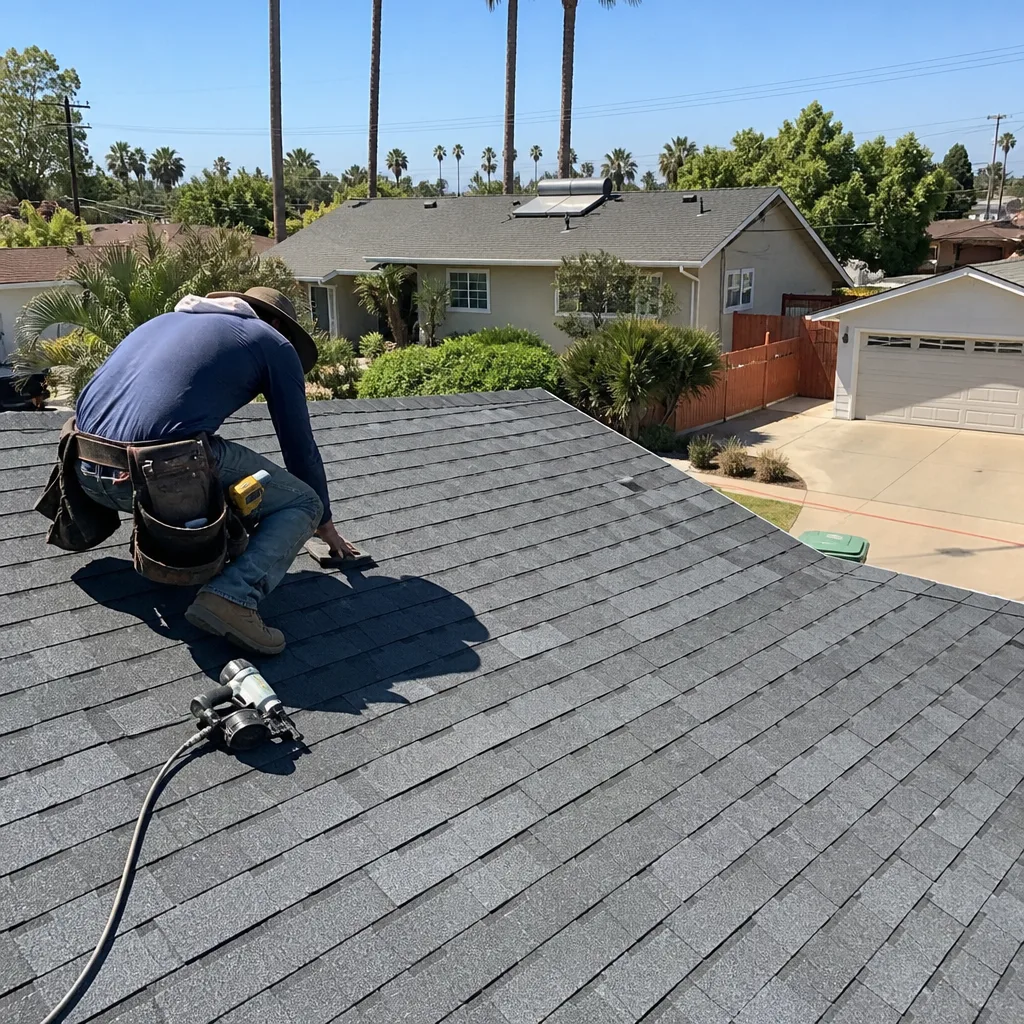 After
After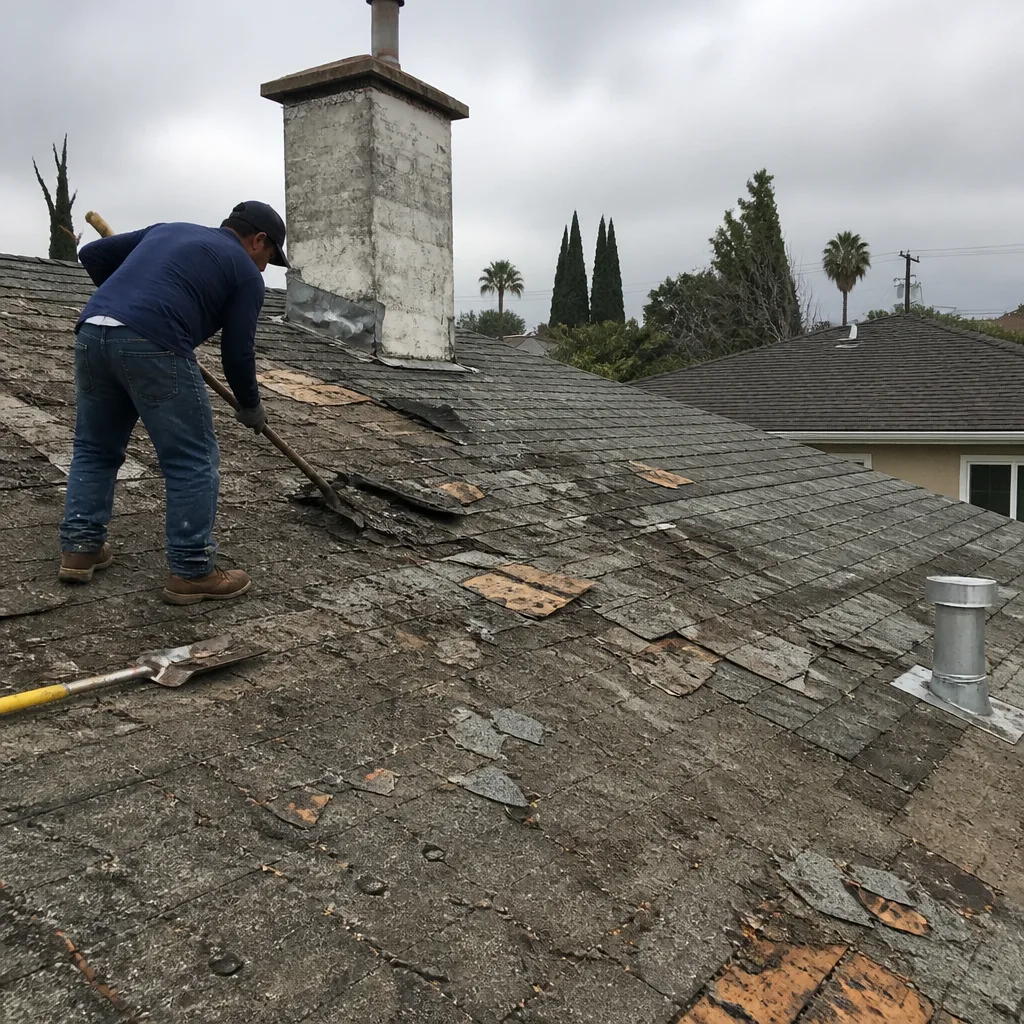 Before
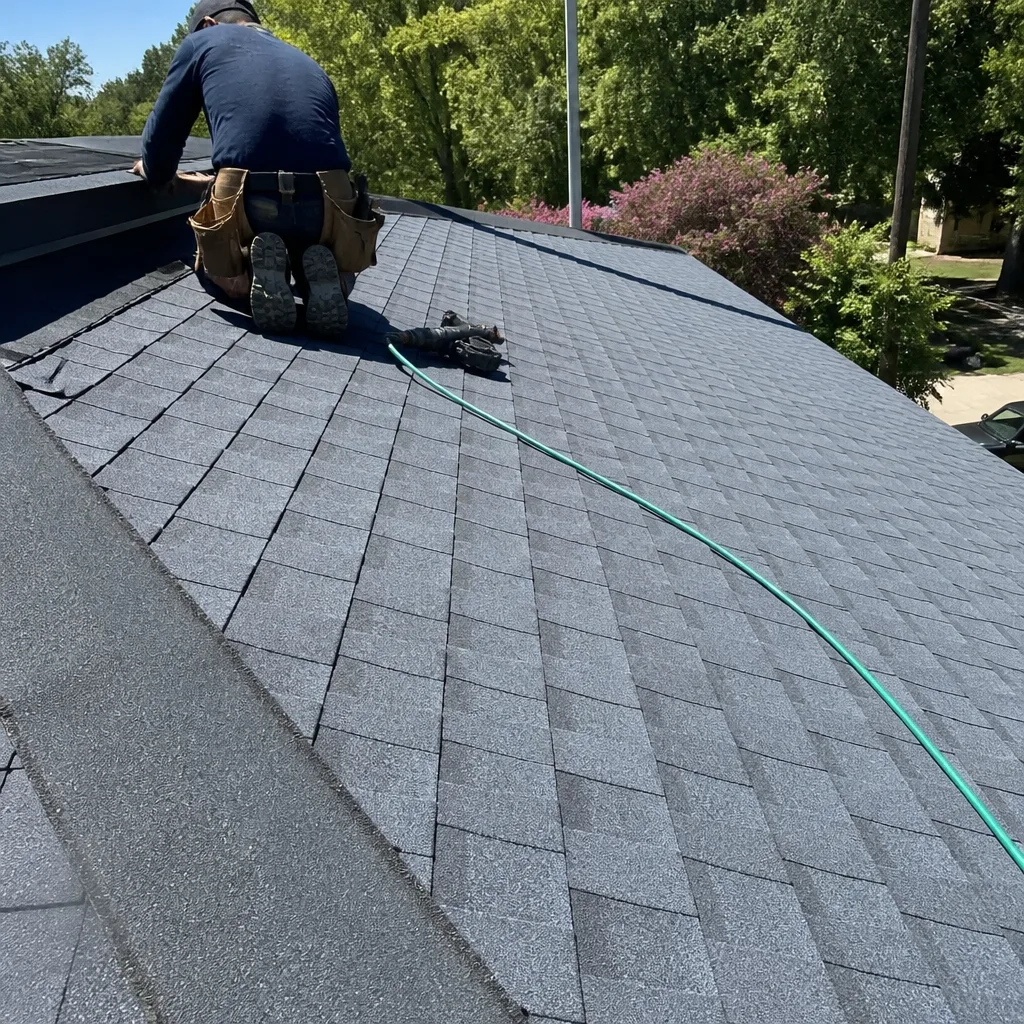 After
After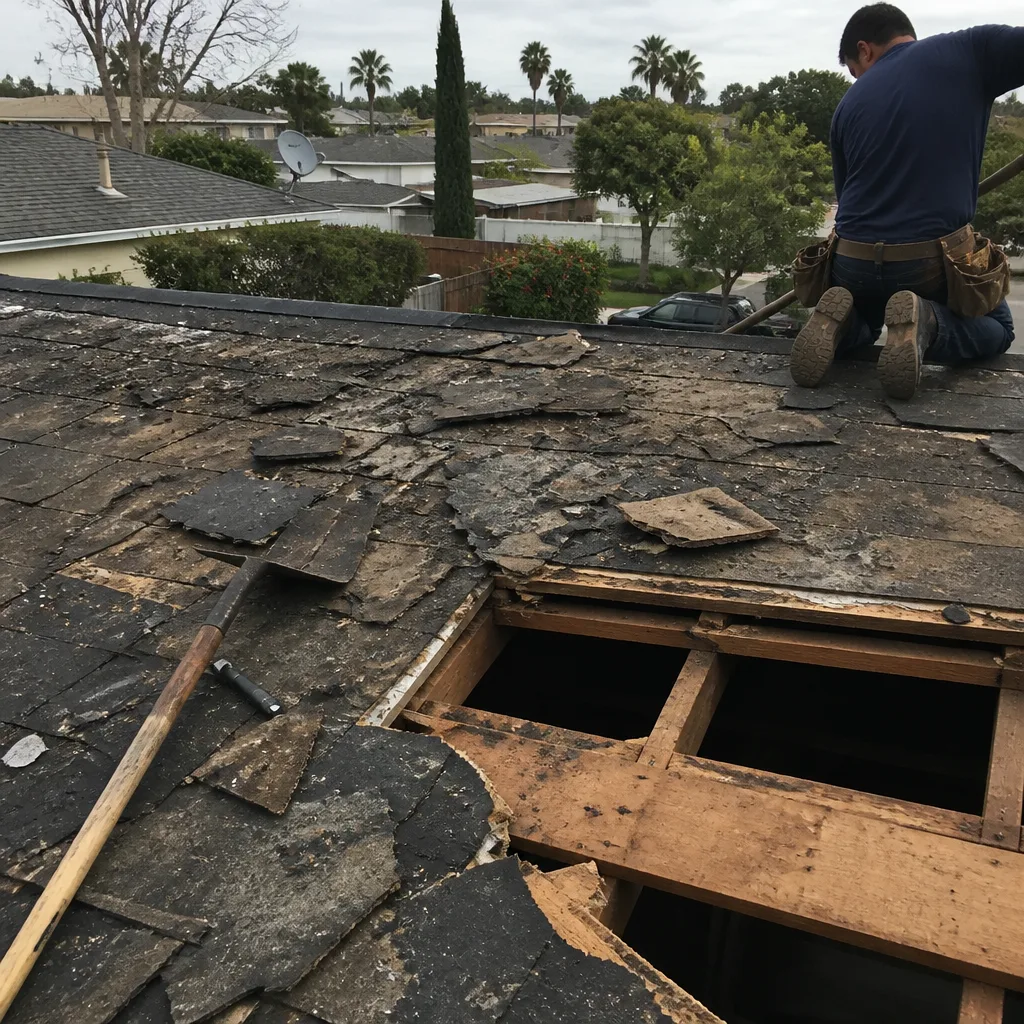 Before
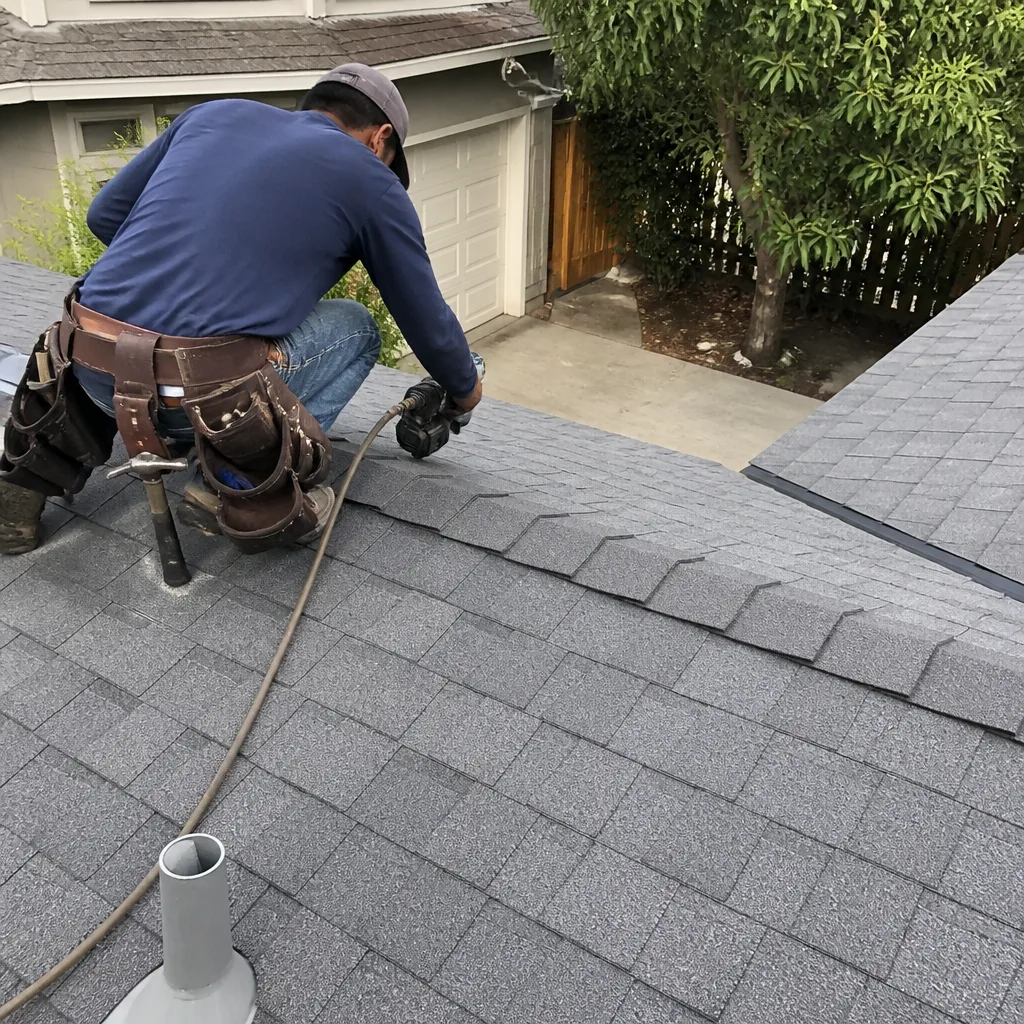 After
AfterDIY vs Professional Roofing: The Los Angeles Homeowner’s Decision Guide
It doesn’t matter how handy you are. The moment the first tile comes off, you need to know something clear: the real line is not drawn by your skill, but by California law, your insurance policy, and the physical reality of a roof pitched over a hillside. This guide gives you that line, in plain language, with real dollar figures and the specific code provisions that apply in Los Angeles. We’ll cover what you can legally do, what will void your coverage, and where the honest cost breakpoint sits for a homeowner in this market.
Quick Answer
For most Los Angeles homeowners, the DIY-vs-professional question is decided by one number: $500. California Business and Professions Code Section 7048 requires a licensed contractor for any roofing project where the combined cost of labor and materials exceeds $500. Since a single square of mid-grade asphalt shingles with underlayment runs $120 to $180 at any LA supplier before you even buy a nail gun, the only legal DIY options for most people are jobs below that threshold: clearing gutters, hosing down ground-level debris, and inspecting the attic from the inside. Everything else falls under a licensed contractor or an owner-builder permit with strict resale restrictions.
Table of Contents
- The $500 Legal Threshold and the Owner-Builder Trap
- What an LA Roofing Permit Actually Requires
- The Short Safe List: What an LA Homeowner Can Legally Do
- Pitch, Hillside Access, and Tile Weight: Why LA Roofs Are Different
- What Your Insurance Carrier Will Do With a DIY Roof Claim
- The Honest 2026 Cost Comparison: DIY vs Licensed Professional
- Common Mistakes to Avoid
- When to Call a Professional
- Frequently Asked Questions
The $500 Legal Threshold and the Owner-Builder Trap
The legal line in Los Angeles is $500 in combined labor and materials. Cross it and you must either hire a licensed C-39 roofing contractor or pull an owner-builder permit from the Los Angeles Department of Building and Safety (LADBS). That threshold is not per day. It is per project. A full tear-off on a 1,500-square-foot LA ranch will push past $500 in the first hour at the supply yard.
The owner-builder path exists, and we mention it honestly because guides that skip it are leaving out the one legal way to do major work on your own home. You can apply for it, pull your own permits, and do the work yourself. Here is what that actually means in Los Angeles:
- You must sign a declaration that you will occupy the home. The owner-builder permit is for your residence, not a flip or rental property. Lying on that declaration is fraud.
- You cannot delegate the work to unlicensed help. Family members and friends can assist without pay. The moment you pay someone who is not a licensed contractor, you have hired an unlicensed worker and broken the same law you were trying to satisfy.
- At resale, you must disclose the work. California Civil Code requires you to tell the buyer that roofing work was performed under an owner-builder permit. What that tells a buyer and their lender is that no licensed contractor was on the hook for the installation. Some lenders hesitate. Some title companies add scrutiny. You will find out at the closing table.
- Workmanship warranty vanishes. A licensed contractor in California must provide a minimum one-year warranty on labor. No such requirement applies to you when you do the work yourself. You are the warranty, and you are not in writing.
The owner-builder permit is a real thing, and for a small number of highly capable LA homeowners it is the right call. What it is not is a loophole. It is a disclosure you carry with the house.
What an LA Roofing Permit Actually Requires
The DIY roofing conversation in Los Angeles usually runs straight into the permit process, and that process is more demanding here than in most of the country. Los Angeles has a dense patchwork of rules: LADBS for most of the city, with separate requirements in areas under the Coastal Zone, Hillside Ordinance, and specific Historic Preservation Overlay Zones. The roof you look at from the street may not be the roof the city will let you rebuild.
Here is what a typical reroof permit in Los Angeles involves:
- Submittal of the existing roof covering and proposed replacement. LA has cool roof requirements under the Green Building Code. If you live in a designated fire hazard severity zone, the replacement must meet Class A fire rating. You do not get to argue with the code; you get to comply with it.
- Weight calculations for tile. If the home has clay or concrete tile and you are replacing it with the same, fine. If you are switching materials, the structure may need an engineering check. Los Angeles has tens of thousands of 1950s and 1960s rafter systems that were built for wood shake, not for modern concrete tile.
- Inspection scheduling. LADBS requires an inspection after tear-off and before the new covering goes on, and often a final inspection. The inspector is looking at the nailing pattern, the underlayment laps, the flashing. If it fails, you fix it and re-book. That can add a week to a job that a licensed crew completes in two days.
- Attic ventilation and fire blocking. LA building code no longer allows a simple reroof to ignore what is underneath. The inspector can require additional intake ventilation or fire blocking at the eaves. That is additional material and additional time.
None of this is impossible. It is simply not what most DIY articles describe. They describe the national average. Los Angeles is not the national average. If you go the professional route, this is exactly the administrative load a Roofing Company in Los Angeles is already built to carry, down to meeting the inspector on site.
The Short Safe List: What an LA Homeowner Can Legally Do
The honest answer is that the safe, legal DIY list in Los Angeles is short. We do not say that to protect our business. We say it because the real numbers are what they are, and a homeowner who understands the boundary makes fewer expensive mistakes. Here is what you can and arguably should do yourself:
- Gutter clearing at ground level. Use a pressure wand from a ladder stabilized on flat ground, or disconnect and clean the downspout at the bottom. Los Angeles gutters fill with eucalyptus leaves, sycamore bark, and wildfire ash. This is real maintenance.
- Ground-level debris removal. Palm fronds, wind-blown branches, the occasional tennis ball. If you can reach it from the ground with a rake or a stick, it is yours.
- Attic inspection from inside. Go up into the attic after a rain and look for daylight at the roof deck, water stains on rafters, or crumbling sheathing. You are not walking on the roof; you are standing on the ceiling joists with a flashlight. That is not roofing. That is observing.
- Documenting suspected damage with photos. Take photos from the ground and from the attic. Time-stamp them. If a wind event or a tree limb hits, your carrier will want evidence. You can gather it without leaving the ground.
What you should not do is climb onto the roof itself. Not to “take a quick look.” Not to “pull that one loose shingle.” That is where the legal line and the safety line meet, and they meet in the same place.
Pitch, Hillside Access, and Tile Weight: Why LA Roofs Are Different
Most DIY roofing tutorials are filmed on a 4:12 ranch roof in Texas or Florida, where the ground is flat, the pitch is walkable, and the covering is three-tab asphalt. A lot of Los Angeles is not that. Some of it is worse than anything in those tutorials.
In neighborhoods like Mount Washington, Echo Park, Silver Lake, and the hillside sides of Sherman Oaks and Studio City, roofs are cut into slopes. The pitch is often 6:12 or 8:12, sometimes steeper. Fall protection on a residential roof is not a suggestion; the Bureau of Labor Statistics consistently puts roofing among the top occupations for fatal falls, and falls from residential roofs account for a significant share of those deaths. A homeowner with a borrowed harness and no training is not safer than a roofer with a decade of muscle memory. They are less safe.
Tile adds a second layer of hazard. A clay tile roof in Los Angeles can weigh 800 to 1,100 pounds per square, compared to 250 to 350 pounds per square for asphalt shingles. Picking up a tile to “look at the felt underneath” means standing on a surface where a cracked tile can give way, where the slope is pushing you toward the edge, and where the material you are holding weighs a lot more than you think it does. Add in the Santa Ana winds that hit LA from late September through November, and the risk calculation is not close.
We are not saying this as a scare tactic. We are saying it because a real expert always names the danger. The pitch, the weight, and the access problems on an LA hillside roof are not like a suburban roof in a flat state. This is one of the clearest reasons the professional route exists.
What Your Insurance Carrier Will Do With a DIY Roof Claim
Here is the scenario that no DIY article wants to discuss. You replace a section of your roof yourself. Six months later, a winter storm hits Los Angeles, water gets in at the transition point between your work and the existing roof, and the ceiling in your living room is stained brown. You file a claim. The adjuster comes out, looks at the roof, and asks a simple question: who did this work?
When the answer is “I did,” the claim can go sideways. Most California homeowners policies require that the property be maintained to a professional standard. If the carrier determines that the damage originated from faulty workmanship, and that workmanship was yours, they can deny the portion of the claim attributable to the installation. Not the storm. The installation. They will argue that the storm simply exploited a failure you created. Whether they win the argument is decided in a claims process you now have to fight, without a contractor’s paper trail backing the work.
It gets worse. If you performed the work without a permit, and the scope required one, the carrier may ask to see the permit. No permit, no coverage for that repair. That is not hypothetical. We have met LA homeowners who learned this the hard way, standing in a room with a tarp over their furniture.
A licensed contractor in California carries workers’ compensation and general liability. That means two things for you as the homeowner. First, if a worker is injured on your roof, their medical costs are not your claim. Second, the contractor’s insurance stands behind defects in the work. Your own homeowners policy is not a substitute for either of those.
The Honest 2026 Cost Comparison: DIY vs Licensed Professional
The DIY pitch is always the same: you save the labor. And it is true that labor is the largest single line item on a roofing quote in Los Angeles. What the pitch omits is everything else. Here is a realistic 2026 comparison for a standard 1,500-square-foot roof, a projected roof area of roughly 24 squares, using mid-grade asphalt shingles.
Licensed Professional: $9,600 to $14,400
- Labor (tear-off, haul-away, install): $3,000 to $5,000
- Materials (underlayment, shingles, flashing, drip edge, fasteners): $2,900 to $4,000
- Disposal and dump fees: $400 to $700
- Permit and inspections: $300 to $600
- Overhead, insurance, warranty administration: $3,000 to $4,100
DIY (Legal Path With Owner-Builder Permit): $5,900 to $8,700, Plus Your Time
- Materials: same $2,900 to $4,000 (you do not get contractor pricing)
- Tool rental or purchase: $300 to $900 (nail gun, compressor, ladder, safety gear, dump trailer)
- Permit and inspections: $300 to $600
- Disposal: $400 to $700
- Your time: 4 to 6 weekends, minimum, with a real risk of a failed inspection extending that to 8
The gap is real, but smaller than most homeowners assume. And when you add the resale disclosure, the insurance exposure, the warranty loss, and the time cost, the savings often shrink to a number that would not survive an honest conversation with your future self. We install materials from manufacturers including Owens Corning and CertainTeed because buying through a licensed contractor gets a homeowner the rated system warranty, not just the shingle warranty. That warranty is not available on a DIY pull.
Common Mistakes to Avoid
- Assuming a steep roof is fine because “it’s just a quick look.” LA hillside pitches turn a 10-minute inspection into a fall risk. If you need a rope to feel comfortable, you need a professional.
- Patching over a soft spot instead of cutting it out. Rotten decking does not get better under a new layer of shingles. It spreads, and the next rain finds it.
- Buying the cheapest underlayment. Los Angeles roofs sit under intense UV for eight months of the year. Cheap felt degrades faster here than in cooler climates, and it is the last place to save $200.
- Ignoring the $500 threshold. A lot of homeowners treat it as a guideline. It is not. It is the statute.
- Filing an insurance claim for a roof that a licensed roofer should have inspected first. The claim that gets denied for DIY work is often a claim that could have been solved with a written repair plan from a contractor. The inspection costs less than the denial.
- Skipping the re-roof inspection. If LADBS requires an inspection and you skip it to “save time,” you have created a code violation that follows the house.
- Doing work on a roof you plan to sell within five years. The owner-builder disclosure is not a paperwork formality. It is a negotiation point for every buyer.
When to Call a Professional
Call a professional when the scope passes $500, when the pitch is steep enough that you would not walk it without a rope, when the roof is tile or slate, when you see daylight in the attic, when you have an active leak, or when you are anywhere near the resale of your home. Those are the boundary lines, and they cover most of the real decisions Los Angeles homeowners face.
If you are not sure which side of the line you are on, get an inspection. Roof Inspection in Los Angeles is where most of our best work starts: a written condition report, a straight answer on scope, and no pressure. Brennan Roofing offers free estimates in Los Angeles. Call (361) 320-9467 and a live person will answer.
Frequently Asked Questions
Yes, but only if the project stays under $500 in labor and materials, or you pull an owner-builder permit and do the work yourself without paid help. Above that threshold, California law requires a licensed C-39 roofing contractor. Los Angeles enforces that threshold through LADBS permitting.
An owner-builder permit is a legal permit that allows a homeowner to act as their own general contractor on a project, including roofing. It is worth it only if you have real trade skills, are not selling the home for several years, and understand that you are accepting full liability for the workmanship with no warranty backing. For most LA homeowners, it is a complicated way to save a few thousand dollars.
A standard asphalt shingle replacement on a 1,500-square-foot Los Angeles home runs $9,600 to $14,400 all-in, including tear-off, materials, permit, and disposal. Tile runs higher. Call (361) 320-9467 for a written line-item quote, free of charge.
Possibly. If the damage is traced to faulty workmanship performed by you, the claim can be denied or reduced. If the work required a permit and you do not have one, the denial is almost automatic. Licensed contractor work comes with the paper trail that keeps a claim on solid ground.
Gutter clearing from the ground, ground-level debris removal, attic inspection from inside, and photo documentation of visible damage. For more guides & resources, see our blog. Anything that requires walking on the roof surface crosses out of DIY territory for safety and legal reasons.
Because of pitch, hillside access, and the weight of clay and concrete tile. Many Los Angeles homes are built on slopes where roof falls are more severe, and tile roofs are far heavier and more fragile underfoot than the asphalt shingle roofs most DIY tutorials show. Combined with Santa Ana winds, the risk profile is materially worse.
If the repair is minor and stays under the $500 threshold, generally no permit is required. If the repair involves replacing decking, re-flashing a penetration, or replacing more than a small patch, LADBS may treat it as a re-roof requiring a permit. When in doubt, ask before you start.
The Bottom Line
The DIY-vs-professional question in Los Angeles has a clean answer. Under $500, on the ground, the work is yours. Over $500, on the roof, it belongs to a licensed contractor or a very committed owner-builder. The law, the insurance math, and the physical danger all point the same direction. Roof Repair in Los Angeles is not a DIY alternative; it is the answer for the scope of work that genuinely requires a license, a permit, and a paper trail. If you are weighing the decision, get a free estimate and a straight answer first. The price goes on paper before any work starts, and you can decide from there.
Written by Travis Oakley, Owner at Brennan Roofing, serving Los Angeles since 2000.