
Last updated October 9, 2026
Free roof inspection with deck photos before we talk money - GAF and Owens Corning certified installation


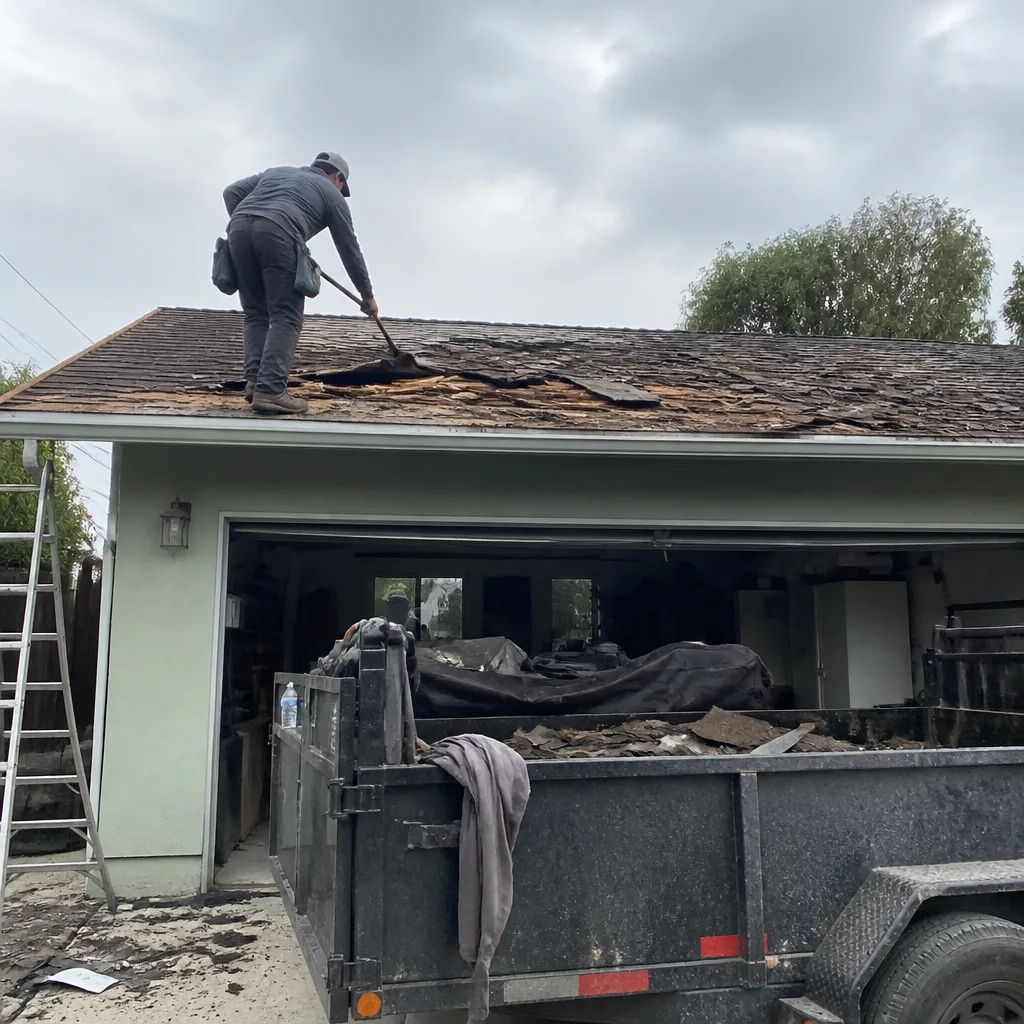 Before
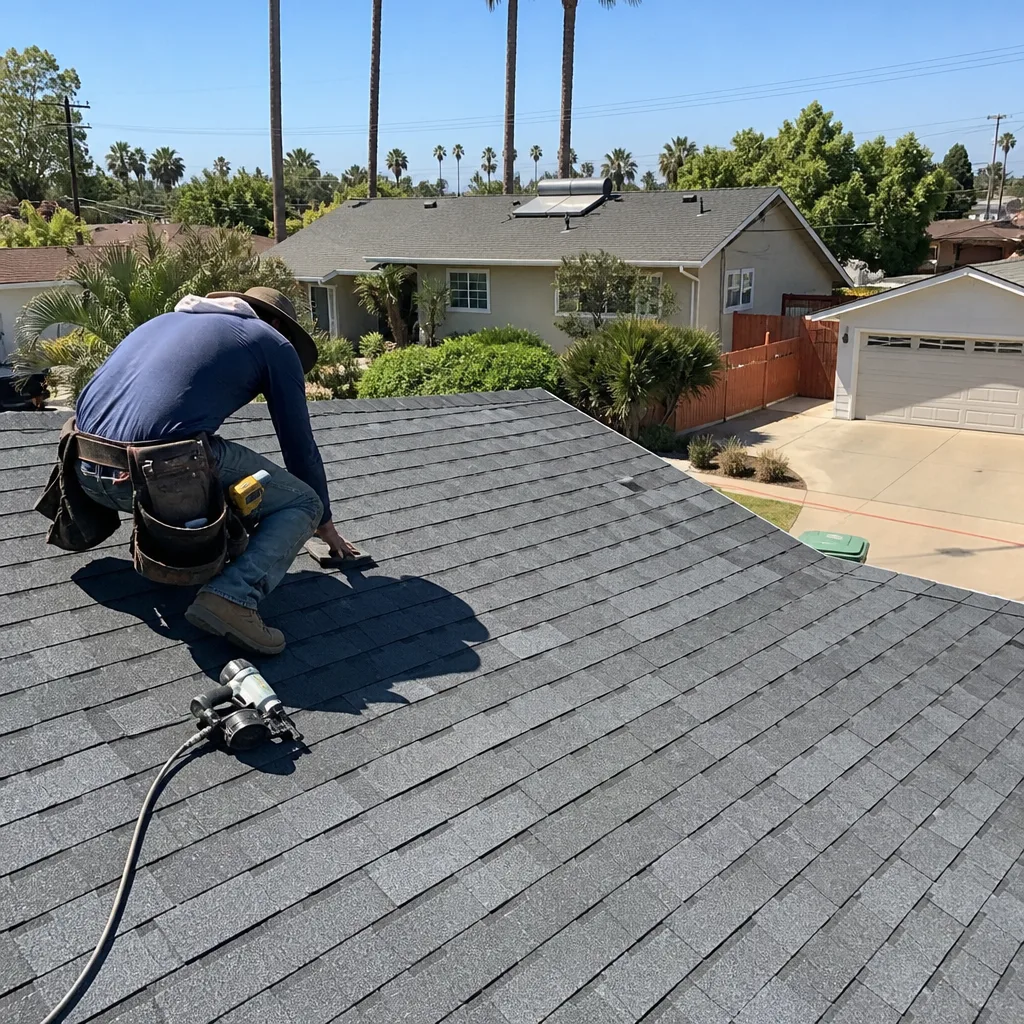 After
After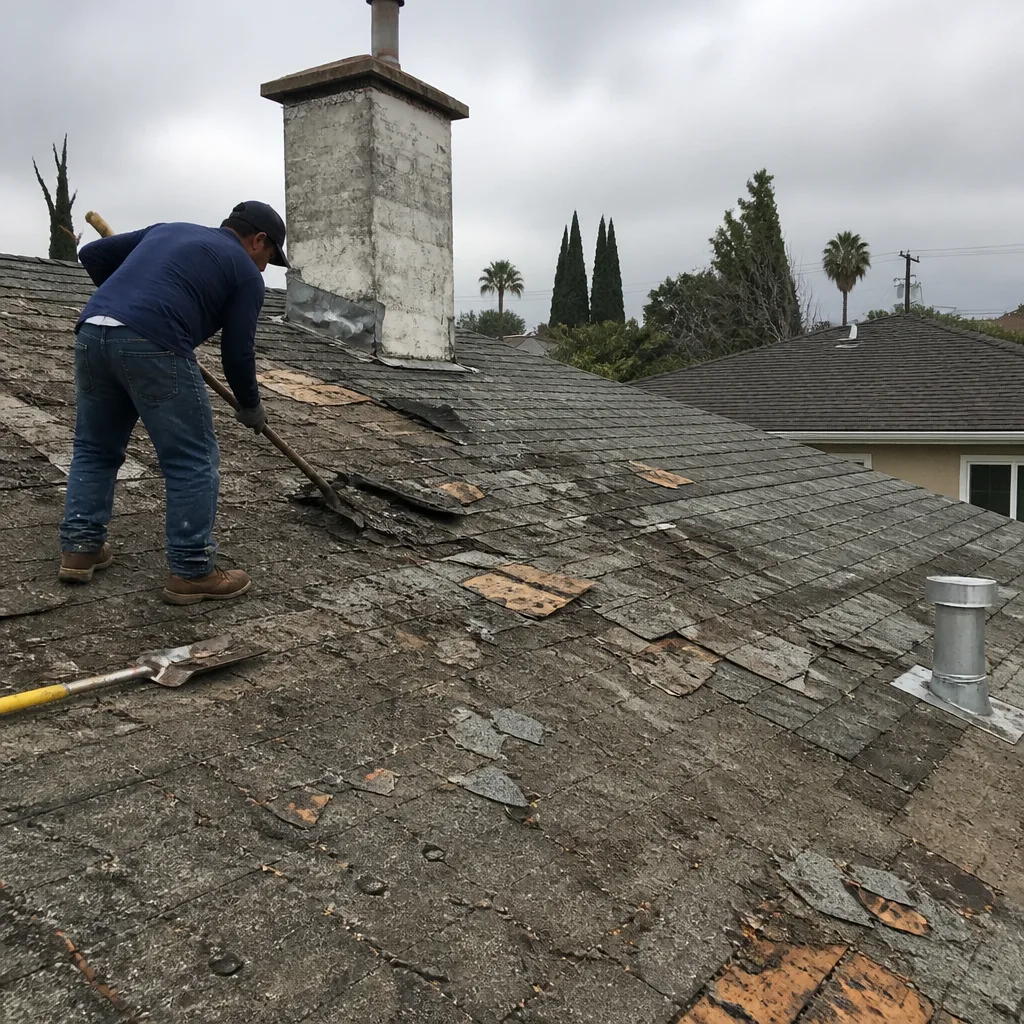 Before
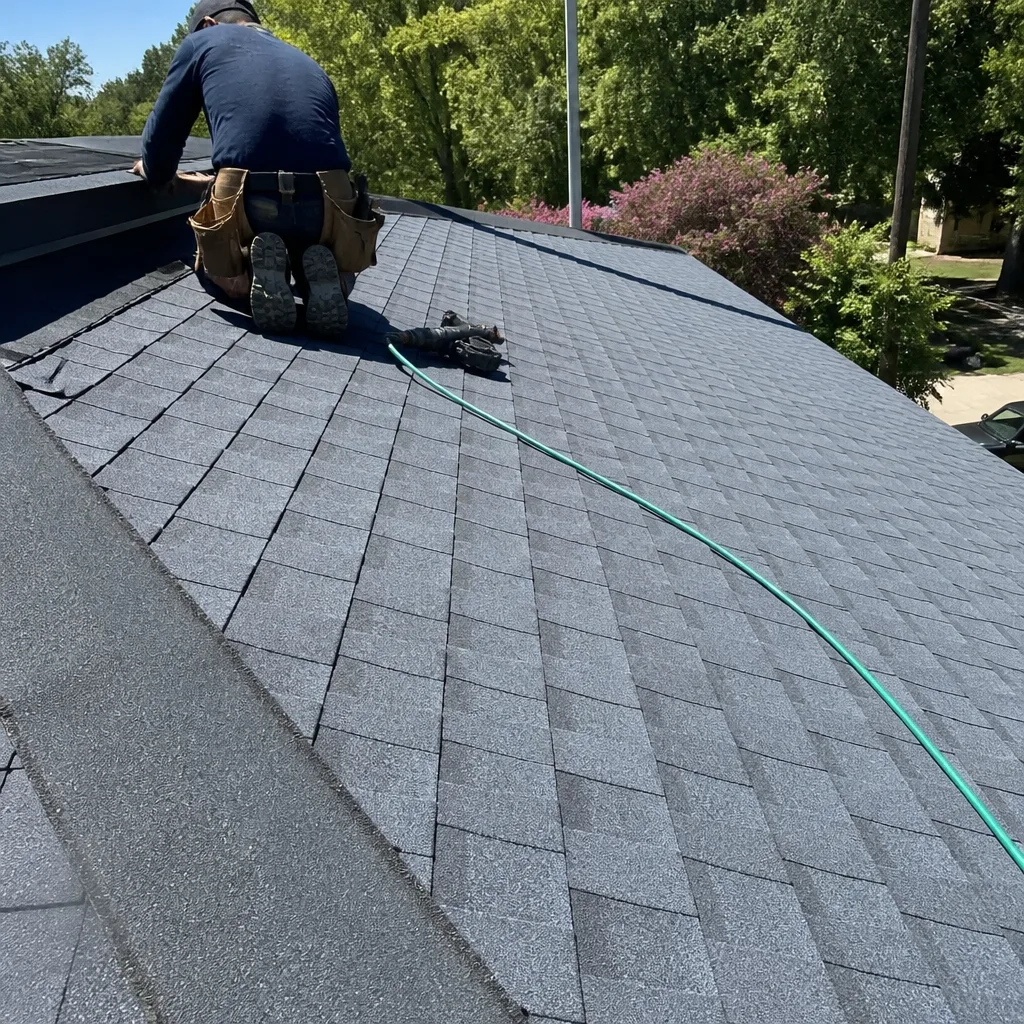 After
After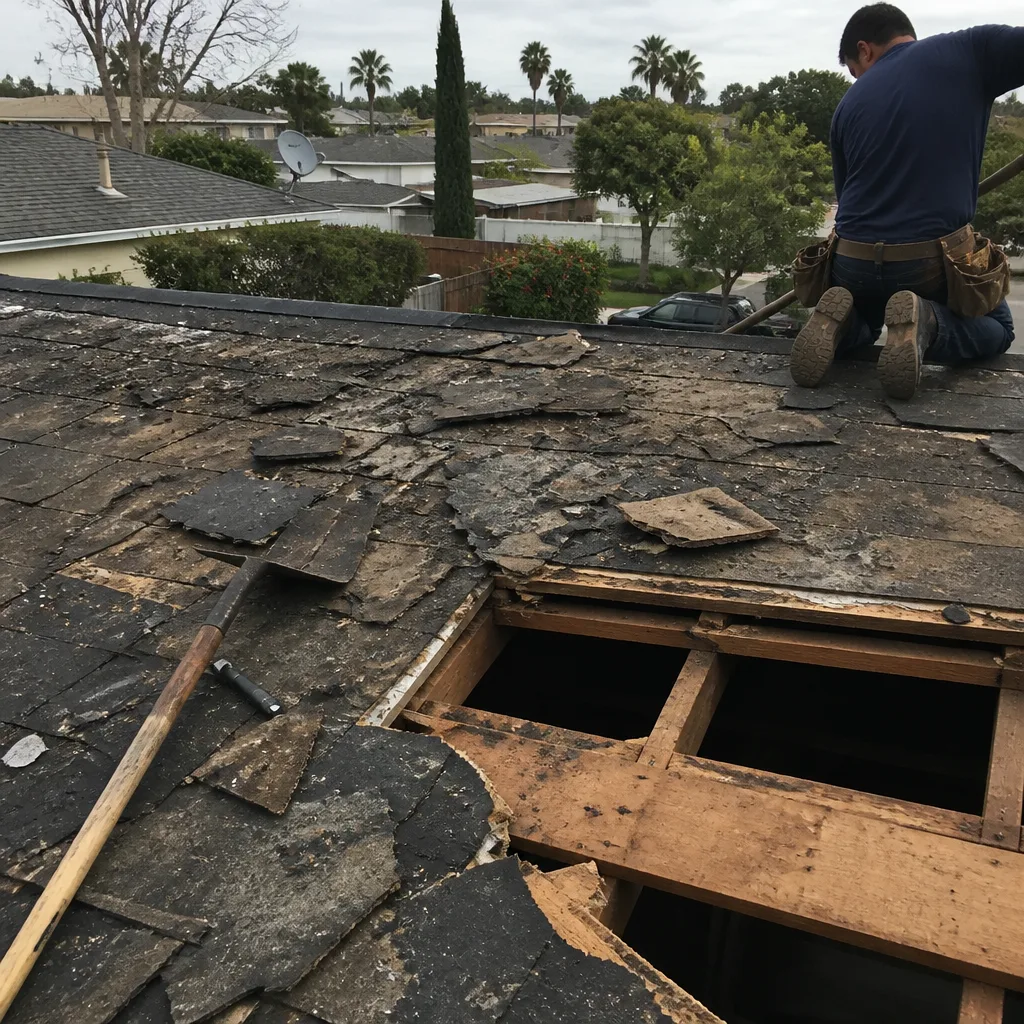 Before
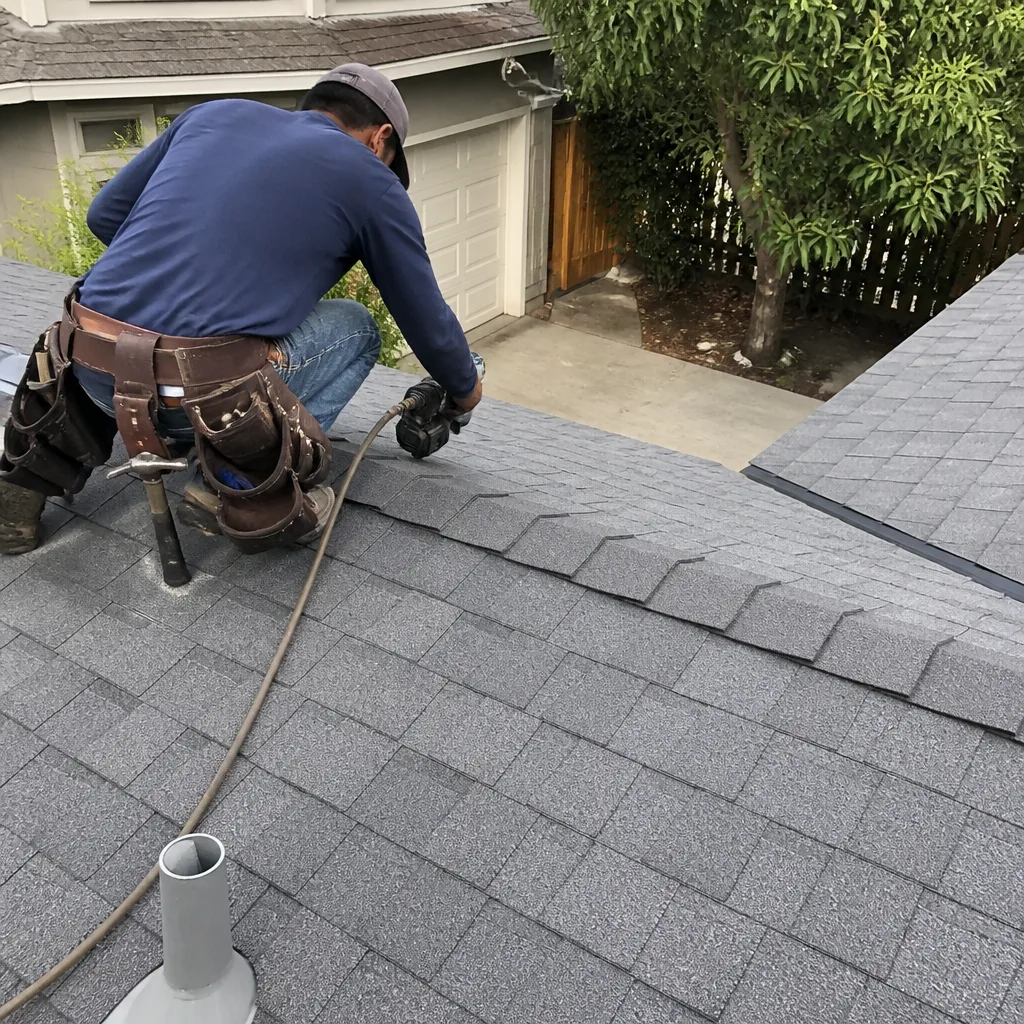 After
AfterRoof Repair Troubleshooting: Common Problems and How to Fix Them
Roughly 90% of roof leaks originate at a flashing point, a penetration, or a transition – not in the field of the roof itself. If your roofer’s first answer is ‘the shingles,’ ask more questions. This guide walks through a systematic tracing method we use in Los Angeles: working backward from the stain on your ceiling to the actual failure point on the roof. For more guides & resources, visit our blog. You’ll learn the seven highest-probability leak origins, how to run a controlled hose test, and what photos to take before you call anyone. By the end, you’ll know more about your roof than most estimators expect.
Quick Answer
To troubleshoot a roof leak, start inside: mark the ceiling stain, measure from two fixed walls, then look in the attic for water trails on rafters and decking. Follow the highest, most uphill stain to find where water enters – usually a flashing point like a pipe boot, chimney, valley, or vent. Don’t start by replacing shingles; 90% of leaks aren’t in the shingle field. For Los Angeles homes, clay tile and flat roofs move water sideways before it drops, so the interior stain is often 4 to 10 feet away from the actual entry point.
Table of Contents
- Interior Mapping: How to Trace a Ceiling Stain to Its Source
- The Seven Highest-Probability Leak Origins on a Los Angeles Home
- Running a Controlled Hose Test Without Soaking Your House
- Why Clay Tile and Flat Roofs Trick You: Water Travel Before Entry
- Photos and Measurements to Have Ready Before You Call
- When the Fix Needs New Materials: What Actually Matters
- Common Mistakes to Avoid
- When to Call a Professional
- Frequently Asked Questions
- The Bottom Line
Interior Mapping: How to Trace a Ceiling Stain to Its Source
Here’s the method we’ve taught hundreds of Los Angeles homeowners. Do this before you touch anything on the roof. It takes about 30 minutes and it will save you from chasing the wrong leak.
- Mark every stain. Circle each ceiling stain lightly with a pencil. Don’t wipe it first – the pattern matters. A fresh leak will have a darker center. An older leak will show rings, like a bathtub, with the oldest ring farthest out.
- Measure from two fixed walls. Use the nearest two perpendicular walls as reference points. Write down: “stain A is 6’3″ from the north wall, 4’8″ from the east wall.” This gives any roofer, including us, a starting point that survives your memory.
- Get into the attic with a bright flashlight. Look for water trails on the underside of the roof decking. Water leaves a dark, often shiny path that runs downhill. The trail does not point to the entry. It points from the entry. Follow it up, against the slope.
- Check the rafters. Water runs down rafters too. A stained rafter means water ran along the wood, which usually means the entry is farther up the same rafter line. Look for a subtle white or gray film – that’s dried mineral deposits from evaporated water.
- Look for daylight. On a dry day, in a dark attic, you can sometimes see pinholes of light where flashing has separated. It won’t look like a hole. It’ll look like a thin line of light along a pipe or a vent. That’s a leak path.
The stain shape tells you something. A perfectly round stain usually means a slow drip from a single point. An elongated stain along a seam or tape line suggests water traveled along a joint before dropping. A stain that appears only after rain from a specific direction – say, Santa Ana-driven storms out of the east in Los Angeles – points to a wind-blown entry at a flashing lap rather than a gravity-driven one.
The Seven Highest-Probability Leak Origins on a Los Angeles Home
Los Angeles roofing has specific failure patterns. We see these seven constantly across the basin, the Valley, and the foothills. If you check these first, you’ll find the problem roughly nine times out of ten.
- Chimney counter-flashing. LA homes built before 1970 often have chimneys with the original counter-flashing cut into old mortar joints. The mortar crumbles, the metal lifts, and water runs down the brick face behind the flashing. The interior stain usually shows up on the ceiling next to the chimney chase, not directly above the fireplace.
- Pipe boots. The rubber boot around plumbing vents cracks in LA sun within 8 to 12 years. When it does, water chases the pipe straight down and drips wherever the pipe passes. Fixes are inexpensive, but access matters – in LA ranch homes, that pipe often runs through a chase, and the stain appears far from the pipe’s actual roof position.
- HVAC curb flashing. Many LA homes have package units mounted on the roof. The curb – the raised metal frame the unit sits on – has flashing at its base. When the curb flashing fails, water enters around the unit and travels along duct runs before it drops. The stain can be 15 feet from the unit.
- Valley flashing. Where two roof planes meet, a valley carries more water than any other part of the roof. In Los Angeles, the freeze-thaw cycle is minimal, so valley failures are usually from debris backup or metal erosion, not thermal movement. If your valley holds leaves for weeks after rain, the flashing under them is rusting.
- Parapet wall caps. Flat-roof homes – huge in mid-century LA – have parapet walls around the roof’s edge. The top cap is usually metal or tile. When the sealant under that cap fails, water gets into the wall and migrates sideways 6 to 12 feet before it shows inside. We’ve traced parapet leaks across entire bedrooms in Silver Lake and Sherman Oaks.
- Skylight frames. Skylights have factory flashing kits, but the kits depend on a perfectly clean, flat deck. LA’s sun bakes the rubber seals at the skylight’s curb joint. The leak often starts as a wet ring around the skylight’s interior trim that appears only during heavy rain.
- Gutter-to-fascia gaps. This one surprises people. A gutter that has pulled away from the fascia allows water to run behind the gutter and down the wall’s top plate. The problem looks like a roof leak, but it’s actually a drainage failure. In Los Angeles, where many gutters are original to 1950s and 60s homes, the fasteners have simply pulled out of the fascia.
We’ve written about these failure patterns in our Roof Repair in Los Angeles guide, and we see them in that order of frequency.
Running a Controlled Hose Test Without Soaking Your House
A hose test is the closest thing to rain you can produce on demand, and when it’s done right, it isolates the leak zone before the roofer arrives. Done wrong, it floods your attic and blurs the evidence. Follow this order.
- Put one person inside at the stain, one person on the roof with the hose. You’ll need phones or two-way communication. The inside person watches the ceiling and calls out the moment water appears.
- Start low and go up. Soak the roof area directly above the interior stain for 10 minutes. If water shows, the entry is in that immediate zone. If not, move up the roof 2 feet and repeat. Water always runs downhill, so the entry must be at or above the first place that produces the leak.
- Soak one thing at a time. Test the pipe boot alone for 5 minutes. No leak? Move to the chimney flashing. Then the valley. Then the skylight. This isolates the culprit instead of soaking everything and guessing.
- Use a low-pressure stream. Don’t blast. You’re simulating rain, not pressure-washing. A soft, heavy soak works best.
- Document every test. Note the time each zone was soaked, how long, and whether water appeared. Take a photo of the zone you’re testing before, during, and after.
Here’s what most homeowners don’t realize: Los Angeles roofs are designed for sporadic, often intense rainfall, not long soaks. A hose test that runs for 20 minutes on one spot is actually a harder test than most LA rainstorms. It can create a “leak” that would never happen naturally. So soak in 5 to 10 minute windows. If the interior stays dry after 10 minutes on one component, move up to the next. This is the same method our technicians use during Roof Inspection in Los Angeles calls when we’re tracing an intermittent leak.
Why Clay Tile and Flat Roofs Trick You: Water Travel Before Entry
Los Angeles has two roof types that break the standard leak-tracing assumption. Most guides online are written for shingle roofs where water runs straight down the slope. Clay tile and flat roofs don’t work that way.
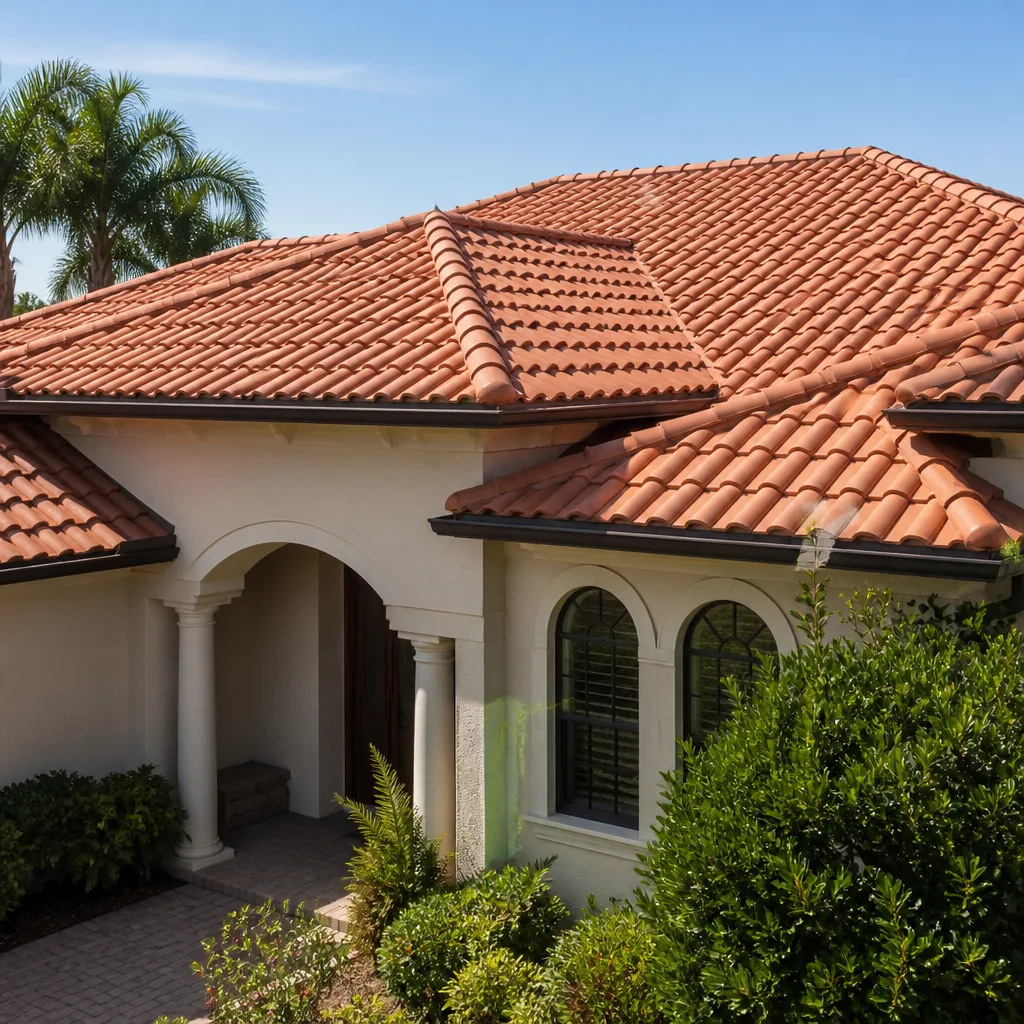
Clay tile roofs (common in the San Gabriel Valley, Pasadena, and older Mid-City neighborhoods): Tile is a water-shedding system, not a waterproof system. Water gets under the tile regularly – that’s normal. The real roof is the underlayment beneath the tile. When the underlayment fails, water runs along the decking underneath the tile, can travel 8 to 15 feet laterally, and then drops at a seam or a fastener point. The interior stain will seem to be nowhere near the actual entry. To trace a tile roof leak, you need to look at the underlayment condition in the attic and follow the highest water trail on the decking, not on the tile surface itself.
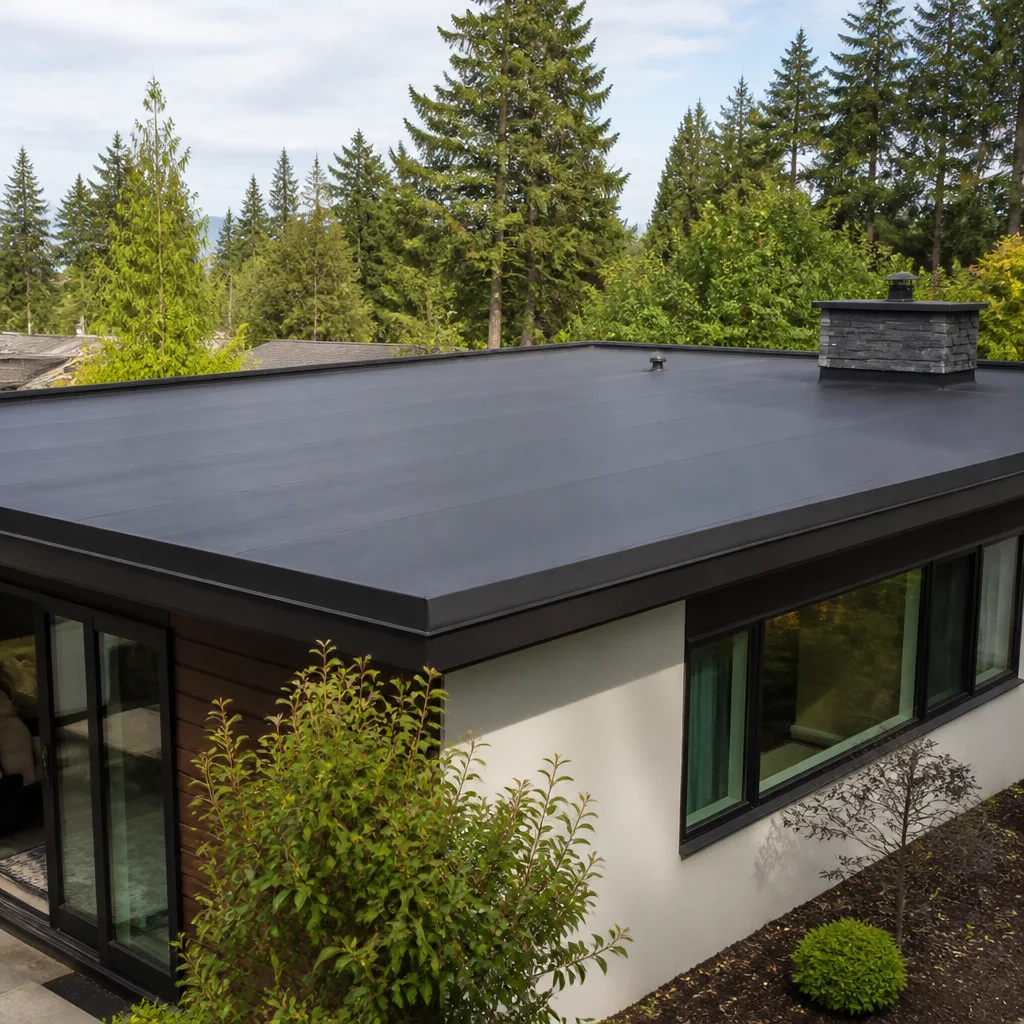
Flat roofs (common in the Hollywood Hills, West LA, and the Valley’s mid-century tracts): A flat roof is not actually flat. It has a slight slope to drains or scuppers, but it’s gentle enough that water moves slowly and spreads. It pools around penetrations, saturates seams, and then enters wherever the membrane has a blister or a seam separation. A leak can originate 10, 20, or even 30 feet from where it drips inside, because the water is traveling across the membrane’s surface before it finds a hole. When you trace a flat roof leak, ignore the interior stain’s position entirely. Look for the shallowest ponding area above the stain and start there. Standing water on an LA flat roof is not just a cosmetic issue – it’s a leak waiting for a seam failure.
LA building codes require specific membrane systems for flat roofs, and the choice between modified bitumen, TPO, PVC, and coating systems changes how a leak is repaired. The wrong patch material can make a leak worse within one season.
Photos and Measurements to Have Ready Before You Call
When you call a Los Angeles roofer, the first thing they’ll do is ask questions. The better your answers, the more accurate the quote, and the fewer no-show or price-shift problems you’ll have. Here’s what to gather before you pick up the phone.
- Interior stain photo with a tape measure in frame. Hold a tape measure across the stain so the photo shows the stain’s width. Photograph the stain from 3 feet away and then close up. The contrast tells the roofer how long the leak has been active.
- Two measurements from fixed walls. As covered above: stain to north wall, stain to east wall. Write them down, don’t trust memory.
- Attic photos of any water trail on decking or rafters. A phone photo with the flashlight beam visible is fine. The goal is to show the trail’s direction, not to win photography awards.
- Roof-level photos of the suspects. If you can safely shoot from the ground, photograph the chimney flashing, pipe boots, valleys, and skylight from at least two angles. Ladder work on a roof is dangerous, especially on Los Angeles hillside homes with steep pitches – don’t climb if you have any doubt. We’ll get on the roof; that’s our job.
- The roof’s rough age and material. “Composition shingle, maybe 15 years old” or “clay tile, original to the 1962 build” narrows the probable failures immediately.
- The leak’s behavior. Does it drip within minutes of rain starting? Does it take a full day? Does it only leak in heavy rain or also in light drizzle? This behavioral data points to either an immediate entry or a slow water-path saturation.
Having these ready makes any roofer’s estimate far more reliable. It also filters out contractors who don’t ask for them. We’ve built our process around written, up-front pricing, so when someone calls Brennan Roofing with these details already gathered, the conversation starts productively instead of at square one. That’s the whole point of The Garrison Standard – a written price before any work starts, so you’re choosing a roofer with real information, not a guess.
When the Fix Needs New Materials: What Actually Matters
Some leaks are fixed with a $60 pipe boot and 30 minutes of labor. Others need a new valley, new curb flashing, or a partial underlayment replacement. Los Angeles roofing material markets are priced differently than national averages – labor rates, local permitting, and disposal costs push the numbers around. Here’s what common repairs actually run in the LA area right now.
- Pipe boot replacement: $180 – $320. Small job, but climbing onto an LA roof and setting up safely costs the roofer real time. A boot that has been leaking for years may also need decking repair where the pipe passes through.
- Valley flashing repair or replacement: $650 – $1,400 per valley. The metal itself is not the expense – the labor to peel back shingle or tile, remove the old valley, install new metal, and re-lay the surrounding material is.
- Chimney flashing and counter-flashing repair: $600 – $1,500. Repointing mortar joints around a chimney can add several hundred dollars. If the chimney has a cricket – the small peaked wall on the uphill side – the work is more involved.
- Parapet wall cap repair or replacement: $800 – $2,200, depending on linear feet and the cap material. Los Angeles parapets are everywhere on flat-roof homes, and the cap often needs custom metal work.
- Skylight re-flashing: $500 – $1,100 per skylight, more if the drywall around the light needs repair from water damage. Some manufacturers like Owens Corning and IKO produce skylight-compatible flashing kits, but the curb itself often needs rebuilding.
- Gutter re-securing to fascia: $150 – $500. Minor fix, but if the fascia board is rotted, the repair expands. In Los Angeles, original wood fascia on 60-year-old homes is often soft by the time the gutter has pulled away.
For shingle replacements, we install materials from lines like Owens Corning, IKO, and Atlas. The right shingle for a Los Angeles home depends on roof slope, exposure, and the homeowner’s tolerance for heat reflectivity – LA’s sun punishes dark materials. For flat roofs, material selection matters even more. We source from manufacturer lines including GAF, CertainTeed, and Tamko, and the patch or replacement membrane must match the existing system’s chemistry. Mixing TPO with an old modified bitumen roof is a shortcut that fails within months.
Common Mistakes to Avoid
- Starting with the shingles. Since 90% of leaks are at flashing and penetrations, inspecting the shingle field first wastes hours and often leads to replacing material that wasn’t the problem. The shingles may be old, but they may not be the leak.
- Sealing from inside. Spray foam and liquid sealants applied to the interior ceiling or attic side of a leak do not stop the water at the source. They trap it inside the roof assembly, and the rot continues unseen. In Los Angeles, where termites thrive on damp wood, this is a fast track to structural damage.
- Testing with a pressure washer. A pressure washer forces water through gaps that rainfall would never penetrate. You’ll “confirm” a leak where no real leak exists and throw off the diagnosis.
- Ignoring the leak’s timing. A leak that appears 6 hours after rain starts is a saturation leak – water is pooling somewhere and slowly working through. A leak that appears 10 minutes into a downpour is a direct entry. Treating both as the same problem leads to the wrong fix.
- Waiting through one wet season. In Los Angeles, a roof leak that goes unfixed through one winter means decking rot, interior drywall damage, and often mold by spring. The repair cost multiplies. We’ve seen what could have been a $300 pipe boot turn into a $3,000 decking and drywall job because the homeowner waited a year.
- Not checking the gutters first. Before you call a roofer about water staining near the eaves, walk outside in the next rain and watch the gutter. If water is overflowing at the corner or running behind the gutter, the fix is drainage, not roofing. Los Angeles gutter systems are often under-sized for the heavy bursts we get from atmospheric rivers.
When to Call a Professional
If the leak is on a steep roof, a two-story home, a clay tile system, or a flat roof with ponding water, stop the DIY tracing and call someone who does this daily. Steep and high roofs in Los Angeles are genuinely dangerous, and a slip on a two-story Spanish tile roof in the hills is not a risk worth taking to save a diagnostic fee. The same goes for leaks that have already caused visible decking rot – that’s structural territory, and pulling off material without braces is how garages get crushed. If you’ve done the interior mapping and you can’t find the entry, or if the hose test produces water but you can’t isolate the zone, it’s time for professional Roof Repair services. Brennan Roofing offers free estimates in Los Angeles – call (361) 320-9467 and we’ll send a background-checked technician in uniform to trace the leak and give you a written price before any work starts.
Frequently Asked Questions
Most common roof repairs in Los Angeles run between $180 and $1,500 depending on the failure point. A pipe boot replacement runs $180 – $320, valley flashing repair runs $650 – $1,400, and chimney flashings run $600 – $1,500. Larger structural repairs involving decking or roof framing push higher. Call (361) 320-9467 for a written quote – our estimates are free, and the price goes on paper before any work starts.
If the interior stain sits near a chimney, pipe, skylight, valley, or vent, the leak is almost certainly flashing-related. Shingle-only failures without a nearby penetration are rare on Los Angeles homes. Trace the attic water trail to its highest point on the decking – wherever the trail begins is the entry, and the component there is your suspect.
At Brennan Roofing, no. The price goes on paper before any work begins and it does not move at the door. We check the attic, roof, and leak path during the estimate so we’re quoting the actual job, not a guess. That’s the whole point of The Garrison Standard.
Most repairs take 2 to 6 hours on site. Pipe boots and minor flashing jobs are often done in under two hours. Valley replacements, parapet caps, and skylight re-flashing take half a day to a full day. Larger decking or underlayment replacements can run 2 to 3 days depending on scope. We give a written timeline with every estimate.
No. Every repair and installation is backed by the 365-Day Done Right Promise – a written guarantee for one full year, with a free return visit at no charge if the repair fails within that period. If it’s not done right, we make it right. In writing.
Run the interior mapping method on any existing stains, check your flashings and pipe boots for visible sun damage, and clear your gutters and valleys. Los Angeles rain arrives in bursts, and a roof that survives the dry summer can fail in the first heavy storm. A Roofing Company in Los Angeles like Brennan Roofing can do a full inspection and give you a written list of what needs attention before the rain returns.
The Bottom Line
Roof leaks almost never enter where they show. The stain on your ceiling is the end of the water’s path, not the beginning. Map the interior, check the attic trails, and focus on the seven flashing points that cause most Los Angeles leaks. Run a hose test in controlled zones if you need to isolate the source, and document everything with measurements and photos before you call a roofer. The more you know about where the water is entering, the more accurate the quote will be, and the less chance you’ll pay for work that doesn’t fix the problem. When you’re ready for a professional eyes-on assessment, start at the Brennan Roofing home page or call us directly.
Written by Travis Oakley, Owner at Brennan Roofing, serving Los Angeles since 2000.