
Last updated October 9, 2026
Free roof inspection with deck photos before we talk money - GAF and Owens Corning certified installation
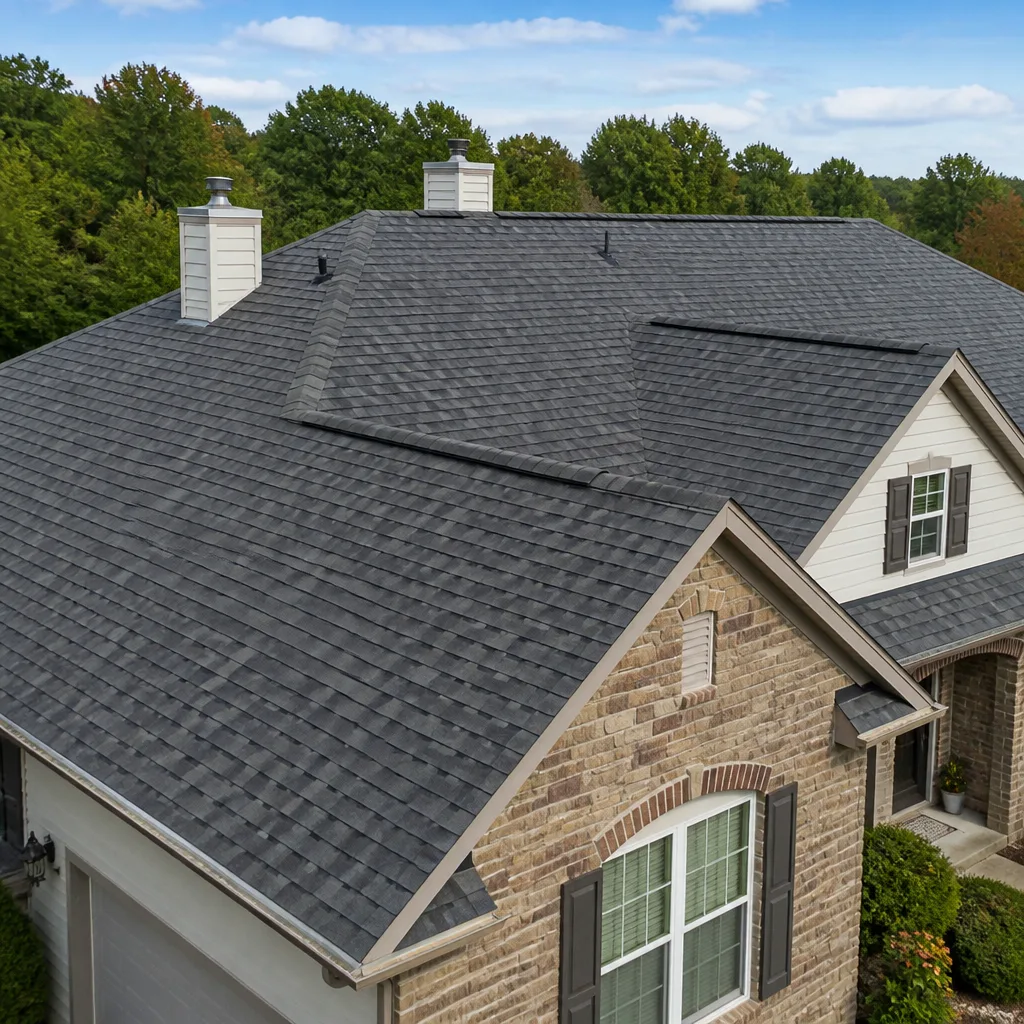
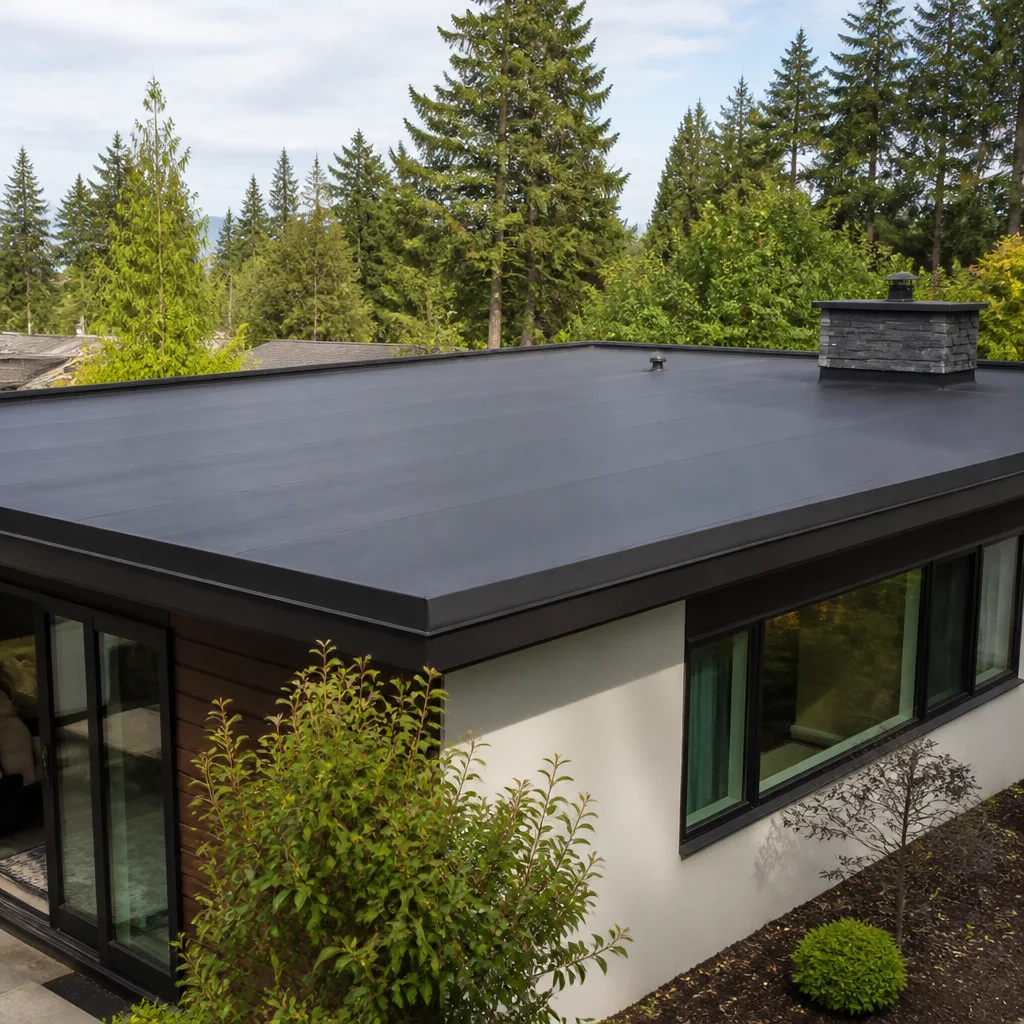
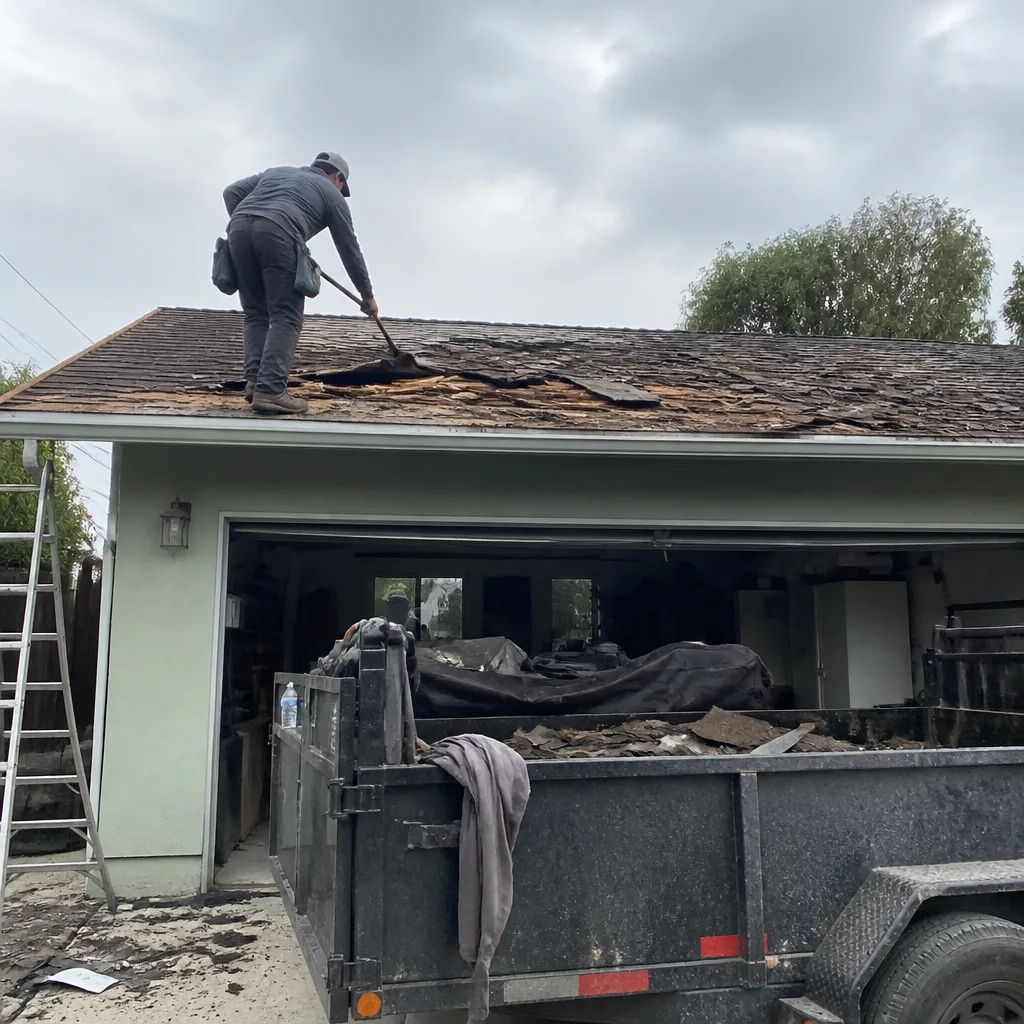 Before
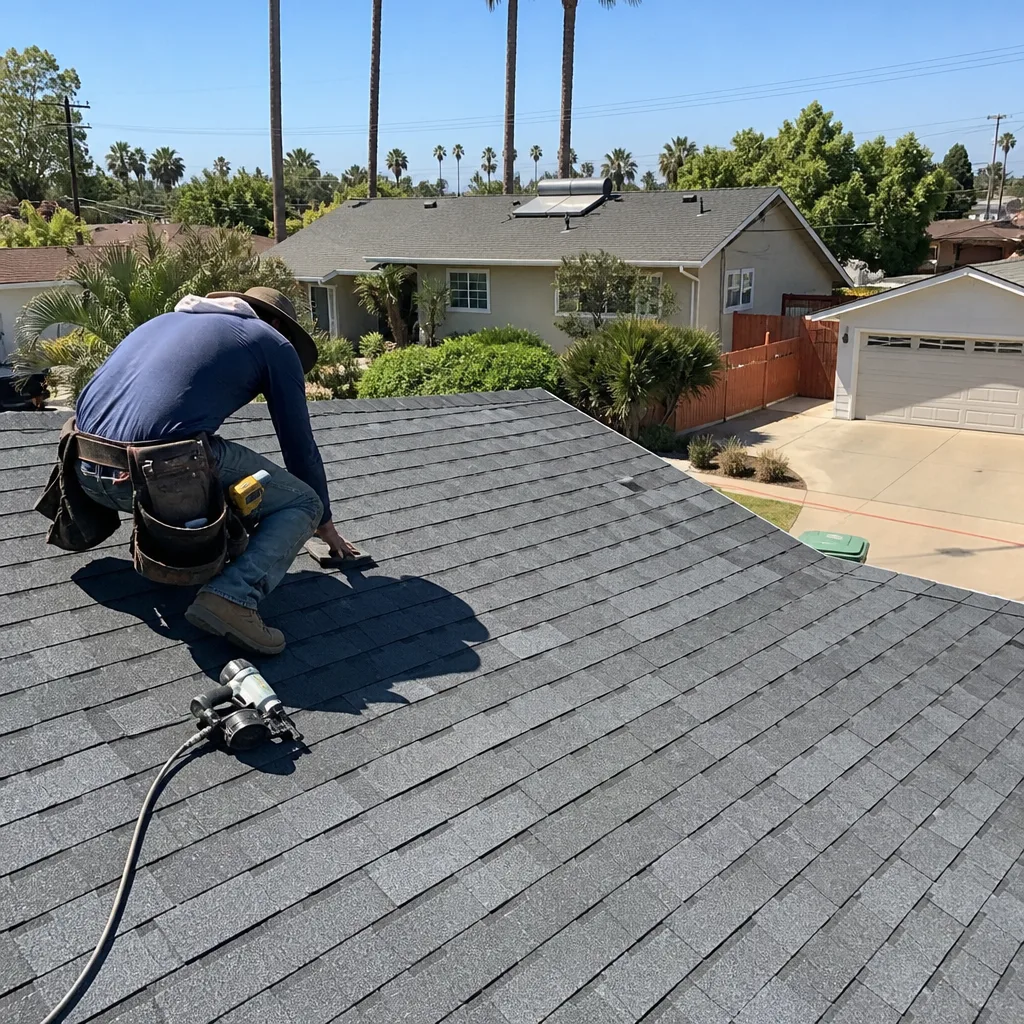 After
After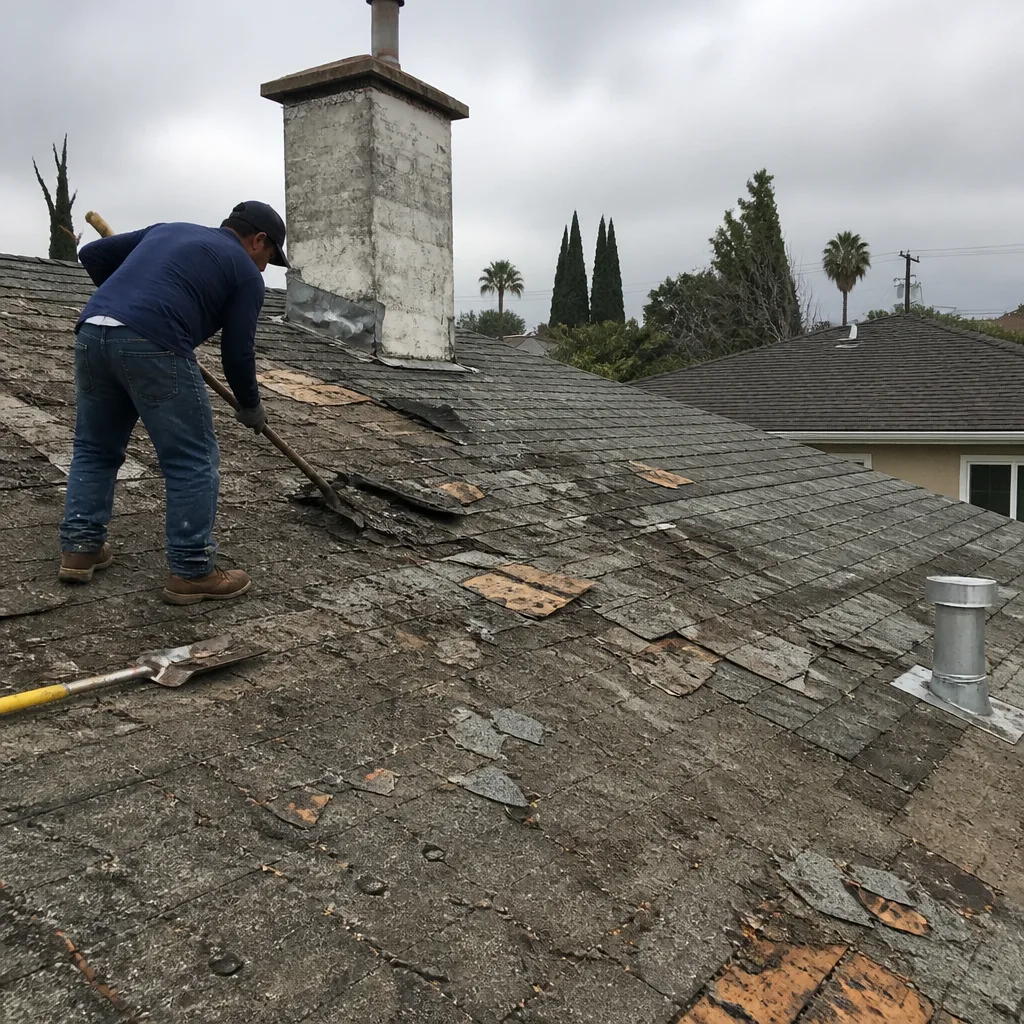 Before
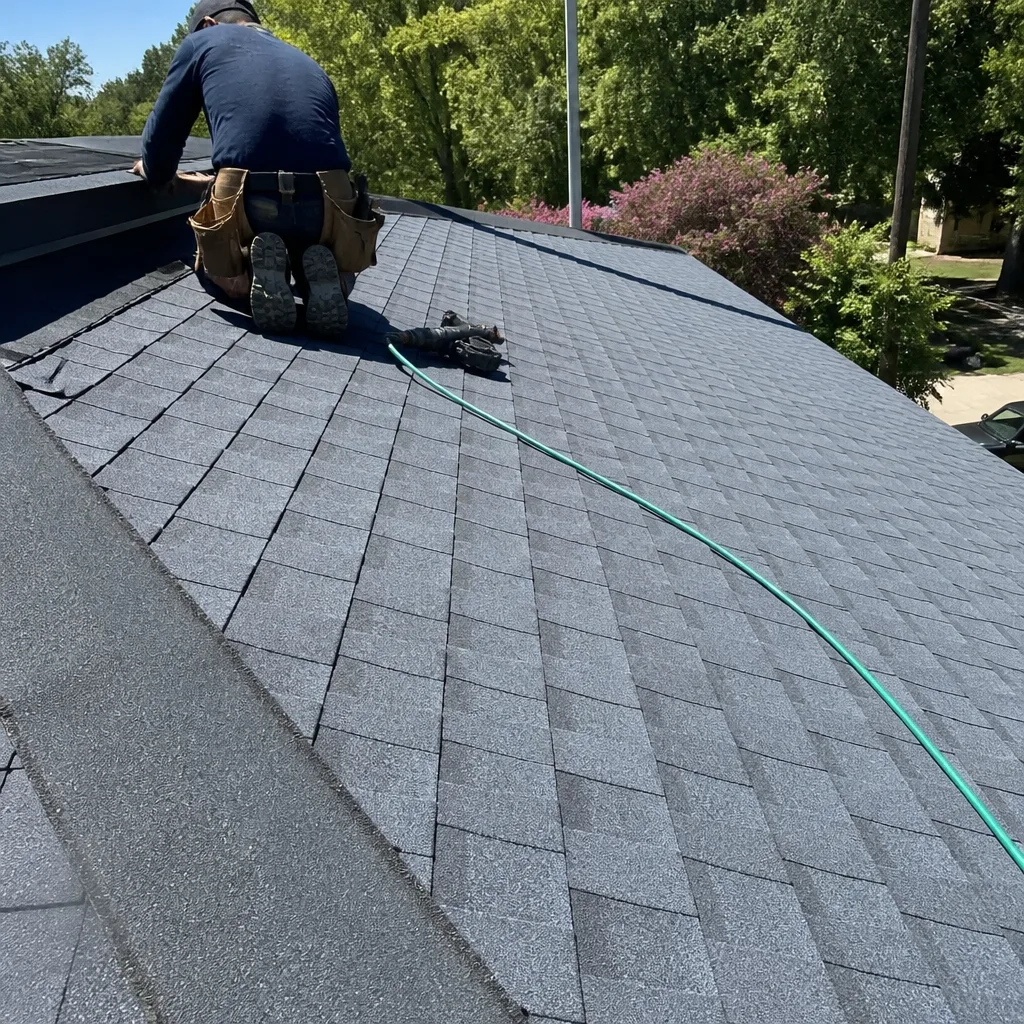 After
After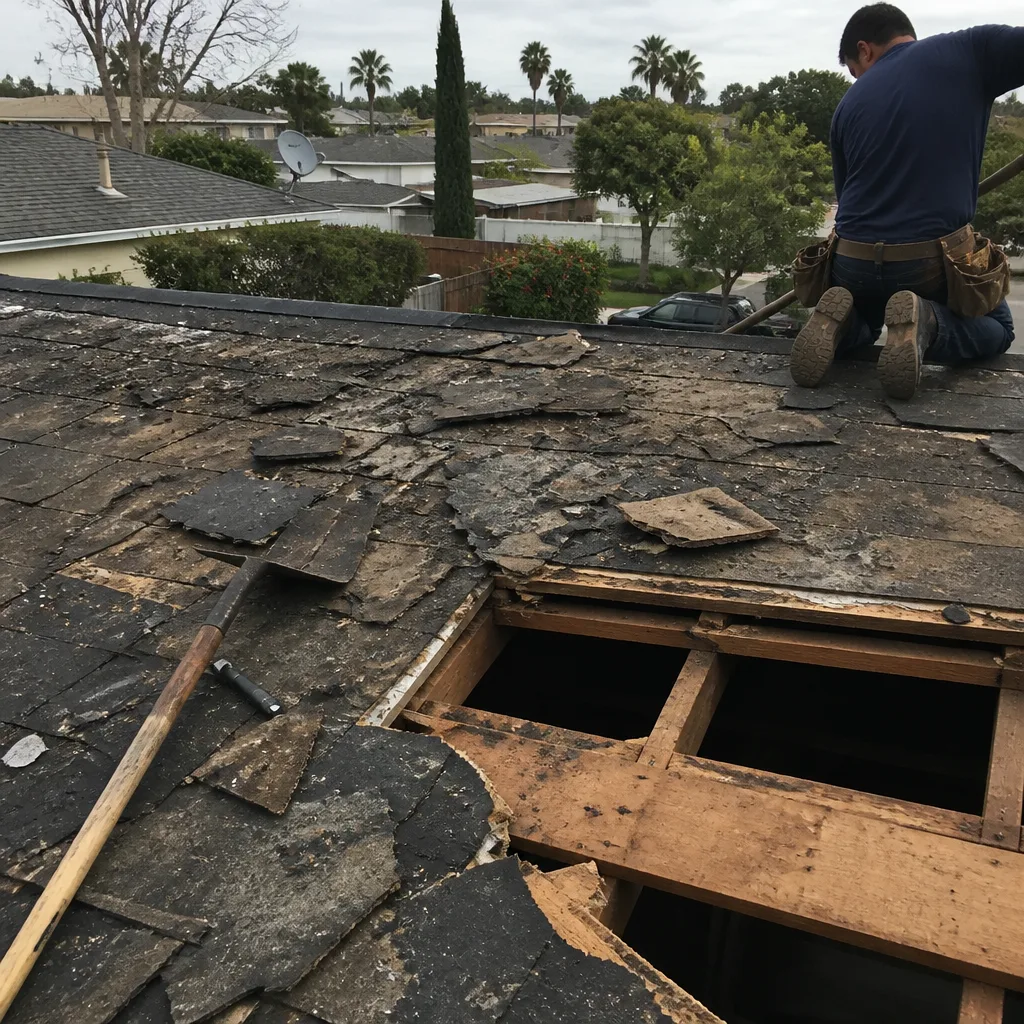 Before
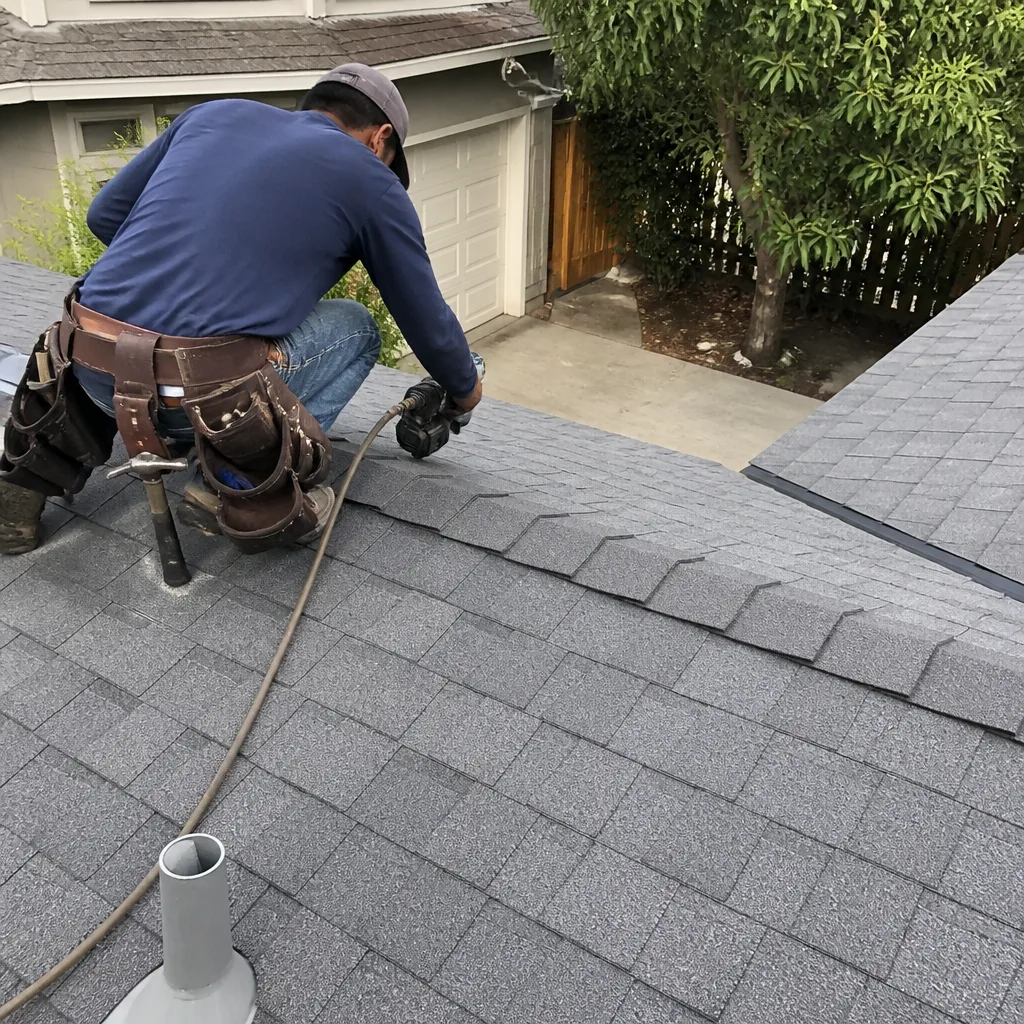 After
AfterRoof Repair Warning Signs Every Homeowner Should Know
A roof leak that costs $400 to fix on day one typically costs $2,500 to $6,000 by the time water has migrated through sheathing into framing. The difference isn’t severity. It’s which side of the ceiling you found it on. Most homeowners learn about roof damage from the inside out: a brown stain on the ceiling, a drip in the attic, warped drywall. By then, moisture has been working its way through the roof assembly for months. This Roof Repair guide flips the sequence. We’ll walk the warning signs from the outside in, so you catch problems at the $300 stage instead of the $8,000 stage. If you own a home in Los Angeles, the sun and Santa Ana winds are working against your roof every single year, and the earliest signs are almost always visible before anything ever reaches your ceiling.
Quick Answer
The earliest roof repair warning signs are exterior: granule accumulation in gutters, shingles that cup or claw in direct sun, lifted edges at the ridge and rake, and visible sag along the ridge line. Inside, the first signs are usually a musty smell in the attic on hot days, rusted nail heads on sheathing, and compressed or darkened insulation in specific zones, all of which precede any ceiling stain. In Los Angeles, UV damage and Santa Ana wind uplift accelerate these signs, so an exterior walk-around with binoculars twice a year is the single most effective habit a homeowner can build; see our Roofing Company Maintenance Checklist for Los Angeles Homeowners for a full routine.
Table of Contents
- Exterior Warning Signs You Can See From the Ground
- Granule Loss: How to Read Your Gutters Like a Gauge
- Shingle Cupping, Clawing, and Curling: What Each Pattern Means
- Ridge Line Sag and Lifted Rake Edges
- Early Interior Signs That Precede Ceiling Stains
- Cosmetic Damage vs. Active Water Intrusion: How to Tell the Difference
- What Los Angeles Conditions Do to a Roof That Other Climates Don’t
- Common Mistakes to Avoid
- When to Call a Professional
- Frequently Asked Questions
- The Bottom Line
Exterior Warning Signs You Can See From the Ground
You don’t need a ladder to catch most roof problems early. You need ten minutes, a pair of binoculars, and a habit of walking the perimeter twice a year. In our experience across Los Angeles, the homeowners who catch repairs at $300 to $600 are the ones who look at their roof from the street and the backyard on a regular schedule, not the ones who wait for a sign inside the house.
Here’s what to look for from the ground, no ladder required:
- Dark patches or streaks that don’t dry out. On Los Angeles roofs, this can be algae or moss on shaded north slopes, but on sun-exposed slopes, dark patches often mean the granule layer is worn away and the asphalt mat underneath is exposed. Exposed asphalt absorbs heat and degrades fast.
- Shingles that don’t lie flat. Look along the roofline against a clear sky. Any shingle edge that is visibly lifted, bent, or casting a shadow against the shingle below it is a problem. Wind gets under lifted edges, and once one shingle lifts, the ones around it follow.
- Missing shingles. Obvious, but walk the whole footprint. A single missing shingle on a back slope that faces an alley or rear neighbor can go unnoticed for months. In Los Angeles, a missing shingle during Santa Ana season becomes a patch of exposed underlayment, then exposed decking, then a leak.
- Dips, waves, or uneven planes. A roof should read as straight lines. Any visible dip between rafters or sag along the ridge suggests decking that has absorbed moisture or framing that is settling.
- Rusted flashing at chimneys, vents, and skylights. Flashing is the metal that seals the joints where the roof meets anything vertical. Surface rust is cosmetic at first, but rust that is flaking or has pinholes means water is working through the metal.
- Debris dams at valley intersections. Leaves, needles, and city grit collect where two roof planes meet. Those dams hold water against the shingles and force it sideways under the shingle laps.
None of this requires touching the roof. Binoculars from the sidewalk, the backyard, or a neighbor’s driveway are all you need for a ground-level read. If you want a professional eyes-on, a Roof Inspection in Los Angeles from a crew that walks the entire surface is the next step, but the initial triage is yours to do.
Granule Loss: How to Read Your Gutters Like a Gauge
The single most overlooked warning sign in roofing is granule accumulation in gutters. Every asphalt shingle is coated with ceramic granules that serve two functions: they block UV radiation from breaking down the asphalt, and they provide fire resistance. As shingles age, they shed granules. Some shedding is normal in year one, then it should taper off sharply. When it picks back up, that’s degradation.
Here’s how to read the gutter as a gauge, a simple numbered process we walk homeowners through in Los Angeles all the time:
- Clean the gutters once, thoroughly. Remove all material. Note the date.
- Check again in 90 days. If you find a visible layer of granules in the trough, that’s active shedding.
- Measure the texture of the granules. Rub them between your fingers. New granules feel like coarse sand, angular and sharp. Worn granules feel smooth, almost like fine beach sand. Smooth granules mean the shingle surface is spent.
- Look at the color. Granules in the gutter should match the shingle color. If you see a mix of colors, debris from other sources is in play. If you see a uniform color that matches your roof, that’s shingle material.
- Check the downspout splash blocks. Granules wash through downspouts and collect where the water discharges. A visible pile of granules at the splash block is the same signal, just concentrated.
In Los Angeles, the pattern we see most often is concentrated granule loss on the west and south-facing slopes. Those planes take the full afternoon sun, and UV breaks down the asphalt binder that holds granules. The granules go first, then the asphalt oxidizes and cracks, then water gets through. A homeowner who reads granule loss early is looking at a potential re-shingle of one slope in a few years, not an emergency tear-off today.
When we see granule loss at the $300 repair stage, it’s usually a few shingles replaced or a section re-sealed. At the $8,000 stage, it’s full decking replacement with everything that comes with it. That’s the whole argument for watching the gutters.
Shingle Cupping, Clawing, and Curling: What Each Pattern Means
Shingle deformation follows predictable patterns, and each pattern tells you something different about what’s happening on the roof. We’ll walk through the three most common, using the trade terms and then the plain-English meaning.
- Cupping. The edges of the shingle turn upward, so the shingle forms a shallow U-shape, like a cup. Cupping usually happens when the underside of the shingle absorbs moisture while the top side dries out. In Los Angeles, we see this most on north-facing slopes and under tree canopies where the roof stays damp longer. Cupping is often the first visible sign that moisture is trapped in the shingle assembly.
- Clawing. The edges turn downward and the center of the shingle stays flat, so the shingle looks like a claw gripping the one below it. Clawing is typically an aging and heat signal. The asphalt has lost flexibility and the edges are curling under the stress of thermal expansion and contraction. In Los Angeles, clawing shows up first on west-facing slopes that heat to 160-plus degrees in July and August, then cool dramatically overnight.
- Curling. The entire shingle tab lifts and rolls like a wave. Curling is advanced. The shingle is no longer sealed, wind can get underneath it, and water can run sideways into the laps. Curled shingles are one strong wind event away from becoming missing shingles.
Here’s the practical read. Cupping is a moisture warning. Clawing is an age and heat warning. Curling is a replacement warning. If you see isolated curling on a slope that takes direct sun, you’re probably looking at a repair of that section rather than a catastrophic failure. But if curling is widespread, the roof is telling you the shingle product has reached the end of its service life.
When we replace shingles in Los Angeles, we typically recommend materials from CertainTeed, Owens Corning, or IKO depending on the home’s exposure and the homeowner’s priorities. The manufacturer matters less than the installation discipline: the fastening pattern, the nailing zone, and the sealant strip all have to be right. The shingle is only as good as the crew that put it on.
Ridge Line Sag and Lifted Rake Edges
The ridge line is the highest point of the roof, where the two slopes meet. The rake is the sloped edge that runs from the eave to the ridge. Both are structural early-warning sites, and both are visible from the ground with binoculars in most Los Angeles homes.
Ridge line sag reads as a dip or a bow in what should be a straight line. A roof ridge should be absolutely level with no visible variation. If you sight down the ridge and see a soft spot, a dip, or a wave, that’s a sign that the framing or decking underneath has moved. Common causes include: a ridge beam that has settled, rafter ends that have rotated, or decking that has absorbed moisture and lost its stiffness. Ridge sag doesn’t repair itself, and it doesn’t get better with time. It is a structural conversation, not a shingle conversation.
Lifted rake edges are shingles at the sloped edge of the roof that are no longer sealed down. On a standard roof, the rake shingles get hammered by wind uplift because they are the first edge the wind hits. In Los Angeles, Santa Ana winds come out of the northeast and hit the rake lines on the windward side of the house directly. Wind gets under the rake shingle, breaks the seal, and lifts the edge. Once lifted, the shingle flexes with every wind event, and the lift spreads shingle by shingle toward the ridge.
The fix for lifted rake edges is mechanical: re-seal the shingles or replace the affected ones, sometimes with a wind-rated adhesive. The fix for ridge sag starts with an inspection of what’s underneath. Either way, these are signs to document. Take a photo from the ground, note the date, and compare it next season. If the sag is deepening or the lifted edge is spreading, that’s a change in condition, not a static feature.
Early Interior Signs That Precede Ceiling Stains
By the time water reaches the ceiling drywall, it has already passed through the shingle, the underlayment, the decking, and into the attic. The pathway takes months. But water announces itself in the attic long before the ceiling shows anything. The problem is that most homeowners never go into the attic. In Los Angeles, where attics are often cramped, hot, and used only for storage of holiday decorations, the attic is the most neglected early-warning system in the house.
Here are the interior signs that show up before any ceiling stain, in the order they typically appear:
- A musty smell in the attic on hot days. Heat drives moisture out of the decking and insulation, and the smell is the first signal. If the attic smells musty when the temperature climbs, that’s trapped moisture somewhere, even if you can’t see it yet.
- Compressed or darkened insulation in specific zones. Fiberglass insulation that has been wet loses its loft and compresses under its own weight. Walk the attic and look for insulation that is thinner, matted, or darker than the surrounding areas. In our experience in Los Angeles homes, the wet zones are usually directly under roof penetrations: vents, chimneys, skylights, and plumbing stacks.
- Rusted nail heads on the underside of the decking. Roofing nails penetrate the decking from above. When moisture gets into the decking, the exposed nail shanks and heads rust. A pattern of rusted nail heads, especially in a line or a cluster, is a moisture map. The nails are showing you exactly where water has been traveling.
- Dark rings or water lines on decking. Once the decking gets wet repeatedly, the wood itself shows it. Dark rings around nail penetrations, streaking, or water lines that follow the decking seams are all active or historical leaks.
- Daylight visible through the decking. At the ridge, at penetrations, or wherever two planes meet, look for pinholes of light. If light gets through, water gets through.
None of these require a roofing professional to spot. They require a flashlight, a willingness to climb into the attic, and about twenty minutes. The payoff is catching a leak at the point where the repair is measured in hundreds of dollars, not thousands.
Cosmetic Damage vs. Active Water Intrusion: How to Tell the Difference
Not every roof warning sign means water is getting into the house. Some signs are cosmetic. Some are functional but not yet leaking. Some are active water intrusion happening right now. Homeowners who can’t tell the difference either panic and overspend, or dismiss a real problem until it’s too late. Here’s how to calibrate urgency.
Cosmetic only. Surface algae or moss on shaded slopes is cosmetic, though it holds moisture and shortens shingle life over time. Minor granule loss in year two or three of a new roof is normal manufacturing excess shedding. Slight color variation between shingle lots is cosmetic. A few rust spots on flashing that haven’t pitted through are cosmetic. None of these require urgent action, though none should be ignored for years either.
Functional but not yet leaking. Curled shingle edges, lifted rake shingles, granule loss on a ten-year-old roof, and nail heads beginning to rust from above are functional warnings. The roof’s water-shedding ability is degrading, but water hasn’t breached the decking yet. This is the window where a repair is cheapest. It’s the $300 to $800 range for most Los Angeles homes.
Active water intrusion. Wet insulation in the attic, rusted nail heads from below, dark water rings on decking, musty smell accompanied by visible moisture, or any water on the ceiling drywall. This is an active leak. The decking is getting wet, and every week of delay adds cost. Active intrusion in a Los Angeles home typically runs $1,200 to $4,500 to repair properly, depending on how far the water has migrated and whether the decking has to be cut out and replaced.
The discipline is in matching your response to the category. A cosmetic issue can be noted and watched. A functional issue should be scheduled for repair within a season. Active water intrusion should be handled the same week it’s discovered. The Roof Repair in Los Angeles page on our site walks through what a proper repair involves, but the triage is yours to make before you ever pick up the phone.
What Los Angeles Conditions Do to a Roof That Other Climates Don’t
Roofs fail differently in Los Angeles than they do in Seattle, Chicago, or Houston. The damage profile is unique, and it’s worth understanding because the warning signs you read elsewhere don’t always apply here.
UV degradation is the primary killer. Los Angeles averages 284 sunny days a year. The west and south-facing slopes of a roof take direct sun from mid-morning to sunset, and surface temperatures on a 90-degree day routinely exceed 160 degrees. That heat bakes the asphalt in the shingle, driving off the oils that keep it flexible. Shingles in Los Angeles don’t typically fail from water exposure first. They fail from sun exposure first, which then allows water through. The tell is granule loss concentrated on the sun-facing slopes, followed by cracking and brittleness on those same slopes only.
Santa Ana wind uplift is the second most common failure mode. Santa Anas blow out of the northeast, often 40 to 60 miles per hour, with gusts higher. They hit the rake edges and ridge lines at odd angles, working under shingle laps and breaking the sealant strips. The homeowners we see after a Santa Ana event are usually dealing with lifted shingles at the rake, not leaks. Untreated, those lifted shingles become missing shingles in the next event.
Fire-season ember exposure is a reality specific to the hillside and canyon neighborhoods. From the Hollywood Hills to Sherman Oaks to the foothill communities of Pasadena and Glendale, embers carried on wind can settle on aged shingles, in gutters, and against roof-to-wall intersections. Asphalt shingles with intact granules are Class A fire-rated. Shingles that have lost their granules are not. We recommend that homeowners in wildfire-adjacent zones consider granule loss not just a waterproofing issue but a fire-safety issue.
Marine layer moisture on the westside. In Santa Monica, Venice, Playa del Rey, and other coastal neighborhoods, overnight marine layer condensation keeps north and east-facing roofs damp for hours each morning. That’s the environment where moss and algae grow, and where the shingle underside stays wet enough to cup. The westside sees more biological growth than the valley, and the valley sees more UV cracking. The warning signs are geographically predictable.
This is why a generic “roof repair guide” from a national site gets Los Angeles wrong. The failure sequence here is sun, wind, then water. In most of the country, it’s water first. A Roofing Company in Los Angeles that reads your specific slope orientation and neighborhood exposure will give you a much more accurate forecast than any national checklist.
Common Mistakes to Avoid
- Waiting for a ceiling stain to investigate. The ceiling stain is the last sign, not the first. Water that reaches the drywall has already passed through the shingle, underlayment, decking, and insulation. In Los Angeles, where the rain comes in a few concentrated months, a leak that starts in February may not show on the ceiling until March. That’s a month of active damage you didn’t know about because you weren’t looking in the attic.
- Caulking over missing granules or cracked shingles. Roofing compound is a temporary sealant for flashings and small joints. It is not a shingle replacement. A homeowner who smears caulk over a cracked shingle is buying a few weeks, and the underlying shingle continues to degrade. The water finds a way around.
- Replacing one shingle and ignoring the pattern. A single missing shingle after a wind event is a single missing shingle. But if you’re replacing shingles after every Santa Ana season, the roof is telling you the sealant strips have failed across the slope. Repeated isolated repairs are more expensive in the long run than a proper section repair.
- Assuming a new roof is problem-free for 20 years. Material warranties are not installation warranties, and Los Angeles sun doesn’t respect either. Even a well-installed roof should be inspected on a schedule: after the first full year, then annually after year eight. The roof is a wearing surface, like tires, not a permanent fixture.
- Ignoring the gutter full of granules. A gutter that fills with granules after every rain is not a gutter problem. It’s a roof surface problem. The gutter is just the collector. Clean it, then find out why the granules are shedding.
- Making repairs without a written price. Any roofer who won’t put a number on paper before starting work is not someone you want on your roof. The price should be in writing, line by line, before any work begins. No exceptions. If the number moves at the door, the roofer moves with it.
- Deferring repairs because “it doesn’t rain much in LA.” Los Angeles gets most of its rain between November and March, but the damage accumulates all year. UV degradation in August is what makes the roof vulnerable in February. Waiting for the rainy season to inspect is waiting too long.
When to Call a Professional
Some warning signs are for you to note and watch. Others mean it’s time to get a professional on the roof. Call a roofer if you see: active water in the attic, any daylight through the decking, ridge line sag, widespread granule loss on sun-facing slopes, shingles curling on more than a few scattered tabs, or water stains on ceilings or walls. Call if you’re not comfortable getting on the roof yourself, or if a ground-level inspection raises questions you can’t answer. Call if the last full inspection was more than three years ago and you live in a high-UV or wildfire-adjacent part of Los Angeles. Brennan Roofing home is where you can see the full scope of what we do. We offer free estimates in Los Angeles, and the price goes in writing before any work starts. Call (361) 320-9467 to schedule.
Frequently Asked Questions
Twice a year at minimum: once in late summer, before the Santa Ana and rainy season, and once in late spring, after the rainy season has passed. If you live in a wildfire-adjacent zone or under heavy tree cover, quarterly is better. The inspections from the ground with binoculars take ten minutes, and the attic checks take about twenty. The Roof Inspection in Los Angeles page on our site has more detail on what a professional inspection covers. Schedule your first professional inspection within one year of buying the home, then follow your roofer’s recommended interval.
Most Los Angeles roof repairs fall between $400 and $2,500. Isolated shingle replacement runs $300 to $600. Flashing repair around a vent or chimney runs $500 to $1,200. Decking replacement around a leak runs $1,200 to $3,000. The cost depends on what’s underneath the shingle, and that’s why the written quote matters: the number on paper before work starts is the number you pay. Call (361) 320-9467 for an exact quote, estimates are free.
Not at our company. The price goes on paper before any work begins, and that number is the number. If we find additional damage during the repair, we stop, show you photos, and get your approval on a written change before proceeding. No roofer should be adjusting the price at the door or after the fact without your written consent.
A repair addresses a specific, localized problem: a section of shingles, a flashing, a penetration leak. A replacement removes the entire roof assembly down to the decking and installs new underlayment, shingles, and flashings. The decision point is coverage: if repairs are spreading across multiple slopes, or the shingles are end-of-life across most of the roof, replacement is usually the better financial decision. A roofer who only sells replacements will always recommend replacement. A roofer who does both will show you the numbers and let you decide.
For most repairs, no permit is required. Replacing a few shingles, resealing flashings, or patching a small section does not trigger the Los Angeles permit process. A full re-roof, where the old shingles are torn off and new underlayment and shingles are installed, does require a permit. The city uses the permit to verify the roof meets current code for the wind zone and fire rating. Any roofer who suggests skipping the permit on a full replacement is asking you to carry a liability that isn’t yours to carry.
We install materials from leading manufacturer lines including GAF, CertainTeed, Owens Corning, IKO, Atlas, Tamko, and Boral. The brand matters less than the installation, but we prefer to give homeowners real options with the trade-offs explained plainly. CertainTeed and Owens Corning are the two we recommend most often for Los Angeles homes, given the UV exposure and wind conditions here. The right product depends on your slope orientation, your fire zone, and your budget.
The Bottom Line
Roof damage is a compounding problem. The $400 repair on day one becomes the $2,500 repair in month six and the $6,000 repair in year two. The difference is not the severity of the original problem. It’s the speed of detection. The warning signs are visible from the ground, readable in the gutters, and detectable in the attic long before they ever reach the ceiling. In Los Angeles, where sun and wind work on the roof every single day, twice-a-year inspections are the cheapest roof insurance you will ever buy. Read the granular loss. Watch the rake edges. Smell the attic on hot days. And when those signs point to a problem, get a written price before any work starts.
Written by Travis Oakley, Owner at Brennan Roofing, serving Los Angeles since 2000.