
Last updated October 9, 2026
Free roof inspection with deck photos before we talk money - GAF and Owens Corning certified installation

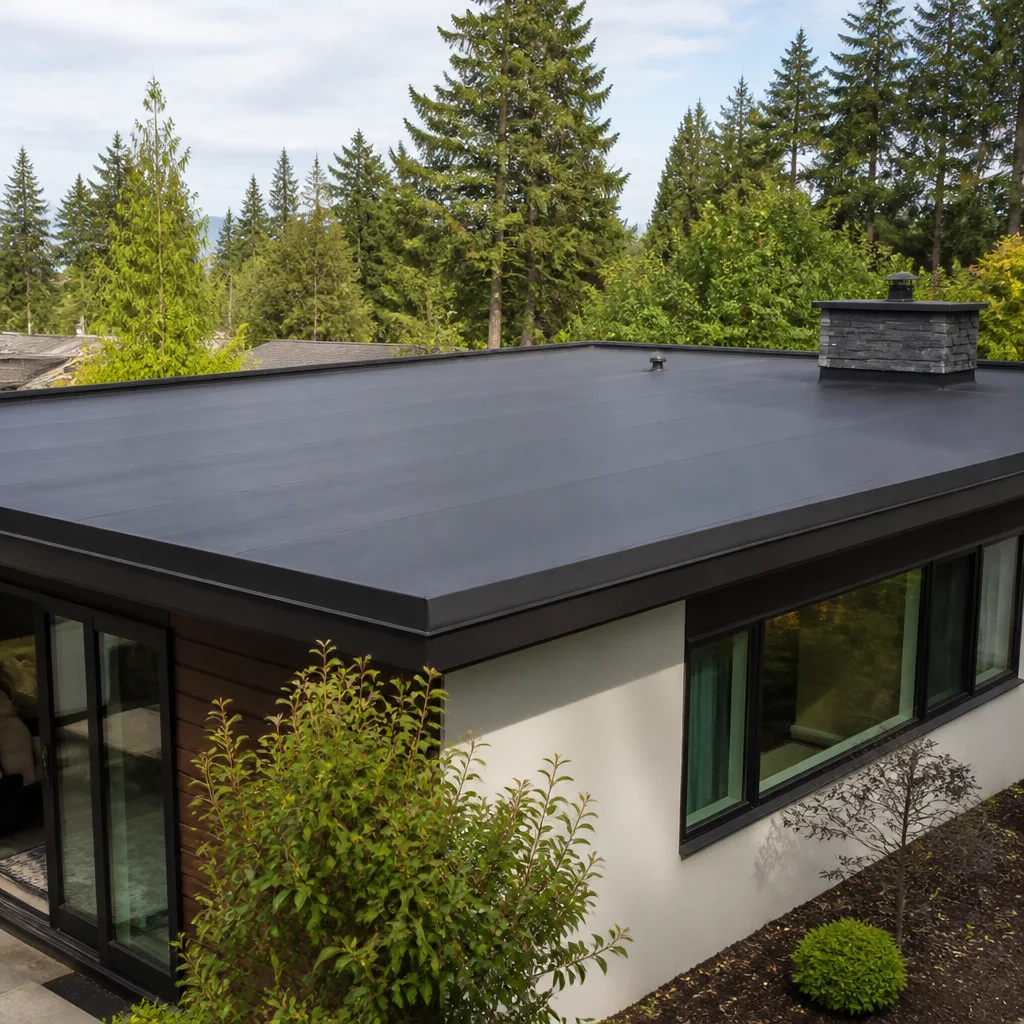
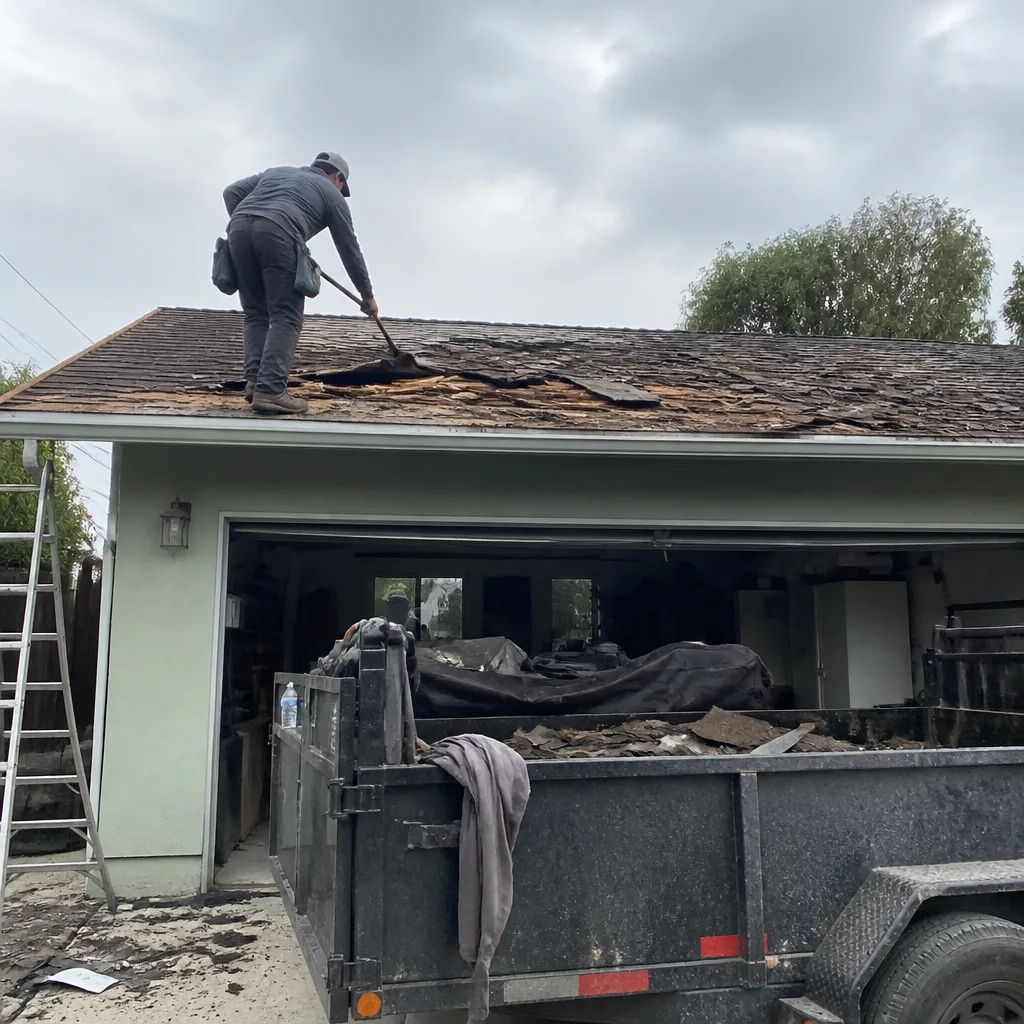 Before
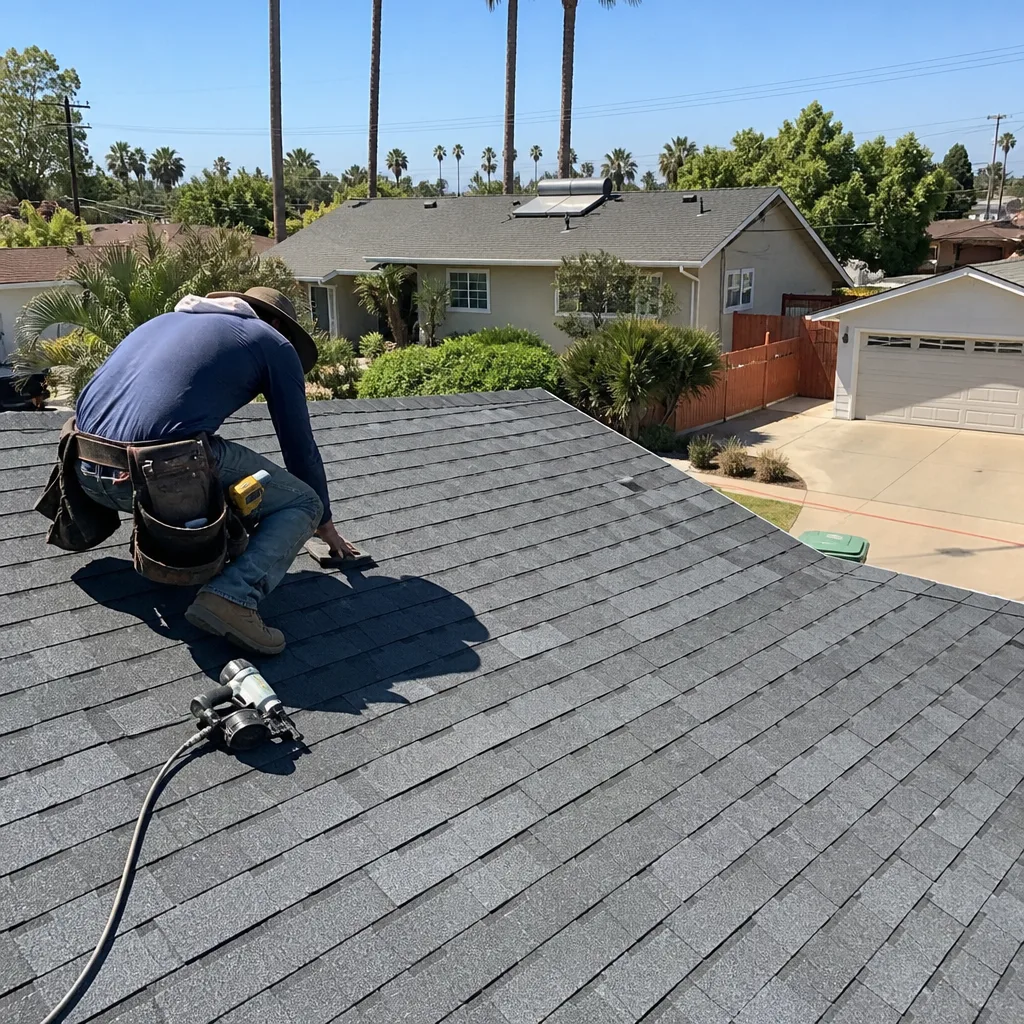 After
After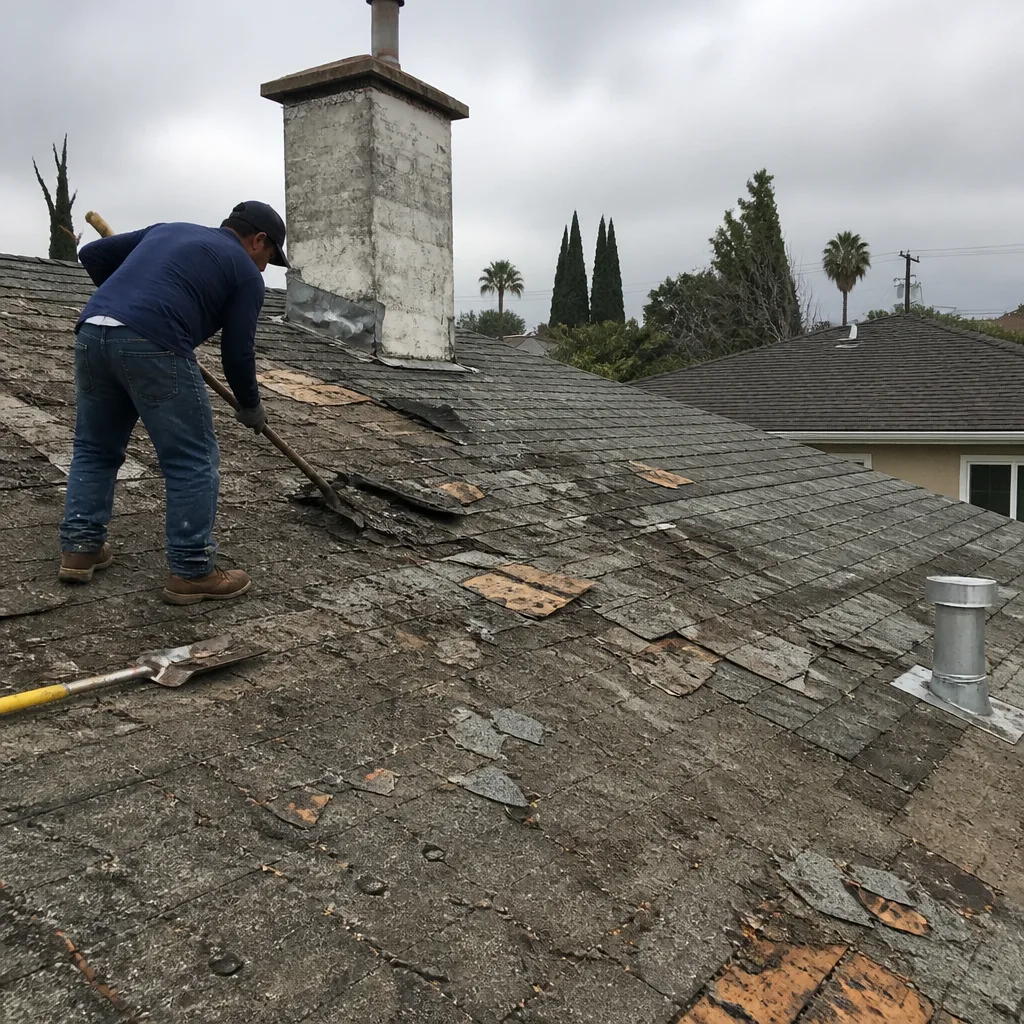 Before
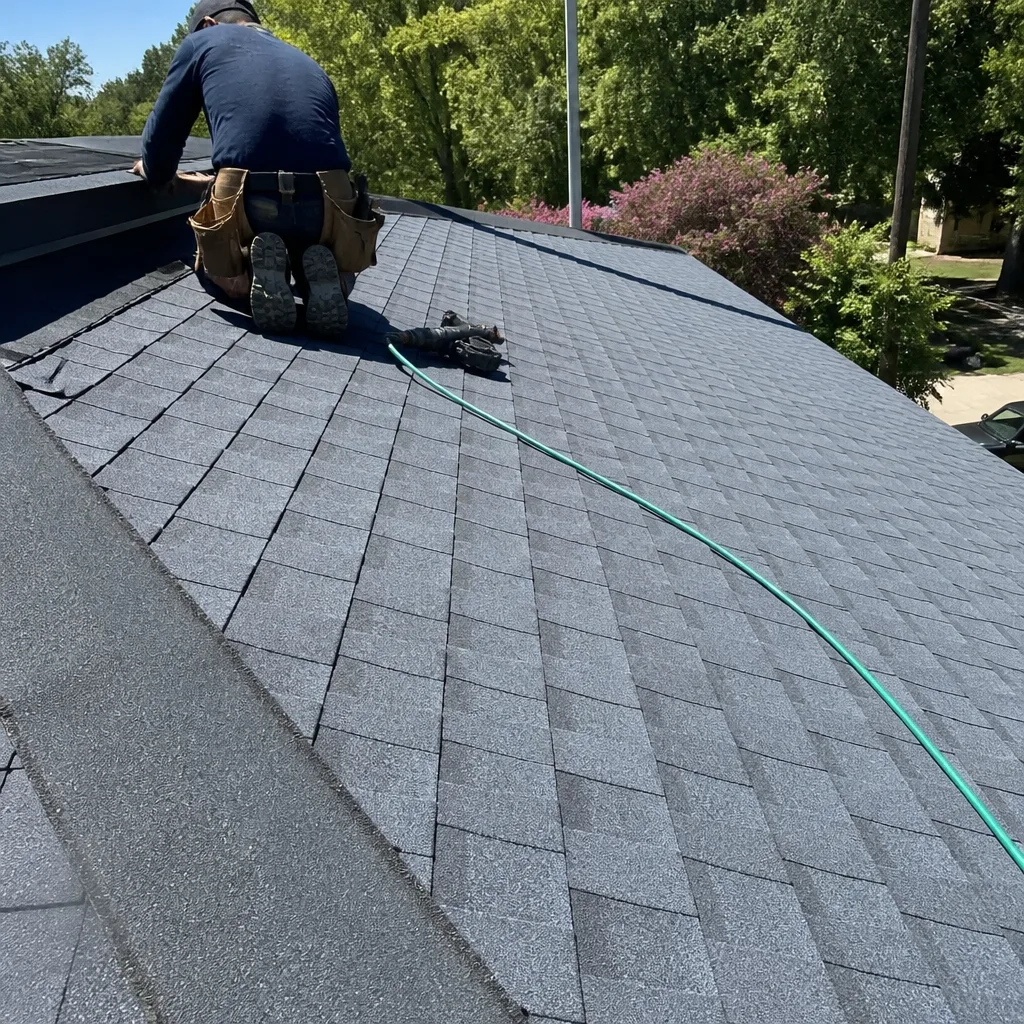 After
After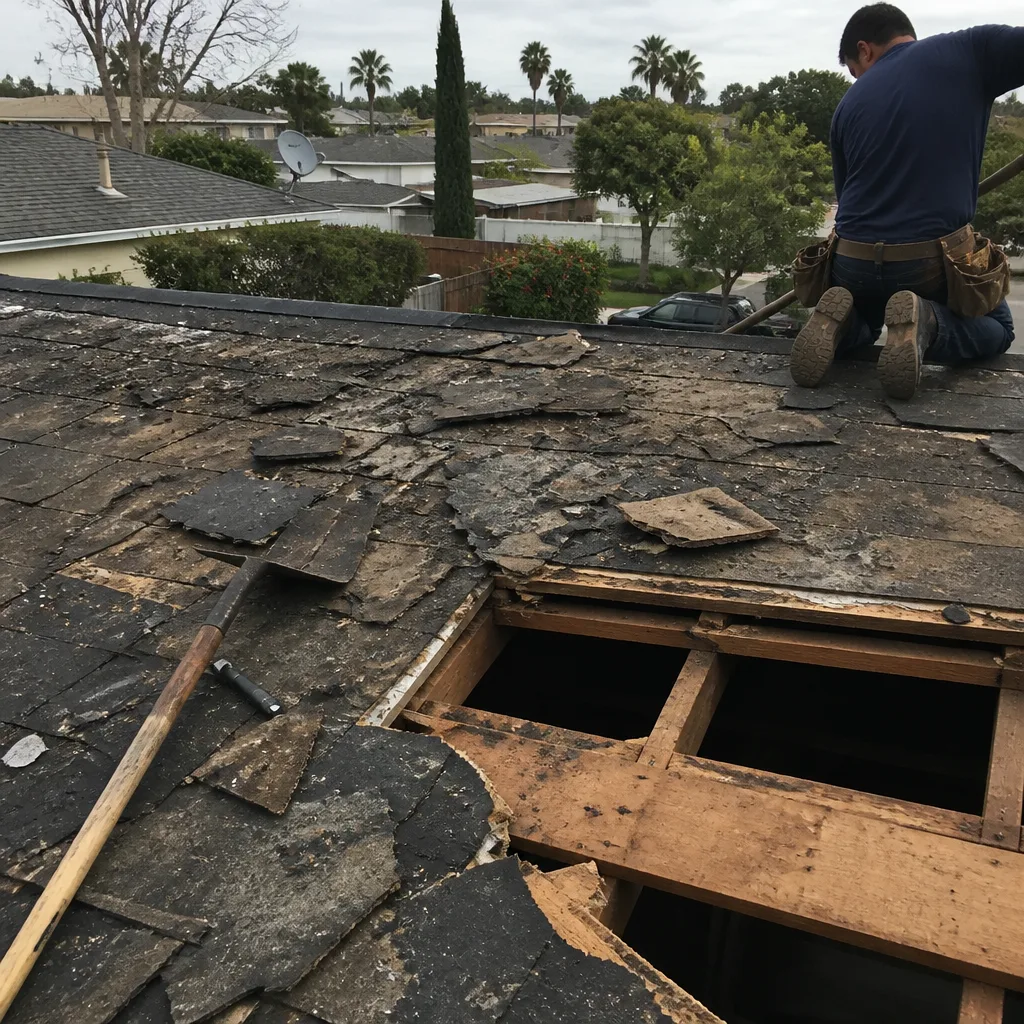 Before
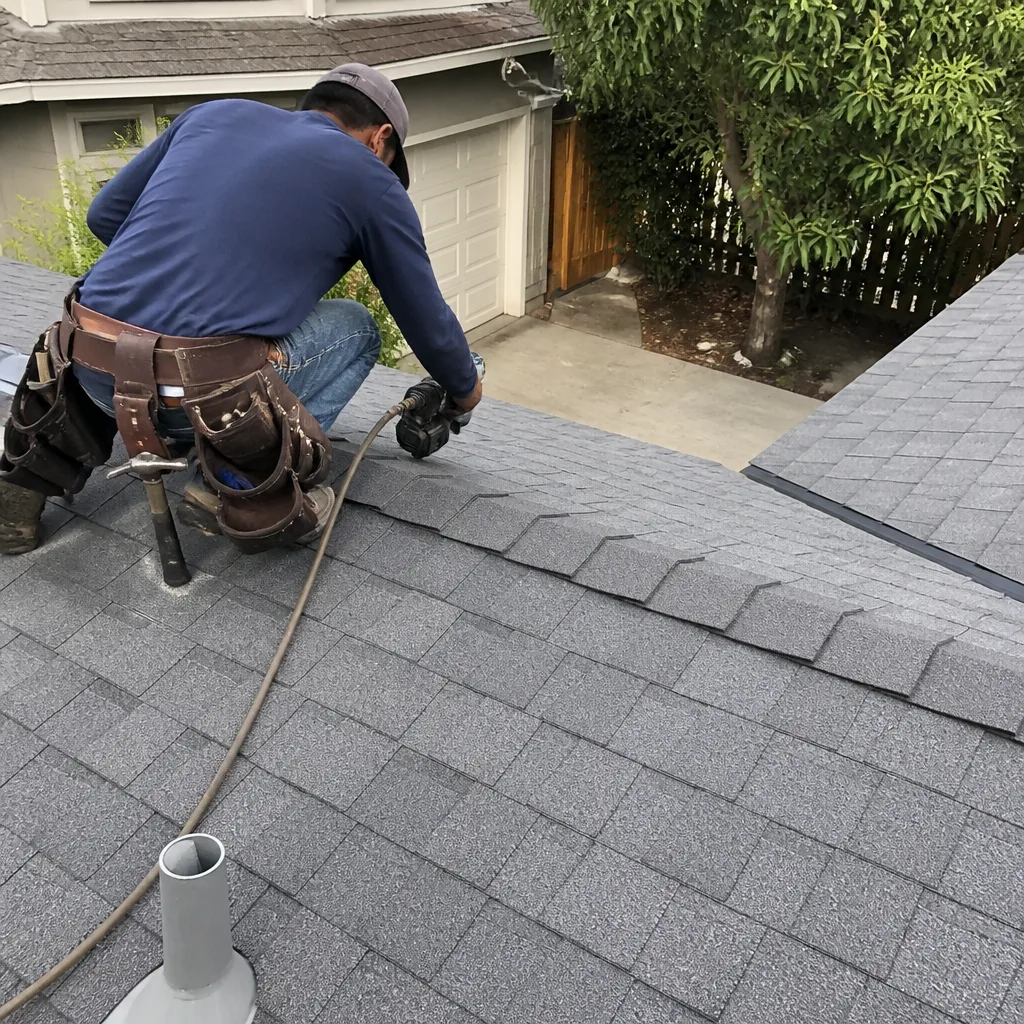 After
AfterRoofing Company Troubleshooting: Common Problems and How to Fix Them
A water stain on your ceiling is not a roof problem. It’s the end of a chain of failures that started weeks or months earlier, and it means damage has already spread past the roof deck and into your framing, insulation, or drywall. By the time you see it, the fix costs more than it should have. In Los Angeles, where long dry stretches let small roof defects hide for months before a rainstorm exposes them, this pattern is especially common. This guide teaches you to read the early exterior signals instead, so you can call a roofer before interior damage begins.
Quick Answer
The most common roof problems a homeowner can spot early are granule accumulation in gutters, lifted or exposed nail heads, cracked pipe boots, failing flashing around chimneys and vents, and water staining on the underside of roof decking visible from the attic. Finding these before they reach the interior usually means a repair under $600 instead of a replacement or structural repair in the thousands. If you’re unsure what you’re looking at, read our Roofing Company Warning Signs Every Homeowner Should Know or call Brennan Roofing at (361) 320-9467 and we’ll take a look.
Table of Contents
- How a Ceiling Stain Connects to a Roof Leak
- The Early Exterior Signs of Roof Failure
- Flat Roofs and Low-Slope Roofs in Los Angeles Fail Differently
- How to Document What You Find
- When to Monitor and When to Call a Roofer
- What Common Roof Repairs Cost in Los Angeles
- Common Mistakes to Avoid
- When to Call a Professional
How a Ceiling Stain Connects to a Roof Leak
Water follows the easiest path, not the shortest one. A stain on a bedroom ceiling in Los Angeles is almost never directly under the point where water enters the roof. Water hits the roof, finds a gap, runs along a rafter or the top of a ceiling joist, and only drops when it reaches a low point or a fastener. That path can be six feet, ten feet, sometimes more. If a roofer arrives and looks only at the stained area, you’re getting an incomplete diagnosis.
Here’s how to trace an interior leak back to its actual roof-level origin:
- Go into the attic with a flashlight during daylight hours. Don’t bother with a leak detector or moisture meter yet. Just look for light coming through holes that shouldn’t be there.
- Mark the stain on the ceiling from below. Use a pencil and make a small mark. Then go up and find that same spot in the attic. Note: this is where the water dropped, not where it entered.
- Follow the water line uphill. Look at the top surface of the drywall or plaster. Water usually runs along the top of a joist, leaving a trail or a darker line. Follow that line toward the roof decking.
- Check the decking above that line. Look for staining, darkened wood, or water beads on the underside of the decking. The entry point is usually uphill from where the decking shows the first signs of moisture.
- Look at roof penetrations uphill from the stain. Vents, chimneys, skylights, satellite mounts, and pipes that penetrate the roof are the most common entry points. In Los Angeles, the long summer sun degrades the rubber boot around plumbing vents and the sealant around skylights faster than many homeowners realize.
We’ve traced a leak in a Los Angeles home from a dining room ceiling back through 14 feet of attic, uphill to a cracked boot around a plumbing vent that looked perfectly fine from the ground. The homeowner’s previous roofer had patched the area directly above the stain twice. The real problem cost about $260 to fix once it was actually found.
The takeaway: water travels before it drops. If you want to know what’s wrong with a Brennan Roofing home inspection starts from the deck down, not from the stain up.
The Early Exterior Signs of Roof Failure
Every roof fails from the outside first. Interior staining is just the final symptom. The good news is that the exterior signs are visible long before water reaches your drywall, if you know what to look for. Here are the signals that show up earliest on asphalt shingle roofs, the most common roof type on pitched homes in Los Angeles.
Granule accumulation in gutters. Asphalt shingles are coated with mineral granules that protect the underlying asphalt from UV light. As a shingle ages, these granules loosen and wash into gutters. Some granule loss is normal in the first year. Consistent, heavy accumulation, especially if it looks like a layer of fine grit at the bottom of your gutters, means the shingles are wearing out. In Los Angeles, where the sun beats down hard for 300-plus days a year, shingles lose granules faster than in coastal or temperate climates.
Lifted nail heads. Nails hold each shingle to the deck. As the deck expands and contracts through hot LA days and cooler nights, nails can back out. A nail head pushed up against the underside of the shingle above eventually works through it. You’ll see small bumps in the roof surface, or in some cases, the nail head poking through. When that happens, you have a direct channel for water.
Cracked pipe boots. Every plumbing vent that comes through your roof is sealed by a rubber boot that fits around the pipe and lies flat under the shingles. That rubber degrades from UV exposure. After six to ten years in Southern California sun, the boot can crack and split. This is one of the least expensive fixes in roofing and one of the most common sources of small leaks. A cracked boot is often the culprit when only one room shows a ceiling stain.
Curling, cupping, or clawing shingle edges. Curling is what old shingles do. The edges lift away from the deck, exposing the underlayment to sun and water. Once shingles start curling, the roof is in the final stage of its useful life. Repairs can buy time, but the roof’s days are numbered.
Missing or displaced shingles after wind. Los Angeles gets Santa Ana winds every fall. A full shingle that blows off leaves exposed decking. More commonly, shingle edges lift and don’t reseat, leaving a small opening that water finds during the next rain. Walk your yard after the first big wind event and look up. Any shingle edge that’s raised or displaced is a pending leak.
One more thing we see often on roofing company in Los Angeles inspections: failed sealant at roof-wall intersections. Where the roof meets a vertical wall or chimney, roofers use flashing and sealant to close the gap. The sealant fails from UV exposure, the flashing begins to lift, and water gets behind it. This one is hard to spot from the ground but easy to identify from a ladder or with binoculars.
Flat Roofs and Low-Slope Roofs in Los Angeles Fail Differently
Most troubleshooting advice assumes a pitched shingle roof. But a significant share of homes in Los Angeles, especially from the 1950s through the 1980s, have flat or low-slope roofs. These roofs fail in a different way and at different points, and they need a different set of eyes.
Flat roofs in LA are built with materials designed for water-resistant coverage, not water-shedding coverage: modified bitumen, built-up roofing, TPO, or torch-down systems. On a pitched roof, water runs off quickly. On a flat roof, water sits. Every seam, penetration, and edge on a flat roof is tested every time it rains.
The points that fail first on a Los Angeles flat roof:
- Standing water or ponding. If water is still sitting on your roof 48 hours after rain, the surface has low spots. Ponding accelerates material breakdown and eventually opens seams. A good flat roof drains completely within a day or two.
- Seam separation. Flat roof materials are laid in sheets and welded or adhered at the seams. Heat and UV expand and contract the material at a different rate than the house structure. Seams eventually open. The opening may be hairline and invisible from the ground, but enough to leak over a prolonged rain.
- Flashing at parapet walls. Most flat roofs are surrounded by a short wall called a parapet. The roof material runs up the wall and is capped with metal flashing. If the cap comes loose, or the sealant between cap and wall fails, water runs down inside the wall and shows up far from the actual entry point.
- Scuppers and drains. Flat roofs shed water through openings in the parapet called scuppers, or through roof drains. Leaves and debris from LA’s sycamores and eucalyptus block scuppers every year. Once blocked, water has nowhere to go and begins to pond. A clogged scupper can turn a healthy roof into a leaking one in a single storm.
- Surface blisters and cracking. Flat roof material flexes with temperature. Blisters form when moisture gets trapped under the surface, and cracks follow once the material loses flexibility. These signs are visible from a ladder or from the roof itself, and they’re early warnings.
If you own a flat-roof home in Los Angeles, the single most useful habit is to clear your scuppers and drains before the first rain of the season. The second most useful is to have a professional look at the seams and flashing every couple of years, even if nothing appears wrong from below. Flat roofs rarely give an obvious interior warning until the damage is serious.
How to Document What You Find
When you call a roofer in Los Angeles, the conversation goes better if you can describe what you’re seeing in specific terms. Photos and measurements turn a vague concern into a concrete work order. They also protect you from a roofer who isn’t looking at the same thing you’re looking at. Here’s how to document a roof issue so any contractor you call is working from the same facts.
- Take photos from at least two distances. One photo should show the whole roof plane from the ground. A second should zoom in on the issue. On a smartphone, take the close shot from a ladder or a window if possible. The wide shot tells the roofer where on the roof the issue is. The close shot tells them what it looks like.
- Measure the location from ground-level landmarks. Note that the lifted flashing is three feet left of the chimney, or the stain in the gutter is under the second eave from the north corner. These references let the roofer find the spot quickly.
- Photograph the interior stain the same day you notice it. Mark its edges with pencil and photograph it with a tape measure for scale. This lets you know later whether the stain is expanding.
- Record the date and weather context. “Noticed granules after the January storm” is more useful than “granules in gutter.” A simple note on your phone is enough.
- If you can safely access the attic, photograph the decking area above the stain. A photo of darkened decking is often the single most useful piece of evidence a roofer can receive before arriving.
Do not walk a pitched roof to take photos. We’ve seen homeowners create new damage by walking on shingles they thought were sound. Ground shots and attic shots are sufficient for an initial call. The roofer will get on the roof themselves when they arrive.
This documentation practice is something we respect when we see it. A homeowner who has photos and measurements is a homeowner who gets a more accurate diagnosis, and a more accurate roof inspection in Los Angeles report.
When to Monitor and When to Call a Roofer
Not every roof issue demands a service call. Some conditions can be watched safely and handled at the next regular maintenance interval. Others need a professional on-site within days. Knowing the difference saves you money and prevents small issues from becoming structural ones.
You can monitor these if they’re stable:
- Minor granule accumulation in gutters without other signs of wear.
- A small curled shingle corner on an older roof with no leak present.
- Seasonal stain from a one-time wind-driven rain, if it dries and doesn’t return.
- Surface rust on nails that are still seated flat.
- Ponding on a flat roof that drains within 24 hours after rain.
Monitoring means photographing or marking the issue, revisiting it in a month, and comparing. If it hasn’t changed, keep watching. If it has changed, call.
Call a roofer within days for these:
- Any nail head that has poked through the shingle surface.
- A cracked, split, or lifted pipe boot.
- Flashing that has separated from a wall or chimney.
- Missing shingles after wind, even if no leak has appeared yet.
- A ceiling stain that grows or returns after rain.
- Granule loss heavy enough to expose the fiberglass mat of the shingle.
- Any flat roof seam that is visibly open or blistering.
When in doubt, we tell Los Angeles homeowners the same thing: the cost of a diagnostic visit is small compared to the cost of waiting. A $300 repair missed becomes a $3,000 repair inside a season. That’s not pressure, it’s arithmetic.
What Common Roof Repairs Cost in Los Angeles
Roof repair pricing in Los Angeles varies by roof type, access, and the condition of the surrounding materials; see our Roofing Cost Breakdown: The Los Angeles Homeowner’s Reference for 2026 for deeper detail. But you should not have to call for a ballpark. The ranges below reflect what a homeowner can expect in the LA market for straightforward repairs performed by a licensed contractor.
| Repair Type | Typical Range in Los Angeles |
|---|---|
| Pipe boot replacement | $180 – $340 |
| Small shingle patch (under 10 shingles) | $250 – $450 |
| Flashing repair (chimney, wall, or skylight) | $300 – $700 |
| Flat roof seam repair | $350 – $800 |
| Valley re-flashing | $500 – $1,200 |
| Decking replacement (per sheet, plus shingle overlay) | $150 – $300 per sheet |
| Full roof replacement (asphalt shingle, pitched roof) | $9,000 – $22,000 depending on size and slope |
| Flat roof replacement (modified bitumen or TPO) | $10,000 – $25,000 depending on size and system |
These are ballpark ranges. Your specific number depends on roof size, pitch, access, and whether the decking underneath is sound. But you should expect a written price before any work starts. At Brennan Roofing, that’s not a policy; it’s the Garrison Standard. The price goes on paper, you read it, and it doesn’t move when the crew shows up. No change orders materialize mid-job because someone “discovered” something. The discovery happens during the estimate, which is why we walk the roof before quoting.
For a roof replacement, we walk through material options from manufacturers like GAF, CertainTeed, Owens Corning, IKO, and Atlas, and explain the difference plainly. A homeowner choosing between three-tab and architectural shingles, or between TPO and modified bitumen on a flat roof, should know what they’re paying for and why. That’s part of the written estimate, not a hurried conversation at the front door.
Common Mistakes to Avoid
We’ve seen the same avoidable errors on Los Angeles roofs for years. Most of them cost homeowners money, and most of them are simple to avoid once you know what to look for.
- Patching a ceiling without finding the roof entry point. Water inevitably returns and does more damage in the interim. Find the roof-level cause first.
- Ignoring granule accumulation. It’s not “normal wear” when it’s filling your gutter. It means the shingles are losing the material that protects them, and the clock is running.
- Using caulk or spray sealant as a permanent fix. Over-the-counter sealants break down in LA’s UV within one or two seasons. They give a false sense of repair while the underlying material continues to fail.
- Walking a pitched roof without experience. A slip on a 6/12 pitch in Los Angeles can mean a serious fall. Leave footwork to someone trained, equipped, and background-checked to be on your property.
- Hiring a roofer based only on price. A low bid from an unlicensed or uninsured operator can turn into an abandoned job, a lien, or a roof that fails inside a year. Ask for a written price, a written warranty, and proof of insurance before anyone climbs a ladder.
- Delaying the first roof inspection after a storm. Los Angeles may not get the rainfall of other markets, but the rain it does get often falls hard and fast. The inspection after the first big storm of the season catches what the season exposed.
- Assuming a flat roof is low-maintenance because it has no shingles. Flat roofs require more, not less, attention to drainage and seams. The maintenance is different, not optional.
When to Call a Professional
If you’ve found a nail head through a shingle, an open seam on a flat roof, or a pipe boot that’s split, stop monitoring and schedule a repair. These are not self-correcting conditions. They get worse every week, and the Los Angeles sun accelerates the damage regardless of the season.
If you’ve found a ceiling stain and you cannot trace it in the attic, that’s also a call. A roofer with leak-tracing experience will find the entry point and give you a written price to fix it. Brennan Roofing, a trusted Roofing Company services provider, offers free estimates in Los Angeles. Call (361) 320-9467 and we’ll walk your roof, document what we find, and put the number on paper before any work starts.
Frequently Asked Questions
The source of a roof leak is usually uphill from the interior stain, not directly above it. Go into the attic, locate the stain, and follow any visible water line upward along joists or decking until you find the first point of moisture. Then look above that point for failed flashing, a cracked pipe boot, or a lifted shingle. If you can’t trace it, call a roofer who specializes in leak diagnosis.
The first signs of roof damage appear on the exterior, not the interior. Granule accumulation in gutters, curled or lifted shingle edges, exposed nail heads, cracked pipe boots, and failing flashing at chimneys or walls all precede interior water damage. Spotting these early usually means a repair in the hundreds instead of a replacement in the thousands. Call (361) 320-9467 if you’re not sure what you’re seeing.
Most common Los Angeles roof repairs run between $180 and $800 depending on the repair type. A pipe boot replacement typically costs $180 to $340, a small shingle patch $250 to $450, and a flashing repair $300 to $700. Full roof replacement in Los Angeles typically ranges from $9,000 to $25,000 depending on roof type, size, and material selection. Every price at Brennan Roofing is written down before any work begins.
Most roof leak repairs are not safe DIY projects. Working on a pitched roof without training and fall protection carries serious risk, and store-bought sealants fail quickly under LA’s UV exposure. You can safely document what you see from the ground and from the attic, but the repair itself belongs with a licensed, insured, background-checked roofer. Estimates are free, so the diagnostic visit costs you nothing.
In Los Angeles, a roof inspection every one to two years catches the UV-related degradation that comes with a high-sun climate. Flat roofs should be inspected at least annually, since their seams and drainage points fail differently than pitched shingle roofs. Schedule an inspection after any significant storm, especially Santa Ana wind events and the first heavy rains of the season. Roof repair in Los Angeles costs less when it’s caught before a leak develops.
Yes. Every estimate from Brennan Roofing is free and comes with a written price before any work starts. We walk the roof, document what we find, and explain the options in plain English. If you have a roof you’re worried about, call (361) 320-9467 and we’ll schedule the visit.
The Bottom Line
Most roof damage is visible outside long before it’s visible inside. The roof tells you it’s failing through granule loss, lifted nails, cracked boots, and failing flashing. Your job as a homeowner is to listen early and get an accurate diagnosis while the repair is still measured in hundreds, not thousands. Document what you find, know which signs need immediate attention, and explore more guides & resources to stay ahead of problems, or call a roofer who puts the price in writing before work begins. That’s how you keep a roof over your head without surprises.
Written by Travis Oakley, Owner at Brennan Roofing, serving Los Angeles since 2000.