
Last updated October 9, 2026
Free roof inspection with deck photos before we talk money - GAF and Owens Corning certified installation
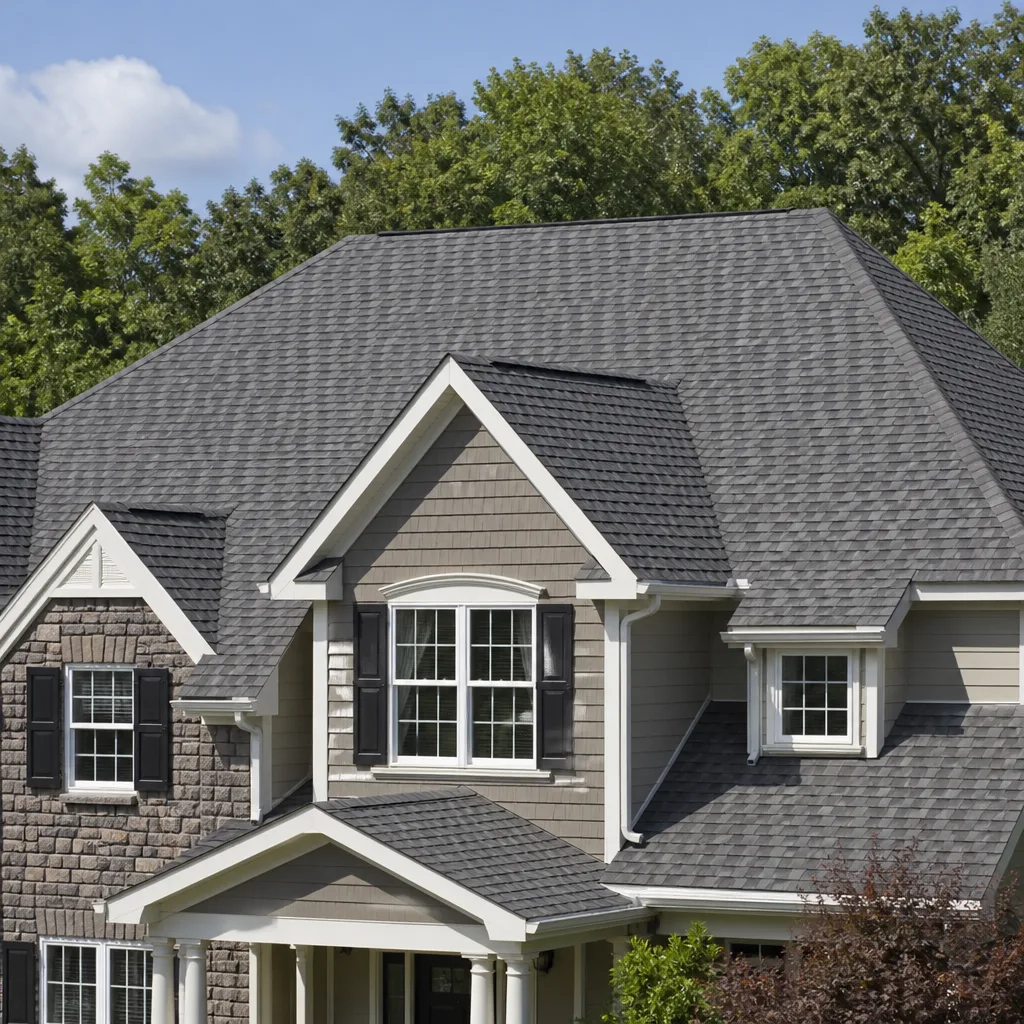
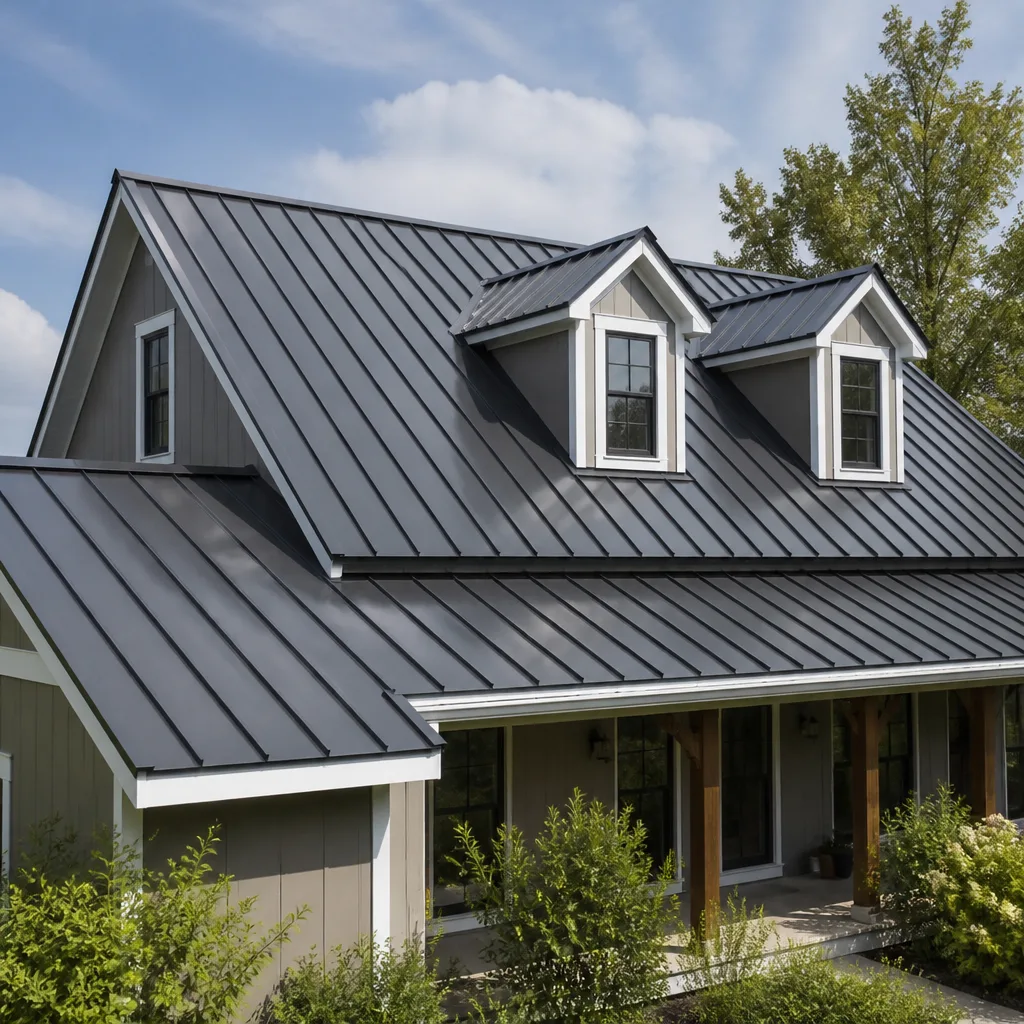
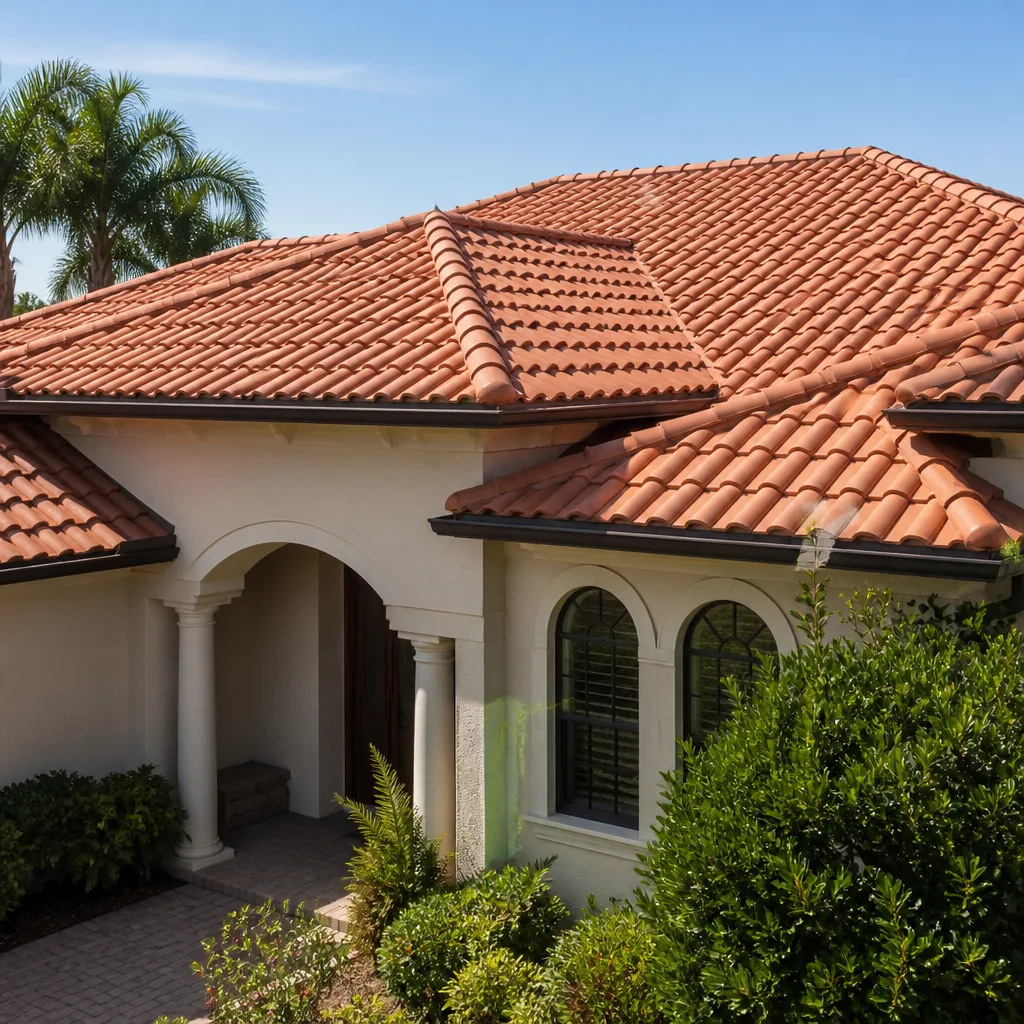
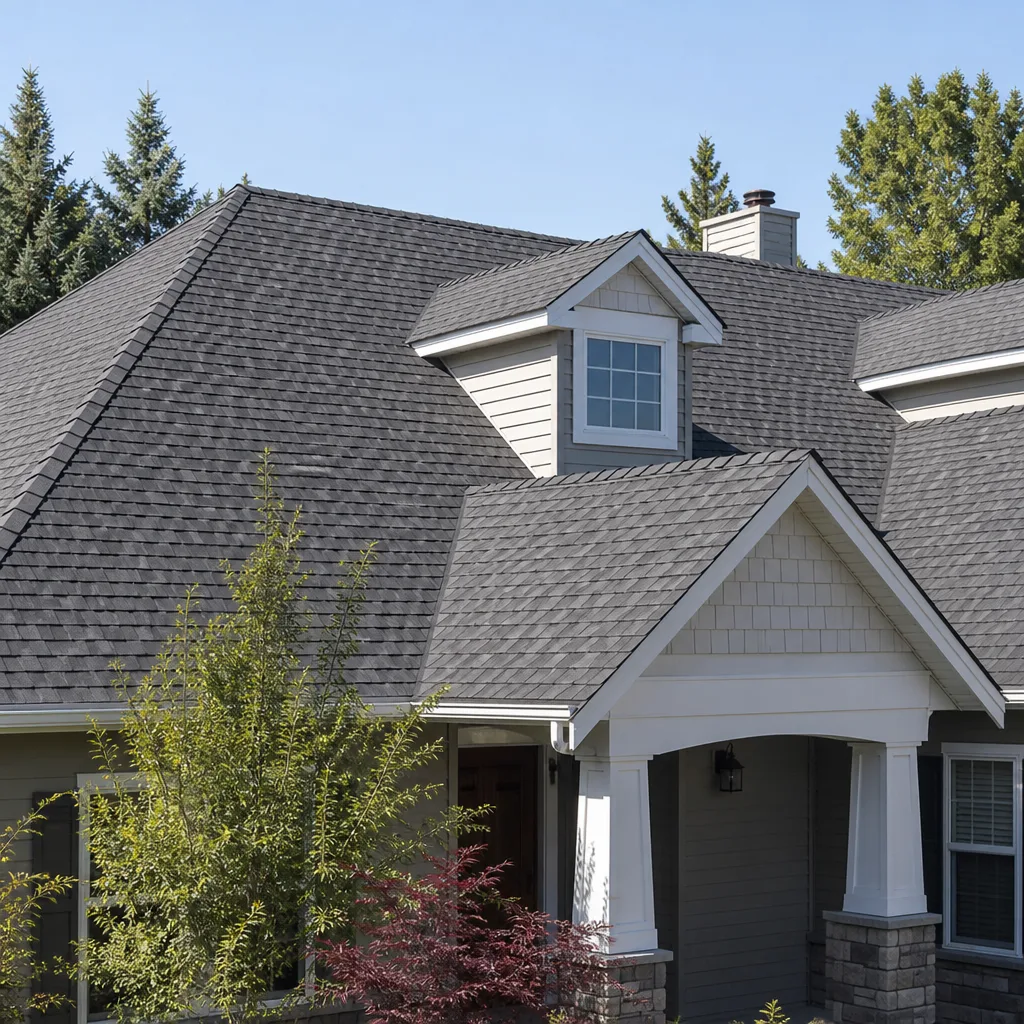
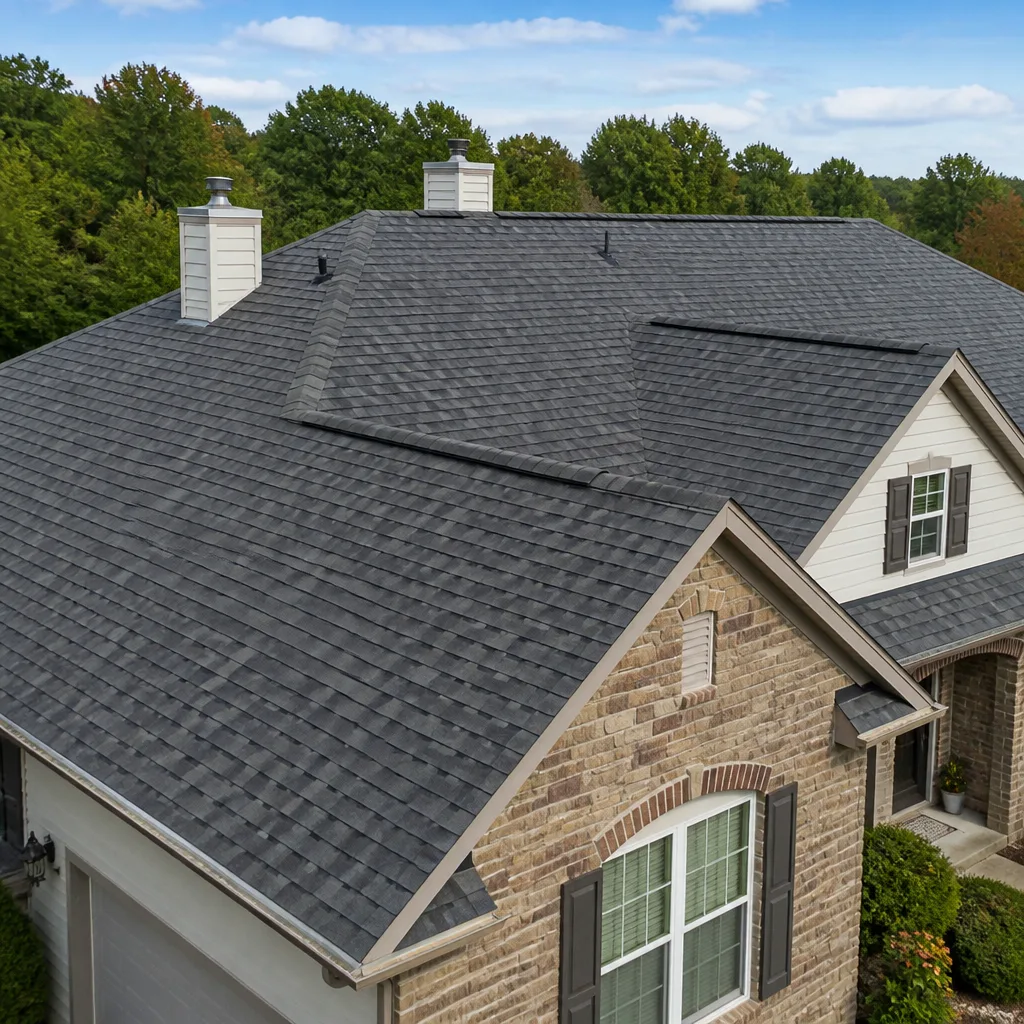
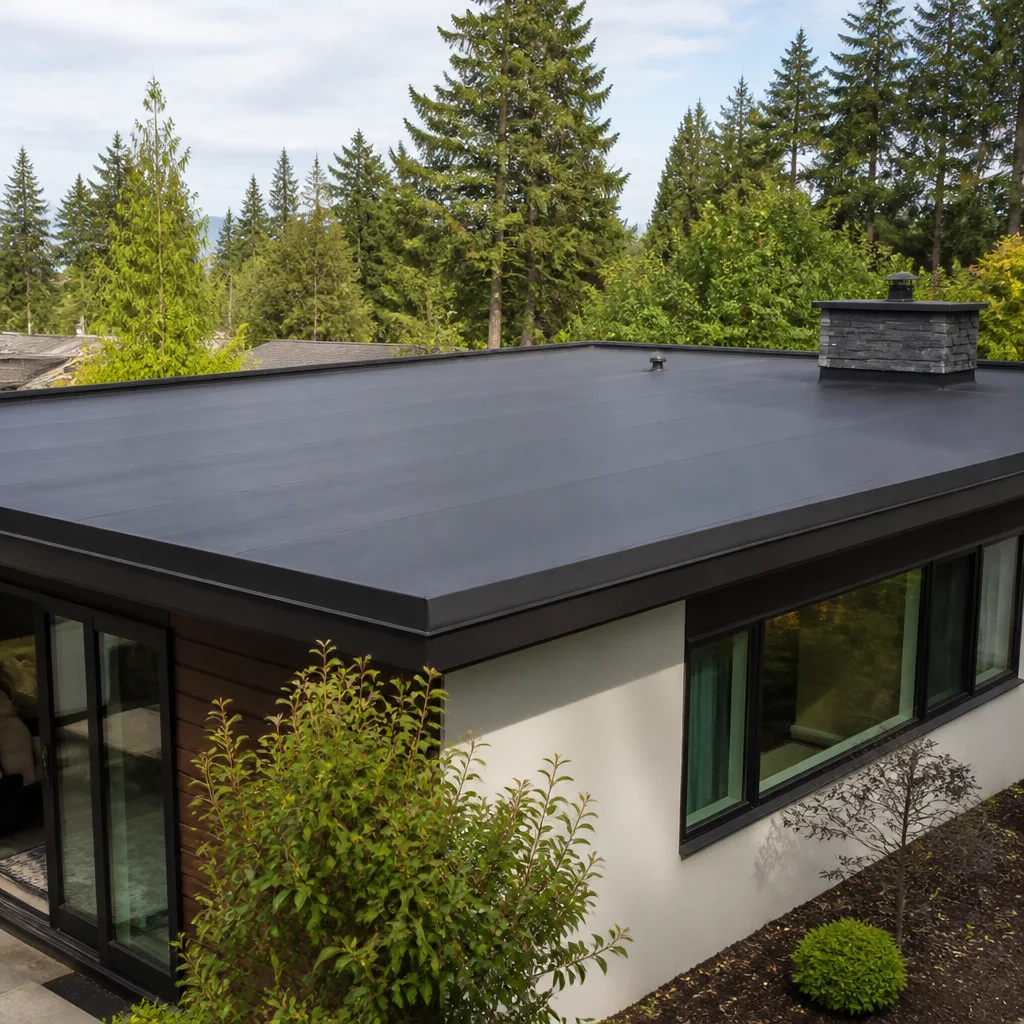
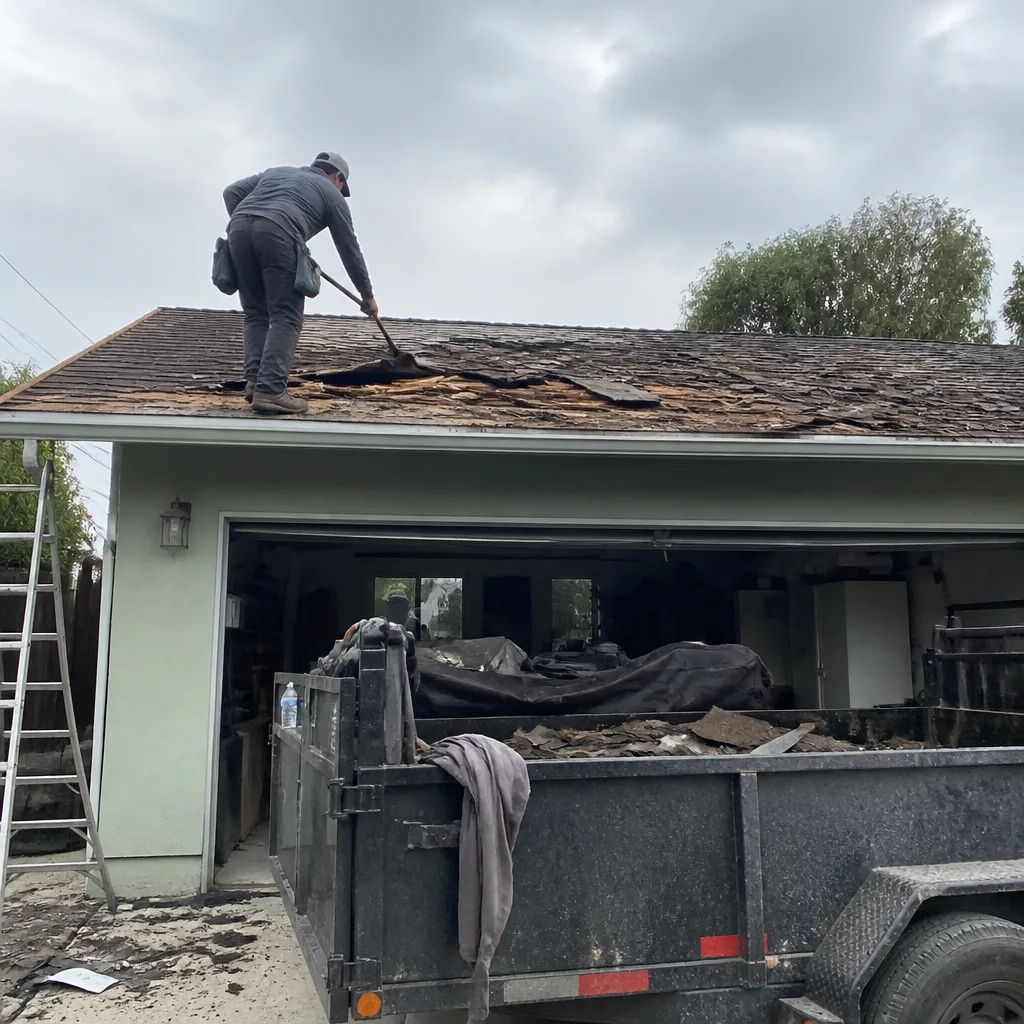 Before
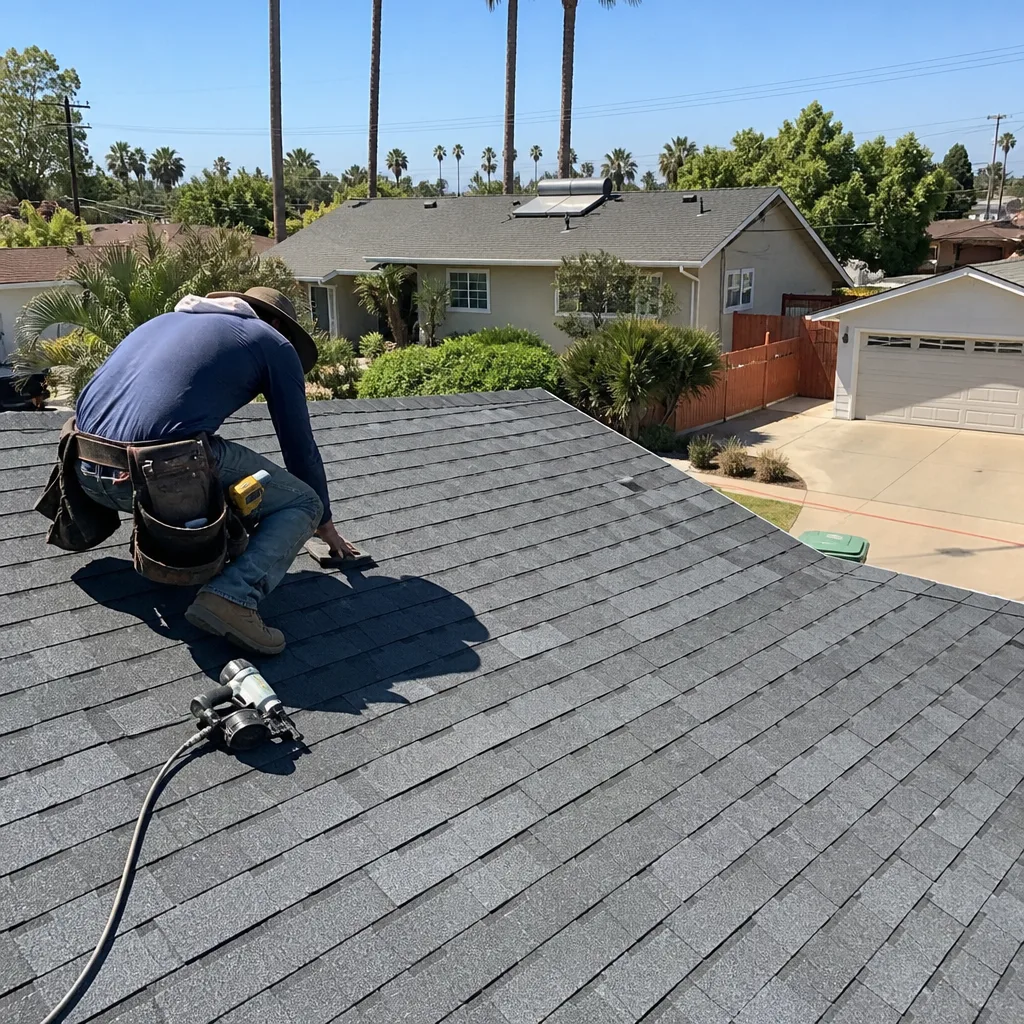 After
After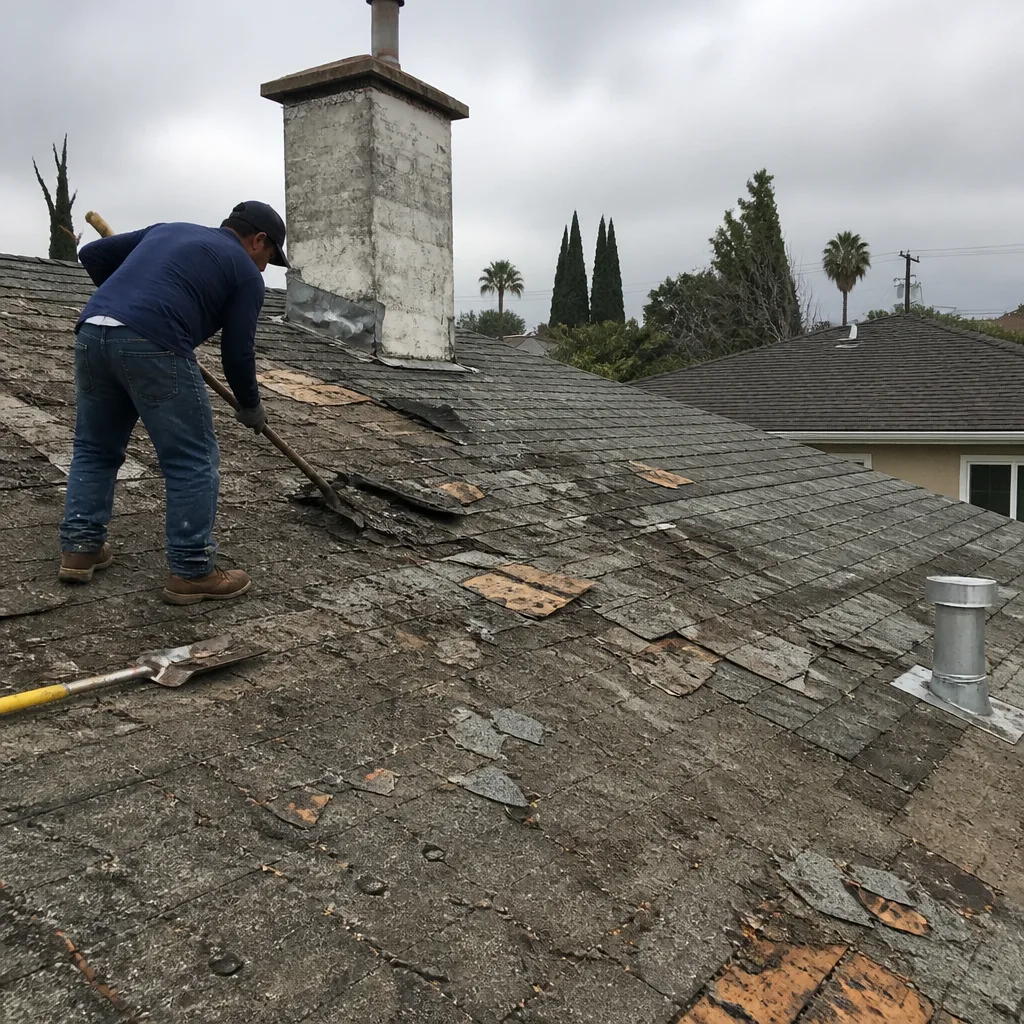 Before
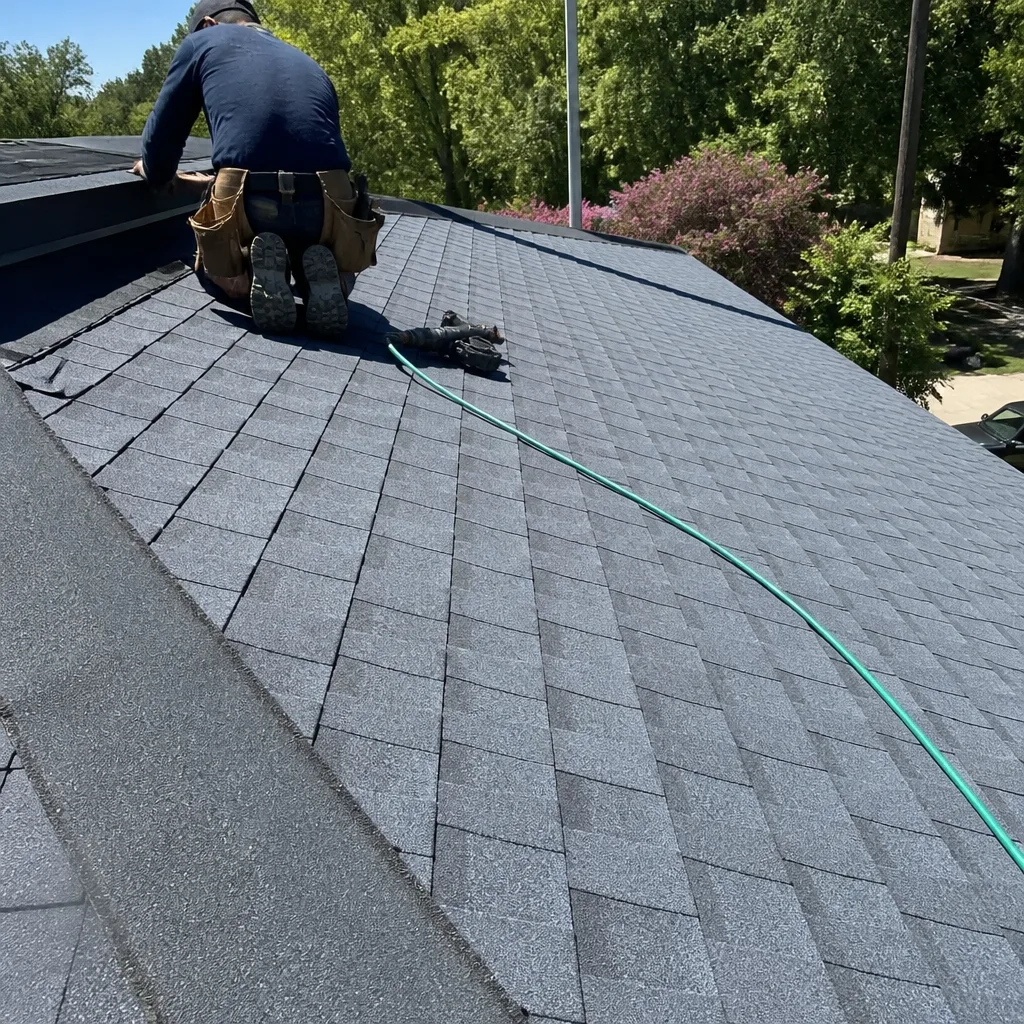 After
After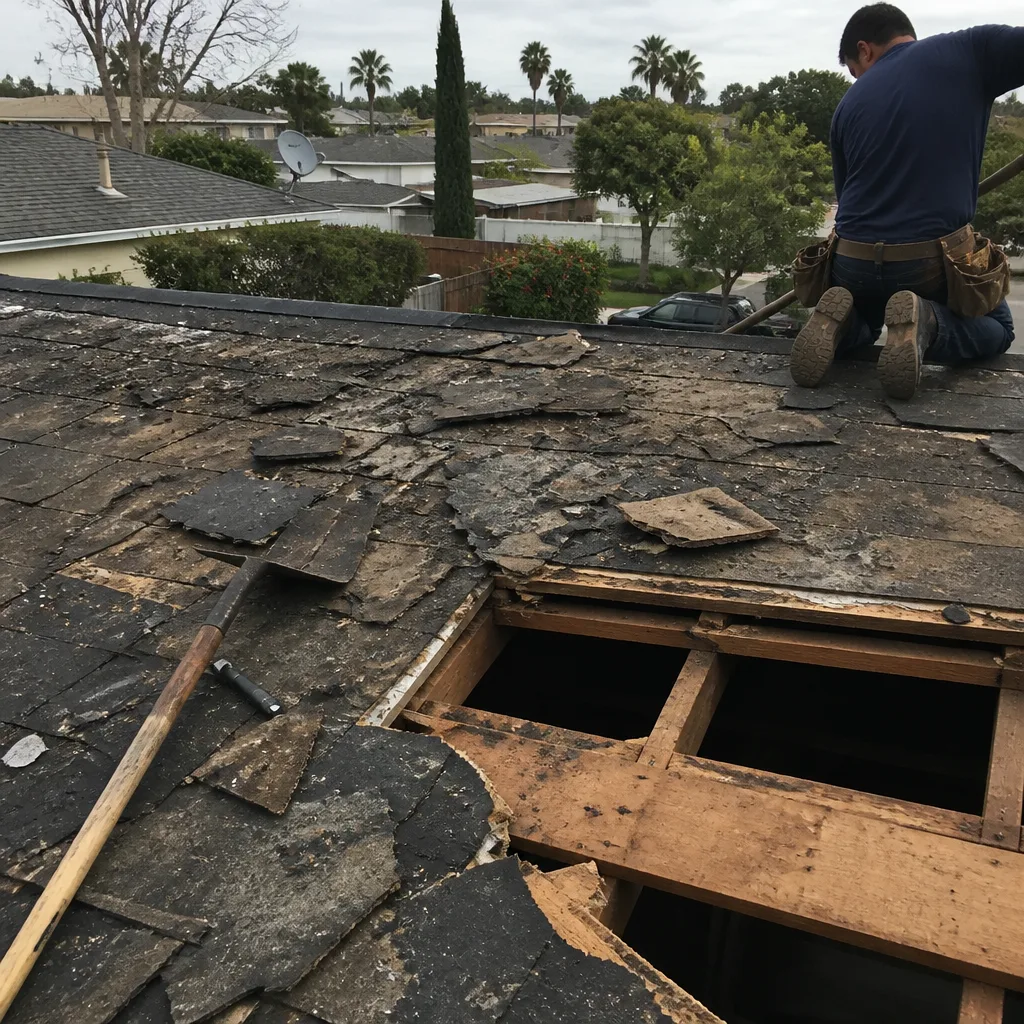 Before
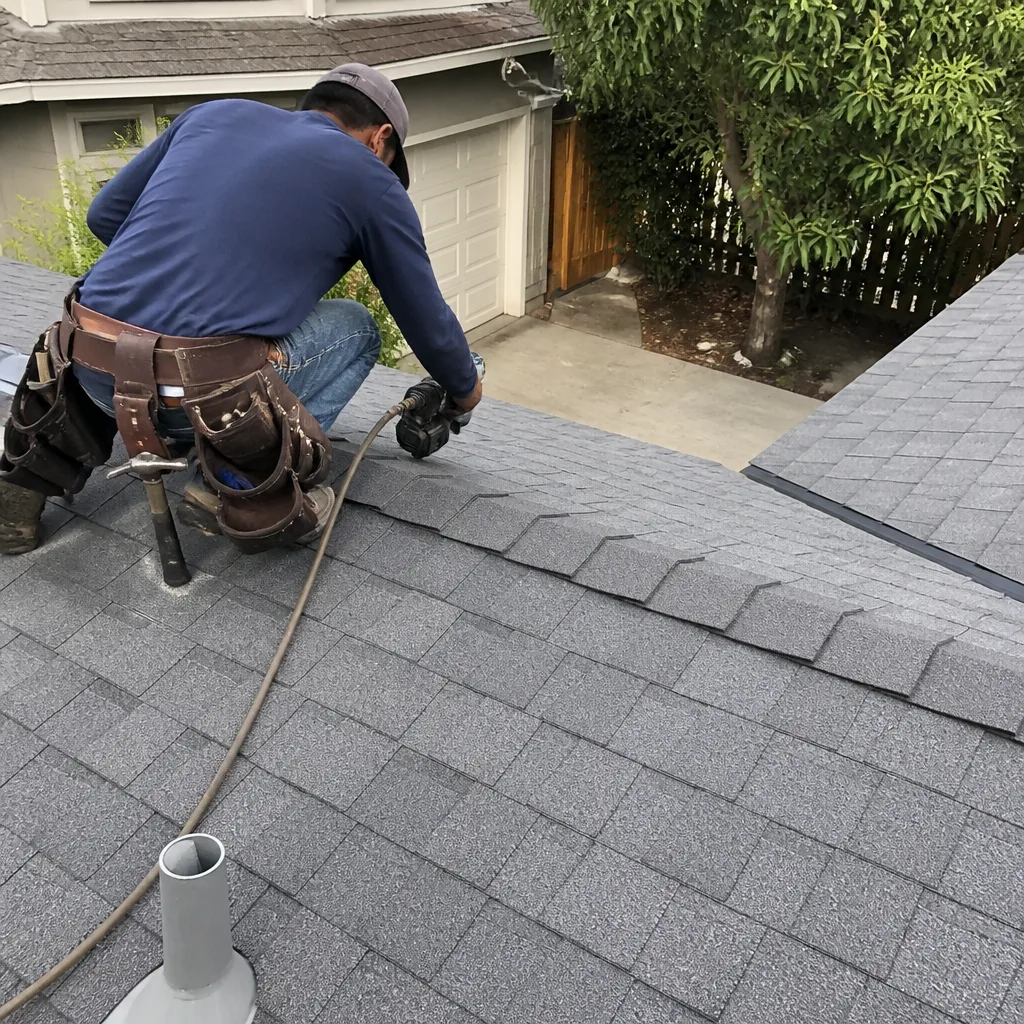 After
AfterSeasonal Roofing Care for Los Angeles: Year-Round Homeowner’s Guide
Los Angeles gets roughly 15 inches of rain in an average year, but nearly 80% of it falls in a four-month window between December and March. That means a roof that looked fine in September, after eight months of sun and Santa Ana winds, can fail in a single January storm. This guide-along with our Complete Guide to Roofing in Los Angeles-lays out a care calendar built around Los Angeles’s actual roof stress cycle: the long dry stretch when heat and wind do quiet damage, and the compressed rain window when that damage turns into leaks. We’ll walk through what to check, when to check it, and what actually needs a contractor’s eyes.
Quick Answer
Los Angeles roof care comes down to two windows: a pre-rain inspection-detailed in our Complete Roof Inspection Guide for Los Angeles Homeowners-between September and November to catch dry-season damage before the first storm, and a post-rain inspection between March and April to see what the winter actually did. Between those windows, the recurring jobs are clearing vegetation debris, checking flashing and sealant after Santa Ana wind events, and watching for UV damage on south-facing and west-facing slopes. Most homeowners can handle visual checks from the ground and gutter clearing; anything involving ladder work, walking the roof surface, or touching flashing should be left to a professional.
Table of Contents
- Why Los Angeles Has Two Roofing Seasons, Not Four
- Fire and Wind Season: May Through November
- The Pre-Rain Inspection Window: September Through November
- The Five Items a Contractor Should Clear Before the First Storm
- How Santa Ana Winds Set Up Winter Leaks
- Summer UV and Thermal Cycling: What Heat Does to Different Roof Materials
- Dry-Season Vegetation Management: Eucalyptus, Pine, and Palm
- Post-Rain Inspection: Stressed Versus Damaged
- Common Mistakes to Avoid
- When to Call a Professional
- Frequently Asked Questions
- The Bottom Line
Why Los Angeles Has Two Roofing Seasons, Not Four
Most roofing guides are written for climates with real winters-freeze-thaw cycles, ice dams, snow load, spring melt-unlike our more guides & resources tailored to Southern California conditions. Los Angeles doesn’t have any of that, and homeowners who follow Midwest advice end up checking the wrong things at the wrong times. What Los Angeles does have is a distinct pattern: roughly eight months of heat, UV exposure, and periodic wind events, followed by a short, intense rainy season where all the accumulated damage gets tested at once.
The dry months, May through November, are when Los Angeles roofs take most of their abuse. Inland valleys like Woodland Hills, Burbank, and the San Fernando Valley routinely see summer highs above 95 degrees, with roof surface temperatures climbing 50 to 70 degrees above air temperature. A black composition shingle roof in the Valley can hit 160 degrees on a July afternoon. That heat doesn’t just sit there; it cycles. The roof heats up all day and cools down each night, and that daily expansion and contraction works on every seam, nail, and sealant joint. The damage is slow and invisible until water finds it.
Then comes the rain window. Los Angeles averages around 15 inches annually, but the distribution is wildly uneven. December, January, and February carry most of it, often in a handful of heavy storms rather than steady drizzle. When three inches fall in 24 hours, a roof that has been quietly degrading for eight months doesn’t leak a little; it leaks a lot, and quickly. The sequence matters. The dry season creates the vulnerability, and the rain season exposes it. That’s why the most important Los Angeles roof maintenance task is the pre-rain inspection, not the spring cleanup.
Fire and Wind Season: May Through November
From late spring through fall, Los Angeles roofs face three constant forces: UV radiation, heat cycling, and wind. The UV exposure in Southern California is among the highest in the continental United States, and it works on roof materials the same way it works on car paint and patio furniture, breaking down the chemical bonds that keep shingles flexible and sealants pliable. Over a single summer, the damage is minor. Over five or ten summers, it’s the difference between a roof that repels water and a roof that absorbs it.
Wind is the second force, and it’s not evenly distributed. Coastal neighborhoods like Playa del Rey and San Pedro get consistent ocean winds. Inland corridors like the Cajon Pass and the foothills below the Angeles National Forest get the Santa Anas, which arrive in the fall with gusts that regularly top 50 mph and occasionally exceed 70. Wind doesn’t just blow debris onto the roof; it lifts shingle edges, works fasteners loose, and flexes flashing. After a strong Santa Ana event, we find lifted shingle tabs, broken tile edges, and displaced ridge caps on roofs that looked fine the week before.
The third force is UV-accelerated breakdown of sealants. Roof penetrations, pipes, vents, skylights, and chimneys, are sealed with caulks and rubber boots that dry out and crack in LA’s heat. Sealant joints that are soft and flexible in year one are chalky and split by year five. When the rain finally arrives, these penetrations are the first leak points. The dry season is when the sealant fails; the wet season is when you find out.
What a homeowner should do during the fire and wind season is mostly passive: keep the roof clear of debris, watch for visible changes after wind events, and schedule a professional roof inspection in Los Angeles in late October or November. You don’t need to walk the roof yourself; most dry-season damage is visible from the ground or a ladder at the eave line.
The Pre-Rain Inspection Window: September Through November
The most important maintenance decision a Los Angeles homeowner makes each year is when to schedule the pre-rain inspection. The window is September through November. Earlier than that, and you’re inspecting before the worst Santa Ana events have happened. Later than that, and you’re competing with every other homeowner who waited until the first storm was forecast. Contractors book up fast in late November and December, and the homeowners who call after the first heavy rain are calling for repairs, not inspections.
A proper pre-rain inspection in Los Angeles is not a visual glance from the driveway. It involves getting on the roof surface or close to it at the eaves, checking the condition of the field, the penetrations, the flashing, and the drainage path. The specific failure points a Los Angeles roof faces going into winter are:
- Dried and cracked sealant at penetrations: pipe boots, vent collars, skylight curbs, and chimney flashing. This is the single most common leak source we see in Los Angeles, and it is almost always repairable if caught before rain.
- Lifted or torn shingle tabs and cracked tile: wind damage from the Santa Ana season that hasn’t yet leaked. A lifted shingle that gets three inches of rain driven under it becomes a ceiling stain.
- Clogged or slow-draining gutters and downspouts: LA’s dry season deposits dust, pollen, and vegetation debris that turns to sludge in the first rain. A gutter that overflows in a storm sends water straight down the fascia and into the wall.
- Deteriorated flashing at walls and chimneys: LA’s heat cycling breaks the bond between flashing and the masonry or stucco it protects. Gaps as small as an eighth of an inch will weep water during a wind-driven rain.
- Valley and low-slope ponding areas: on flat and low-slope Los Angeles roofs, areas that hold water after a rain are where mud, pollen, and dust accumulate during the dry season, accelerating membrane breakdown.
Each of these is a specific, known failure mode with a specific repair. Catching them in October costs hundreds. Catching them in January, after water has found the ceiling below, costs thousands and adds drywall and insulation to the invoice.
The Five Items a Contractor Should Clear Before the First Storm
When you hire a contractor for a pre-rain inspection in Los Angeles, ask them to confirm these five items in writing before they leave. Not all roofing companies check all five, and the ones that don’t are the ones whose phone rings in February.
- Every penetration is sealed and properly booted. The inspector should physically touch each pipe boot, vent collar, and skylight curb, checking for cracks, gaps, and exposed fasteners. If it’s not on the report, it wasn’t checked.
- All flashing is intact and bonded. Flashing doesn’t just sit there; it moves with the roof and the wall. The bond between flashing and surface is the check. Loose flashing is a leak waiting for wind-driven rain.
- Gutters and downspouts are clear and flowing. The inspector should run water through the downspouts if possible, or at minimum confirm that the path is clear of debris and the slope is correct. A gutter that holds standing water in November will spill over the edge in December.
- No lifted shingles, cracked tiles, or displaced ridge caps. After a Santa Ana season, everything on the roof has been flexed. The inspector should note every lifted edge. Any crack that penetrates the tile surface is a water entry point.
- Drainage on flat sections is working. If the roof has any low-slope areas, the inspector should confirm that water has a clear path to the scuppers or drains, with no ponding points that will hold water through the winter.
If you’re working with Brennan Roofing, all five of these items are on the written inspection report you receive, along with photographs and a line-item estimate for anything that needs repair. That’s the Garrison Standard in practice: the price goes on paper before any work starts, and it does not change at the door.
How Santa Ana Winds Set Up Winter Leaks
Santa Ana winds are a Los Angeles-specific weather pattern: hot, dry, high-speed winds that blow from the high desert toward the coast, typically between September and November. They’re most famous as a fire hazard, but they’re also a roofing hazard, and the connection to winter leaks is direct.
The mechanism works like this. Santa Ana gusts hit the roof edge and the ridge line first. They flex shingle tabs, especially on slopes facing north and east where the wind hits at an angle. Composition shingles have a sealant strip that bonds each tab to the one below it; once that bond is broken by wind flexing, the tab can lift. A lifted tab doesn’t leak immediately. It sits there, half-attached, through November and into December. Then the first rain arrives with more wind, and water driven under the lifted tab follows gravity to the nail line, and from there into the decking.
Tile roofs have a different Santa Ana failure mode. Clay and concrete tile don’t flex; they crack or shift. A tile that shifts on its batten leaves a gap, and a cracked tile leaves a direct path for water. Neither is visible from the ground. Both are visible to an inspector walking the roof in October or November.
The practical takeaway for Los Angeles homeowners: after a significant Santa Ana event, any event with gusts over 40 mph, do a ground-level visual check. Look for shingles on the lawn, tile fragments, or visible lifting at the eaves. Then, if you see anything or even if you don’t, the pre-rain inspection is the moment to have the roof examined before the rain finds what the wind loosened. The sequence is not a coincidence. The wind damages, and the rain follows. Los Angeles homeowners who connect those two events are the ones who don’t wake up to water stains in January.
Summer UV and Thermal Cycling: What Heat Does to Different Roof Materials
Los Angeles heat damages different roof materials in different ways, and the failure signs are not interchangeable. Homeowners in the inland valleys, Woodland Hills, Northridge, Pasadena, see the most aggressive heat cycling, while coastal neighborhoods like Santa Monica and Long Beach see milder temperatures but more UV exposure from direct sun on south-facing slopes.
Composition asphalt shingles lose flexibility as UV radiation breaks down the asphalt’s oils. The first visible sign is granule loss: the colored mineral granules that protect the asphalt from UV wear off slowly, collecting in gutters or at downspout exits. A shingle that has lost significant granules looks patchy and faded, and the asphalt underneath, now exposed, dries and cracks faster. Once the shingle itself cracks or curls at the edges, it’s beyond cosmetic. Curled edges catch wind; cracks admit water. In Los Angeles, a composition roof in full sun typically reaches this stage between year 12 and year 18, depending on the shingle line. Higher-end lines from manufacturers like CertainTeed and GAF are engineered with the UV stabilizers that slow this process, but no shingle is immune to a south-facing Los Angeles slope. See Choosing the Right Roofing Brand: A Buyer’s Guide for Los Angeles for how to evaluate these options.
Concrete and clay tile handle UV well; they don’t degrade from sunlight the way asphalt does. Their weakness is the underlayment beneath the tile. The tile itself shades the underlayment from direct sun, but heat still radiates through, and the underlayment, typically a felt or synthetic sheet, dries out and becomes brittle over one or two decades. The tile looks fine on top while the waterproofing layer beneath it is failing. This is why a tile roof that looks perfectly good from the street can leak: the tile was never waterproof; the underlayment was, and the underlayment is gone.
Flat and low-slope roofs, common on Los Angeles homes from the mid-century era, take heat damage differently. A modified bitumen or built-up roof surface absorbs heat and reaches surface temperatures above 150 degrees day after day. The seams and flashings, where the material is joined, flex and crack. Ponding areas that hold water for a day or two after a rain bake dry in the summer and leave behind a ring of sediment that accelerates membrane wear. On flat Los Angeles roofs, the failure point is almost always a seam, a penetration, or a ponding area, not the field of the membrane itself.
The takeaway for homeowners: UV and thermal damage crosses from cosmetic to structural when the protective layer, granules on shingles, underlayment under tile, membrane at seams, is gone. That’s when the next rain finds a path. The pre-rain inspection is designed to catch it in that window between degraded and leaking.
Dry-Season Vegetation Management: Eucalyptus, Pine, and Palm
Los Angeles neighborhoods are full of trees that shed constantly, and the dry season backlogs the load onto roofs and into gutters. Three tree types dominate the problem, and each creates a different failure mode.
Eucalyptus is the worst offender in many LA hillside communities: Silver Lake, Echo Park, the Hollywood Hills, and any canyon neighborhood where eucalyptus was planted a century ago. Eucalyptus sheds leaves year-round, but also drops bark strips and seed pods, and its leaves are oily. On a roof, eucalyptus debris mats down, holds moisture, and resists decay. In gutters, it clogs fast and turns to a dense sludge that blocks downspouts. An overhanging eucalyptus over a composition roof shortens the shingle life under the branch shadow because the debris holds moisture against the surface even through the dry season, morning dew, occasional fog, and the damp of shade. It also creates a fire hazard in the fall, and in Los Angeles, that is not a theoretical concern.
Pine needles are smaller and sneakier. They slide under shingle edges, collect in valleys, and pile up behind chimneys and skylights. Needles are acidic, and when they decompose in a gutter or a valley, they leave a corrosive residue that eats at metal flashing and gutter seams. Pines in neighborhoods like Altadena and La Cañada Flintridge drop needles heavily in the fall, right before the rain window.
Palm fronds and berry strings create a different problem. A palm frond falling from 40 feet can crack a clay tile on impact, and the berry strings, when they land in gutters, dry into a wiry mat that’s difficult to remove and blocks water even when the gutter looks empty from the ground. Palm debris is common in South LA, Long Beach, and the older boulevard neighborhoods like Mid-City.
The management practice is straightforward: trim overhanging branches back at least six feet from the roofline, clear gutters two to three times per year (more if you have eucalyptus or pine overhead), and sweep or blow off the roof surface after major wind events. Debris that sits on a Los Angeles roof during the dry season is not harmless; it’s the pre-condition for a leak when the first rain arrives.
Post-Rain Inspection: Stressed Versus Damaged
After a winter with significant rain, every Los Angeles homeowner should do a post-rain check, typically in March or April once the storms taper off. The question to answer is not “did it leak?” but “did the storms stress the roof, or damage it?” The difference matters for planning and budget.
A stressed roof is one that held through the rain but shows signs of the load it carried: granule wash in the gutters, small debris dams that formed in valleys, sealant that looks chalkier than it did in October, a few lifted shingle edges that stayed down but flexed. These are maintenance items. They don’t need emergency repair, but they should be addressed before the next rain window, and they will inform whether the roof has one more year or several more years.
A damaged roof is one where water actually entered: a ceiling stain, a damp attic, peeling paint near the roofline, or a visible gap in flashing. This is not a maintenance item; it’s a repair. The distinction matters because a stressed roof can often be addressed with a few hundred dollars of sealant and fastener work, while a damaged roof means the waterproofing layer has been compromised, and the repair is more involved.
How to tell the difference without getting on the roof:
- Check the ceilings and attic after the first heavy rain and again after the last one. A water stain that appears and darkens means active water entry. A stain that is old and dry means a past leak that may already have been fixed.
- Check the gutters for granule load. A light dusting of granules is normal wear. Piles of granules at the downspout exits, especially after one or two storms, mean the shingles are degrading faster than they should.
- Check the exterior walls near the roofline. Water stains, peeling paint, or soft stucco at the top of a wall indicate that water is getting behind the fascia or through a flashing joint.
- Check the ground for tile fragments or shingle pieces after each major storm. Anything that came off the roof during a storm left a gap behind.
If the roof is stressed but not leaking, the post-rain inspection becomes the plan for the year: what needs to be repaired, what needs to be monitored, and what the budget should look like. If the roof is damaged, the call is different: schedule a professional roof repair in Los Angeles before the damage spreads. Water that entered one winter will find the same path next winter, and it will take more of the decking with it each time.
Common Mistakes to Avoid
- Skipping the pre-rain inspection because the roof “looks fine from the street.” Most Los Angeles roof failures start in places you can’t see from the ground: sealant joints, valleys, flashing corners. Visual checks from the driveway catch about half of what a roof-level inspection catches.
- Cleaning gutters only after the first rain. In Los Angeles, the first rain after a long dry season carries the accumulated dust, pollen, and vegetation debris into the gutter all at once. If the gutter was half-clogged, that first rain turns it into a dam, and the overflow goes down the wall.
- Ignoring lifted shingles after Santa Ana events. A lifted shingle in October is a leak in January. The repair cost doesn’t change much in three months; the collateral damage does.
- Walking the roof yourself. A homeowner on a roof causes more problems than they find, especially on tile, where cracked tiles are the most common DIY inspection outcome. Leave roof-surface work to someone with the training and insurance.
- Treating a post-rain ceiling stain as a one-off problem. Water doesn’t find a roof path once; it finds a path and reuses it. If the ceiling stained once, the path is there, and the next storm will use it again.
- Assuming tile roofs don’t need maintenance. Tile is the longest-lasting roof material, but the underlayment beneath it degrades on a 20-to-30-year cycle. A tile roof that has never been inspected is a hidden leak waiting for the right storm.
- Waiting until December to schedule anything. Roofing contractors in Los Angeles book out weeks in advance once the rainy season is in the forecast. The homeowners who schedule in October get the pre-rain window; the ones who wait get the repair queue.
When to Call a Professional
Certain conditions warrant a professional’s eyes, and in Los Angeles the triggering conditions are specific. Call a contractor if you see a ceiling stain or damp attic after any rain, if Santa Ana winds left visible damage at the roofline (lifted shingles, missing tile, displaced flashing), if you notice granule piles in the gutters after a single storm, or if you can see daylight through any gap from inside the attic. Also call if you have a flat or low-slope roof with ponding areas that hold water for more than 48 hours after rain, or if vegetation debris has sat on the roof surface through an entire season. None of these are DIY situations. The Garrison Standard exists for a reason: a written price before any work starts, background-checked technicians in uniform, and a written guarantee for one full year. If something isn’t done right, we come back and make it right at no charge.
Brennan Roofing offers free estimates in Los Angeles, and you can reach a live person at (361) 320-9467, any hour, no voicemail and no automated system. If you’re not sure whether your roof needs attention, a Brennan Roofing home inspection is a good place to start, and it costs nothing to have us look.
Frequently Asked Questions
Once a year, and the timing matters more than the frequency. The annual inspection should happen in the September-to-November window, before the rain arrives. Los Angeles roofs take eight months of heat, UV, and wind damage between rains, and the annual inspection is the reset point that catches that damage before it becomes a leak. If you have large trees overhanging the roof or you live in a high-wind corridor, twice a year is worth considering.
Most established Los Angeles roofing companies, including Brennan Roofing, offer inspections at no charge as part of a repair estimate. If you’re hiring an independent inspector for a pre-purchase evaluation, expect to pay $200 to $500 depending on the roof size and complexity. A free inspection will catch the same issues; the difference is that the independent inspector is paid to write a report, while a free inspection is part of the sales process for whatever repairs are found.
The best replacement window is April through October, when the dry weather means the job can be scheduled without rain delays and the old roof can be fully removed without the interior being exposed to weather. Replacing a roof in December or January is done when it has to be; it’s not the ideal, and crews working around storms add schedule uncertainty. If your roof is nearing end of life and it’s August, the move is to schedule the replacement now or in September, not to wait until the spring.
Yes, if you can reach them from the ground with a standoff tool or from a ladder that is properly stabilized, and if you’re comfortable on a ladder. The risk is not the gutter; it’s the fall. For two-story Los Angeles homes, a professional gutter cleaning is a modest expense compared to the medical bill from a ladder fall, and most roofing companies will clear gutters as part of any roof visit.
They do. Santa Ana gusts over 40 mph are strong enough to lift shingle tabs, and gusts over 60 mph can tear shingles, shift tile, and displace flashing. The damage is often not visible from the ground, which is why homeowners underestimate it. The pattern we see in Los Angeles is consistent: after a strong Santa Ana season, the pre-rain inspections find more lifted edges and cracked seals than in mild years. Wind damage that goes unrepaired becomes water damage in January.
In the Los Angeles climate, a quality composition shingle roof typically lasts 15 to 20 years with proper installation and ventilation. Tile roofs can last 50 years or more on the tile itself, but the underlayment beneath usually needs replacement between year 20 and 30. Flat roofs, depending on the membrane, typically run 15 to 25 years. Inland valley roofs exposed to full sun run on the shorter end of their ranges; coastal roofs on the longer end. Materials matter, and lines from manufacturers like Tamko and Boral are engineered with the UV and heat exposure of Southern California in mind, but installation quality and ventilation are just as important as the material choice.
The Bottom Line
Los Angeles roof care is a two-window discipline: inspect and repair before the rain arrives, then assess the damage after it passes. The homeowner who skips the pre-rain inspection isn’t saving money; they’re moving it from a few hundred dollars of sealant and fastener work to a few thousand dollars of leak repair, drywall, and insulation. The most valuable habit is the annual September-to-November inspection, and the second most valuable is the ground-level visual check after every significant wind event. If you do those two things consistently, you’ll catch most Los Angeles roof failures before they become ceiling stains. If you need an inspection, a repair, or a roof replacement, call (361) 320-9467. A live person answers. The price goes on paper before any work starts. And the guarantee is in writing for a full year.
Written by Travis Oakley, Owner at Brennan Roofing, serving Los Angeles since 2000.