
Last updated October 9, 2026
Free roof inspection with deck photos before we talk money - GAF and Owens Corning certified installation
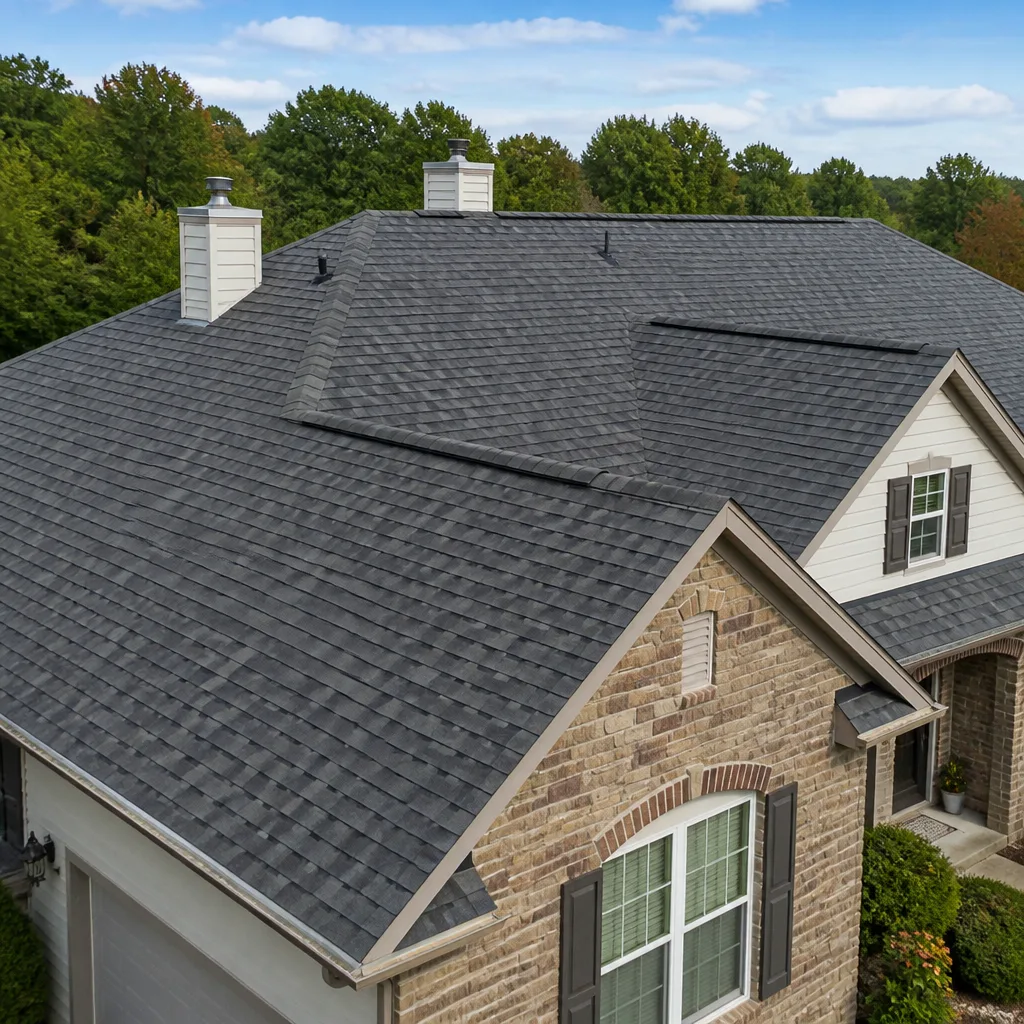
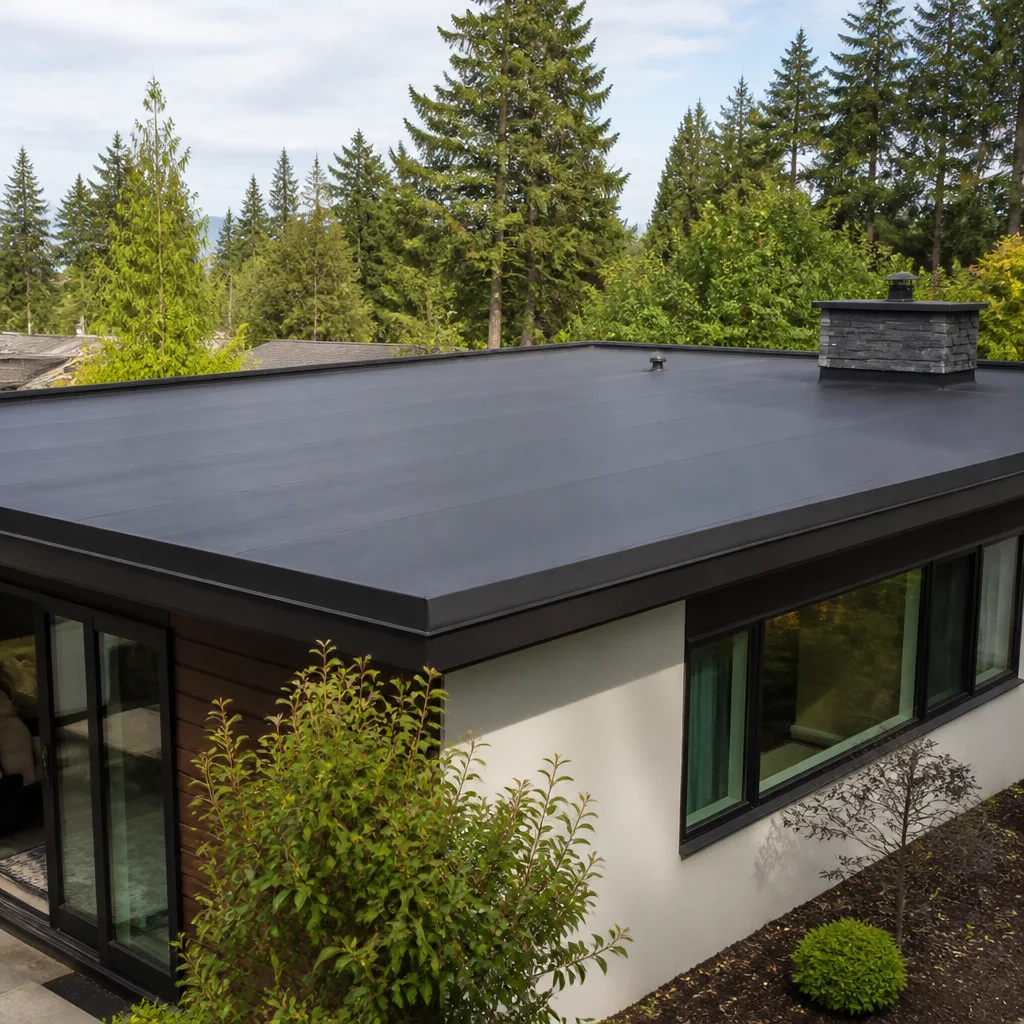
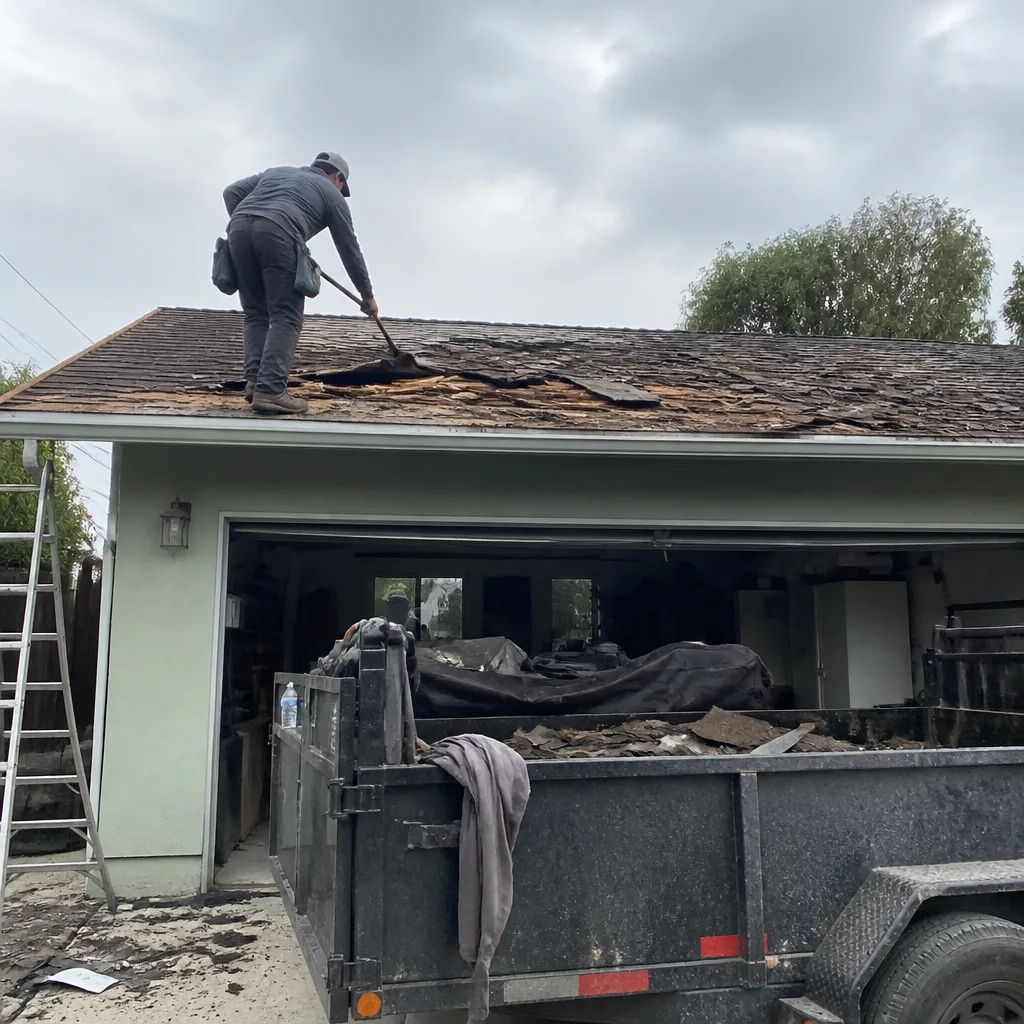 Before
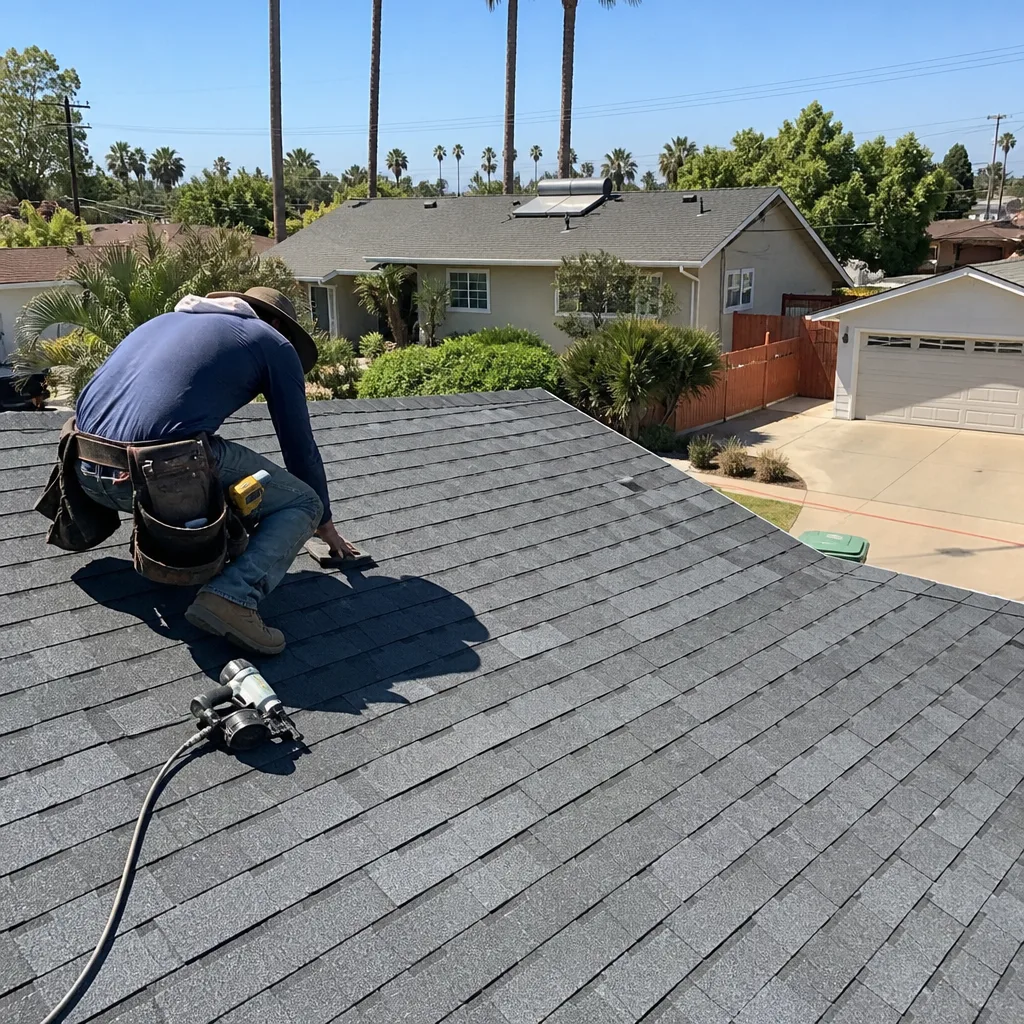 After
After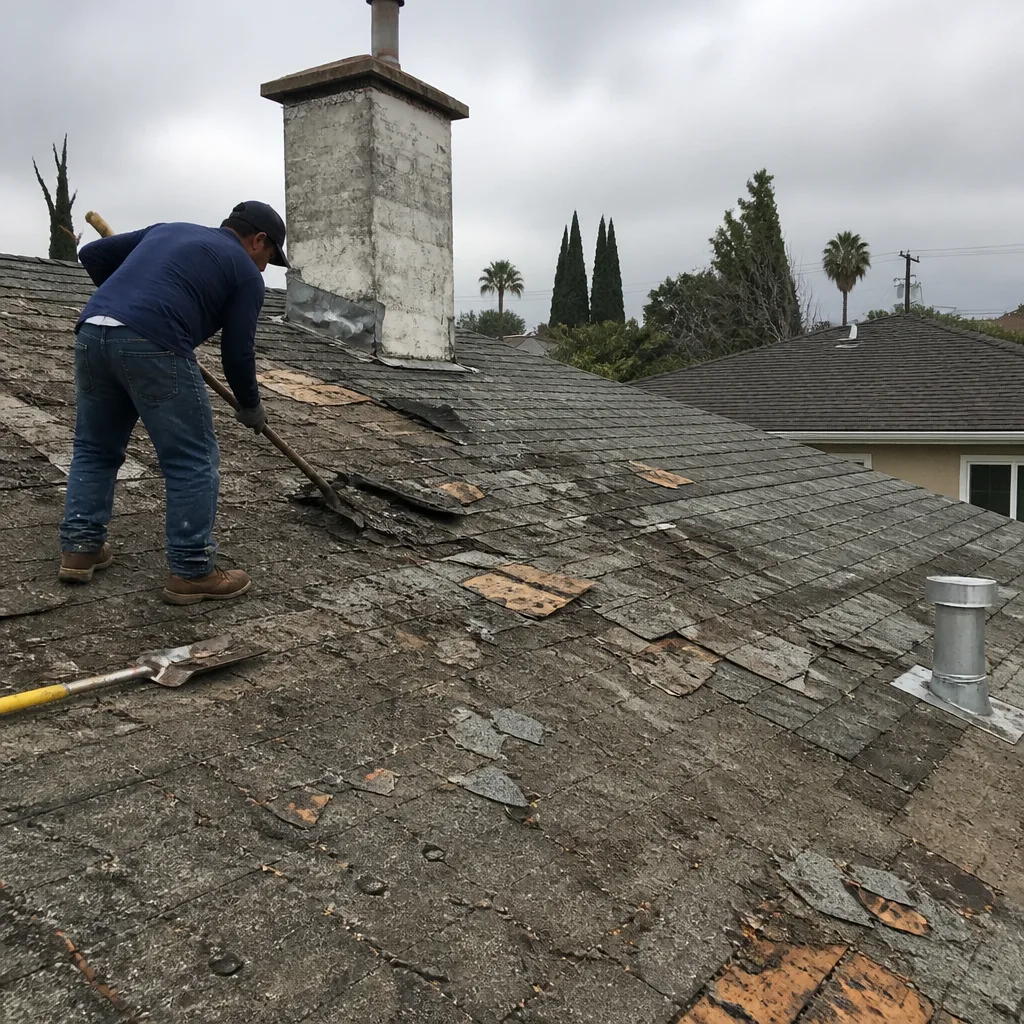 Before
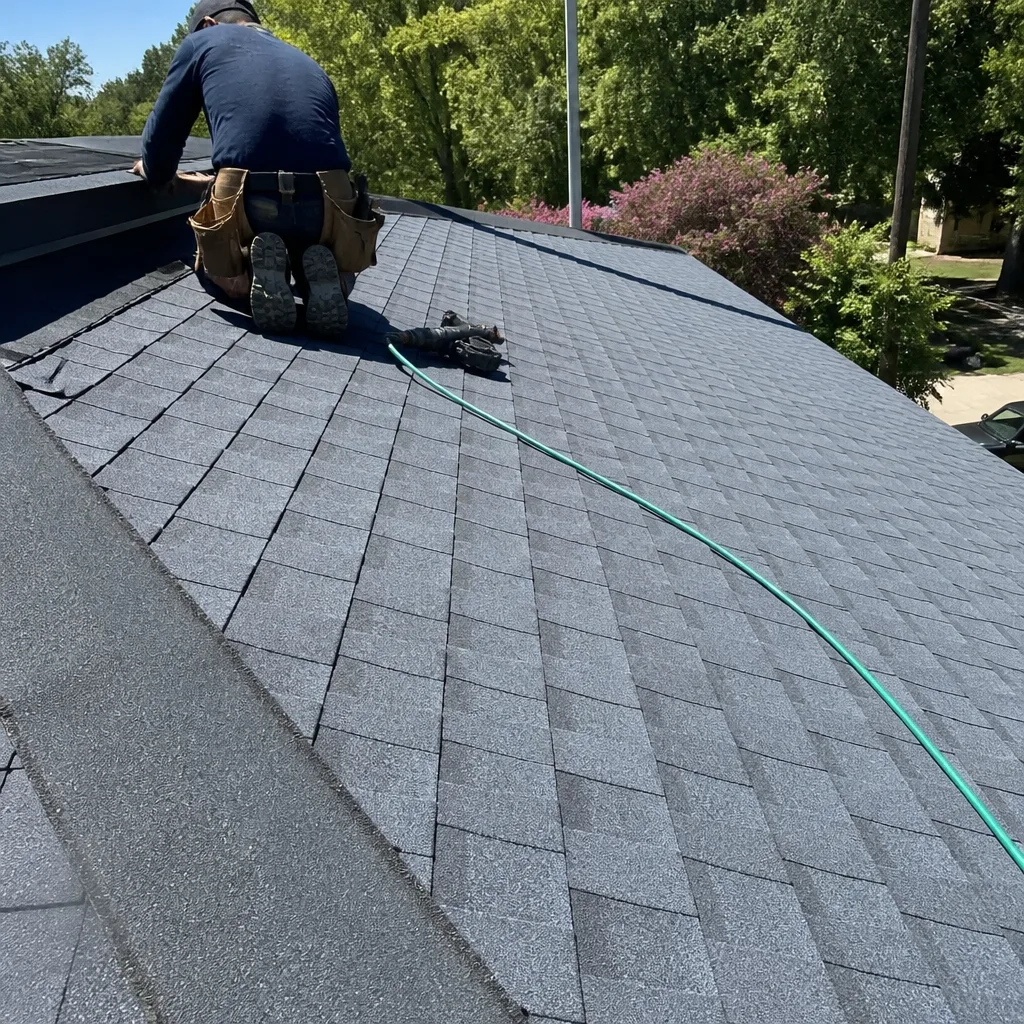 After
After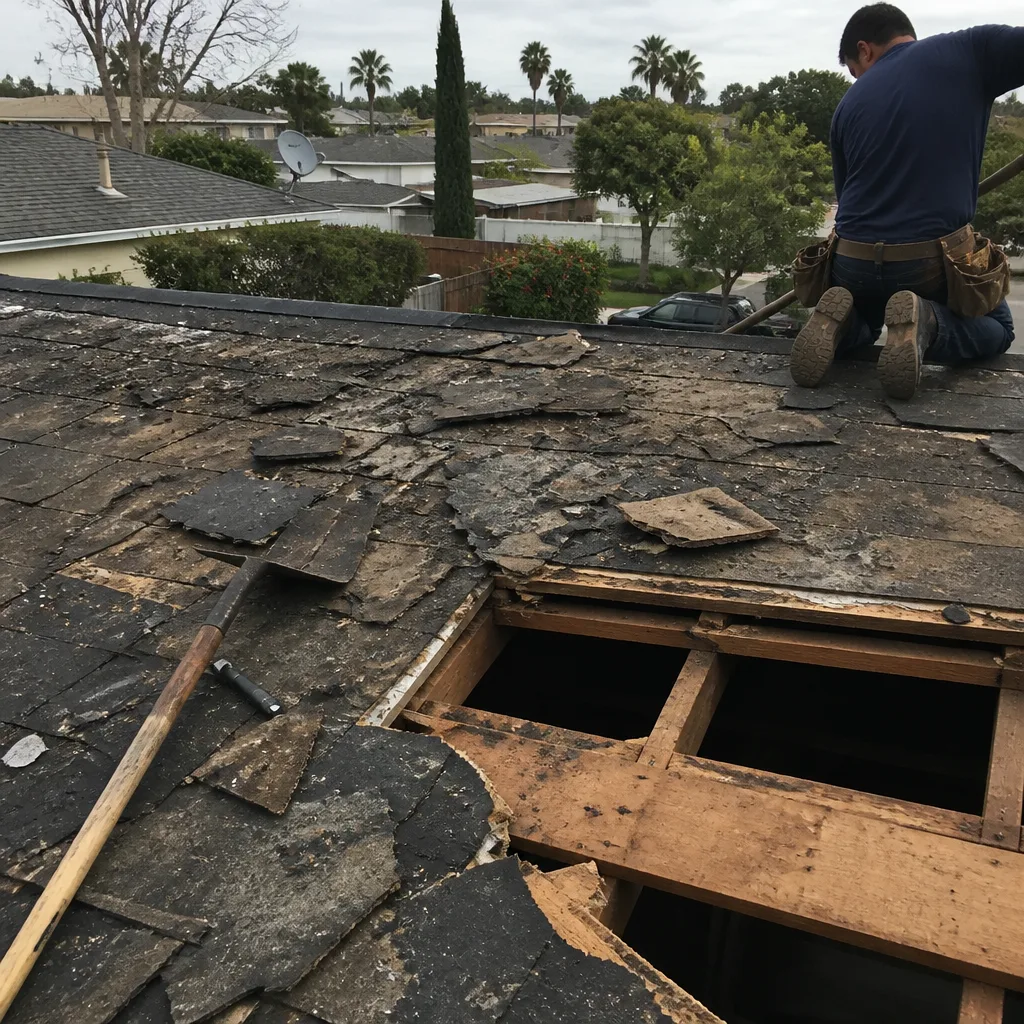 Before
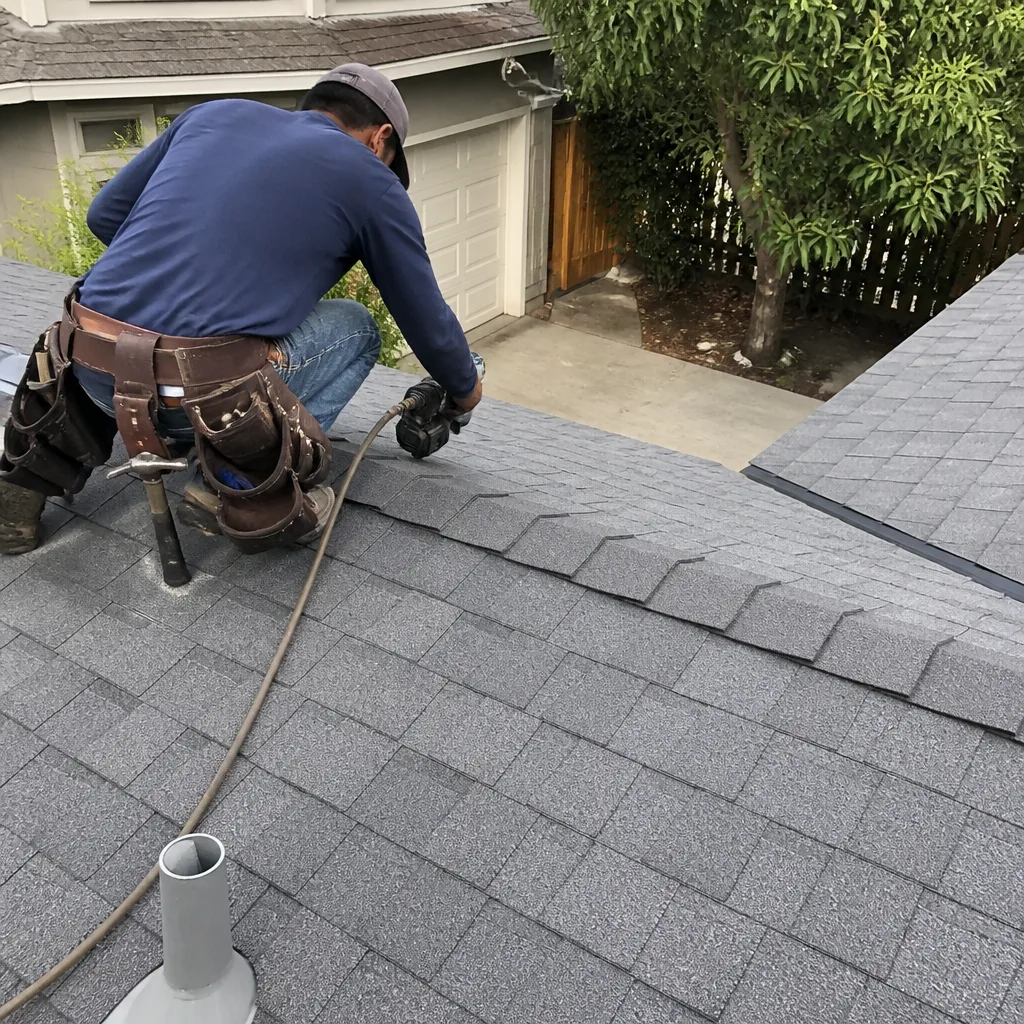 After
AfterRoof Inspection Warning Signs Every Homeowner Should Know
You don’t need a missing shingle to need a Roof Inspection. In Los Angeles, a roof that’s 8 years old, hasn’t been inspected since installation, and just came through its third Santa Ana season is already a roof that needs professional eyes, regardless of what you can see from the driveway. Most homeowners wait for visible damage before calling anyone. By then, the repair bill has often doubled or tripled. This guide walks through the warning signs that show up before the leak, before the sag, and before the insurance claim. If you own a home in Los Angeles, these are the signals you can’t afford to ignore.
Quick Answer
The clearest signs you need a roof inspection are: your roof is 8 years old or more without a professional inspection, you’ve just come through a Santa Ana wind season or heavy winter rain, your attic feels hotter than it should in summer, you see staining on ceilings or walls, or you’re buying, selling, or refinancing a home. You don’t need visible damage to justify the inspection. In Los Angeles, the cost of a professional roof inspection runs roughly $200 – $450 depending on roof size and complexity, and it’s a fraction of what early-stage repairs cost once they become emergencies.
Table of Contents
- Time-Based Warning Signs: When Age Alone Says It’s Time
- Interior Warning Signs: What Your Attic and Ceilings Are Telling You
- Weather Event Triggers: Los Angeles Climate and Your Roof
- Real Estate and Insurance Triggers: When Someone Else Demands an Inspection
- Neighborhood and Site-Specific Triggers Unique to Los Angeles
- Emergency vs. Scheduled: A Decision Framework
- What a Professional Roof Inspection Actually Covers
- What Roof Inspections and Common Repairs Cost in Los Angeles
Time-Based Warning Signs: When Age Alone Says It’s Time
Age is the single most reliable inspection trigger, and it’s the one most Los Angeles homeowners skip. You don’t wait for a toothache to see a dentist. A roof is the same. The material on top of your house was engineered for a specific service life, and that life shrinks in Los Angeles’s particular conditions, where UV exposure is intense and the marine layer keeps coastal roofs damp for hours every morning.
Here’s what age thresholds look like by material:
- Asphalt shingle roofs (the most common in LA): manufactured service life of 20 – 30 years, but in Los Angeles sun and heat, the asphalt begins hardening and losing granules after year 10. Every shingle roof aged 8 years or more should have a professional inspection, regardless of how it looks from the street.
- Concrete and clay tile roofs (common in Spanish-style LA homes): the tiles themselves can last 50 years, but the underlayment beneath them, the water-shedding layer that actually keeps your house dry, typically fails in 20 – 30 years. A tile roof that’s 15 years old needs eyes on the underlayment.
- Flat and low-slope roofs (common on mid-century modern homes and additions): built-up roofing and modified bitumen have 10 – 20 year lifespans in LA heat. Inspect every 3 – 5 years once the roof passes year 7.
- Metal roofs: 40 – 70 years, but the fasteners and flashings around penetrations wear faster than the panels. Inspect every 5 years starting at year 10.
There’s a second time-based trigger that almost no one tracks: the number of seasons since your last professional inspection, not since installation. A roof installed in 2018 and never inspected since is in a different condition than an identical roof inspected in 2022. The professional inspection creates a baseline. Without one, you’re guessing. At Brennan Roofing, we recommend Los Angeles homeowners have a professional roof inspection every 3 – 5 years, and every 2 years for flat roofs and homes within 3 miles of the coast, where the marine layer accelerates fastener corrosion and underlayment deterioration.
Interior Warning Signs: What Your Attic and Ceilings Are Telling You
Your roof communicates through the inside of the house long before it shows damage outside. These interior signals are the ones homeowners rationalize away: “It’s always been a little warm up there,” or “That stain’s been there for years.” That rationalization is exactly what turns a $400 repair into a $4,000 one.
Attic temperature anomalies in summer. Los Angeles summers push attic temperatures past 140°F on a regular basis. But if your attic is noticeably hotter than your neighbors’, or hotter than it was three summers ago, that’s a sign your roof’s ventilation is failing or your insulation has compressed and thinned. Poor ventilation doesn’t just make the house warmer, it bakes the roof decking from underneath, warping plywood and cracking shingles from below.
Insulation moisture. Fiberglass batt insulation that feels damp or heavy in the middle of a dry Los Angeles August is a red flag. Dry-season attic moisture almost always means a slow roof leak or inadequate ventilation trapping humidity. You don’t need to see water to have a leak. Moist insulation is water.
Early-stage staining that gets dismissed. The faint brown ring on the ceiling corner, the slight discoloration around a bathroom vent, the small bubble in the paint near an exterior wall. Homeowners see these and think “cosmetic.” They’re not. Staining means water has entered the building envelope and traveled. During an inspection, we look for stains that appear and reappear with rain, stains that darken in specific light, and stains that feel cool or damp to the touch.
One thing we’ve learned from thousands of inspections: if you can see a stain, the leak started months before the stain appeared. Water moves slowly through decking, insulation, and drywall before it becomes visible. A visible interior stain is not an early warning. It’s a late one.
Weather Event Triggers: Los Angeles Climate and Your Roof
Los Angeles weather is often described as mild. That description misses what actually happens to roofs here: intense UV radiation, seasonal Santa Ana winds, sudden deluges, and a morning marine layer that keeps coastal roofs damp. Each of these leaves its own signature on a roof, and each creates an inspection trigger that has nothing to do with what you can see from the ground.
Santa Ana wind seasons. From September through November, sustained winds of 30 – 60 mph hit Los Angeles with gusts that can exceed 70 mph in the foothills and canyons. These winds don’t just blow shingles off. They lift shingle edges, loosen nails, and peel flashing away from chimneys and walls slightly, just enough to break the water seal without creating visible damage. A roof can survive three Santa Ana seasons looking fine from the driveway and be losing its weatherproofing at every edge. In our experience, the most common post-Santa-Ana repair in Los Angeles is lifted flashing around chimney and vent penetrations, followed by wind-lifted shingle edges that haven’t torn off yet.
Atmospheric river rain events. When Los Angeles gets a winter deluge, roofs that have been fine for years suddenly leak. The trigger isn’t the roof failing on that day. It’s the rain finding a gap that’s been forming for years. After any rain event over 2 inches in 24 hours, homeowners should check for interior leaks and schedule an inspection if anything shows. After any rain event over 4 inches, an inspection is warranted even with no visible interior damage.
The marine layer. Coastal Los Angeles neighborhoods, including Venice, Playa del Rey, San Pedro, and the Palisades, live under a morning marine layer 250 – 300 days per year. That consistent moisture accelerates rust on exposed fasteners, encourages moss and algae growth on shaded roof slopes, and keeps the underside of roof decking damp. It’s a slow, constant degradation that inland roofs don’t face. Coastal homeowners should inspect more often than the LA average, every 2 – 3 years rather than every 3 – 5.
Real Estate and Insurance Triggers: When Someone Else Demands an Inspection
Some of the most common roof inspection warning signs don’t come from the roof at all. They come from lenders, insurers, and escrow companies. When these parties demand an inspection, they’re reacting to risk signals that most homeowners don’t see.
Insurance company inspections. Los Angeles homeowners are receiving more roof-related non-renewal and cancellation notices than at any point in recent memory, particularly in wildfire-adjacent zones. Insurers look at roof material, age, and condition, and they’re increasingly requiring documentation of roof condition before binding or renewing a policy. If your insurance carrier asks about your roof, the answer should be a professional inspection with written documentation. What that inspection needs to document: roof type, estimated age, visible condition, any signs of granule loss, any signs of impact damage, and a professional assessment of remaining service life.
Home purchase and sale transactions. In a normal Los Angeles real estate transaction, the buyer’s home inspector will walk the roof visually, but that’s not the same as a professional roof inspection. A home inspector checks for obvious issues. A roof inspection checks for the issues that become obvious two years later. Sellers who get a professional roof inspection before listing can address issues before they become negotiation leverage. Buyers who get one during escrow know whether that 12-year-old roof has 3 years or 10 years of service life left.
Refinancing and HELOCs. Lenders don’t always require roof documentation, but when the appraisal notes roof concerns, they do. A professional inspection with a clear written report keeps the loan moving.
The common thread in all of these triggers is documentation. A lender, insurer, or buyer doesn’t want a verbal “it looks fine.” They want a written report with specific findings, photographs, and recommendations. When we inspect a roof in Los Angeles for a real estate or insurance purpose, we document condition with photos and provide clear written findings that can go directly to the insurer or lender.
Neighborhood and Site-Specific Triggers Unique to Los Angeles
Roof risk in Los Angeles varies by neighborhood in ways that a generic roofing checklist misses. Your zip code matters, not just your roof.
Fire-adjacent and fire-affected areas. Homes near the foothills, in the canyons, and in fire-affected zones like Brentwood, Encino, Sherman Oaks, Sunland-Tujunga, and neighborhoods near Griffith Park face ember intrusion risk that flatland homes don’t. Embers don’t just land on the roof. They collect in roof valleys, behind dormers, and in gaps between roof decking and gutters. A roof that’s structurally fine can still be vulnerable to embers entering through 1/8-inch gaps. Homes in these areas should be inspected for ember-vulnerable openings and missing or deteriorated fire-resistant materials.
Hillside drainage patterns. Hillside homes in neighborhoods like Mount Washington, Echo Park’s steeper slopes, Silver Lake, and the Hollywood Hills face water movement that flatland homes never see. Rainwater flows downhill toward the house, pools against the uphill foundation wall, and puts the roof-to-wall flashing under pressure. Hillside homes need inspection of flashing integrity and drainage more often than flatland homes, and they need it after any significant rain event.
Coastal moisture exposure. Neighborhoods within three miles of the coast, from Malibu down through Santa Monica, the South Bay, and Long Beach, live under the marine layer. That means different failure modes: rusted fasteners, corroded flashing, algae growth, and saturated underlayment. The visual signs are often subtle, a slight lifting at the shingle edges, rust staining, discoloration near roof penetrations. Coastal Los Angeles homeowners should treat the marine layer as an active weather event and inspect accordingly.
Mature tree canopy coverage. Los Angeles has older neighborhoods with significant tree cover: parts of Pasadena, Eagle Rock, Los Feliz, and the older sections of the Valley. Continuous shade means roofs stay damp longer after rain, and accumulated debris, leaves, and pine needles trap that moisture against the roof surface. Debris accumulation is a warning sign that’s easy to see from the ground. If you can see piles of leaves from your driveway, there’s more you can’t see collecting in valleys and behind chimneys.
Emergency vs. Scheduled: A Decision Framework
Not every warning sign requires the same response. Learning the difference saves homeowners from both panic and expensive delay. For more on this topic, see our Roof Repair Troubleshooting: Common Problems and How to Fix Them. Here’s a plain-language framework to use.
Emergency response, call a professional now:
- Active water intrusion, meaning water entering the living space during or immediately after rain
- A visible hole, missing section of roofing, or fallen tree branch that has breached the roof surface
- Sagging in the roof plane that you can see from inside or outside
- A roof leak that has reached an electrical fixture or wiring
- Water staining that expands visibly over a 24 – 48 hour period
These require immediate professional attention. Covering the roof with a tarp is a temporary measure, not a solution, and it should be done by someone who knows how to work safely on a roof.
Scheduled inspection, book it this week:
- Your roof has passed an age threshold and hasn’t been inspected in 3+ years
- You’ve just come through a Santa Ana season or a heavy rain season
- Interior staining that’s old, stable, and not actively wet
- Granules collecting in gutters or at downspout outlets
- You’re planning to sell, refinance, or renew insurance
- You’ve noticed rising cooling bills without a change in habits
These are not emergencies, but they are time-sensitive in their own way. In Los Angeles, the window between “should inspect” and “expensive problem” closes faster than homeowners expect. A roof that shows granule loss today may be at active leak risk by the next winter rain season.
What a Professional Roof Inspection Actually Covers
Knowing what a real inspection includes helps homeowners understand why it’s worth paying for, and why it’s different from a contractor walking the roof while giving a repair estimate. A professional roof inspection is a systematic examination with written documentation.
Here’s what a proper inspection covers, inside and out:
- Exterior roof surface: shingles, tiles, or membrane condition, granule loss, cracking, curling, blistering, punctures, and impact damage
- Flashing: the metal material that transitions between the roof and chimneys, walls, skylights, and vents, and where most leaks actually start
- Penetrations: vents, pipes, skylights, and any opening through the roof, the highest-risk areas on any roof
- Drip edge and fascia: the metal edge that directs water into gutters and away from the roof decking
- Gutters and downspouts: attachment, slope, and drainage function, since the roof and gutter system work as one
- Attic and underside of decking: water staining, mold, ventilation, insulation condition, and daylight visible through gaps
- Interior ceilings and walls: staining, paint bubbling, and moisture intrusion that indicate active or historical leaks
After the inspection, you should receive a written report with photographs and specific findings. A verbal “looks okay” is not an inspection. Our inspections at Brennan Roofing are documented in writing, every time, and you get that report whether the news is good or whether we’re recommending repairs.
What Roof Inspections and Common Repairs Cost in Los Angeles
Homeowners shouldn’t have to call just to get a ballpark. Here are current price ranges for roof inspections and the most common repairs we see in Los Angeles.
- Professional roof inspection (no repairs): $200 – $450 depending on roof size, complexity, and whether it’s a single-story or multi-story access
- Minor flashing repair (one penetration or wall transition): $250 – $600
- Shingle repair (wind-lifted or broken shingles, small area): $350 – $900
- Gutter cleaning and debris removal (per job): $150 – $400
- Underlayment repair on tile roofs (localized section): $600 – $1,400
- Full roof replacement (asphalt shingle, standard LA home): $12,000 – $28,000 depending on square footage, pitch, and material
- Full roof replacement (tile or higher-end material): $25,000 – $60,000
These are honest ranges for the Los Angeles market in 2025. Every job at Brennan Roofing home begins with a written price before any work starts. No one puts a tool on your roof until you have that number on paper, and that number does not move at the door. If an inspection finds issues, we quote the repair the same way: in writing, with a clear scope, before anything happens.
For homeowners considering a full replacement, we install materials from manufacturer lines including GAF, CertainTeed, Owens Corning, and Boral, and we’ll explain the actual differences between them in plain English so you can decide with confidence. A Roofing Company in Los Angeles that can’t explain why one material costs more than another isn’t giving you the information you need to make a sound decision.
Common Mistakes to Avoid
- Waiting for a visible leak before inspecting. By the time water shows up inside, the roof has been failing silently for months and the repair cost has multiplied. Inspect on the schedule, not on visible damage.
- Treating a home inspector’s visual walk as a roof inspection. A general home inspection in a Los Angeles real estate transaction is not the same as a professional roof inspection. They look for different things at different depths.
- Ignoring granule loss in gutters. Granules collecting at downspout outlets are the most reliable early indicator of shingle aging, and most homeowners never look at their gutters. That granular material is your roof’s UV protection washing away.
- Assuming tile roofs don’t need inspection. The tile is fine. The underlayment beneath it is not. Tile-roof homeowners in Los Angeles routinely discover that the visible roof is hiding a worn-out waterproofing layer.
- Deferring inspection because “it doesn’t rain much.” Los Angeles roofs fail from UV exposure and heat cycling even in dry years. The leak waits for the rain. The damage doesn’t.
- Accepting a verbal “looks fine” from a contractor. If the report isn’t written, it doesn’t exist. Insurers, lenders, and future buyers want documentation, and so should you.
- Choosing an inspector based on price alone. A cheap inspection that misses a failing underlayment costs thousands more than a proper one. What you’re buying is thoroughness and documentation, not just time on the roof.
When to Call a Professional
Call a professional roof inspector when your roof hits its age threshold, when you’ve been through a heavy weather season, when you see interior staining you can’t explain, or when your lender or insurer asks for roof documentation. You should also call before a real estate transaction, whether you’re buying or selling. A professional inspection gives you the written baseline that every future decision rests on. If you’re in Los Angeles and you’re not sure whether your roof needs attention, Roof Inspection in Los Angeles from Brennan Roofing includes a written report with photos and specific findings, and we offer free estimates. Call (361) 320-9467 to schedule yours.
Frequently Asked Questions
Every 3 – 5 years for most Los Angeles homes, every 2 – 3 years for coastal homes within three miles of the ocean, and every 2 years for flat or low-slope roofs. For a detailed breakdown, see our Roof Repair Maintenance Schedule: What to Do and When. The marine layer and intense UV exposure accelerate roof aging in ways that make LA inspection schedules shorter than national averages. If it’s been longer than 5 years, your roof is overdue. Call (361) 320-9467 to schedule an inspection and get a written report.
A professional roof inspection in Los Angeles typically costs $200 – $450 depending on roof size, pitch, and number of stories. At Brennan Roofing, that inspection includes written documentation with photographs and specific findings, which you can give to an insurer, lender, or real estate agent. Call (361) 320-9467 for an exact quote.
You can spot some warning signs from the ground: sagging, missing shingles, debris accumulation, and visible flashing issues. But the critical details, the lifted shingle edges, the failing underlayment, the flashing gaps, and the attic-side moisture, are invisible from the driveway. Working on a roof is genuinely dangerous, and a trained professional has both the access equipment and the knowledge to identify what’s failing. We’d rather see you safe on the ground and thorough on the inspection.
Active leaks, visible holes, daylight through the decking in the attic, sagging roof planes, and water reaching electrical fixtures all indicate repair is needed now. Interior staining that’s old and dry may indicate a past leak that should be examined. A professional inspection distinguishes between what needs immediate repair and what can be monitored. Roof Repair in Los Angeles from Brennan Roofing starts with a written price before any work begins.
Increasingly, yes, especially in wildfire-adjacent zones and for roofs over 10 years old. Insurers are asking more Los Angeles homeowners for documented proof of roof condition and material. A professional inspection with a written report satisfies this requirement and protects you from surprises at renewal time.
Every repair and installation from Brennan Roofing is guaranteed in writing for one full year. If the work fails within that period, we return and make it right at no charge. That’s the Garrison Standard: a written guarantee, not a verbal assurance. Call (361) 320-9467 to schedule an inspection and get your roof’s condition documented in writing.
The Bottom Line
The warning signs that actually matter are the ones most homeowners never think to look for: age thresholds, weather events, attic temperature changes, and neighborhood-specific exposure patterns. In Los Angeles, a roof that looks fine from the driveway can be quietly losing its waterproofing, and the window between “should inspect” and “expensive problem” is shorter here than in most climates. Scheduling a professional inspection every few years, and after any significant weather event, is the simplest and cheapest protection available. For more guides & resources on protecting your Los Angeles home, visit our blog. Documentation matters: written reports, written prices, written guarantees. That’s how a roof inspection protects you, not just your roof.
Written by Travis Oakley, Owner at Brennan Roofing, serving Los Angeles since 2000.