
Last updated October 9, 2026
Free roof inspection with deck photos before we talk money - GAF and Owens Corning certified installation
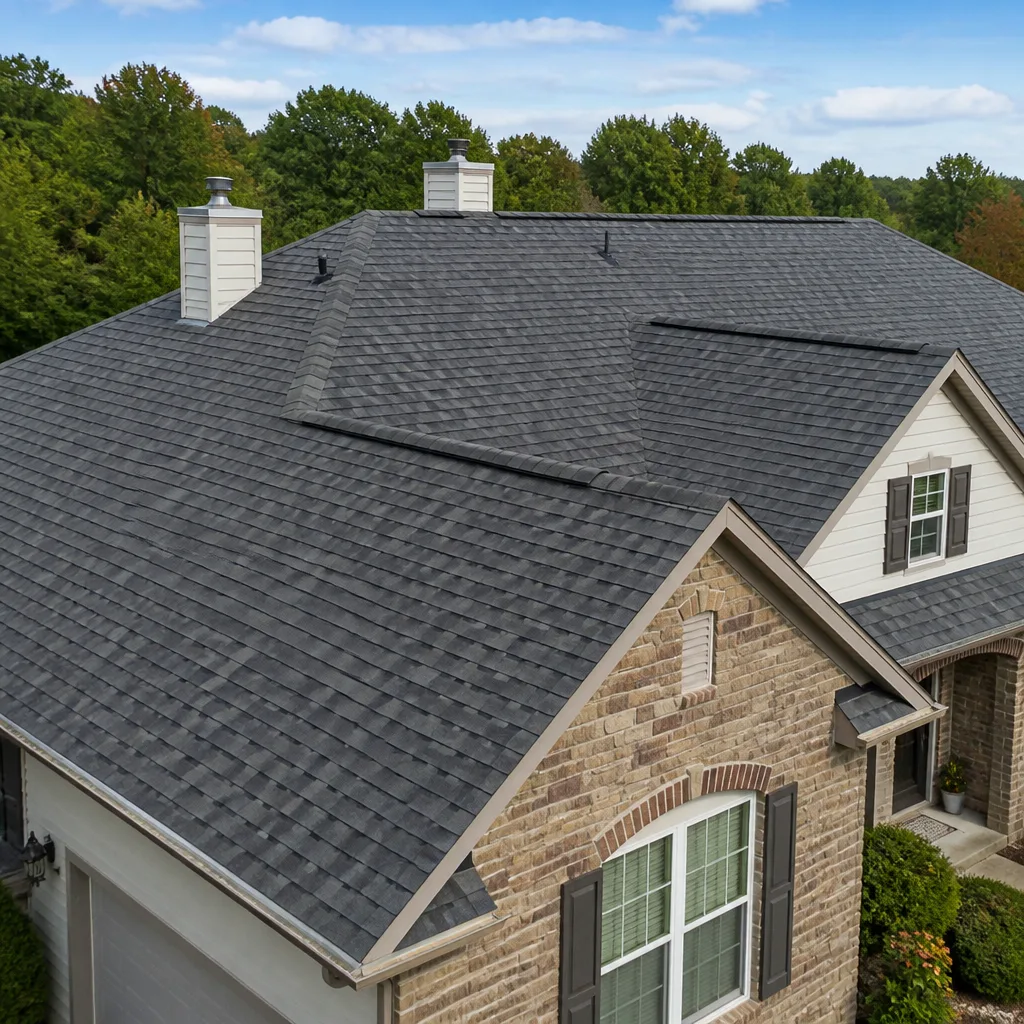
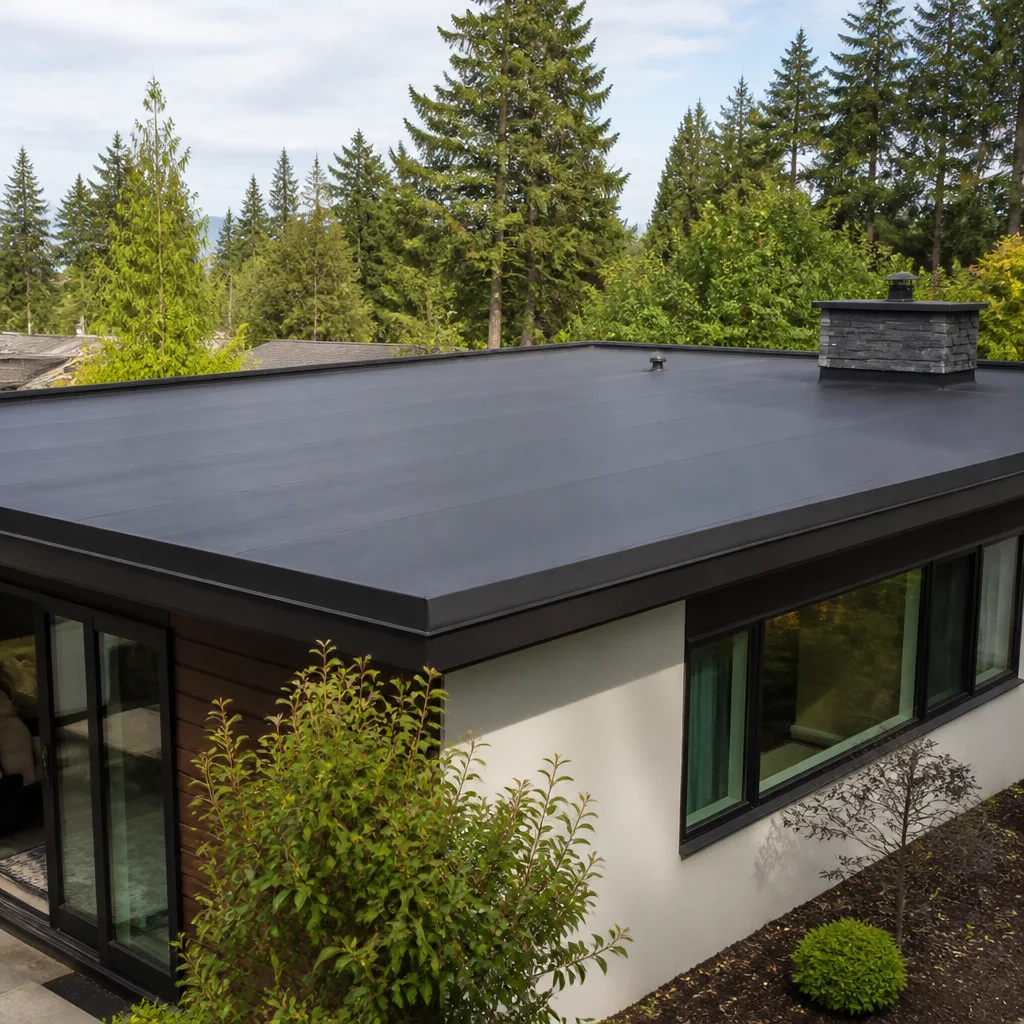
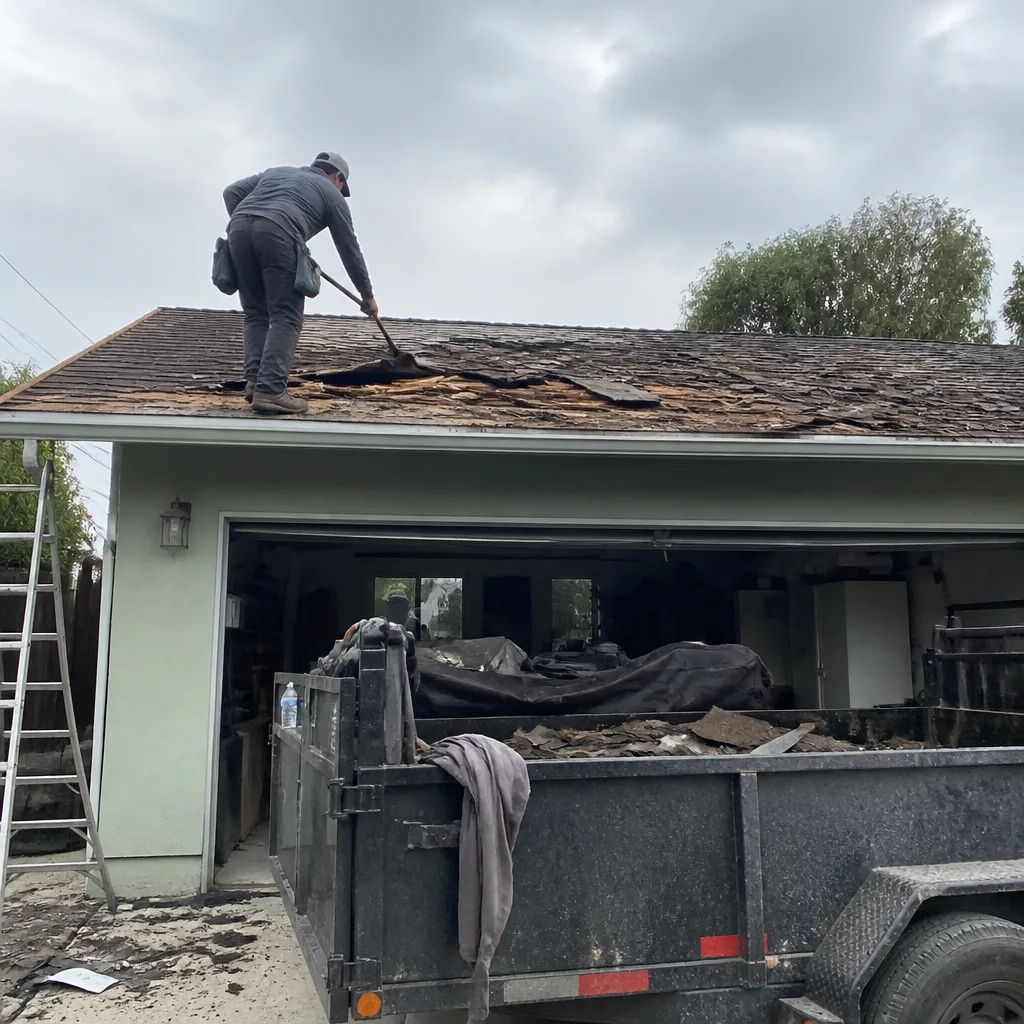 Before
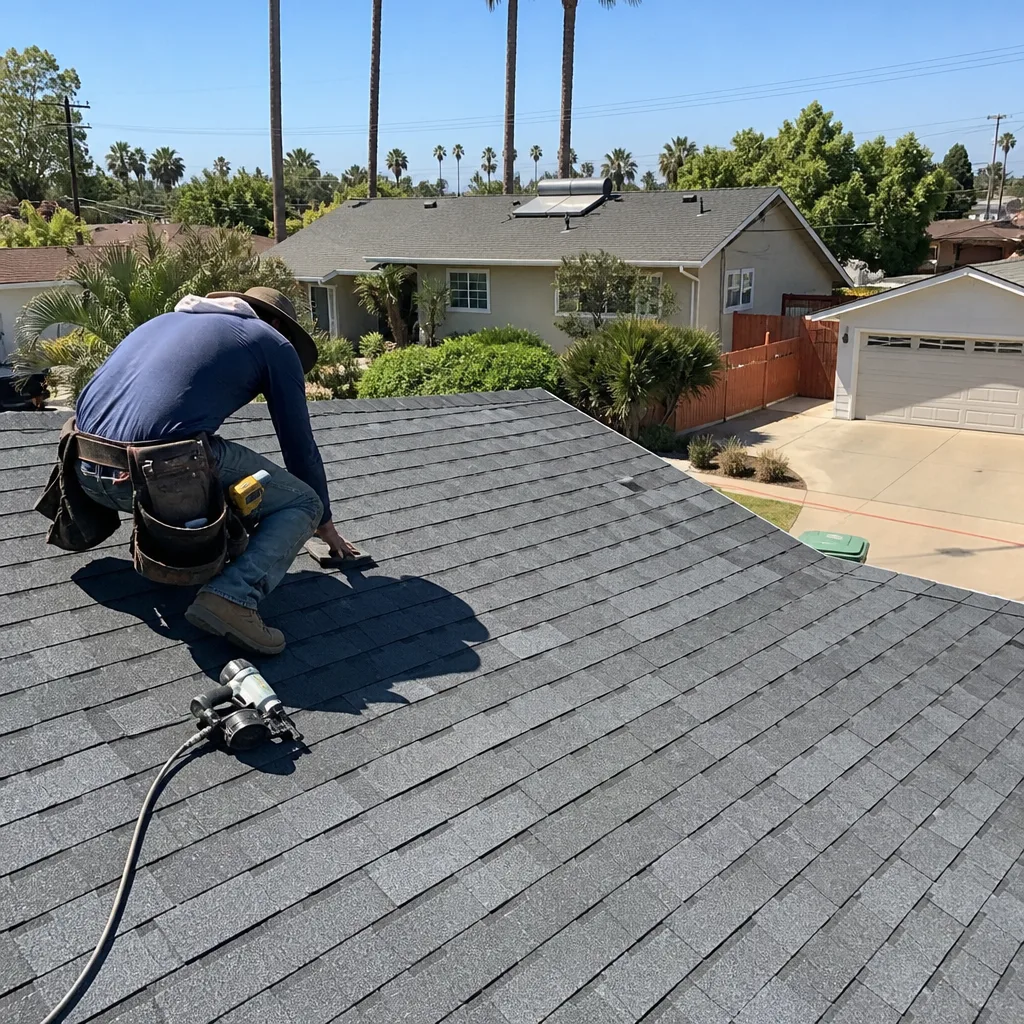 After
After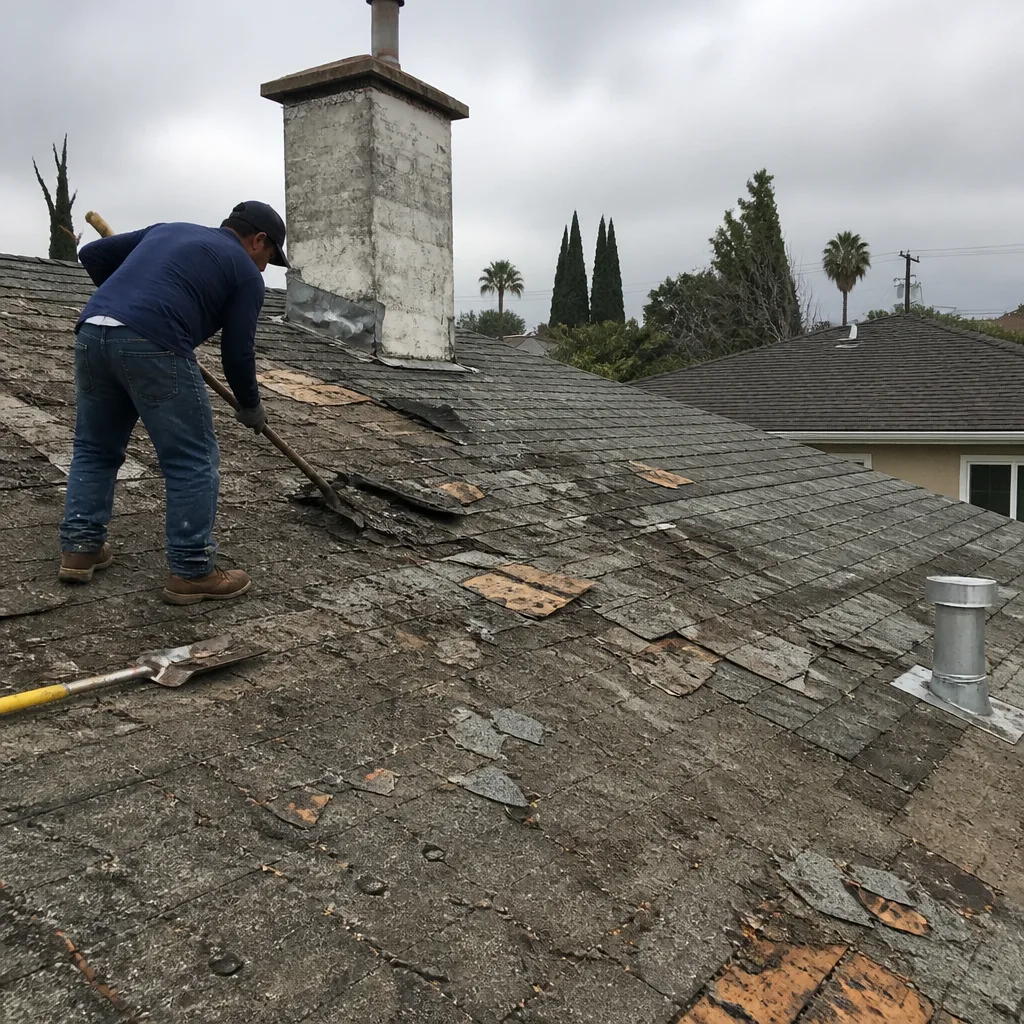 Before
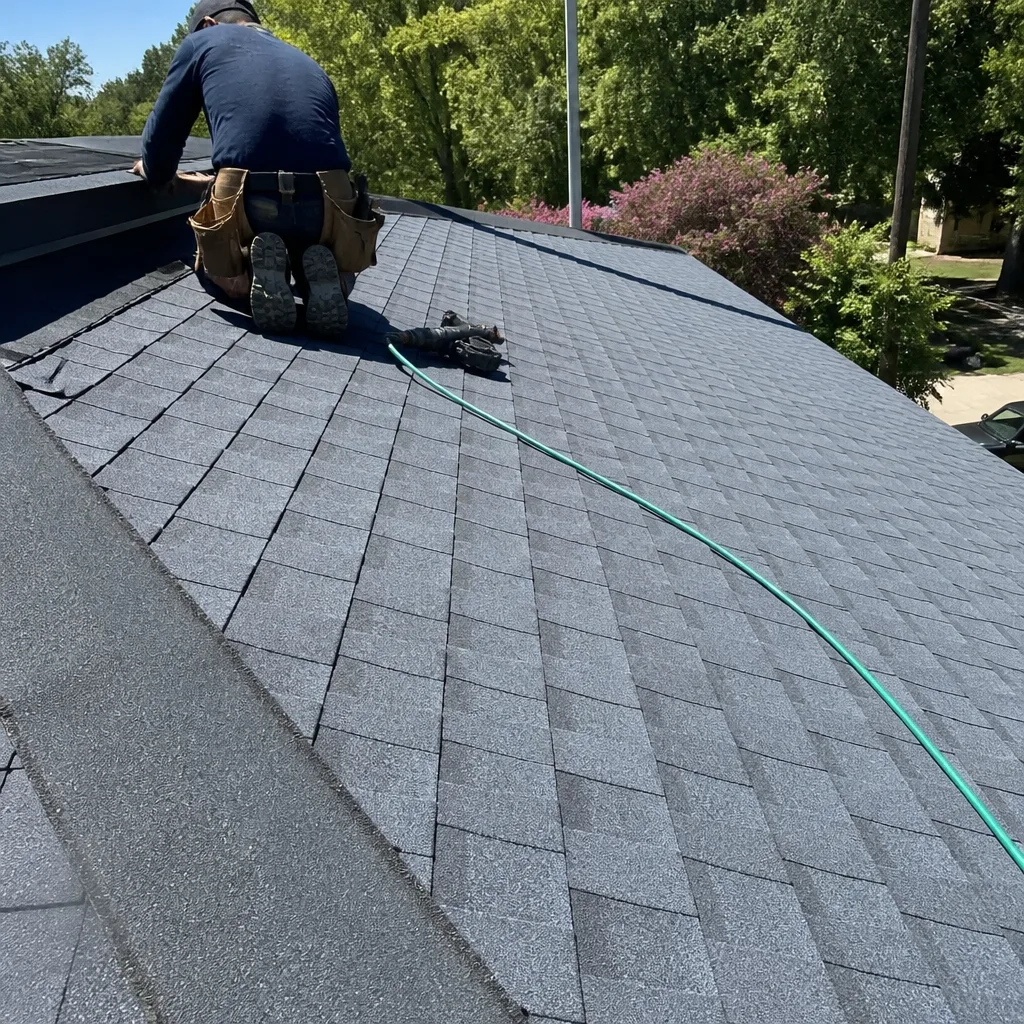 After
After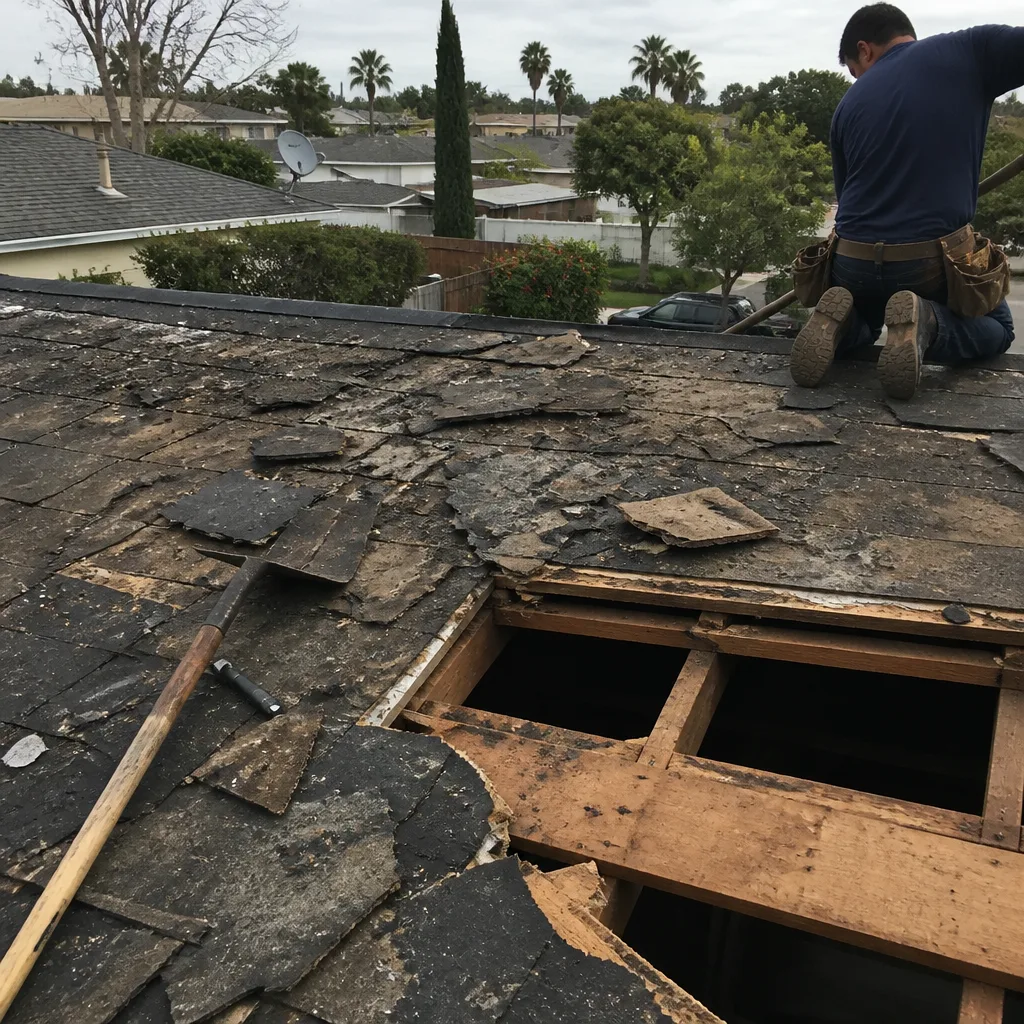 Before
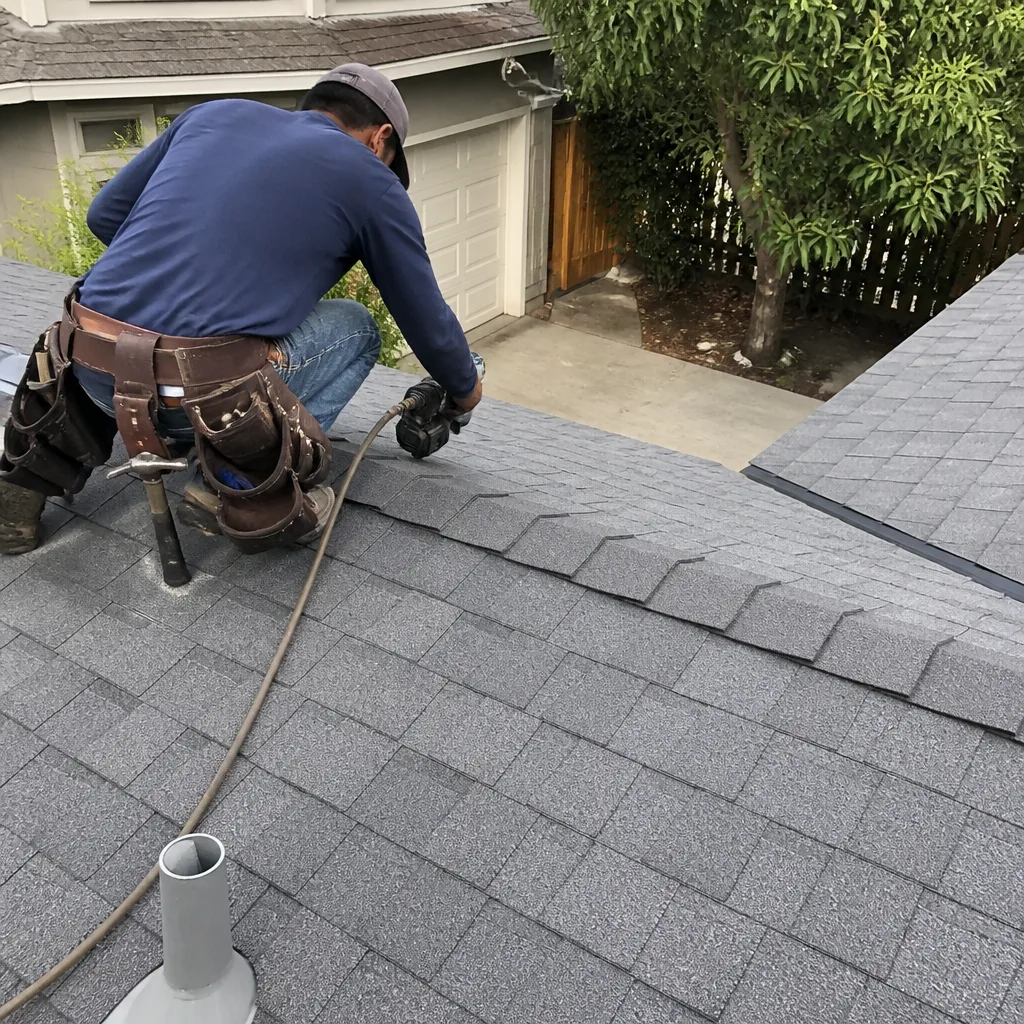 After
AfterDIY vs Professional Roof Repair: What’s Safe to Do Yourself
A DIY pipe boot repair that holds for six months before failing during a rainstorm can produce $15,000 in interior water damage, from a part that costs $25 at a hardware store and $150 installed by a roofer. That is the real math behind DIY roof repair, and most how-to articles never put the failure cost on the table. This guide walks through specific repairs one by one, what can go wrong with each, and where the line is between work a careful homeowner can do and work that carries risk you should not take on. Los Angeles sees roughly 15 inches of rain a year, but most of it arrives in a handful of storms, which means a roof that fails quietly for months gets exposed all at once.
Quick Answer
Safe DIY roof work is limited to small, visible, low-consequence repairs on walkable roofs: replacing a single cracked tile, applying roof cement to a small visible crack, clearing a flat-roof drain. Anything involving flashing, underlayment, structural decking, steep pitches, or a repair where failure would leak water into living space should go to our Roof Repair services, because the cost of a failed repair typically runs ten to fifty times the cost of the repair itself.
Table of Contents
- The Repair-by-Repair Breakdown
- The Consequence Math: Why Failure Cost Matters More Than Repair Cost
- Physical Prerequisites for Safe DIY Roof Work
- How DIY Work Affects Existing Warranties
- Honest Cost Comparison: DIY vs Professional vs DIY Failure
- Los Angeles-Specific Roof Conditions to Know
- Common Mistakes to Avoid
- When to Call a Professional
The Repair-by-Repair Breakdown
The right question is not “can I fix this myself.” The right question is “what happens if this repair fails in the next rainstorm.” That single question separates the work a homeowner can responsibly take on from work that should go to a licensed roofer. For a deeper look at this decision, see our guide on DIY vs Professional Roofing Company: What’s Safe to Do Yourself. Here is the breakdown, organized by consequence if the repair fails.
Work a Careful Homeowner Can Realistically Do
These three repairs share the same profile: the damaged part is visible, the failure consequence is limited, and the work does not require opening up a roof system.
Replacing a single broken tile on a walkable roof. A cracked clay or concrete tile is easy to spot and relatively straightforward to swap. The tile sits on battens or directly on underlayment, and a replacement tile typically costs $4 to $15 depending on the profile. The key requirement is that the roof pitch be low enough to walk safely, and that the broken tile is reachable without walking on adjacent tiles in a way that cracks them. Los Angeles has thousands of Spanish and Mediterranean style homes with tile roofs, and single tile failures are common after falling branches or foot traffic.
Applying roof cement to a small visible crack. For a hairline crack in a flat roof surface or around a small penetration, a tube of plastic roof cement can buy you six to twelve months. This is a patch, not a repair, and it should be labeled as such. The surface must be clean, dry, and the crack must be fully accessible. This work is reasonable as a stopgap while you line up a professional repair, not as a permanent fix.
Clearing a blocked flat-roof drain. Flat roofs in Los Angeles, especially on mid-century commercial buildings and some modern residential designs, depend on drains and scuppers to move water off the roof. Leaves, tennis balls, and debris block these drains routinely. Removing debris from a drain is maintenance, not roofing, and any able-bodied homeowner can do it from a ladder or roof access hatch. The failure consequence of not doing it is ponding water, which degrades the roof membrane over time, so this is a task worth doing regularly.
Work That Carries Disproportionate Risk
These repairs look simple from the ground and go wrong in expensive ways.
Flashing repair or replacement. Flashing is the metal, typically galvanized steel, aluminum, or copper, that transitions the roof surface around chimneys, skylights, vents, and wall intersections. It is the highest-consequence component on a roof because flashing failures send water directly into the roof decking and wall framing. A failed flashing repair does not just leak, it rots the structural framing, and that repair runs into the thousands. Flashing work requires cutting, bending, and fastening metal in a way that sheds water correctly, which is why roofers spend years learning to do it properly.
Underlayment replacement. The underlayment is the water-shedding layer that sits between the roof decking and the finished roof surface, whether tile, shingle, or metal. Replacing underlayment means removing the finished roof surface, which means you are now doing a roof replacement, not a repair. This is not a DIY task under any circumstances, because getting underlayment wrong means the roof leaks everywhere, not in one spot.
Flat-roof seam repair. Flat and low-slope roofs in Los Angeles are usually built-up roofing, modified bitumen, or single-ply membranes like TPO or PVC. The seams between membrane sheets are where these roofs fail, and a failed seam repair can flood an entire floor of a house in one storm. Seam welding and membrane patching require specialty tools, material-specific primers and adhesives, and surface preparation that is easy to get wrong. A flat-roof seam is the highest-consequence DIY repair on this list, and we recommend against it in every case.
Any repair on a roof pitched steeper than 4:12. A 4:12 pitch means the roof rises four inches for every twelve inches of horizontal run. Above that ratio, walking and working safely requires fall protection equipment and training. Most DIY roof accidents happen on pitches that look walkable from the ground and are not.
The Consequence Math: Why Failure Cost Matters More Than Repair Cost
Every professional roofer has walked into a home where a homeowner attempted a repair, the repair failed, and the resulting damage cost more than the original professional repair would have cost, by a wide margin. The failure profile of a roof repair changes based on where the repair is and what it is doing.
A failed shingle repair leaks. Shingle repairs fail at the nail line or the seal strip, and the leak usually stays localized. You get a water spot on the ceiling, you notice it, and you address it. Annoying, but not catastrophic.
A failed flashing repair rots framing. Water that gets behind flashing travels down the inside of the wall or along a rafter, often far from the visible leak point. By the time you see a stain, the framing may have been wet for months. Framing repair means opening walls or ceilings, replacing lumber, addressing mold, and then repairing the roof properly. This is the difference between a $400 professional flashing repair and a $6,000 to $12,000 structural repair.
A failed flat-roof seam can flood an entire floor. On a flat roof, water ponds, and a failed seam acts like an open spigot. A one-inch rain on a 1,000 square foot flat roof is 623 gallons of water, and if that water goes through a failed seam, it ends up inside your building. Interior flooding from a failed flat-roof repair can wreck flooring, drywall, electrical, and personal property in one afternoon.
The point here is not that every DIY repair fails. Many small DIY repairs succeed. The point is that the cost curve is wildly asymmetric: the upside of a successful DIY repair is saving a few hundred dollars, and the downside of a failed one is damage in the thousands or tens of thousands. The question to ask is whether you are willing to take that asymmetric risk on a particular repair.
Physical Prerequisites for Safe DIY Roof Work
Before touching any roof repair, check yourself against these physical and situational requirements. If any of these is not true, do not get on the roof, regardless of how simple the repair looks.
Pitch. If you cannot comfortably walk the roof with both feet flat and without holding onto anything, the pitch is too steep for DIY work. A 4:12 pitch is about the practical limit for most people without fall protection. Most Los Angeles tile roofs are 3:12 to 5:12, so some are workable and some are not, and you need to know which one you have.
Footwear. Soft-soled shoes with good grip are non-negotiable. Leather-soled shoes are dangerous on roofing surfaces, and so are worn-out sneakers. On tile roofs, step on the lower third of each tile and avoid stepping on tile edges, which crack easily.
Anchor points. On any roof where you are working higher than six feet off the ground, you need a roof anchor and a harness if you are doing anything beyond a quick inspection from a ladder. Most homeowners do not have this equipment, and buying it for a single repair usually erases the cost savings of doing the work yourself.
Weather windows. Roof work requires dry conditions, and not just while you are working. Roof cement, sealant, and patch materials need specific temperature and moisture conditions to cure. Los Angeles has a long dry season that is good for roof work, but the Santa Ana wind season brings gusts that make working on a roof unsafe even on a clear day. If the wind is above 15 mph, stay off the roof.
Two-person rule. No one should be on a roof alone. If you fall or get injured, someone needs to be there to call for help. This is a hard rule in professional roofing and it should be a hard rule for DIY work too.
How DIY Work Affects Existing Warranties
Before you make any repair to a roof that is under warranty, read the warranty language. This is the step nearly every homeowner skips, and it can cost real money.
Most roofing contractor warranties contain language stating that the warranty is void if anyone other than the original contractor performs work on the roof during the warranty period. That language is legally enforceable in most cases, and it means a $40 DIY patch can void a warranty that would have covered a $5,000 repair.
Manufacturer warranties are different from contractor warranties. A shingle manufacturer like GAF, CertainTeed, Owens Corning, or IKO warranties the material against manufacturing defects, not the installation or subsequent repairs. However, most manufacturer warranty claims require that the roof was installed by a certified contractor and that repairs were performed by licensed roofers. If a manufacturer investigates a claim and finds evidence of unlicensed repair work, the claim can be denied.
The practical rule: if your roof is under any warranty, and the repair is more involved than clearing a drain or removing debris, call the roofer who installed the roof before doing anything. In our experience, most warranty disputes we see in Los Angeles could have been avoided by reading the warranty language before the DIY repair happened.
Honest Cost Comparison: DIY vs Professional vs DIY Failure
Here is the honest money conversation, laid out in Los Angeles market terms. These are ranges, not quotes, and your specific roof will vary based on access, roof type, and condition.
| Repair Type | Typical DIY Material Cost | Typical Professional Repair Cost (Los Angeles) | Typical Cost If DIY Fails |
|---|---|---|---|
| Single tile replacement | $4 – $15 | $150 – $350 | $500 – $2,000 (if additional tiles crack or underlayment is compromised) |
| Small crack patch (flat roof) | $10 – $40 | $250 – $500 | $2,000 – $8,000 (if water intrudes before proper repair) |
| Pipe boot replacement | $25 – $60 | $150 – $400 | $3,000 – $15,000 (interior water damage) |
| Flashing repair (chimney, wall, or skylight) | $40 – $150 | $350 – $900 | $6,000 – $20,000 (rot repair, mold remediation, structural work) |
| Flat-roof seam repair | $50 – $200 | $500 – $1,500 | $5,000 – $25,000 (flooded interior, full roof replacement) |
The pattern is obvious: on the low end, DIY saves you a few hundred dollars. On the failure end, DIY costs you five to fifty times what the professional repair would have cost. We are not saying never do small roof work yourself. We are saying understand the bet you are placing before you place it.
Los Angeles-Specific Roof Conditions to Know
Los Angeles roof conditions are shaped by climate and building stock, and both affect what repairs are realistic for a homeowner.
The rain comes all at once. Los Angeles averages 15 inches of rain a year, but nearly all of it falls between November and March, and a large share falls in a few atmospheric river events. A roof that has been leaking slowly for eight months will show itself during the first big storm, and the damage accumulates quickly because the soil around Los Angeles homes does not dry out fast. This is why the failure-consequence question matters more here than in wetter climates, where roofs leak continuously and get caught earlier. For more on how Los Angeles conditions affect this choice, read DIY vs Professional Roofing: The Los Angeles Homeowner’s Decision Guide.
Tile roofs dominate the housing stock. A large percentage of Los Angeles homes built before 1980 have clay or concrete tile roofs. Tile roofs are durable, but the tiles are brittle, and foot traffic cracks them. A homeowner can often replace a single broken tile safely, but walking across a tile roof to reach a repair point without cracking more tiles is harder than it looks. The underlayment beneath the tile is the actual water barrier, and if that underlayment is compromised, the tiles are cosmetic, not protective.
Flat roofs are common on mid-century and modern buildings. The post-war building boom in Los Angeles produced a large stock of flat-roofed homes and commercial buildings. These roofs are usually built-up roofing or modified bitumen, and they fail at seams and penetrations. Flat-roof repair carries the highest consequence profile of any roof type, because ponding water sits on every seam and finds every weak point.
The sun is harder on roofs than the rain. Ultraviolet exposure in Los Angeles breaks down roofing membranes, sealants, and flashing materials faster than in most of the country. A sealant joint that would last ten years in Seattle might last five or six in Los Angeles, simply because of UV degradation. This is a strong argument for using professional-grade materials and having the work done by someone who knows which products hold up locally.
Common Mistakes to Avoid
- Using the wrong sealant. Not all sealants work with all roofing materials, and using the wrong one creates a false sense of security. Silicone and asphalt-based products do not mix, and some sealants degrade specific membrane types. Know the material on your roof before buying anything.
- Patching over a leak without finding the source. Water travels, and the spot where water shows up on your ceiling is often not where the water is getting in. Patching the visible spot without tracing the leak path means the actual entry point is still open. In Los Angeles homes with vaulted ceilings, water can travel fifteen feet or more along a rafter before it drops.
- Walking on a steep roof without protection. Most DIY roof injuries happen on roofs between 4:12 and 6:12 pitch, because they look walkable and are not. The fall is the same regardless of what the pitch looks like.
- Ignoring the two-person rule. Falling off a roof and lying injured for hours because no one knew you were up there is avoidable. Never work on a roof alone.
- Assuming a six-month patch is a permanent fix. A roof cement patch that holds through one winter has not “fixed” anything. It has bought time, and the clock is still running. If a patch is your plan, book the professional repair while the patch is doing its job, not after it fails.
- Working on a roof under warranty without checking the language. Voiding a $5,000 warranty to save $200 on a repair is a trade you should never make. Read the warranty first.
- Starting work without a plan for the weather. In Los Angeles, a surprise rain during roof work is rare but not impossible, especially in January and February. A roof opened up for a repair and left exposed overnight during a storm is a $10,000 mistake.
When to Call a Professional
Call a roofer when the repair involves flashing, underlayment, structural decking, or a flat-roof seam. Call when the roof pitch is steep enough that you cannot walk it comfortably, when the roof is under warranty, or when you are not certain where the leak is coming from. Call when the repair would take you more than a day or require tools you do not own. The common thread is consequence: if a failed attempt at this repair would produce damage that costs more than the repair itself, the math points to a professional. For more guides & resources on making smart roofing decisions, visit our blog. Brennan Roofing offers free estimates in Los Angeles, and every estimate includes a written price before any work starts, so you know the number on paper before making a decision. Call (361) 320-9467 to schedule yours.
Frequently Asked Questions
Yes, you can replace a single missing or damaged asphalt shingle on a walkable roof if you understand nail placement and seal strip behavior, but most shingle leaks are not caused by the shingle you can see, they are caused by flashing or underlayment failures behind the shingle. If the shingle is missing because of wind, there may be other damage you cannot see. The risk is low, but a professional inspection is the better move if the roof is over ten years old. Call (361) 320-9467 for a free estimate in Los Angeles.
Walkable tile roofs in Los Angeles are generally in the 3:12 to 5:12 pitch range, and safe walking requires stepping on the lower third of each tile with flat feet, never on tile edges or corners. The bigger risk is cracking tiles you did not intend to replace, which turns a single-tile repair into a multi-tile repair. If you are not confident about foot placement on tile, hire someone who is.
Flashing repairs are the most expensive DIY mistake, because a failed flashing repair lets water into the wall or roof framing, and the resulting structural repair can cost $6,000 to $20,000 in the Los Angeles market. The second most expensive is flat-roof seam repair, which can flood an entire floor. Both are repairs we recommend against doing yourself in every case.
In most cases, yes. Most contractor warranties in Los Angeles and elsewhere contain explicit language that any work by a third party, including the homeowner, voids the remaining warranty coverage. Read the warranty document before doing any work, and if the language is unclear, call the contractor who wrote it.
Professional roof repair in Los Angeles typically ranges from $150 for a simple tile replacement to $1,500 for a flat-roof seam repair, depending on access, roof type, and the extent of the damage. Major repairs that involve structural work run higher. Brennan Roofing provides written pricing before any work starts, so the number you get is the number on the final invoice. Call (361) 320-9467 for an exact quote.
A roof leak is serious if it appears during or immediately after rain, if the water stain is spreading, if you see water in multiple rooms, or if the leak is near a chimney, skylight, or wall intersection. Those are flashing-adjacent leaks, which means the potential for framing damage is higher. Any leak that has been present for more than one rainy season is serious by definition. The fastest way to know what you are dealing with is a professional roof inspection, and our roof inspections in Los Angeles give you a documented condition report with plain-English findings.
The Bottom Line
Safe DIY roof work is limited to small, visible, low-consequence repairs on roofs you can walk safely: a single tile, a small crack patch, a blocked drain. Everything else carries a failure consequence that dwarfs the money you save by doing it yourself. The pipe boot that costs $25 at the hardware store can cost $15,000 in interior damage if it fails, and pipe boot failures are common enough that we see them regularly in Los Angeles. The disciplined approach is to match the repair to the risk, read the warranty before touching anything, and call a professional when the math says the bet is not worth taking. The ask is not the job, it is the estimate, and the estimate is free. Call (361) 320-9467 and we will put a written price in your hand before any work starts.
Written by Travis Oakley, Owner at Brennan Roofing, serving Los Angeles since 2000.